Authorized Generics vs Brand Drugs: Are They Really Identical?
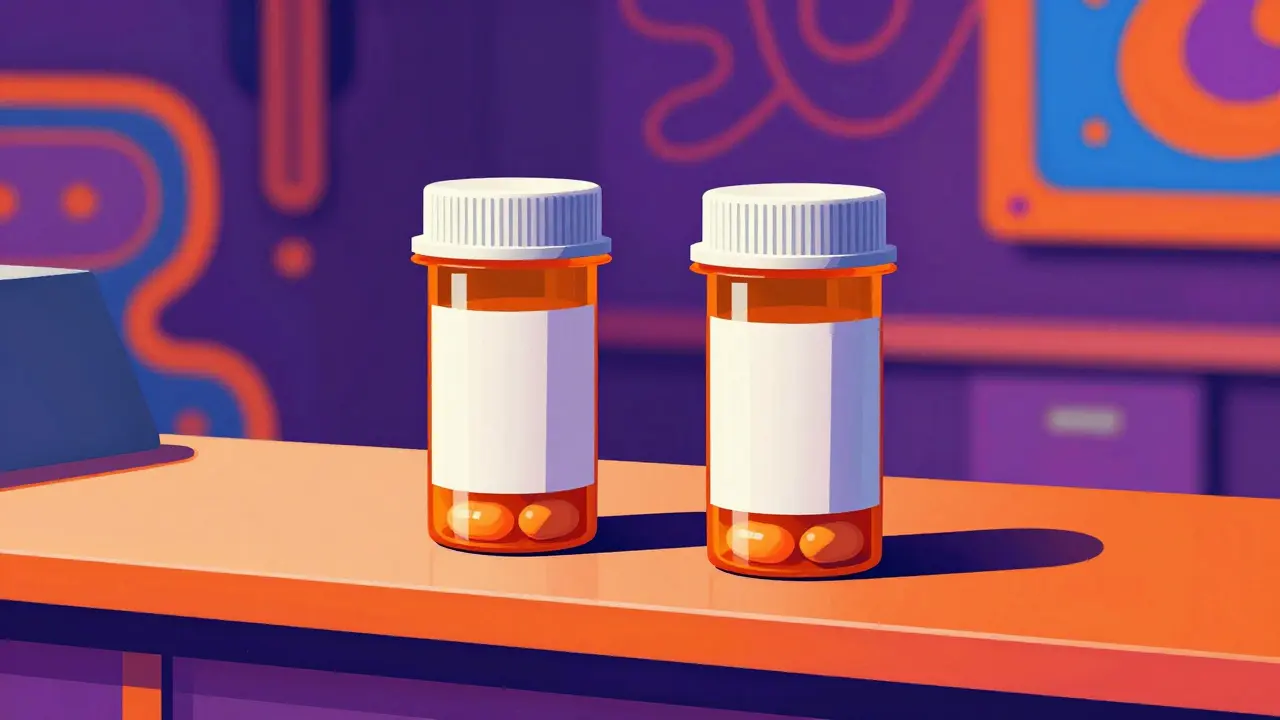
Standing at the pharmacy counter, you might have noticed something strange. Sometimes your prescription comes in a box that looks exactly like the brand-name drug you were told to expect, but the price is lower. Other times, it looks completely different, with a generic name you've never heard of. This confusion isn't just about packaging. It's about a specific type of medication called authorized generics, which are approved brand name drugs marketed without the brand name on their label. These products sit in a unique space between expensive brand drugs and standard generics, often leaving patients wondering if they are getting the real deal or something less effective.
If you've ever worried that a generic version of your medication might not work the same way, understanding authorized generics could change how you view your prescriptions. They aren't just another type of copy. They are the original product, just sold under a different name. This distinction matters, especially for people who are sensitive to certain ingredients or who want the highest quality assurance without paying brand-name prices.
What Exactly Is an Authorized Generic?
To understand why these medications exist, we need to look at how the pharmaceutical industry operates. When a company develops a new drug, they hold a patent that gives them exclusive rights to sell it for a certain period. Once that patent expires, other companies can make their own versions, known as traditional generics. However, the original brand manufacturer can also choose to sell their own product without the brand name attached. This is what we call an authorized generic.
According to the U.S. Food and Drug Administration (FDA), an authorized generic is defined as an approved brand-name drug that is marketed without the brand name on its label. Other than the missing logo, it is the exact same drug product as the branded version. This means it comes from the same factory, uses the same manufacturing process, and contains the same ingredients. It is essentially the brand-name drug in disguise, designed to compete with other generic manufacturers while keeping the quality identical to the original.
This concept emerged as a strategic response to the Hatch-Waxman Act of 1984, which established the modern generic drug approval pathway. Before this act, generic competition was less structured. The act allowed for Abbreviated New Drug Applications (ANDAs), making it easier for other companies to produce generic versions once patents expired. Brand manufacturers realized they could protect their market share by releasing their own "generic" version before or alongside competitors. This move allowed them to capture some of the generic market volume without diluting their brand's reputation.
The Regulatory Difference: NDA vs. ANDA
One of the most critical distinctions between authorized generics and traditional generics lies in how they are approved by the FDA. This regulatory pathway determines the level of scrutiny the product undergoes and where it appears in official databases. Brand-name drugs are approved through a New Drug Application (NDA). This is a comprehensive process that requires extensive clinical trials to prove safety and efficacy in humans. It is a rigorous and expensive pathway.
Traditional generics, on the other hand, are approved through an Abbreviated New Drug Application (ANDA). To get approval, a generic manufacturer must demonstrate that their drug is bioequivalent to the brand-name drug. This means it must deliver the same amount of active ingredient into the patient's bloodstream in the same amount of time. However, they do not need to repeat the full clinical trials because the safety and efficacy of the active ingredient are already established by the brand-name drug's NDA.
Authorized generics bypass the ANDA process entirely. Because they are the same product as the brand-name drug, they are marketed under the original brand's NDA. This means they do not require a separate FDA application or approval. They are sold under the brand-name product's existing regulatory umbrella. This is why you won't find authorized generics listed in the FDA's Orange Book (Approved Drug Products with Therapeutic Equivalence Evaluations) in the same way traditional generics are. They are not listed as a separate therapeutic equivalent rating because they are the reference standard itself.
This regulatory nuance is vital for healthcare providers and pharmacists. When a prescription is filled, the system checks for therapeutic equivalence. For traditional generics, the Orange Book provides a code (like AB) that indicates they are considered therapeutically equivalent to the brand. Authorized generics don't need this code because they are the brand product. They share the same regulatory identity, which simplifies the approval process but can sometimes confuse patients who expect to see a different manufacturer's name.
Active and Inactive Ingredients: The Hidden Detail
Many patients assume that all generics contain the same ingredients as the brand-name drug. While the active ingredient-the chemical that actually treats the condition-must be the same, the inactive ingredients can vary. These are the fillers, binders, dyes, and preservatives that give the pill its shape, color, and stability. For most people, these differences don't matter. However, for a subset of patients, they can make a significant difference.
Traditional generic manufacturers have the freedom to use different inactive ingredients than the brand-name drug. They might use a different type of starch as a binder or a different dye to color the tablet. While these changes are generally safe, they can cause issues for people with allergies or sensitivities. For example, a patient might react to a specific dye used in a traditional generic but tolerate the brand-name version perfectly.
Authorized generics solve this problem because they must contain identical active and inactive ingredients to the brand-name counterpart. Since they are produced under the same NDA, the formulation cannot change. If the brand-name drug uses a specific coating to control how the medication is released, the authorized generic will use the exact same coating. This consistency is a major selling point for patients who have experienced side effects or lack of efficacy with traditional generic versions.
The American Academy of Allergy, Asthma & Immunology has noted this distinction, highlighting that authorized generics will have the same active and inactive ingredients as the brand-name drug. This addresses specific concerns in allergy-sensitive populations where even minor changes in fillers can trigger reactions. For these patients, switching from a traditional generic to an authorized generic can sometimes resolve unexplained side effects without needing to pay the full price for the branded version.
Pricing and Cost Savings
Cost is often the primary driver for choosing a generic medication. Brand-name drugs can cost significantly more than their generic counterparts, sometimes 80-85% more according to data from GoodRx. Traditional generics usually offer the deepest discounts because multiple manufacturers compete to sell the same drug, driving prices down. Authorized generics sit in the middle of this pricing spectrum.
Because authorized generics are produced by the original brand manufacturer or a licensee, they don't always face the same price pressure as traditional generics. The brand company has a vested interest in maintaining a certain price point to protect the value of their brand-name product. As a result, authorized generics are typically priced lower than the brand-name drug but higher than traditional generics. You might see a savings of 15-20% compared to the brand, whereas a traditional generic might be 80% cheaper.
However, the pricing isn't fixed. It depends on market conditions, insurance coverage, and pharmacy benefit managers (PBMs). Some insurance plans cover authorized generics under the same tier as traditional generics, meaning your out-of-pocket cost could be the same. In other cases, they might be placed on a higher tier, resulting in a slightly higher copay. It is worth checking with your insurance provider to see how they classify authorized generics. Sometimes, the small price difference is worth the peace of mind that comes with knowing the formulation is identical to the brand.
Pharmacy benefit managers play a crucial role here. They design formularies that determine which drugs are covered and at what cost. Increasingly, PBMs are incorporating authorized generics into these formularies. They recognize that for some patients, the authorized generic is a better value proposition than a traditional generic that might cause adherence issues due to side effects. If a patient stops taking a traditional generic because it doesn't work well for them, the long-term cost to the insurance plan is much higher than the savings from the cheaper pill.
Safety and Efficacy: What the Experts Say
Safety is the top concern for anyone taking medication. The FDA has been clear on the safety profile of authorized generics. Their Generic Drugs division states unequivocally that an authorized generic is therapeutically equivalent to the brand-name drug because it is exactly the same drug. There is no variation in the active ingredient concentration, which can sometimes occur in traditional generics due to allowable manufacturing tolerances.
Traditional generics are allowed a 20% variation in active ingredient concentration compared to the brand, although actual variation averages only around 4%. Authorized generics have no such variation because they are the original product. This consistency is backed by the extensive clinical trials conducted for the original NDA. A comprehensive review published in PMC concluded that the safety and efficacy profiles between an authorized generic and the branded drug should be identical.
Some experts have raised questions about the market impact of authorized generics. A study in Health Affairs noted that brand manufacturers sometimes introduce authorized generics to blunt the impact of generic competition while maintaining higher prices than traditional generics. This can be seen as a defensive strategy to protect profits. However, from a patient safety perspective, there is no downside. The product is as safe as the brand-name version, often providing a cost-saving option for those who cannot afford the full brand price but need the specific formulation.
Patient experiences reflect this confidence. On community forums, users have reported noticing no difference when switching from brand to authorized generic versions of allergy medications. One user commented on using the authorized generic of Xyzal for two years with identical results. This real-world feedback supports the clinical data, showing that patients generally tolerate the switch well, provided they understand what they are receiving.

Practical Advice for Patients and Pharmacists
Knowing about authorized generics is one thing; getting them at the pharmacy is another. In many states, pharmacists have the authority to substitute a generic form of a prescription without needing the doctor's permission, unless specific instructions are given. However, because authorized generics are often sold under the same NDA as the brand, they might not always be the default substitution in the pharmacy's system.
If you have had issues with traditional generics, you can specifically request an authorized generic. Your doctor can write "Dispense As Written" (DAW) on the prescription, but this usually forces the brand-name drug. Instead, you might need to ask the pharmacist if an authorized generic is available for your medication. Not all brand-name drugs have an authorized generic version. It depends on whether the manufacturer has chosen to license the product to a third party or sell it themselves under a generic label.
Documentation quality can vary by manufacturer, but the FDA requires identical labeling for authorized generics as their brand-name counterparts, differing only in the absence of the brand name. This means the instructions, warnings, and usage information will be the same. Common challenges include patient confusion at the pharmacy counter. Pharmacists report that approximately 30% of patients question the switch to an authorized generic despite identical formulation. Solutions often involve patient education using FDA-produced materials that explain the equivalence.
When you pick up your medication, check the box. If it looks like the brand-name drug but has a generic name, you likely have an authorized generic. If it looks different and has a different manufacturer, it is a traditional generic. If you are unsure, ask your pharmacist to verify the manufacturer and the source of the product. This simple step can provide clarity and ensure you are getting the medication that works best for your body.
Frequently Asked Questions
Are authorized generics safer than traditional generics?
Authorized generics are not necessarily "safer" in terms of regulatory approval, as both types must meet FDA standards. However, authorized generics are identical to the brand-name drug in every way, including inactive ingredients. This means there is zero risk of formulation differences that can sometimes occur with traditional generics, which may use different fillers or dyes.
Can I ask my doctor for an authorized generic specifically?
Yes, you can discuss this with your doctor. While they cannot always guarantee availability, they can note on your prescription that you prefer a specific manufacturer or formulation. However, since authorized generics are often sold by the same company as the brand, you may need to coordinate with your pharmacist to ensure the right product is dispensed.
Why are authorized generics more expensive than traditional generics?
Authorized generics are priced higher because they are produced by the original brand manufacturer or a licensee. They do not face the same intense price competition as traditional generics, where multiple companies compete to sell the lowest-priced version. The brand company maintains a price point that is lower than their brand drug but higher than the market floor for traditional generics.
Do insurance plans cover authorized generics?
Coverage varies by plan. Many insurance companies cover authorized generics under the same tier as traditional generics, resulting in the same copay. However, some plans may place them on a higher tier. It is important to check with your specific insurance provider to understand how they classify these medications.
How can I tell if my medication is an authorized generic?
Look at the packaging. Authorized generics often have packaging that looks very similar to the brand-name drug, sometimes with the same colors and design, but without the brand name logo. The manufacturer name on the box will be the same as the brand-name manufacturer or a licensed partner. If in doubt, ask your pharmacist to confirm the product details.
Natasha Rodríguez Lara
March 25, 2026 AT 23:17I used to be so confused about the boxes at the counter. Seeing the same pill in different packaging made me worry about quality. Reading about authorized generics finally cleared up a lot of fog. It is comforting to know the manufacturing process is identical. The inactive ingredients are often where the real issues lie for people. I have friends who react badly to dyes in traditional generics. This option gives them a way to avoid those reactions without the high cost. The FDA definition is quite clear on the equivalence aspect. It really does seem like a strategic move by the big companies. They want to keep some market share when the patent runs out. Patients benefit from the lower price point compared to the brand. It is still more expensive than the standard generic though. Insurance coverage varies which complicates the decision making process. Checking with the pharmacist is always the best first step. Knowing the difference helps you advocate for what your body needs. I feel much more informed now about my prescription choices.
Chris Farley
March 26, 2026 AT 04:57Big pharma is always trying to find a new angle to squeeze money out of us. This whole authorized generic thing is just a marketing trick to keep prices high. They know people trust the brand so they hide the name to sell the same stuff for less but still more than real generics. It is a manipulative tactic designed to confuse the average person at the pharmacy counter. We should be demanding full transparency on every single pill we swallow. The system is rigged against the consumer from the start.
J. Murphy
March 27, 2026 AT 01:22its all the same stuff really
Kevin Y.
March 28, 2026 AT 14:48I must respectfully disagree with that perspective regarding the intent of the manufacturers. While skepticism is healthy, the regulatory framework ensures a baseline of safety for all products. The existence of authorized generics provides a middle ground that many patients find beneficial for their health outcomes. It is not necessarily a trick but rather a market adaptation to patent expiration laws.
peter vencken
March 29, 2026 AT 01:08i work in a pharmacy and see this alot. the authorized generics are literally the same box just without the logo on the front. people get mad when the price is different but the drug inside is identical. its just how the contracts work with the manufacturers. sometimes insurance will pay for the brand tier but the authorized generic gets the generic tier copay. it saves people money if they know to ask for it.
Darlene Gomez
March 30, 2026 AT 11:07That is such helpful insight to have from someone in the field. Knowing that the physical product is identical helps alleviate the anxiety many patients feel about switching. It is great to hear that insurance tiers can sometimes align in your favor. You are providing valuable clarity to a confusing situation for many people.
Elaine Parra
March 31, 2026 AT 16:36Why do we trust these companies to tell us the truth about ingredients. They lie about everything else so why not the fillers in the pills. It is a waste of time to debate the ethics when the profit motive is always the driver. People should just buy the cheapest version and not worry about the branding nonsense.
Anil Arekar
April 2, 2026 AT 06:55It is important to maintain a constructive dialogue regarding pharmaceutical safety standards. The regulatory bodies have established protocols to verify the composition of these medications regardless of the branding. Trust is built through consistent adherence to these guidelines rather than speculation. We should encourage patients to consult their healthcare providers for personalized advice.
Raphael Schwartz
April 2, 2026 AT 08:31cost is to high for some people. the brand name is just a logo. the authorized one is still expensive for poor folks. why not just make the real generics cheaper instead.
Pat Fur
April 3, 2026 AT 22:41The essence of the debate lies in the balance between accessibility and quality assurance. We must consider the economic factors that drive these pricing structures in the modern healthcare system. It is a complex web of patents, regulations, and market forces that shapes our options. Understanding this helps us navigate the choices available to us more effectively.
Linda Foster
April 4, 2026 AT 21:24Your philosophical point is well taken regarding the broader economic context. The interplay between market forces and patient needs requires careful consideration by all stakeholders. It is a nuanced issue that deserves thoughtful engagement from the public. We should continue to seek information that empowers our healthcare decisions.
Rama Rish
April 5, 2026 AT 05:54just ask the pharmacist if u want the real thing. they know who makes what. dont be shy about asking for the authorized version if u have issues with other generics. it helps to be clear about what u need.
Chris Crosson
April 5, 2026 AT 20:25That is a very practical piece of advice for anyone navigating the pharmacy counter. Being assertive about your medication needs can make a significant difference in your treatment experience. Pharmacists are there to help ensure you get the right product for your specific health situation. Communication is key to managing your prescriptions effectively.