Citalopram vs Escitalopram: Understanding QT Prolongation Risks and Safe Dose Limits
QT Prolongation Risk & Dose Checker
Patient Parameters
Assessment Result
Enter parameters to analyze cardiac risk.
Imagine you are prescribed an antidepressant to help lift the fog of depression or anxiety. You take it faithfully, feeling better day by day. But beneath the surface, your heart’s electrical system is being subtly altered. For millions of people taking Citalopram, a widely used selective serotonin reuptake inhibitor (SSRI), this hidden change can lead to serious cardiac issues if not managed correctly. The same applies to its cousin, Escitalopram, which consists solely of the active S-enantiomer found in citalopram. Both drugs carry a risk of QT interval prolongation-a condition that disrupts the heart's repolarization phase and can trigger life-threatening arrhythmias like Torsade de Pointes.
This isn't just theoretical medical jargon. In 2011, major health agencies worldwide sounded the alarm. The U.S. Food and Drug Administration (FDA) issued a specific warning about high doses of Celexa (citalopram), while the UK's Medicines and Healthcare Products Regulatory Agency (MHRA) updated guidance for both medications. Why? Because data showed these drugs could dangerously stretch the time between heartbeats. If you are a patient, a caregiver, or a healthcare professional, understanding these dose limits and risks is crucial for safe treatment.
What Is QT Prolongation and Why Does It Matter?
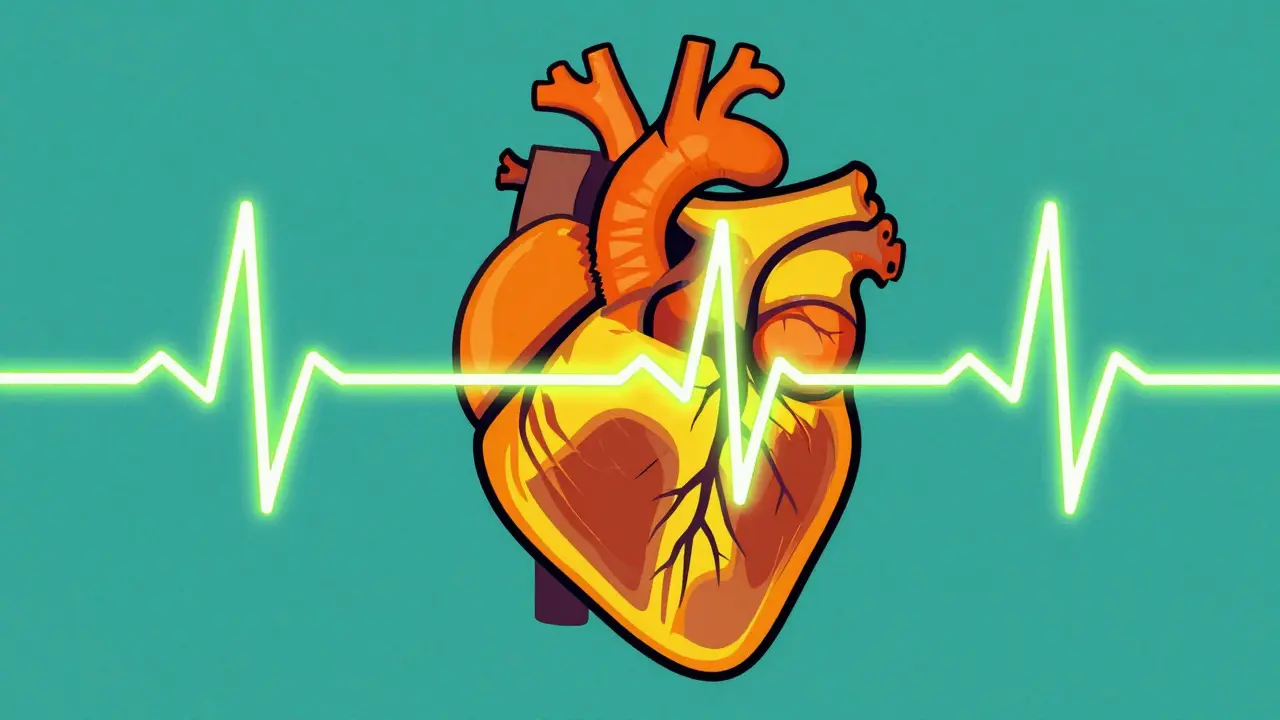
To understand the risk, you first need to know what the QT interval represents. On an electrocardiogram (ECG), the QT interval measures the time it takes for the heart's ventricles to electrically charge and discharge between beats. Think of it as the reset button for your heart muscle. When this interval is prolonged, the heart doesn't reset quickly enough. This delay creates a window of vulnerability where abnormal electrical signals can spark chaotic rhythms.
The clinical threshold for concern is clear. According to analysis by Mehrul Hasnain, Robert H. Howland, and W. Victor R. Vieweg published in PMC, a QTc interval (corrected for heart rate) of 500 milliseconds or longer, or an increase from baseline of 60 milliseconds or more, is considered clinically significant. At this level, the risk of Torsade de Pointes-a type of ventricular tachycardia-rises sharply. This arrhythmia can degenerate into ventricular fibrillation, causing sudden cardiac arrest.
So, how do Citalopram and Escitalopram cause this? Both medications work primarily by blocking the reuptake of serotonin in the brain. However, they also block hERG potassium channels in the heart. These channels are responsible for allowing potassium to flow out of heart cells during repolarization. When blocked, potassium efflux slows down, delaying the reset process and stretching the QT interval. This mechanism is well-documented in studies such as those cited in PMC9468567.
Dose-Dependent Risks: The Numbers Behind the Warning
The risk isn't binary; it scales with dosage. Higher doses mean more potassium channel blockade, leading to greater QT prolongation. Data from the MGH Center for Medical Education's 2021 course materials provides precise figures on this dose-response relationship.
| Medication | Dosage (Daily) | Average QTc Increase (ms) | 95% Confidence Interval |
|---|---|---|---|
| Citalopram | 20 mg | 8.5 ms | 6.2 - 10.8 ms |
| Citalopram | 40 mg | 12.6 ms | 10.9 - 14.3 ms |
| Citalopram | 60 mg | 18.5 ms | 16.0 - 21.0 ms |
| Escitalopram | 10 mg | 4.5 ms | 2.5 - 6.4 ms |
| Escitalopram | 20 mg | 6.6 ms | 5.3 - 7.9 ms |
| Escitalopram | 30 mg | 10.7 ms | 8.7 - 12.7 ms |
Notice the trend. Citalopram at 60 mg causes an average increase of 18.5 ms. While this might sound small, in vulnerable patients, pushing the QTc closer to that 500 ms danger zone is risky. Escitalopram shows a lower magnitude of effect at equivalent therapeutic doses, but it still contributes to prolongation. Dr. Oracle’s 2023 analysis confirms that while Citalopram carries a higher risk, especially above 40 mg, Escitalopram has a more favorable profile but is not risk-free.
Regulatory Changes: What Changed in 2011?
Before 2011, Citalopram was often prescribed up to 60 mg daily for severe depression. That changed dramatically after global health reviews. The FDA’s August 2011 safety communication specifically targeted Citalopram, citing abnormal heart rhythms at high doses. Meanwhile, the MHRA in the UK took a broader approach in December 2011, issuing warnings for both Citalopram and Escitalopram.
Why the difference? European regulators adopted a more precautionary stance. They recognized that elderly patients have reduced metabolism and elimination rates, leading to higher drug exposure. Consequently, new maximum daily dose restrictions were implemented:
- Citalopram: Max 40 mg daily for adults under 65; max 20 mg daily for patients over 65.
- Escitalopram: Max 20 mg daily for adults under 65; max 10 mg daily for patients over 65.
These limits are now standard in prescribing information globally. Medsafe in New Zealand echoed these guidelines in March 2012. The key takeaway? If you are over 65, your safe upper limit is half that of a younger adult. This isn't arbitrary; it's based on pharmacokinetic realities.
Who Is Most at Risk?
Not everyone who takes these medications will experience dangerous QT prolongation. For most healthy young adults, the risk is low. However, certain factors significantly amplify the danger. The Best Practice Journal (2012) highlighted several red flags for prescribers:
- Pre-existing Heart Conditions: Congenital Long QT Syndrome, recent myocardial infarction, or heart failure.
- Electrolyte Imbalances: Low potassium (hypokalemia) or low magnesium (hypomagnesemia) destabilize heart rhythms further.
- Bradycardia: Slow heart rates naturally lengthen the QT interval, compounding the drug's effect.
- Drug Interactions: Combining SSRIs with other QT-prolonging drugs (like certain antibiotics, antifungals, or antiarrhythmics) creates a cumulative risk.
- Hepatic Impairment: Liver disease slows drug clearance, increasing blood concentrations.
If any of these apply to you, standard dosing may be unsafe. A baseline ECG and electrolyte panel are often recommended before starting therapy. The Psychiatric Times notes that while increases like the 18.5 ms seen with 60 mg Citalopram indicate potential, they don't guarantee an event. Still, ignoring risk factors is playing Russian roulette with your heart.
Citalopram vs. Escitalopram: Which Is Safer?
Since Escitalopram is the pure S-enantiomer of Citalopram, it offers similar antidepressant efficacy with potentially fewer side effects. But does it spare the heart? Data suggests yes, to an extent. At standard doses (10-20 mg), Escitalopram causes smaller QTc increases than Citalopram at 20-40 mg. Expert consensus, including insights from MGH CME materials, indicates Escitalopram produces only mild increases (around 3.5-6.6 ms) at typical doses.
However, Hasnain et al. noted in their 2013 analysis that the two drugs differ "marginally" in terms of absolute risk linking to Torsade de Pointes when dose-adjusted. This means Escitalopram isn't immune. If you are switching from Citalopram due to cardiac concerns, Escitalopram is often preferred, but it still requires adherence to the lower dose caps for the elderly. Cost is another factor; Citalopram is generally cheaper, which influences prescribing decisions in resource-limited settings.

Practical Steps for Safe Management
How do you navigate this in real life? Whether you are a patient or a clinician, individualized care is key. Here is a practical checklist:
- Review Medications: Check for other QT-prolonging drugs. Avoid combinations unless absolutely necessary and monitored.
- Monitor Electrolytes: Ensure potassium and magnesium levels are normal before and during treatment.
- Baseline ECG: Consider an ECG for patients with known heart disease or multiple risk factors.
- Respect Dose Limits: Never exceed 40 mg of Citalopram or 20 mg of Escitalopram in younger adults. Halve these for seniors.
- Watch for Symptoms: Dizziness, fainting, palpitations, or seizures warrant immediate medical attention.
The PMC9468567 study concluded that pro-arrhythmic effects are "manageable in clinical practice." This optimism holds true only if precautions are taken. Don't stop medication abruptly without consulting your doctor, as withdrawal symptoms can be severe. Instead, discuss alternatives like Sertraline or Fluoxetine, which have minimal QT effects, if your risk profile is high.
Conclusion: Balancing Mental Health and Cardiac Safety
Depression and anxiety are serious conditions that demand effective treatment. Citalopram and Escitalopram remain powerful tools in psychiatry. The goal isn't to fear these medications but to use them wisely. By respecting dose limits, monitoring risk factors, and choosing the right drug for the right patient, we can mitigate QT prolongation risks without sacrificing mental health outcomes. Always consult your healthcare provider to tailor treatment to your unique physiology.
What is the maximum safe dose of Citalopram for someone over 65?
The maximum recommended dose of Citalopram for patients over 65 years old is 20 mg daily. This lower limit is due to age-related declines in liver metabolism and kidney elimination, which increase drug exposure and the risk of QT prolongation.
Does Escitalopram also cause QT prolongation?
Yes, Escitalopram can cause QT prolongation, though typically to a lesser degree than Citalopram at equivalent therapeutic doses. It still requires adherence to dose limits, especially in elderly patients (max 10 mg daily) and those with cardiac risk factors.
What are the symptoms of Torsade de Pointes?
Symptoms may include dizziness, lightheadedness, fainting (syncope), rapid or irregular heartbeat, seizures, or sudden collapse. If you experience these while taking an SSRI, seek emergency medical care immediately.
Can I take Citalopram if I have a history of heart disease?
It depends on the specific condition. Patients with congenital Long QT Syndrome, recent heart attack, or uncontrolled heart failure should generally avoid Citalopram and Escitalopram. Consult your cardiologist and psychiatrist to weigh risks against benefits and consider safer alternatives like Sertraline.
Why did the FDA warn about Citalopram in 2011?
The FDA warned about Citalopram because clinical trials and post-marketing data showed that doses above 40 mg significantly increased the risk of abnormal heart rhythms, specifically QT interval prolongation, which can lead to fatal arrhythmias.
Are there antidepressants with no QT risk?
While no drug is entirely risk-free, SSRIs like Sertraline, Fluoxetine, and Paroxetine have minimal effects on the QT interval compared to Citalopram and Escitalopram. Bupropion and Mirtazapine are also considered to have low cardiac risk regarding QT prolongation.
How does hypokalemia affect QT prolongation risk?
Low potassium levels (hypokalemia) impair the heart's ability to repolarize properly, independently prolonging the QT interval. When combined with QT-prolonging drugs like Citalopram, the risk of dangerous arrhythmias increases synergistically. Maintaining normal electrolyte levels is critical.
Should I get an ECG before starting Citalopram?
For most healthy young adults, a routine baseline ECG is not required. However, if you have known heart disease, are over 65, have electrolyte imbalances, or are taking other QT-prolonging medications, a baseline ECG is strongly recommended to establish your starting QTc interval.