Cyclosporine and Drug Interactions: How CYP3A4 Inhibition Affects Your Medications
Cyclosporine Drug Interaction Checker
Check Medication Interactions
Enter any prescription or over-the-counter medication to see if it interacts with cyclosporine due to CYP3A4 enzyme inhibition.
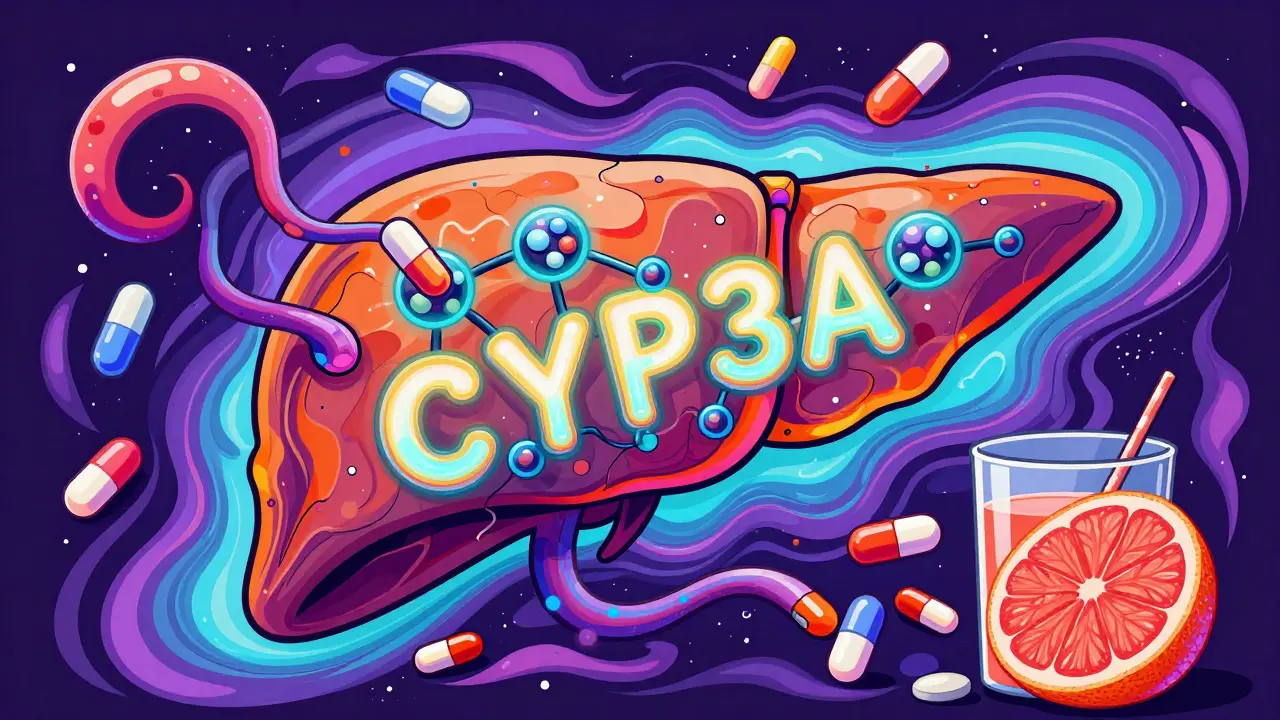
When you take cyclosporine, you're not just managing your immune system-you're navigating a minefield of drug interactions. This medicine, used after organ transplants or for severe autoimmune diseases, doesn't just sit quietly in your body. It actively interferes with how your liver and gut process dozens of other drugs. The main culprit? The CYP3A4 enzyme. This enzyme handles about 60% of all prescription medications. And cyclosporine doesn't just get processed by it-it shuts it down. That’s why even a common antibiotic or blood pressure pill can turn dangerous when taken with cyclosporine.
Why CYP3A4 Matters More Than You Think
CYP3A4 isn’t just another enzyme. It’s the workhorse of drug metabolism. If a drug gets broken down in your liver or intestines before it enters your bloodstream, chances are CYP3A4 did the job. That includes statins, blood thinners, cancer drugs, antifungals, and even some over-the-counter supplements like St. John’s wort. When cyclosporine blocks this enzyme, those drugs don’t get cleared the way they should. Their levels rise-sometimes dramatically. A 2021 study of over 1,200 kidney transplant patients found that nearly one in three had a dangerous interaction involving cyclosporine and another drug. About 8% of those cases landed them in the hospital.
What makes this worse is that cyclosporine has a razor-thin safety window. Too little, and your body rejects the transplant. Too much, and you risk kidney damage, high blood pressure, tremors, or even seizures. The target blood level? Usually between 100 and 400 ng/mL, depending on how long you’ve had the transplant. A small change in how your body handles the drug can push you out of that range fast.
Cyclosporine Isn’t Just a Substrate-It’s an Inhibitor
Many people think of cyclosporine as just another drug your body metabolizes. But that’s only half the story. It’s also a powerful inhibitor of CYP3A4. That means it doesn’t just get broken down by the enzyme-it actively blocks it. Unlike some inhibitors that bind temporarily, cyclosporine causes mixed inhibition, meaning it interferes with the enzyme’s ability to bind to other drugs and also reduces how fast the enzyme works overall.
Research from Wenzhou Medical University shows that cyclosporine’s effect on CYP3A4 is even more complex because it also inhibits CYP3A5, another enzyme involved in drug metabolism. And here’s the kicker: your genes matter. Some people have genetic variants of CYP3A4 that make the enzyme less active to begin with. If you’re one of them and you take cyclosporine, you’re already starting at a higher risk for toxicity. One study found that certain genetic variants reduced enzyme efficiency by up to 40%.
On top of that, cyclosporine doesn’t just mess with enzymes-it blocks P-glycoprotein, a transporter that helps push drugs out of cells. This dual action means drugs can build up not just in your blood, but inside your organs too. That’s why interactions with cyclosporine are often more severe than with other CYP3A4 inhibitors.
What Drugs Are Most Dangerous to Take With Cyclosporine?
Some drug combinations are outright risky. Others are manageable-but only if you know what you’re doing. Here are the biggest red flags:
- Sirolimus and everolimus: These immunosuppressants are metabolized by CYP3A4. When taken with cyclosporine, sirolimus levels can jump by over 200%. The FDA-approved label says you must cut the sirolimus dose by 70% when starting cyclosporine.
- Clarithromycin and ketoconazole: These are strong CYP3A4 inhibitors themselves. When you add them to cyclosporine, you’re stacking two inhibitors. Case reports show kidney function dropping 40-60% within days. This combo is often avoided entirely in transplant centers.
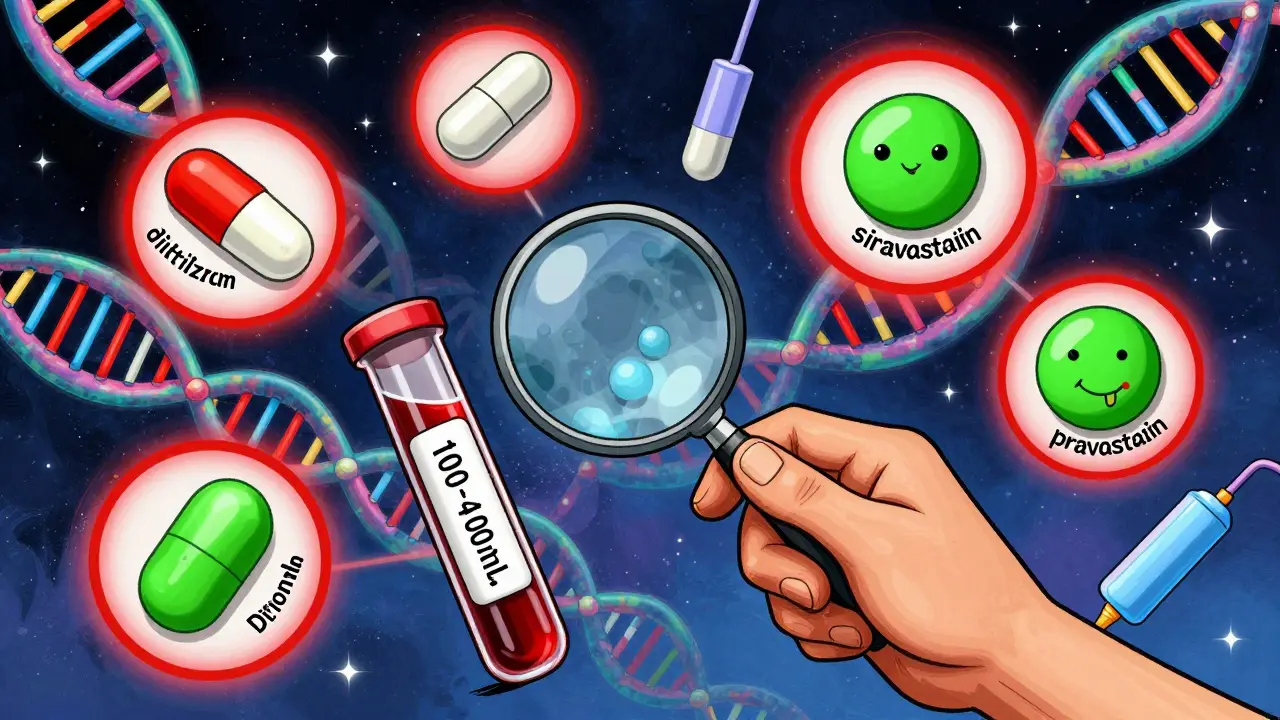
- Diltiazem and verapamil: These calcium channel blockers are moderate CYP3A4 inhibitors. They’re commonly prescribed for high blood pressure or heart rhythm issues. But in transplant patients, they can raise cyclosporine levels by 50-100%. Dose reductions of 25-50% are standard.
- Statins like simvastatin and lovastatin: These cholesterol drugs are highly dependent on CYP3A4. When cyclosporine blocks the enzyme, statin levels spike, increasing the risk of muscle damage (rhabdomyolysis). Atorvastatin and pravastatin are safer alternatives.
- Rifampin and carbamazepine: These are CYP3A4 inducers-they speed up the enzyme. If you start one while on cyclosporine, your levels can crash by 50-80%. That’s not just a risk for rejection-it’s a medical emergency.
Even something as simple as grapefruit juice can be a problem. It inhibits CYP3A4 in the gut, so drinking it with cyclosporine can raise blood levels by up to 50%. That’s why transplant clinics routinely warn patients to avoid it entirely.
How Doctors Manage These Interactions
Managing cyclosporine isn’t guesswork. It’s a science built on monitoring, timing, and adjustment. Here’s how it actually works in real clinics:
- Full medication review: Before starting cyclosporine, pharmacists and doctors go through every pill, supplement, and herbal product the patient takes. Even a daily vitamin can contain ingredients that interfere.
- Therapeutic drug monitoring: Blood levels of cyclosporine are checked regularly-often weekly when starting or changing other drugs. Trough levels (taken just before the next dose) are the gold standard.
- Dose adjustments: When adding a moderate CYP3A4 inhibitor, cyclosporine is typically reduced by 25-50%. With strong inhibitors, reductions of 50-75% are common. These aren’t arbitrary-they’re based on decades of clinical data and guidelines from the American Society of Transplantation.
- Alternative drugs: If possible, doctors switch to drugs that don’t interact. For example, replacing simvastatin with pravastatin, or using azithromycin instead of clarithromycin.
- Electronic alerts: Many hospitals now use systems that flag dangerous combinations in real time. A 2022 study showed that after implementing these alerts across 12 transplant centers, cyclosporine-related adverse events dropped by 45%.
What’s missing in many clinics? Genetic testing. While CYP3A4 and CYP3A5 polymorphisms are known to affect how patients respond to cyclosporine, testing isn’t yet routine. But that’s changing. The European Society of Organ Transplantation now recommends pharmacogenetic testing for high-risk patients to guide initial dosing. Early results show it can improve accuracy by 85-90%.
Why Cyclosporine Is Still Used-Even With All the Risks
You might wonder: if tacrolimus is safer and more effective, why is cyclosporine still around? The answer is simple-it works for people who can’t use other drugs. Tacrolimus is a substrate, not an inhibitor. That means it’s more likely to be affected by other drugs, not cause the problems itself. But cyclosporine has unique benefits. It’s often preferred in pediatric patients, in certain autoimmune conditions like psoriasis or nephrotic syndrome, and in patients who develop intolerance to tacrolimus.
The global market for cyclosporine was worth $1.87 billion in 2022, and it’s still growing. About 150,000 solid organ transplants happen in the U.S. each year. Not all patients can switch to newer drugs. For many, cyclosporine is the only option that keeps their body from attacking the new organ.
The key isn’t avoiding cyclosporine-it’s managing it well. That means knowing every drug you take, getting regular blood tests, and never starting or stopping anything without talking to your transplant team.

What You Can Do Right Now
If you’re on cyclosporine, here’s what to do immediately:
- Make a complete list of every medication, supplement, and herbal product you take-including vitamins and OTC painkillers.
- Ask your pharmacist or doctor to review it for CYP3A4 interactions.
- Never start a new drug without checking first-even if it’s sold over the counter.
- Avoid grapefruit, pomegranate, and Seville oranges-they’re all CYP3A4 inhibitors.
- Keep your blood test appointments. Missing one can mean your levels are dangerously high or low.
- If you feel unwell-especially if you have swelling, fatigue, or dark urine-get your cyclosporine level checked right away.
This isn’t about fear. It’s about control. Cyclosporine saves lives. But it demands respect. The same enzyme that keeps you alive can also kill you-if you don’t know how to manage it.
Can I take ibuprofen with cyclosporine?
Short-term use of ibuprofen is usually safe, but long-term or high-dose use increases the risk of kidney damage. Cyclosporine already stresses the kidneys, and NSAIDs like ibuprofen can make that worse. Always check with your doctor before using any NSAID regularly.
Does cyclosporine interact with vitamin D?
Vitamin D itself doesn’t interact with cyclosporine through CYP3A4. However, cyclosporine can reduce vitamin D levels over time, which is why transplant patients often need supplements. Your doctor will monitor your vitamin D and calcium levels and adjust doses as needed.
How long does it take for cyclosporine’s effects on CYP3A4 to wear off?
Cyclosporine’s inhibition is reversible, so once you stop taking it, CYP3A4 activity gradually returns. It usually takes 3-7 days for enzyme function to normalize, but this varies by person. If you stop cyclosporine and then restart another drug that was previously avoided, wait at least a week and monitor closely.
Can I drink alcohol while taking cyclosporine?
Moderate alcohol consumption is generally allowed, but heavy drinking can damage your liver and kidneys-both already at risk with cyclosporine. Alcohol also affects how your body metabolizes drugs, which can make cyclosporine levels unpredictable. Talk to your doctor about what’s safe for you.
Is cyclosporine being replaced by newer drugs?
Tacrolimus has become the first-choice immunosuppressant for most transplants because it’s more effective and has fewer drug interactions. But cyclosporine is still used in children, patients with certain autoimmune diseases, and those who can’t tolerate tacrolimus. It’s not disappearing-it’s just being used more selectively.
What’s Next for Cyclosporine?
The future of cyclosporine isn’t about replacing it-it’s about personalizing it. Researchers are developing algorithms that combine your genetics, current medications, age, weight, and kidney function to predict exactly how much cyclosporine you need. Early versions already hit 85-90% accuracy in trials. In the next five years, we may see point-of-care devices that give you your cyclosporine level in minutes, not days. That means fewer hospital visits, fewer bad reactions, and more control over your treatment.
For now, the message is clear: cyclosporine is powerful, but it’s not magic. It requires attention, discipline, and teamwork between you and your care team. Get the facts. Ask questions. Stick to your monitoring schedule. That’s how you turn a high-risk drug into a life-saving one.
Brenda King
January 21, 2026 AT 10:49Cyclosporine is such a double-edged sword 😔 I’ve been on it since my kidney transplant 8 years ago and honestly? The drug monitoring saves my life. But man, the list of things I can’t take? It’s longer than my grocery list. Grapefruit juice? Gone. Even my favorite turmeric supplement? Nixed. Still worth it though-alive beats comfortable any day.
Keith Helm
January 22, 2026 AT 08:11Therapeutic drug monitoring is non-negotiable. Failure to adhere constitutes medical negligence.
Lauren Wall
January 24, 2026 AT 04:59People still take ibuprofen with this? 😑 You’re basically asking your kidneys to quit.
Kenji Gaerlan
January 26, 2026 AT 04:20why do we even use this drug anymore? tacrolimus is way better and less of a pain in the ass. this feels like using a flip phone in 2024
Hilary Miller
January 27, 2026 AT 00:29Just got back from my transplant clinic in Mexico City-same rules apply everywhere. No grapefruit, no OTC meds without asking, and my pharmacist knows me by name. Global health is weirdly personal like that 💛
Margaret Khaemba
January 28, 2026 AT 05:44Does anyone know if melatonin interacts with cyclosporine? I’ve been having sleep issues since the transplant and my doctor won’t give me anything strong. Just curious if it’s safe or if I’m risking another blood level spike.
Malik Ronquillo
January 28, 2026 AT 13:23Y’all act like cyclosporine is some ancient dragon guarding treasure. It’s just a drug. If you can’t handle the rules, maybe you shouldn’t have gotten the transplant. 😅
Daphne Mallari - Tolentino
January 28, 2026 AT 14:58The assertion that CYP3A4 inhibition by cyclosporine is ‘mixed’ is technically imprecise; it exhibits competitive and non-competitive characteristics depending on substrate affinity and tissue expression. The article oversimplifies pharmacokinetic complexity for mass consumption, which is both misleading and academically irresponsible.
Neil Ellis
January 29, 2026 AT 06:26It’s wild how a single molecule can hold someone’s life in its grip-like a silent conductor in an orchestra of organs. Cyclosporine ain’t pretty, but it’s the quiet hero in so many survival stories. Respect the grind, respect the science, and yeah… skip the grapefruit. 🍊🚫
Alec Amiri
January 29, 2026 AT 13:18lol so you’re telling me I can’t take my daily Advil? what a joke. my kidney is fine, I’m fine, why do I need to be babysat by a pill?
Lana Kabulova
January 30, 2026 AT 02:50My cousin got her liver transplant last year-she’s on cyclosporine and they did genetic testing for CYP3A5*3. Turned out she’s a slow metabolizer. Her initial dose was cut in half. That’s not luck-that’s precision medicine. Why isn’t this standard everywhere?
Rob Sims
January 31, 2026 AT 20:51Oh wow, so the author actually knows what they’re talking about? Shocking. I thought this was going to be another ‘just avoid grapefruit’ post. This is actually… useful? Maybe I’ll stop rolling my eyes at transplant blogs now. 🤷♂️