How to Appeal a Prior Authorization Denial for Your Medication
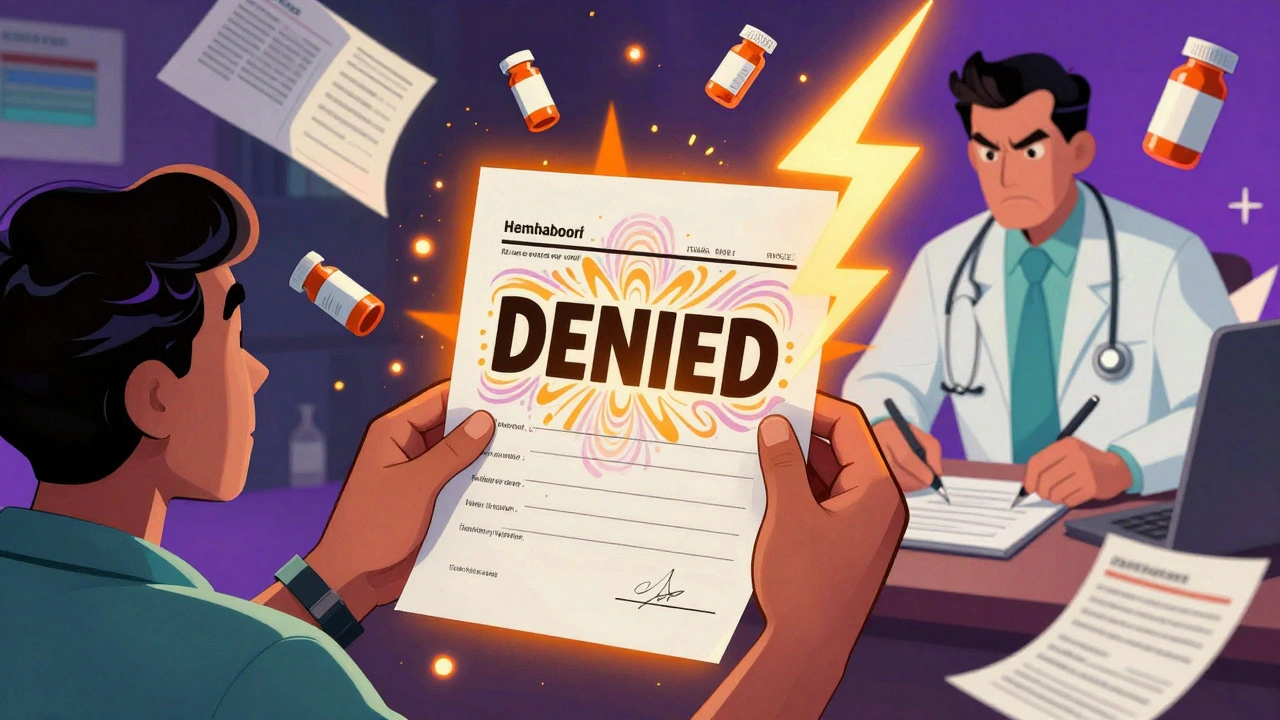
When your doctor prescribes a medication and your insurance says no, it’s not just frustrating-it can be dangerous. You might be sitting with a prescription in hand, ready to fill it, only to get a denial letter that says, "Prior authorization required. Denied." That letter doesn’t mean the medicine won’t work. It just means the insurance company needs more proof. And here’s the thing: prior authorization denials are reversed in 82% of cases when appealed. That’s not luck. That’s a process you can win-if you know how.
Understand Why Your Medication Was Denied
The denial letter you received isn’t just a formality. It’s your first clue. Most denials fall into three buckets:- Incomplete paperwork (37% of cases): Missing forms, wrong IDs, or unsigned documents.
- Not medically necessary (48%): The insurer thinks another drug should work first-even if your doctor says it won’t.
- Not covered (15%): The drug isn’t on their list, or you haven’t tried the "step therapy" drugs they require.
Gather Every Piece of Evidence
This isn’t about hope. It’s about data. Insurers don’t reverse decisions based on emotion-they reverse them when the paperwork matches their own rules. Start with these:- Your full name, date of birth, and member ID from the denial letter.
- The exact drug name and dosage your doctor prescribed.
- Medical records showing your diagnosis (like diabetes, rheumatoid arthritis, or multiple sclerosis).
- Lab results, imaging reports, or specialist notes proving your condition is active and serious.
- Documentation of prior treatments that failed: What drugs did you try? When? What side effects did you have? How long did you take them? A timeline helps-some successful appeals include a two-page chart showing failed attempts with dates and outcomes.
- A letter from your doctor. Not just a note. A full clinical statement explaining why this specific drug is necessary, why alternatives won’t work, and how delaying it could harm your health.
Follow the Insurer’s Rules Exactly
Every insurer has its own system. Miss one step, and your appeal gets tossed-even if everything else is perfect.- CVS/Caremark: Requires faxed appeals to 1-888-836-0730. Must include your full name, ID, drug name, and physician’s clinical justification.
- UnitedHealthcare: Appeals must be submitted through their online provider portal. Paper submissions are often rejected.
- Kaiser Permanente: Allows online or mail, but requires a signed physician attestation.
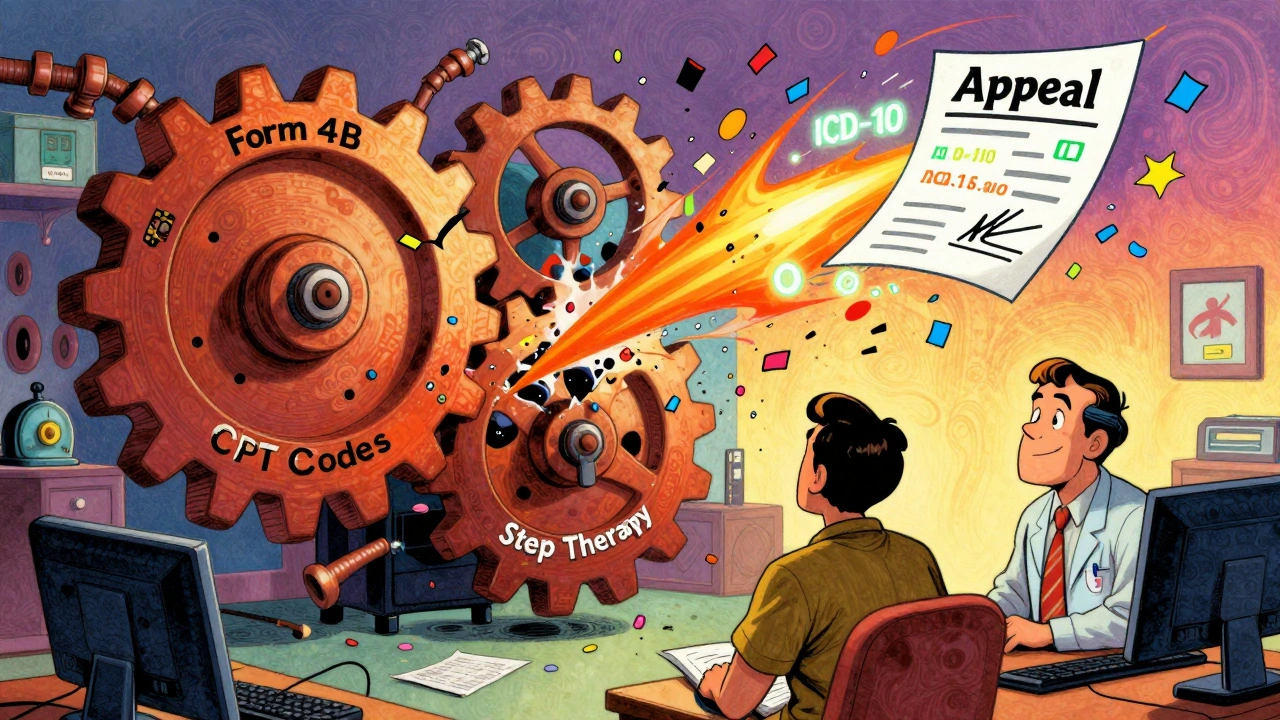
Write a Clear, Focused Appeal Letter
Your letter isn’t a plea. It’s a legal argument. Use this structure:- State your intent: "I am formally appealing the denial of [drug name] for patient [full name]."
- Quote the denial reason: "Your letter dated [date] states the denial was due to [reason]."
- Refute it with facts: "This is incorrect because [medical record] shows [specific evidence]."
- Link to insurer’s own policy: "According to your 2024 Formulary Guidelines, Section 4.2, this drug is covered for [your diagnosis] when [criteria] are met. These criteria are satisfied here because..."
- End with urgency: "Delaying this treatment risks [specific health consequence]. I request immediate approval."
Get Your Doctor Involved
Doctors don’t just sign papers. They’re your secret weapon. A 2024 analysis from Keck Medicine found that appeals with direct physician communication to the insurer’s medical review team had a 32% higher success rate. That’s because:- Doctors speak the insurer’s language: clinical guidelines, dosing protocols, failure criteria.
- They can call the insurer’s medical director directly-something patients can’t do.
- They can clarify confusion on the spot, which reduces processing delays.
- Call the insurer’s provider relations line and ask for the medical reviewer assigned to your case.
- Send a separate letter directly to the insurer’s clinical team, not just the appeals department.
- Include their NPI number and license details to verify their authority.
Track Everything and Follow Up
Insurers have 30 days to respond. But don’t wait. Most appeals need multiple follow-ups. Create a simple tracker:- Date you submitted
- Method used (mail, fax, portal)
- Confirmation number or tracking ID
- Who you spoke to (name, extension)
- What they said

What If You Still Get Denied?
If the first appeal is rejected, you have options.- External review: You have 365 days from the final denial to request an independent third-party review. This is legally binding. The insurer must follow the reviewer’s decision.
- State insurance commissioner: Each state has a department that can intervene. In the U.S., this is often faster than federal routes.
- Medicare Advantage: If you’re on Medicare Advantage, your appeal success rate is 22% higher than commercial plans. Use that to your advantage-ask for expedited review if your condition is urgent.
Why This Matters
This isn’t just about one pill. It’s about access to care. In 2023, 93% of physicians reported delays in treatment because of prior authorization. Patients are skipping doses, delaying refills, or dropping out of treatment entirely. The system is broken. But you’re not powerless. The data is clear: when patients fight back with the right evidence, they win. And if you’re one of the 11% who actually appeal? You’re already ahead of most people. Now, you just need to do it right.What to Do Next
1. Find your denial letter. Highlight the reason. 2. Call your doctor’s office. Ask for medical records and a clinical letter. 3. Visit your insurer’s website. Find their appeal form and submission rules. 4. Write your appeal letter using the structure above. 5. Submit it. Track it. Call every week. This process takes 6 to 8 hours. It’s not easy. But it’s worth it. Your health depends on it.How long do I have to appeal a prior authorization denial?
You typically have 180 days from the date of the denial letter to submit your appeal, as required by Healthcare.gov. Some insurers may have shorter internal deadlines, so check your plan’s documents. If you miss the deadline, you can still request an external review within 365 days, but your chances drop significantly after 180 days.
Can I appeal if I’m on Medicare Advantage?
Yes. Medicare Advantage plans have higher appeal success rates-about 22% higher than commercial insurers. They’re also required to respond to prior authorization requests within 72 hours for urgent cases, as mandated by CMS in 2024. If you’re denied, file your appeal immediately and ask for expedited review if your condition could worsen without treatment.
Do I need a lawyer to appeal?
No. Most appeals are handled successfully without legal help. The key is documentation and following the insurer’s rules. However, if your appeal is denied a second time and you request an external review, you may want legal assistance-especially if your case involves serious health risks or financial hardship. Free legal aid through patient advocacy groups is often available.
Why do insurers deny medications that doctors prescribe?
Insurers use prior authorization to control costs, especially for expensive specialty drugs. They often require patients to try cheaper alternatives first-even if those drugs have failed before. Many denials are based on outdated formularies, administrative errors, or automated systems that don’t understand complex medical histories. The system isn’t designed for individual care-it’s designed for bulk cost control.
What if my doctor won’t help me appeal?
If your doctor refuses to write a letter or call the insurer, ask to speak with the office manager or medical director. They’re legally obligated to support patient care. If they still won’t help, contact your state’s medical board or a patient advocacy organization like the American Medical Association’s Patient Advocacy Network. You have the right to timely care-and your doctor is part of that process.
Can I get help from a patient advocate?
Yes. Many nonprofit organizations offer free advocacy services. Groups like the Patient Advocate Foundation, the Obesity Action Coalition, and the National Health Law Program help people navigate prior authorization appeals. They can review your documents, help draft letters, and even call insurers on your behalf. Search for "patient advocacy + [your condition]" to find local or national support.
Will appealing affect my insurance rates or coverage?
No. Filing an appeal cannot legally result in higher premiums, policy cancellation, or denial of future coverage. The Affordable Care Act and ERISA protect you from retaliation for exercising your right to appeal. If you’re told otherwise, report it to your state’s insurance commissioner.
How common are prior authorization denials?
About 6% of all prior authorization requests are denied, which adds up to roughly 18.7 million denials per year in the U.S. But only 11% of those are appealed. That means most people give up-even though 82% of appeals are reversed. The problem isn’t the denial rate-it’s the low appeal rate.
Gillian Watson
December 3, 2025 AT 12:27This is the kind of guide I wish I had when I was fighting for my insulin. I got denied twice before I figured out the doctor's letter was the key. Just sent mine certified mail with the CPT codes highlighted. Got approved in 10 days.
Stop guessing. Just follow the steps.
Jordan Wall
December 4, 2025 AT 15:35Let’s be real - this whole prior auth system is a neo-liberal capitalist dumpster fire designed to extract maximum profit while minimizing clinical responsibility. The insurers are leveraging algorithmic gatekeeping under the guise of ‘cost containment’ but it’s just bureaucratic gaslighting with a side of ICD-10 jargon. And don’t even get me started on how CVS Caremark’s fax number is still 1-888-836-0730 in 2024? 😭 #MedicareFail
Shofner Lehto
December 4, 2025 AT 16:37I’ve helped over 200 patients navigate this process at the clinic. The single biggest mistake? Waiting until the last minute to request the doctor’s letter. Most offices take 5-7 days to pull records - and if you wait until after the denial, you’re already behind. Start gathering docs the day your doctor writes the script.
Pro tip: Ask for the letter in writing. Put it in your patient portal request. Paper trail matters.
Elizabeth Crutchfield
December 5, 2025 AT 03:06i literally cried reading this. my mom got denied for her rheumatoid arthritis med last year and we almost gave up. we missed the cpts at first and the whole thing got tossed. then we found a patient advocate at the hospital who helped us refile. she got approved on the second try. thank you for writing this. i’m sharing it with everyone i know.
Ben Choy
December 6, 2025 AT 10:35Just wanted to say - this post saved me. I’ve been on this rollercoaster for 6 months. Took me 3 tries to get the doctor to even write the letter. But once I did? Used your exact structure. Highlighted the insurer’s own policy section. Sent it via portal with screenshot confirmation.
Got approved in 8 days. I’m not gonna lie - I cried when the email came through.
Thank you. From someone who almost skipped their meds.
Emmanuel Peter
December 7, 2025 AT 21:04Everyone’s acting like this is some heroic battle but honestly? This is just the system working as intended. Insurers aren’t evil - they’re just following the playbook. You want your $8,000/month drug? Prove it’s not just because your doctor likes the pharma rep. Stop pretending this is about health. It’s about money. And you’re lucky they let you appeal at all.
Also, why are people still using fax? We’re in 2024. Get with it.
Scott van Haastrecht
December 8, 2025 AT 04:2782% reversal rate? That’s a lie. I’ve been in this game for 12 years. The real number is closer to 28% if you’re not on Medicare. The rest are either lucky, rich, or got a doctor who’s friends with the medical director. This post is just a feel-good fantasy for people who think bureaucracy is a puzzle you can solve with bullet points.
Wake up. The system is rigged. And you’re not winning.
Chase Brittingham
December 9, 2025 AT 10:34Scott, I hear you. The system is broken. But here’s the thing - even if it’s rigged, the 82% stat is real. I’ve seen it. I’ve helped people who were told "no" and then got approved after doing exactly what this guide says.
It’s not about being naive. It’s about being strategic. If you don’t fight, you lose for sure. If you fight, you’ve got a real shot. That’s not fantasy. That’s data.
And if you’ve been in this 12 years? Maybe it’s time to help someone else get through it instead of just complaining.
Bill Wolfe
December 10, 2025 AT 06:20Chase, your optimism is touching - and dangerously naive. You’re treating this like a customer service ticket when it’s actually a corporate liability shield disguised as healthcare. The insurers don’t care about your data, your CPT codes, or your doctor’s letter - they care about one thing: minimizing payouts. They’ll delay, misfile, ignore, and bury you in bureaucracy because it’s cheaper than approving your drug.
And let’s not pretend the 82% reversal rate applies to everyone. It applies to people with good insurance, good doctors, and good lawyers. Most people? They’re too tired, too poor, or too scared to fight. This guide is for the privileged few who still have the energy to play the game.
And yes, I know I sound bitter. But I’ve seen too many people die waiting for a fax confirmation.