Manufacturer Copay Assistance Cards: How to Use Them and Avoid Hidden Costs
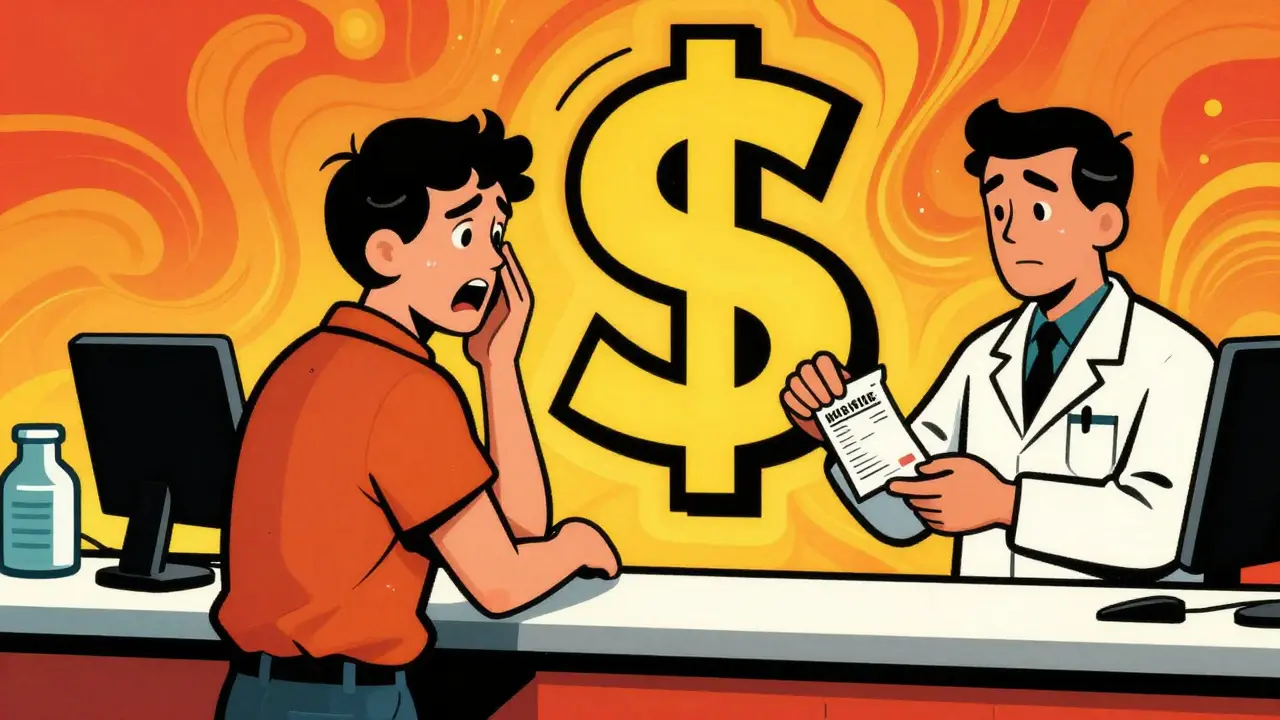
Imagine standing at the pharmacy counter, handing over your insurance card for a brand-name medication you need. The total comes back at $2,000. You freeze. That’s not a typo. Without help, that is often the reality for patients on specialty drugs. But there is a tool many people overlook that can slash that price to zero-or close to it. It’s called a manufacturer copay assistance card. These cards are powerful financial tools, but they come with a catch: if you don’t understand how they interact with your specific insurance plan, you could face a massive bill later in the year.
This guide cuts through the confusion. We’ll walk through exactly how these cards work, who qualifies, and-most importantly-how to spot the hidden traps that turn a free month of meds into a financial shock. By the end, you’ll know whether this card is your best bet or if another option serves you better.
What Is a Manufacturer Copay Assistance Card?
A manufacturer copay assistance card is a coupon program funded directly by the pharmaceutical company that makes your medication. Think of it as a direct subsidy. When you have private commercial insurance, you usually pay a portion of the drug cost (your copay) while the insurer pays the rest. For expensive brand-name drugs, that patient portion can be steep. The copay card steps in to cover part or all of that patient responsibility.
These programs are designed specifically for patients with private health insurance. They are not meant for the uninsured, nor are they legal for use by patients enrolled in government-funded programs like Medicare Part D, Medicaid, or TRICARE. Federal regulations prohibit manufacturers from subsidizing drugs for these populations to prevent anti-kickback violations. So, if you’re on Medicare, this card won’t work for you. If you have a standard employer-sponsored plan or bought coverage through the marketplace, you might be eligible.
The goal for the manufacturer is twofold: help patients afford their medication and encourage them to stick with the brand-name version rather than switching to a cheaper generic competitor. For the patient, the immediate benefit is clear: lower monthly bills. However, the long-term impact depends heavily on how your insurance company handles the money.
How to Get and Use the Card
Getting a copay card is usually straightforward, but it requires a few specific steps. You cannot just grab one off the shelf at the pharmacy. Here is the process:
- Visit the Manufacturer’s Website: Go to the official site of the drug maker. Look for a section labeled “Patient Support,” “Savings Program,” or “Copay Card.”
- Check Eligibility: You will need to create an account and provide details about your insurance plan. The system checks if your plan allows manufacturer assistance.
- Download or Print the Card: Once approved, you’ll get a digital code or a printable PDF. Some apps allow you to store it digitally for easy access.
- Present at Pharmacy: When filling your prescription, show the card (digital or paper) along with your insurance ID. The pharmacist enters the code, and the system applies the discount before calculating your final payment.
It’s critical to do this every time you fill the prescription. If you forget to present the card, you pay full price. Also, keep track of your usage. Most cards have an annual cap, often around $8,000 per year. Once you hit that limit, the assistance stops, and you start paying full copays again.
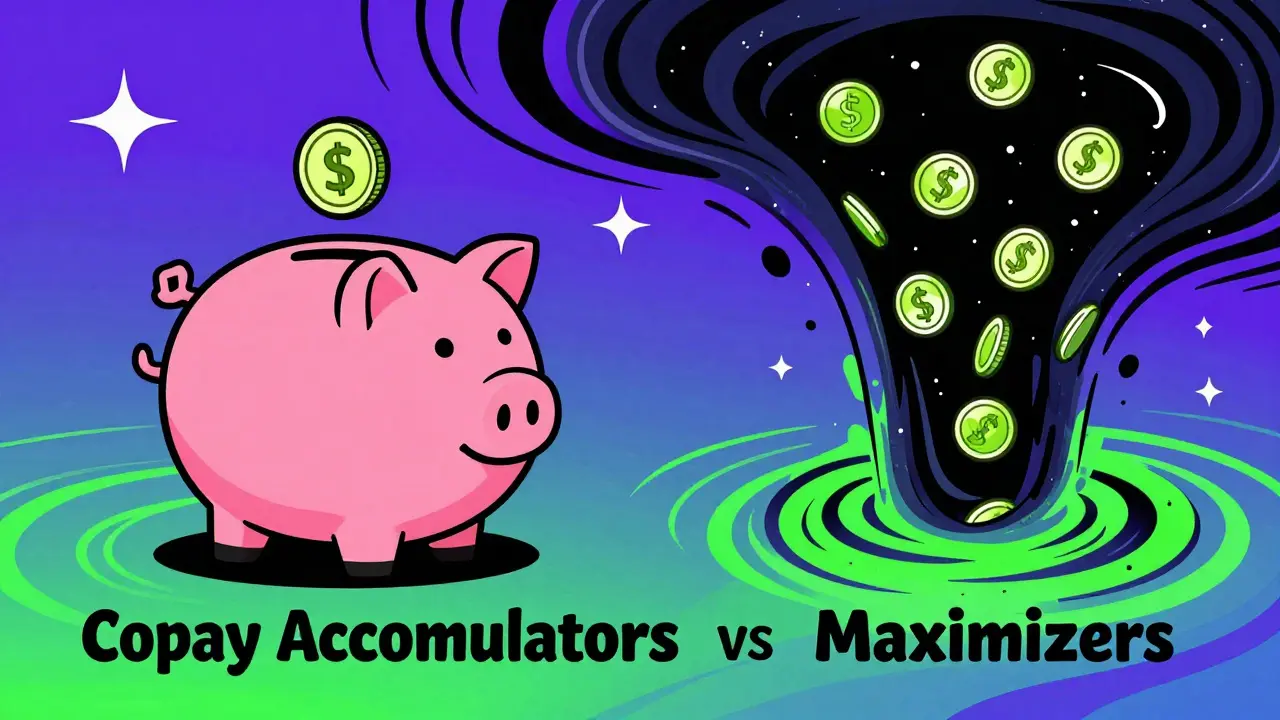
The Hidden Trap: Copay Accumulators vs. Maximizers
Here is where things get tricky-and why many patients are caught off guard. The value of your copay card isn’t just about what you pay today; it’s about what you’ll pay in December when you’re trying to reach your out-of-pocket maximum.
Your insurance plan has two main ways to handle manufacturer payments: copay maximizers and copay accumulators.
- Copay Maximizer (Patient-Friendly): The money the manufacturer pays counts toward your deductible and out-of-pocket maximum. If you have a $5,000 out-of-pocket max and the manufacturer pays $4,000 of your drug costs, you only need to pay $1,000 more before hitting your cap. After that, your insurance covers 100% of covered services.
- Copay Accumulator (Insurance-Friendly): The manufacturer’s payment does not count toward your deductible or out-of-pocket maximum. Even though you paid $0 out of pocket for months, your insurance sees that you haven’t contributed anything toward your own costs. Once the copay card runs out of funds, you suddenly owe the full copay amount, and you still have to meet your entire deductible from scratch.
As of recent years, approximately 70% of commercial health plans have adopted some form of copay accumulator program. This shift was driven by insurers wanting to control costs and redirect manufacturer funds to themselves rather than letting patients bypass their deductibles.
| Feature | Copay Maximizer | Copay Accumulator |
|---|---|---|
| Counts toward Deductible? | Yes | No |
| Counts toward Out-of-Pocket Max? | Yes | No |
| Patient Cost After Card Expires | Low (already near max) | High (must restart deductible) |
| Commonality | Less Common | Very Common (~70% of plans) |
To find out which one you have, call your insurance provider or check your plan documents online. Ask specifically: "Does my plan use a copay accumulator program?" If they say yes, proceed with caution. You may want to calculate whether the short-term savings are worth the long-term risk of facing huge bills once the card expires.
Copay Cards vs. Pharmacy Discount Cards
If copay cards seem risky or you don’t qualify, there’s another option: pharmacy discount cards. Services like GoodRx, SingleCare, or Mark Cuban Cost Plus Drug Company offer third-party discount cards. These are different from manufacturer cards in key ways.
Pharmacy discount cards negotiate lower cash prices with pharmacies. They can be used by anyone, including those without insurance, those on Medicare, or those whose insurance doesn’t cover the drug well. However, they generally work best for generic medications. For high-cost brand-name specialty drugs, the discounts offered by third-party cards are often much smaller than what a manufacturer copay card provides.
For example, a brand-name biologic might cost $2,000 per month. A manufacturer copay card could reduce that to $0. A pharmacy discount card might bring it down to $1,500. That’s still a significant saving, but not the same level of relief. On the other hand, if you’re buying a generic statin, a discount card might drop the price from $30 to $4, which is excellent value.
The rule of thumb: Use manufacturer copay cards for expensive brand-name drugs if you have commercial insurance and understand your plan’s accumulator policy. Use pharmacy discount cards for generics, if you’re uninsured, or if you’re on Medicare.

Strategies to Protect Your Wallet
You don’t have to navigate this alone. Here are practical steps to maximize benefits and minimize surprises:
- Track Your Annual Limit: If your card offers $8,000 in savings and your monthly copay is $2,000, you’ll run out after four months. Mark your calendar. Contact the manufacturer’s support line a month before you hit the limit to discuss next steps.
- Ask About Patient Assistance Programs (PAPs): If you exhaust your copay card and face financial hardship, ask the manufacturer about their non-profit patient assistance foundation. These programs sometimes provide free medication based on income, regardless of insurance status.
- Verify State Regulations: Some states, like California, have passed laws requiring that manufacturer assistance count toward out-of-pocket maximums. Check if your state has similar protections that override your insurer’s accumulator policy.
- Talk to Your Doctor: If the cost becomes unmanageable, your prescriber might switch you to a therapeutic alternative that is cheaper or covered better by your plan. Never stop taking prescribed medication without consulting your healthcare provider first.
Frequently Asked Questions
Can I use a manufacturer copay card if I have Medicare?
No. Federal law prohibits pharmaceutical manufacturers from offering copay assistance to patients enrolled in Medicare Part D, Medicaid, TRICARE, or other government-funded health programs. Using such a card could result in penalties for both the manufacturer and the patient. Instead, look into Medicare Extra Help programs or non-profit patient assistance foundations.
What happens when my copay card reaches its annual limit?
Once the annual cap (often $8,000) is reached, the manufacturer stops covering your copay. You will then be responsible for the full copay amount determined by your insurance plan. If your plan uses a copay accumulator, you may also face higher costs because the previous manufacturer payments did not count toward your deductible or out-of-pocket maximum.
How do I know if my insurance uses a copay accumulator?
You must contact your insurance provider directly or review your plan’s Summary of Benefits and Coverage. Ask specifically: "Does my plan apply manufacturer copay assistance toward my deductible and out-of-pocket maximum?" If the answer is no, you likely have a copay accumulator program.
Are copay cards safe to use?
Yes, they are legitimate financial assistance tools provided by drug manufacturers. However, you should only obtain them from the official manufacturer website or verified sources. Be cautious of third-party sites selling "discount codes" that may be scams or outdated. Always verify eligibility requirements before applying.
Can I combine a copay card with a pharmacy discount card?
Generally, no. Manufacturer copay cards require you to use your commercial insurance. Pharmacy discount cards are typically used instead of insurance. You usually cannot stack both discounts on the same prescription fill. Choose the option that provides the lowest out-of-pocket cost for your specific situation.
Do copay cards work for generic medications?
Rarely. Manufacturer copay cards are primarily designed for brand-name specialty drugs where out-of-pocket costs are high. Generic medications already have low copays due to market competition. If you need savings on generics, a pharmacy discount card is usually a better and simpler option.
Gareth Tyler
May 22, 2026 AT 16:55just got my card last week and it saved me a fortune on my biologics. the process was actually pretty smooth once i figured out which portal to use. highly recommend checking if your plan is an accumulator though because that changes everything about how much you save in the long run.
Sharon O’Mahonh
May 23, 2026 AT 13:00oh wow this is such crucial info for anyone navigating the healthcare maze right now. we often forget that these manufacturer subsidies are basically double-edged swords depending on our specific insurance architecture. it makes total sense why insurers are pushing accumulators to keep the money flowing their way instead of letting patients hit their out-of-pocket max early. lets spread this knowledge far and wide so people dont get blindsided by those end-of-year bills
Jonhnnie john13
May 23, 2026 AT 16:56the entire premise of copay accumulators is predatory design disguised as cost containment. insurers know exactly what they are doing when they decouple manufacturer payments from patient deductibles. it is a calculated move to shift financial burden back onto the consumer while maintaining premium revenue streams. do not trust the marketing fluff from pharma companies either. they want brand loyalty at any cost even if it means trapping you in a cycle of debt once the card expires. read the fine print or better yet read the actuarial tables behind your plan design.
Anthony Padilla
May 24, 2026 AT 15:04i had no idea there was a difference between maximizers and accumulators until today. thanks for breaking it down so clearly. im going to call my insurer tomorrow to check which one i have. its scary to think i could be paying full price later this year without knowing it. hopefully my state has some protections like california does otherwise im gonna be in trouble.
Elizabeth Fandry
May 25, 2026 AT 01:00One must consider the broader socioeconomic implications of these pharmaceutical subsidy structures 🧐 The dichotomy between maximizer and accumulator models reflects a deeper philosophical conflict regarding risk distribution in healthcare systems. While the immediate alleviation of financial stress is undeniably beneficial, the long-term strategic positioning of insurance entities suggests a deliberate obfuscation of true costs. It is imperative that individuals engage with these mechanisms not merely as consumers but as informed stakeholders aware of the intricate web of regulatory and corporate interests at play. Do not let the veneer of generosity mask the underlying transactional nature of these programs. 📉💊
Madeline Petes
May 26, 2026 AT 23:34seriously though this accumulator thing is insane. i used my card for six months thinking i was golden but then realized none of it counted toward my deductible. i almost cried when i saw my statement in november. everyone needs to check their plan docs before using these cards. it feels like a trap but at least the monthly savings help you survive till the bill comes due. just stay vigilant ok?
Ramanath Rao
May 28, 2026 AT 02:24This article highlights a significant disparity in healthcare accessibility that is prevalent in many developed nations including the United States. In India we have different challenges but the principle of ensuring affordability remains universal. However I find the complexity of these American insurance mechanisms baffling and inefficient. Why cannot the government simply regulate drug prices directly instead of creating these convoluted workarounds that benefit corporations more than patients? It is a systemic failure that requires bold political action not just individual navigation skills.
irine sabrina
May 29, 2026 AT 16:59I really appreciate how detailed this guide is. It can be so overwhelming to figure out all the medical billing jargon on your own. Knowing that there are options like GoodRx for generics or specific PAPs for high-cost drugs gives me hope. We all deserve access to medication without facing financial ruin. Please keep sharing these resources because community support makes a huge difference when dealing with health issues.
Gary Helminiak
May 31, 2026 AT 09:17As someone who works in pharmacy benefits management I can confirm that the shift toward accumulator models has been massive over the last three years 😬 Insurers are essentially treating manufacturer coupons as rebates rather than patient contributions. This is technically legal under current federal guidelines but ethically questionable. My advice is to always calculate the break-even point. If your annual cap is $8k and your deductible is $5k you might actually be worse off financially by December if you rely solely on the card. Track every dollar and communicate with your pharmacist regularly. They see these scenarios daily and can often flag potential issues before you pay 💊📊
dane thorp
June 1, 2026 AT 10:29The distinction between commercial and government insurance eligibility is critical here. Many patients mistakenly attempt to use these cards with Medicare Part D which can lead to serious compliance issues for both the patient and the provider. Always verify your status first.
Michael Schurmann
June 3, 2026 AT 01:51It is amusing how naive people believe these cards are purely altruistic gestures from pharmaceutical giants. They are marketing tools designed to lock you into expensive brand-name therapies when cheaper generics exist. The real trick is understanding that your insurance company is playing chess while you are playing checkers. Accumulator clauses are the knight's move that checks your king. Stop complaining and start reading your Summary of Benefits and Coverage document. Ignorance is not a valid defense against financial loss.
Christina Mitchell
June 3, 2026 AT 15:35This perspective on healthcare economics is fascinating. It reminds us that every policy decision has ripple effects across different layers of society. The tension between short-term relief and long-term sustainability is a classic dilemma. Perhaps we need more transparency from insurers about how they categorize these payments. Understanding the mechanics helps us advocate for better policies in the future.
Russell Russell
June 4, 2026 AT 15:24You have to take control of your health finances proactively. Waiting until the bill arrives is too late. Use the strategies listed in the post to track your limits and talk to your doctor early if things get tight. There is always an alternative therapy or assistance program available if you dig deep enough. Stay motivated and informed.
Naresh Chandra
June 4, 2026 AT 18:38I completely agree with the emphasis on tracking your annual limit!! It is so easy to forget about it amidst the daily stress of managing a chronic condition!!! Please make sure you set reminders on your phone!!! Also contacting the manufacturer’s support line is a great tip that many overlook!!! Thank you for sharing this valuable information!!!