Milk Thistle and Liver-Metabolized Drugs: Enzyme Interactions Explained

Milk Thistle Interaction Risk Estimator
Configuration
Analysis Result
Select your medication and usage details to see potential interaction risks.
Recommended Action:
You might have heard that milk thistle is a popular herbal supplement used to support liver health. It’s everywhere-online forums, pharmacy shelves, even your friend’s kitchen cabinet. But here’s the catch: if you take prescription medications processed by your liver, adding this herb to your routine isn’t as simple as popping a pill. The active compounds in milk thistle can change how your body breaks down other drugs, sometimes making them less effective or, worse, dangerously potent.
This article cuts through the noise. We’ll look at exactly which enzymes are involved, which medications are at risk, and what the latest science says about safety. No fluff, just the facts you need to talk to your doctor with confidence.
How Milk Thistle Actually Works in Your Liver
To understand the interaction, we first need to know what milk thistle does inside your body. The star component is silymarin, a complex mixture of flavonolignans including silybin, silychristin, and silydianin. Think of silymarin as a multitasker. On one hand, it acts like a shield for your liver cells, helping to repair damage and reduce inflammation. This is why people with non-alcoholic fatty liver disease (NAFLD) often turn to it.
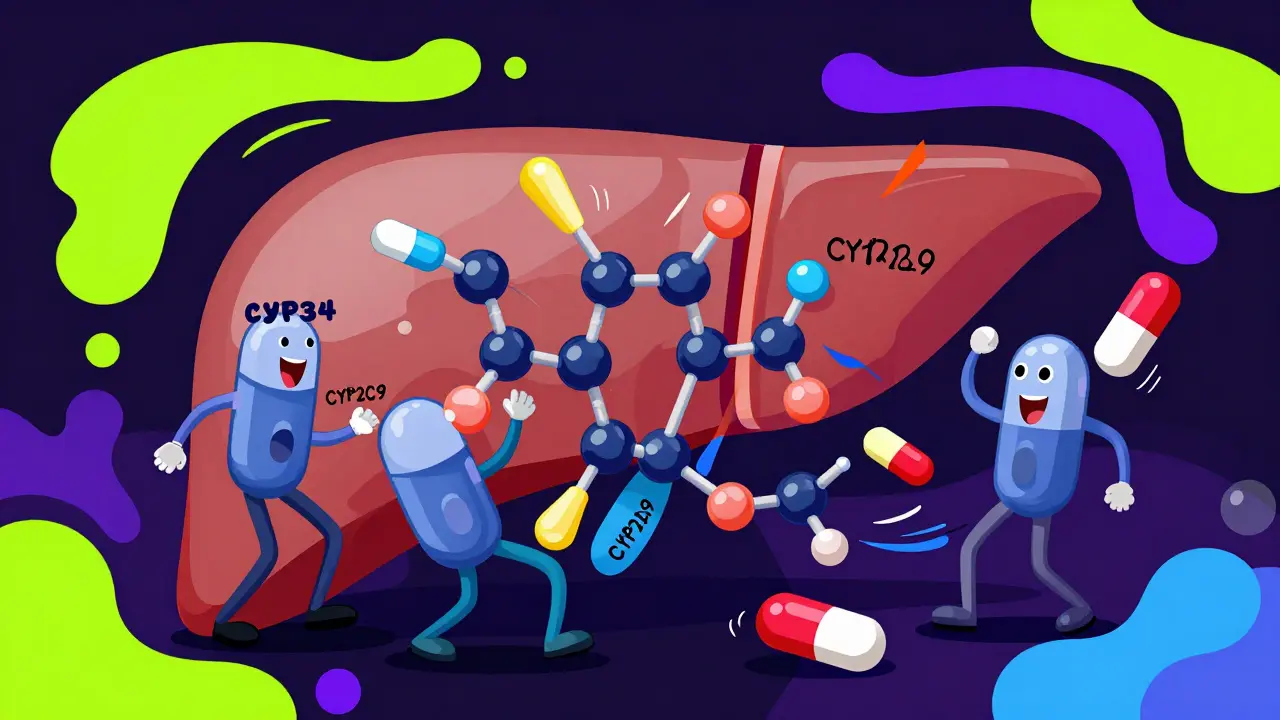
On the other hand, silymarin interacts with the very machinery your liver uses to process medications. Your liver relies on a family of enzymes called cytochrome P450 (CYP) enzymes, which are proteins responsible for breaking down most drugs in the body. Specifically, milk thistle affects three major players: CYP3A4, CYP2C9, and CYP2D6. When these enzymes are slowed down or sped up, the concentration of your medication in your blood changes. That’s where the trouble starts.
The Confusing Science: Inhibition vs. Induction
If you’ve read online about milk thistle interactions, you’ve probably noticed conflicting information. Some sources say it blocks enzyme activity; others say it boosts it. The truth? It can do both, depending on timing and dosage. This makes predicting interactions tricky.
Research shows a biphasic response. A 2021 study published in the Journal of Biomedical and Clinical Practice and Medicine found that silymarin can inhibit CYP2C9 activity by 15-23% in laboratory settings. Inhibition means the enzyme works slower, so drugs stay in your system longer. However, a 2020 study in Drug Metabolism and Disposition revealed a twist: while short-term use inhibited CYP2C9, taking milk thistle for 28 days actually induced (increased) the enzyme’s activity by 12.7%. Induction means your liver clears drugs faster, potentially rendering them ineffective.
Here is a quick breakdown of the key findings:
- CYP2C9: Likely inhibited in the short term, but may be induced with long-term use. This affects drugs like warfarin and phenytoin.
- CYP3A4: Studies are mixed. A 2019 trial in Clinical Pharmacology & Therapeutics found no significant inhibition in healthy volunteers, suggesting lower risk for many common drugs metabolized by this pathway.
- Bioavailability Issues: Silybin, the most active part of silymarin, has poor absorption (only 20-50%). This means the amount reaching your liver varies wildly from person to person, making standardized predictions difficult.
High-Risk Medications: Who Needs to Be Careful?
Not all drugs are created equal when it comes to interactions. The biggest danger lies with medications that have a "narrow therapeutic index." These are drugs where a small change in blood concentration can lead to serious side effects or treatment failure. If you take any of the following, you should proceed with extreme caution.
| Medication Class | Example Drugs | Potential Interaction Effect | Risk Level |
|---|---|---|---|
| Anticoagulants | Warfarin | May increase bleeding risk due to elevated drug levels | High |
| Anticonvulsants | Phenytoin | Can alter seizure control by changing blood concentrations | High |
| Statins | Atorvastatin, Simvastatin | Potential increase in muscle pain or liver enzyme elevation | Moderate |
| Immunosuppressants | Tacrolimus, Cyclosporine | Risk of organ rejection or toxicity due to level fluctuations | High |
| Direct-Acting Antivirals | Sofosbuvir/Velpatasvir | Minimal interaction reported in clinical cases | Low |
For instance, users on Reddit’s r/Supplements community have reported altered INR levels (a measure of blood clotting) after starting milk thistle while on warfarin. In one thread, nearly half of the commenters mentioned needing dosage adjustments. While anecdotal, this aligns with the pharmacological potential for CYP2C9 inhibition.
What Do the Experts Say?
The medical community is divided, largely because the data isn’t black and white. Dr. Joseph Pizzorno, an integrative medicine expert, argues that clinically significant interactions are rare, citing only 12 documented case reports over 40 years. He believes the risks are often overstated.
Conversely, Dr. David S. Bernstein from the University of Connecticut urges caution. He points out that without standardized extracts and consistent clinical data, it’s safer to assume risk, especially for patients on multiple medications. Regulatory bodies reflect this split. The European Medicines Agency states there are "no clinically relevant interactions expected at recommended doses," whereas the U.S. NIH’s LiverTox database lists milk thistle as "possibly interacting" with CYP2C9 substrates.
This discrepancy highlights a gap in standardization. Only 32% of supplements analyzed in a 2022 FDA compliance study met their label claims for silymarin content. If you don’t know exactly how much active ingredient you’re taking, it’s hard to predict how it will interact with your meds.
Practical Steps for Safe Use
If you want to try milk thistle for liver support, you don’t necessarily have to avoid it entirely. You just need a strategy. Here is how to minimize risk:
- Consult Your Doctor First: Never start milk thistle without telling your healthcare provider, especially if you take daily prescriptions.
- Monitor Blood Levels: If you are on warfarin, check your INR weekly for the first month. For phenytoin, check levels at days 3, 7, and 14. This catches any shifts early.
- Choose Standardized Extracts: Look for products that specify 70-80% silymarin content. Whole-herb preparations vary too much in potency.
- Watch for Timing: Enzyme inhibition can happen within 24-48 hours, while induction takes 7-10 days. Be vigilant during the first two weeks of use.
- Start Low: Begin with the lowest effective dose (e.g., 140 mg daily) rather than jumping to 420 mg, to see how your body reacts.
Remember, milk thistle is not a cure-all. While it shows promise for NAFLD, with 65.5% of studies showing improved liver enzymes, it is not a replacement for prescribed treatments. Its safety profile is generally good-with adverse event rates of only 1.2% in large trials-but the interaction risk remains a real variable.
Comparing Milk Thistle to Other Options
Is milk thistle the best choice for liver health? It depends on your goals. Compared to N-acetylcysteine (NAC), which supports glutathione production with minimal enzyme interference, milk thistle offers broader hepatoprotective benefits but higher interaction complexity. Artichoke extract is another alternative, primarily affecting CYP2C9 with more predictable inhibition patterns. However, pharmaceutical options like ursodeoxycholic acid offer standardized dosing, albeit with higher rates of side effects (8.7% vs. 1.2% for milk thistle).
For most people using standard doses, milk thistle is likely safe. But for those on critical medications, the lack of regulation and variable bioavailability makes it a gamble worth discussing with a professional before taking.
Does milk thistle interact with statins?
Yes, potentially. Statins like atorvastatin and simvastatin are metabolized by CYP3A4. While some studies show minimal interaction, others suggest milk thistle could increase statin levels, raising the risk of muscle pain or liver stress. Always monitor for side effects and consult your doctor.
Can I take milk thistle with warfarin?
Proceed with extreme caution. Milk thistle may inhibit CYP2C9, leading to higher warfarin levels and increased bleeding risk. Many users report needing dosage adjustments. Regular INR monitoring is essential if you choose to combine them.
How long does it take for milk thistle to affect liver enzymes?
Effects can begin quickly. Inhibition of certain enzymes may occur within 24-48 hours of starting supplementation. Induction effects, which speed up metabolism, typically appear after 7-10 days of consistent use.
Is milk thistle safe for everyone?
It is generally safe for most people, with low rates of adverse events. However, it is not recommended for individuals with hormone-sensitive conditions, allergies to ragweed or daisies, or those taking narrow-therapeutic-index drugs without medical supervision.
What is the best dosage of milk thistle for liver health?
Clinical trials often use dosages between 140 mg and 420 mg daily of standardized silymarin extract (70-80%). Start with the lower end to assess tolerance and interaction risks before increasing the dose.