Preventing Steroid-Induced Osteoporosis: Calcium, Vitamin D, and Bisphosphonates

Osteoporosis Prevention Eligibility Checker
Osteoporosis Prevention Tool
This tool helps determine which bone protection measures are recommended based on the ACR 2022 guidelines for steroid-induced osteoporosis prevention.
When you’re on long-term steroids - whether for asthma, rheumatoid arthritis, or an autoimmune condition - one of the quietest dangers isn’t the weight gain or the mood swings. It’s what’s happening inside your bones. Glucocorticoid-induced osteoporosis (GIOP) doesn’t come with symptoms. No pain. No warning. But by the time you break a hip or your spine collapses, it’s too late. And it’s more common than you think: 30% to 50% of people on chronic steroid therapy will develop this type of bone loss. The good news? We know exactly how to stop it. Calcium, vitamin D, and bisphosphonates aren’t just supplements - they’re your first line of defense.
How Steroids Destroy Bone
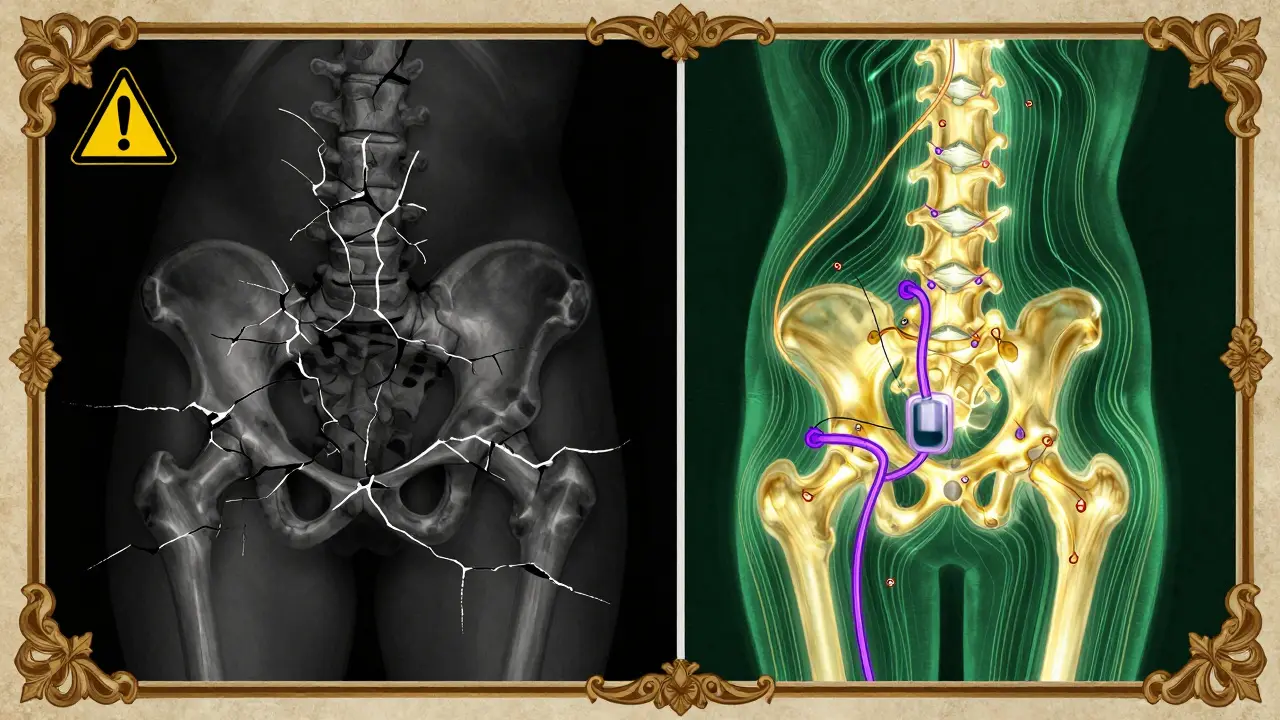
Steroids don’t just weaken bone - they attack it from two sides. First, they shut down the cells that build new bone, called osteoblasts. This cuts bone formation by up to 70%. Second, they wake up the cells that break bone down, osteoclasts, ramping up bone loss by 30%. The result? You lose bone faster than your body can replace it. This isn’t slow aging. This is accelerated damage.
And it starts fast. Studies show bone loss begins within 3 to 6 months of starting steroids at doses of 2.5 mg or more of prednisone daily. By the end of the first year, 12% of people on doses above 7.5 mg/day will have suffered a vertebral fracture. That’s not rare. That’s predictable. And it’s preventable.
The Foundation: Calcium and Vitamin D
Before you even think about pills that stop bone loss, you need the building blocks. Calcium and vitamin D aren’t optional. They’re the base layer. Without them, any other treatment will struggle to work.
The American College of Rheumatology (ACR) 2023 guidelines are clear: everyone starting long-term steroids - even for just 3 months - should get 1,000 to 1,200 mg of calcium daily and 600 to 800 IU of vitamin D. If your blood test shows vitamin D is below 30 ng/mL (a common finding), bump it up to 800-1,000 IU daily.
Where do you get this? Calcium from dairy, leafy greens, fortified foods, or supplements. Vitamin D from sunlight, fatty fish, or supplements. Most people need supplements because diet alone rarely hits these targets. And don’t forget: vitamin D helps your body absorb calcium. One without the other is like trying to build a house with no bricks.
Bisphosphonates: The Workhorse of Prevention
If you’re on steroids for more than 3 months and are 40 or older, guidelines say you need more than calcium and vitamin D. You need a drug that actively protects bone. That’s where bisphosphonates come in.
These drugs - like alendronate (Fosamax), risedronate (Actonel), and zoledronic acid (Reclast) - block osteoclasts. They don’t rebuild bone. They stop it from being destroyed. And they do it well. A major Cochrane review of 27 trials found bisphosphonates reduce the risk of vertebral fractures by 43%. That’s not a small win. That’s life-changing.
Oral bisphosphonates (alendronate 70 mg weekly or risedronate 35 mg weekly) are the go-to for most people. They’re cheap, generic, and proven. In one trial, people on alendronate gained 3.7% bone density in the spine over a year. Those on placebo lost 1.7%. That’s a difference of over 5 percentage points - enough to keep you from breaking a vertebra.
But here’s the catch: oral bisphosphonates are hard to take right. You have to sit or stand upright for 30 to 60 minutes after swallowing the pill. No lying down. No eating. No coffee. Miss this, and you risk serious irritation in your esophagus. About 15-25% of people have trouble sticking to this routine. That’s why many doctors now switch patients to zoledronic acid - a once-a-year IV infusion. It’s just as effective, maybe more so. And it removes the daily hassle.

When Bisphosphonates Aren’t Enough
Not everyone responds the same. If you’re younger, have already broken a bone, or your bone density scan (DXA) shows a T-score below -2.5, you might need something stronger.
That’s where teriparatide (Forteo) comes in. Unlike bisphosphonates, teriparatide doesn’t just slow bone loss - it builds new bone. It’s a daily injection that stimulates osteoblasts. In a study of 428 patients, only 0.6% of those on teriparatide had a new vertebral fracture, compared to 6.1% on alendronate. That’s a massive difference.
But it’s expensive. At $2,500 a month in 2023, it’s 10 times the cost of generic bisphosphonates. It’s also limited to 2 years of use - because after that, the risk of bone tumors (in rats, not humans) becomes a concern. And you can’t use it if you’ve had radiation to the bone or certain bone diseases.
Denosumab (Prolia) is another option. Given as a shot every 6 months, it reduces vertebral fracture risk by 79%. It’s good for people who can’t take bisphosphonates due to kidney problems (eGFR below 30) or stomach issues. But it’s not first-line. It’s a backup.
Who Gets Treatment? The Guidelines
Not everyone needs drugs. The ACR 2022 guidelines give clear rules:
- Everyone on steroids for 3+ months at ≥2.5 mg prednisone/day → calcium and vitamin D.
- Anyone 40+ on those doses → add a bisphosphonate.
- Anyone under 40 with a prior fracture or T-score ≤-2.5 → consider teriparatide or denosumab.
- Anyone with kidney disease → avoid oral bisphosphonates; use IV zoledronic acid or denosumab.
It sounds simple. But here’s the problem: only about 19% of eligible patients actually get the right treatment within 3 months of starting steroids. That’s a huge gap. Doctors miss it. Patients don’t know. And the damage keeps happening.
Monitoring and Long-Term Care
Treatment isn’t a one-time fix. You need to track progress. A DXA scan of your spine and hip should be done at the start, then repeated every 12 months. If your bone density drops more than 5% in a year, it’s time to rethink your plan.
Bisphosphonates work best for 3-5 years. After that, their effect fades. Some experts now recommend switching to teriparatide or denosumab after 5 years - but this is still being studied. The big question: should you stop after 5 years? Or keep going? There’s no perfect answer yet.
And yes, there are risks. Bisphosphonates carry a tiny risk of atypical femur fractures (about 1 in 10,000 per year) and jawbone damage (0.01-0.04%). But these are rare. The risk of breaking a hip or spine while untreated is far higher.
What’s Next?
New drugs are coming. Abaloparatide, approved by the FDA in 2022, may outperform teriparatide in building bone. And researchers are testing combinations - like starting with teriparatide for a year, then switching to zoledronic acid. Early results suggest this could double bone gains compared to either drug alone.
But for now, the answer is clear: if you’re on long-term steroids, you need a bone protection plan. Calcium. Vitamin D. And if you’re over 40 or have other risk factors - a bisphosphonate. Don’t wait for a fracture to act. Bone loss doesn’t shout. It whispers. And if you ignore it, it’s gone for good.
Can I just take calcium and vitamin D instead of bisphosphonates?
No - not if you’re at high risk. Calcium and vitamin D are essential, but they’re not enough on their own if you’re on steroids for more than 3 months and are 40 or older, or if you’ve already had a fracture. Studies show they reduce bone loss by only 10-15%, while bisphosphonates cut fracture risk by over 40%. Think of calcium and vitamin D as the foundation - bisphosphonates are the reinforcement.
Is it safe to take bisphosphonates long-term?
For most people, yes - for 3 to 5 years. After that, your doctor should reassess. Long-term use (over 5 years) may slightly increase the risk of rare fractures in the thigh bone, but this risk is still far lower than the risk of spinal or hip fractures from untreated osteoporosis. The benefits outweigh the risks for the majority of patients on steroids.
Why do I have to sit up after taking a bisphosphonate pill?
Oral bisphosphonates can irritate your esophagus if they sit there too long. Sitting or standing upright for 30-60 minutes helps the pill move quickly into your stomach. Lying down, eating, or drinking anything other than water during that time increases your risk of serious irritation or ulcers. It’s annoying - but it prevents damage.
Can I get a bone scan if I’m on steroids but haven’t had a fracture?
Yes - and you should. The American College of Rheumatology recommends a DXA scan at the start of long-term steroid therapy, and again after 12 months. Even if you feel fine, bone loss happens silently. A scan tells you if you’re losing bone faster than normal - and whether you need treatment.
Are there natural alternatives to bisphosphonates?
There’s no proven natural alternative that matches the effectiveness of bisphosphonates, teriparatide, or denosumab. While exercise, quitting smoking, and avoiding alcohol help, they can’t reverse steroid-induced bone loss alone. Supplements like magnesium or vitamin K2 may support bone health, but they don’t replace prescribed medication. Don’t risk your bones with unproven remedies.
Alex MC
March 15, 2026 AT 08:08tynece roberts
March 15, 2026 AT 12:02Serena Petrie
March 15, 2026 AT 23:24Ali Hughey
March 16, 2026 AT 03:19Aaron Leib
March 17, 2026 AT 07:32Hugh Breen
March 17, 2026 AT 08:58Buddy Nataatmadja
March 17, 2026 AT 23:10rakesh sabharwal
March 18, 2026 AT 12:16mir yasir
March 18, 2026 AT 22:00Lorna Brown
March 19, 2026 AT 20:49Rex Regum
March 20, 2026 AT 18:00Byron Boror
March 22, 2026 AT 01:29Kelsey Vonk
March 23, 2026 AT 14:39Emma Nicolls
March 25, 2026 AT 03:47Stephanie Paluch
March 26, 2026 AT 10:53