Red-Green Color Blindness: Genetics, Symptoms, and Modern Solutions
Imagine looking at a traffic light and seeing only shades of gray or muddy brown. For millions of people, this isn't a hypothetical scenario-it's their daily reality. Red-green color blindness is the most common form of color vision deficiency, affecting the ability to distinguish between red and green hues due to genetic variations in retinal cone cells. While often dismissed as a minor inconvenience, it impacts everything from career choices to digital design. But what exactly causes it, and why does it affect men far more than women?
The Genetic Blueprint of Red-Deficiency
To understand why some people see the world differently, we need to look at the hardware inside your eyes. Your retina contains two types of photoreceptor cells: rods for low-light vision and cones for color. There are three types of cones, each sensitive to different wavelengths of light: short (blue), medium (green), and long (red).
In individuals with normal color vision, these cones work together to create the full spectrum of colors. However, in those with red-green defects, something goes wrong with the medium or long-wavelength cones. This issue traces back to specific genes located on the X chromosome. The OPN1LW gene controls the production of red-sensitive pigments, while the OPN1MW gene handles green-sensitive pigments.
Here’s where it gets tricky. These genes sit right next to each other on the X chromosome at position Xq28. During the formation of sperm and egg cells, errors can occur. Sometimes, parts of these genes get deleted, swapped, or mutated. A study published in JAMA Ophthalmology highlighted that unequal crossovers between these gene arrays are a frequent cause of the condition. If the red pigment gene is missing or broken, you might have protanopia. If the green one is affected, it leads to deuteranopia.
Why Men Are More Affected: The X-Linked Factor
You’ve probably heard that color blindness is more common in men. The statistics back this up: approximately 8% of males worldwide suffer from red-green color vision deficiency, compared to just 0.5% of females. Why such a huge gap? It all comes down to chromosomes.
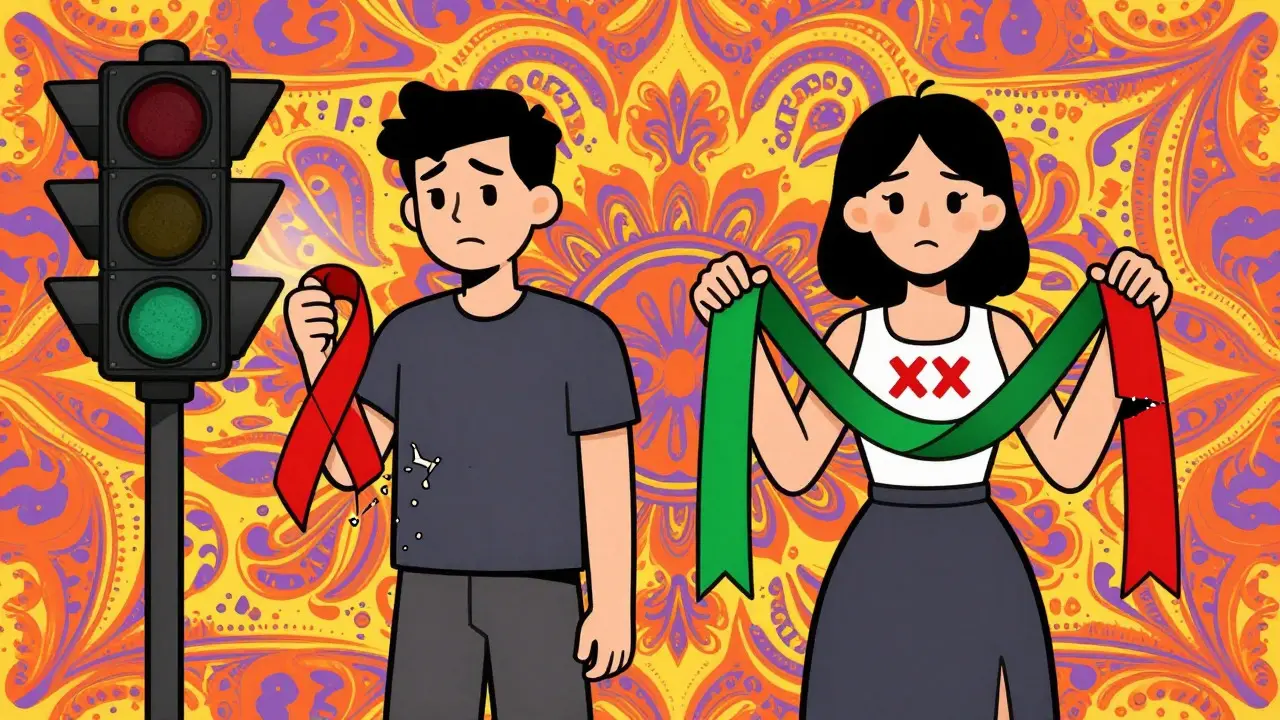
Humans have 23 pairs of chromosomes. One pair determines biological sex: females have two X chromosomes (XX), while males have one X and one Y (XY). The genes responsible for red and green color vision are located exclusively on the X chromosome. This pattern is known as X-linked recessive inheritance, where a trait carried on the X chromosome manifests in males who have only one copy of the gene, while females require two copies to express the condition.
Because males have only one X chromosome, if that single X carries a defective color vision gene, they will be color blind. There is no backup copy to override the defect. Females, having two X chromosomes, usually have one healthy copy that compensates for the defective one. They become "carriers"-they don’t show symptoms but can pass the gene to their sons. For a woman to be color blind, she needs to inherit the defective gene from both her mother and father, which is statistically much rarer.
| Group | Estimated Prevalence | Primary Reason |
|---|---|---|
| Males | ~8% | Single X chromosome with defective allele |
| Females | ~0.5% | Requires two defective X chromosomes |
Types of Red-Green Defects
Not all color blindness is the same. Most people think it means seeing everything in black and white, but that’s actually monochromacy, which is extremely rare. Red-green deficiencies fall into two main categories based on severity:
- Anomalous Trichromacy: This is the mildest form. You still have all three types of cones, but one type doesn’t work properly. Deuteranomaly (abnormal green cones) is the most common, affecting about 5% of males. Protanomaly involves abnormal red cones. People with this condition can usually tell red from green but struggle with subtle shades.
- Dichromacy: This is more severe. One type of cone is completely missing. Deuteranopes lack green cones entirely, while protanopes lack red cones. For them, distinguishing between red and green is nearly impossible without relying on brightness differences.
It’s important to note that blue-yellow color blindness (tritanopia) is a separate condition caused by issues on chromosome 7, not the X chromosome, which is why it affects men and women equally.
Real-Life Challenges and Adaptations
Living with red-green color blindness presents unique hurdles. A survey by Colour Blind Awareness found that 78% of respondents struggled with color-coded educational materials, and 65% had trouble with traffic lights, especially in poor weather. Imagine trying to read a graph in a business report where the only difference between data sets is a slight shade of red versus green. Without patterns or labels, the information is lost.
Career impacts are also significant. Certain professions, like commercial piloting or electrical engineering, often require strict color vision standards. Anecdotal evidence from forums reveals pilots being disqualified despite having perfect visual acuity because they couldn’t distinguish colored wires or signals. However, many find ways to adapt. Designers often use tools like the Color Oracle simulator to ensure their work is accessible, relying on luminance contrast rather than hue alone.

Modern Tools and Technological Solutions
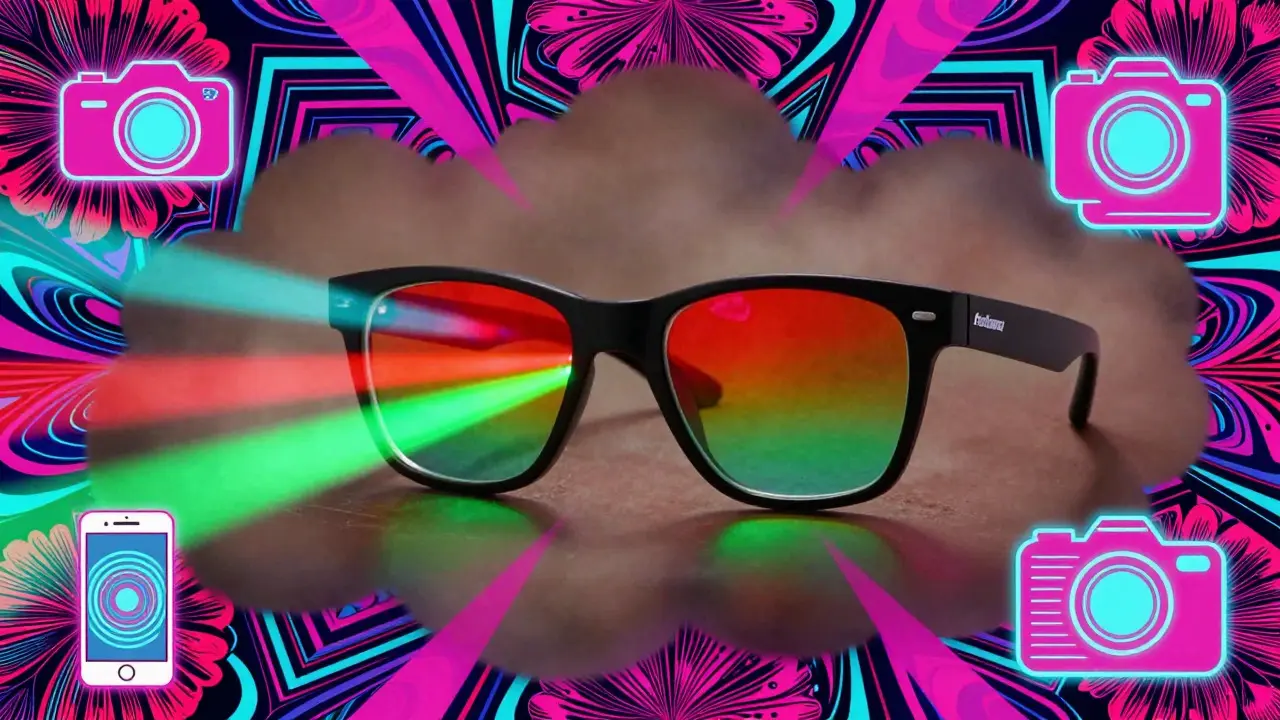
While there is no cure for congenital red-green color blindness, technology has made life easier. Specialized glasses, such as those from EnChroma, have gained popularity. These lenses filter out specific wavelengths of light, enhancing the contrast between red and green. Clinical trials suggest they improve discrimination for about 80% of users, though they don’t restore normal color vision. Prices range from $329 to $499 USD.
Digital accessibility is another major area of progress. Operating systems like Windows and iOS now include built-in color filters. Microsoft reports that its Color Filter feature has been used over 2.3 million times. For designers, plugins like Colorblindifier help simulate how images appear to color-blind viewers, ensuring inclusive design practices. The Web Content Accessibility Guidelines (WCAG) now mandate sufficient color contrast, pushing companies to make their websites more user-friendly for everyone.
Future Outlook: Gene Therapy and Beyond
The future looks promising for those hoping for a permanent solution. In 2022, researchers published a groundbreaking study in Science Advances demonstrating successful gene therapy in squirrel monkeys with red-green color blindness. By introducing functional copies of the opsin genes, scientists restored trichromatic vision for over two years. While human trials are still in early stages, this research marks a significant step toward potential cures.
Meanwhile, augmented reality (AR) apps are emerging as immediate aids. These apps can identify colors in real-time through a smartphone camera, providing audio feedback. As AR technology integrates into smart glasses, we may soon see widespread adoption of real-time color identification tools, reducing the functional impact of the condition significantly.
Is red-green color blindness actually blindness?
No, it is a misnomer. Most people with red-green color vision deficiency have normal visual acuity and can see shapes and details clearly. The term refers specifically to the difficulty in distinguishing certain colors, particularly reds and greens, rather than a loss of sight.
Can color blindness develop later in life?
Congenital color blindness is present from birth and does not worsen with age. However, acquired color vision deficiencies can occur due to eye diseases, medications, or injuries. If you notice sudden changes in how you perceive colors, consult an eye care professional immediately.
How is red-green color blindness diagnosed?
The most common screening tool is the Ishihara Color Test, which uses plates with dot patterns containing numbers or shapes visible only to those with normal color vision. Other tests include the Farnsworth-Munsell 100 Hue Test for more detailed assessment of color discrimination abilities.
Do EnChroma glasses cure color blindness?
No, they do not cure the condition. EnChroma glasses enhance color perception by filtering specific wavelengths, making reds and greens appear more distinct. Effects vary among individuals, and benefits are limited to when the glasses are worn.
What careers are restricted for people with red-green color blindness?
Certain professions requiring precise color discrimination may be restricted, including commercial aviation, military roles, electrical engineering, and some chemical laboratory positions. However, many fields like IT, medicine, and art remain fully accessible with proper accommodations.