Sinusitis: Viral vs. Bacterial and When Antibiotics Actually Help
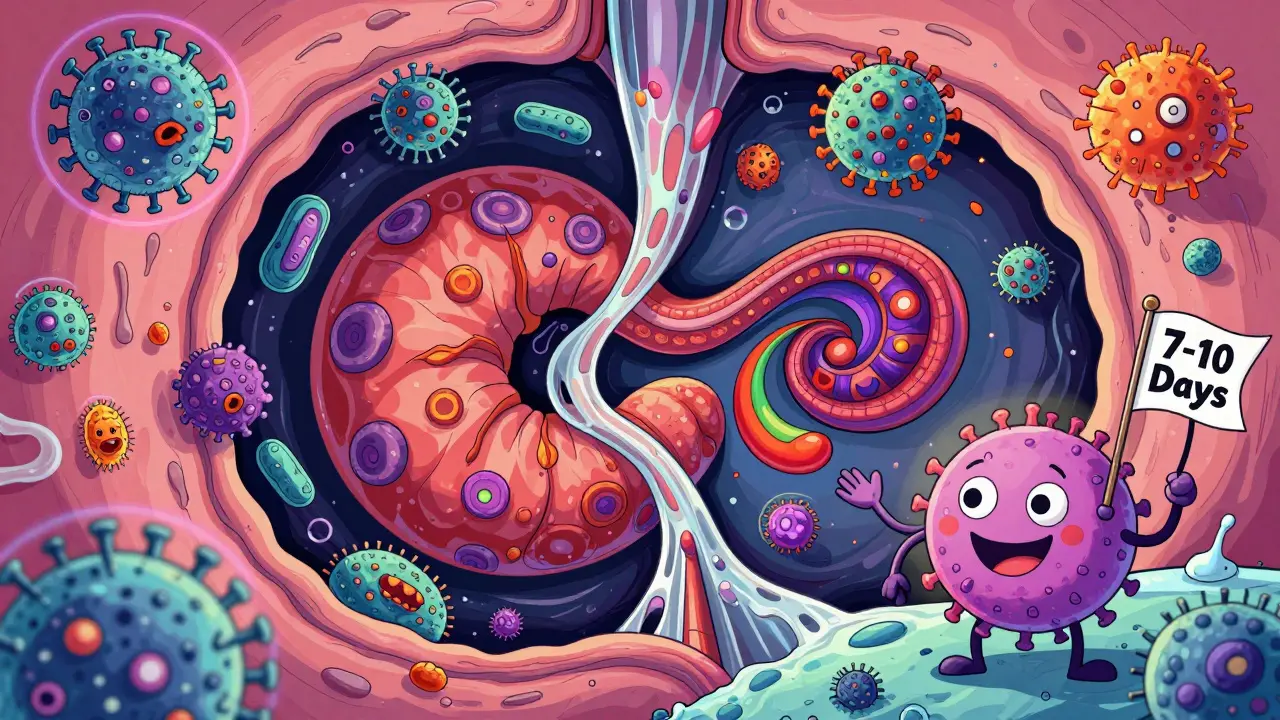
Most people think if their sinuses are clogged, their face hurts, and their nose is dripping, they need antibiotics. But here’s the truth: antibiotics won’t help in most cases. In fact, they often make things worse.
Every year, millions of people in the U.S. go to the doctor with sinus symptoms. About 9 out of 10 of them have a viral infection - not bacterial. And antibiotics do nothing to viruses. Yet, too many still get prescribed them. Why? Because it’s easier than explaining why waiting and resting is the right move.
What Really Causes Sinusitis?
Sinusitis - or rhinosinusitis - means your sinuses are swollen and inflamed. These are the hollow spaces behind your forehead, cheeks, and eyes. When they get blocked and filled with fluid, germs can grow. But not all germs are the same.
Viral sinusitis is the most common. It usually starts like a cold: runny nose, mild facial pressure, maybe a low-grade fever. It comes on fast, peaks around day 3 to 5, and then slowly gets better over 7 to 10 days. That’s normal. That’s your body fighting off a virus, just like it does with the common cold.
Bacterial sinusitis is different. It’s rare - only 2 to 10% of cases. It doesn’t just show up out of nowhere. It usually happens when a viral infection lingers too long and lets bacteria move in. Or, it can come on suddenly with worse symptoms.
Here’s how to tell them apart:
- Viral: Symptoms improve after 5 to 7 days. Nasal discharge is clear or white. Fever is mild or absent. Pain is usually mild and on both sides.
- Bacterial: Symptoms last more than 10 days without improvement. Or, they get better for a few days - then suddenly get worse again (this is called a "double-worsening" pattern). Discharge is thick, yellow, or green. Pain is sharp, one-sided, and can feel like pressure behind the eyes or teeth. Fever is higher - often above 102°F (38.9°C).
One key sign doctors look for: pain in your upper teeth. That’s a red flag for bacterial infection. It happens because the maxillary sinuses sit right above your upper molars. When they get infected, the pressure hits those nerves.
Why Antibiotics Don’t Work for Most Cases
Antibiotics kill bacteria. They don’t touch viruses. That’s basic biology. But people expect them. Doctors feel pressured to give them. And insurance? It often covers antibiotics but not nasal sprays or saline rinses.
Here’s what the data says: In 14 clinical trials with over 3,400 patients, antibiotics showed no real benefit for people with symptoms under 10 days. Same results for those with mild symptoms. The placebo group got just as better - faster, even.
And here’s the scary part: every time you take an antibiotic when you don’t need it, you’re helping create superbugs. The CDC says antibiotic resistance causes over 2.8 million infections and 35,000 deaths in the U.S. every year. Sinusitis is one of the top reasons people get unnecessary antibiotics.
Even worse, antibiotics can cause their own problems. One in 20 people who take them get diarrhea. Some get Clostridioides difficile - a nasty gut infection that can land you in the hospital. It’s especially dangerous for older adults or anyone with a weak immune system. One patient I read about got C. diff after taking azithromycin for what turned out to be a viral sinus infection. He spent three weeks in the hospital.
When Do Antibiotics Actually Help?
They help - but only in specific cases. The Infectious Diseases Society of America says antibiotics should be considered if:
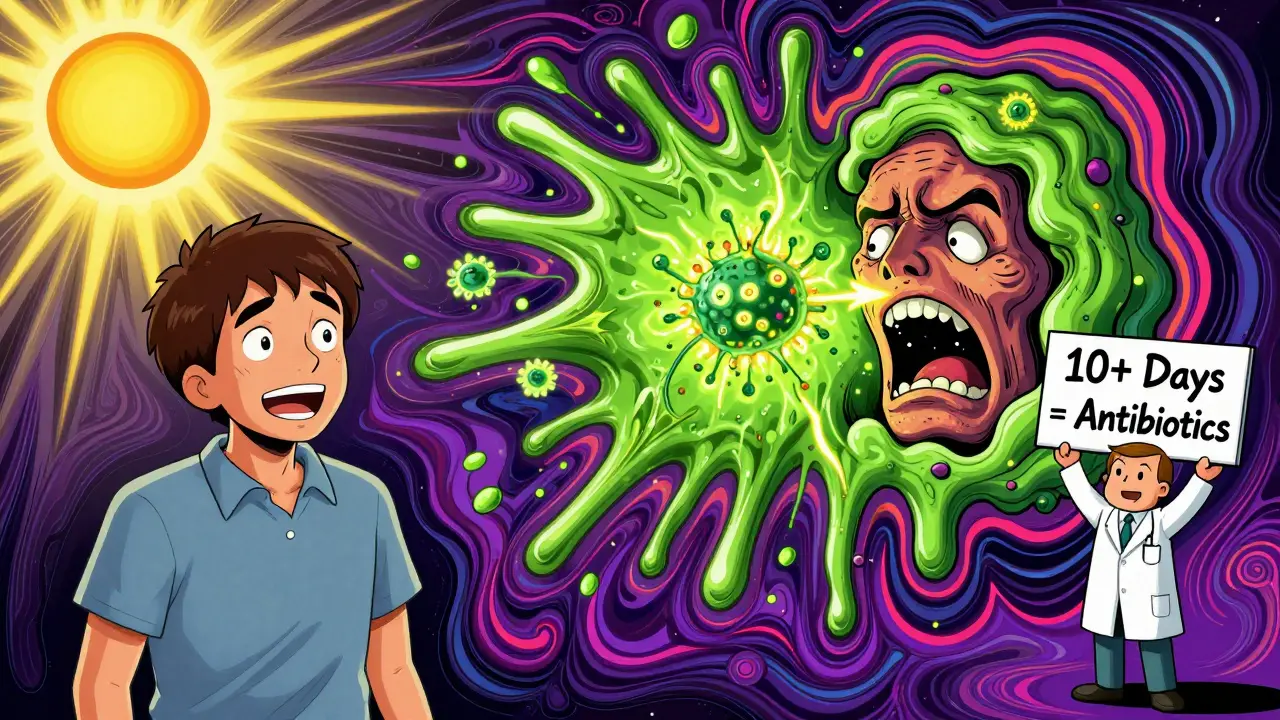
- Symptoms last more than 10 days with no improvement
- There’s a "double-worsening" - you feel better, then suddenly get much worse after day 5 to 7
- You have high fever (over 102°F) for 3 or more days
- You have severe facial pain or swelling, especially on one side
- You have thick, colored discharge for more than 3 to 4 days
When antibiotics are needed, amoxicillin is still the first choice. It’s cheap, effective, and has fewer side effects than other options. The usual dose is 500mg three times a day for 5 to 10 days. For people who’ve taken antibiotics recently or live in areas with high resistance, doctors may use amoxicillin-clavulanate (Augmentin) instead.
Some antibiotics should be avoided entirely. Macrolides like azithromycin and sulfa drugs like Bactrim are now over 30% ineffective against common sinus bacteria. They’re not just useless - they increase your risk of side effects without helping.
What You Should Do Instead
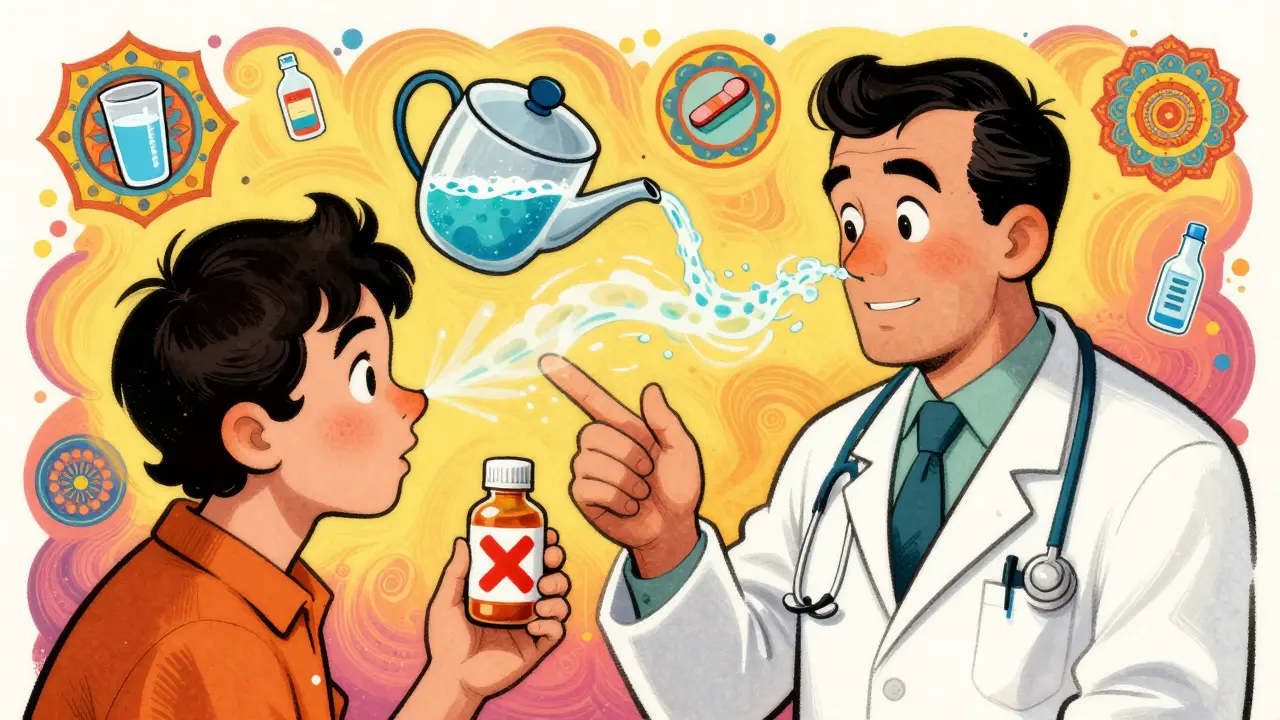
If you have a viral sinus infection - and you probably do - here’s what actually works:
- Saline nasal irrigation: Use a neti pot or squeeze bottle with sterile, distilled, or boiled water. Rinse your nose 2 to 3 times a day. It flushes out mucus, reduces swelling, and speeds healing. Studies show 75% of people get it right after watching a video guide.
- Hydration: Drink at least 2 to 3 liters of water daily. Thinner mucus drains better.
- Humidifiers: Keep indoor humidity between 40% and 60%. Dry air makes congestion worse.
- Pain relief: Take acetaminophen (650-1000mg every 6 hours) or ibuprofen (400-600mg every 6 hours) as needed. Don’t mix them unless you’re sure of the doses.
- Rest: Your immune system needs energy to fight the virus. Don’t push through.
These aren’t "alternative" remedies. They’re the backbone of treatment - backed by the American Rhinologic Society, the CDC, and major medical guidelines.
What About Nasal Sprays and Other Treatments?
Decongestant sprays like oxymetazoline (Afrin) can help for 3 days max. After that, they cause rebound congestion - your nose gets worse when you stop. Avoid them.
Nasal corticosteroid sprays - like fluticasone or mometasone - are safe for long-term use. They reduce swelling and inflammation. They don’t cure the infection, but they help you breathe better and recover faster. Many patients with chronic sinus issues use them daily for months.
And yes - honey, steam, essential oils? They might make you feel better temporarily. But there’s no solid proof they speed healing. Stick to what works: salt water, fluids, rest, and time.
When to Worry - Red Flags
Most sinus infections are harmless and go away on their own. But sometimes, they spread. Go to the doctor right away if you have:
- Fever above 102°F that lasts more than 3 days
- Severe headache that doesn’t improve with painkillers
- Swelling around your eyes or vision changes
- Stiff neck or confusion
- Difficulty breathing
These could mean the infection has spread to your brain, eyes, or bones. That’s rare - but serious. Don’t wait.
Why Do So Many People Get Antibiotics Anyway?
It’s not just doctors. Patients ask for them. A 2021 survey found 55% of people believe antibiotics are needed if symptoms last more than 3 days. That’s wrong. Viral infections often last 7 to 10 days - that’s normal.
On Reddit, one user said: "I got amoxicillin for a cold that lasted 6 days. Felt better in 48 hours - so I thought it worked." But it was the virus running its course. The antibiotic had nothing to do with it.
Another study found that 68% of people who asked for antibiotics for sinusitis got them - even when symptoms lasted less than 7 days. That’s a huge gap between what’s right and what’s done.
But things are changing. The CDC’s "Get Smart" campaign gives free educational materials to clinics. In places that used them, inappropriate antibiotic requests dropped by 27%. When doctors take 5 minutes to explain why antibiotics won’t help, patients understand.
What’s New in Sinusitis Care?
There’s exciting progress. In 2023, the FDA approved the first rapid test for bacterial sinusitis - SinuTest™. It gives results in under 15 minutes with 89% accuracy. It’s not in every clinic yet, but it’s coming.
Researchers are also looking at nasal probiotics. A 2024 trial showed people who used a daily nasal spray with good bacteria had 42% fewer sinus infections over 6 months. That’s huge.
And in the future, doctors might test your genes to see if you’re likely to respond to antibiotics. That could mean no more guessing. Just precision care.
Final Takeaway
Most sinus infections are viral. They get better on their own. Antibiotics won’t help - and might hurt you. Use salt water rinses, drink water, rest, and wait it out. If symptoms last more than 10 days, get worse after getting better, or come with high fever and severe pain - then see a doctor. They’ll know if antibiotics are truly needed.
Don’t let pressure or habit lead you to take something you don’t need. Your body is smarter than you think. Let it heal. And if a doctor prescribes antibiotics without asking about your symptoms? Ask why. You have the right to know.
Can sinusitis be cured without antibiotics?
Yes, in most cases. About 90% of sinus infections are viral and resolve on their own within 7 to 10 days with rest, hydration, saline rinses, and over-the-counter pain relief. Antibiotics are not needed and offer no benefit for viral cases.
How long should I wait before seeing a doctor for sinusitis?
Wait at least 10 days if symptoms are gradually improving. If they don’t improve after 10 days, or if you feel better for a few days and then suddenly get much worse (double-worsening), see a doctor. Also seek care immediately if you have high fever (over 102°F) for more than 3 days, vision changes, or severe facial swelling.
Is green mucus a sign of a bacterial infection?
Not necessarily. Green or yellow mucus can occur with viral infections too. It’s caused by immune cells fighting the virus, not bacteria. The key signs of bacterial infection are duration (over 10 days), worsening after initial improvement, high fever, and severe one-sided pain - not just mucus color.
Can I use a neti pot safely?
Yes, if you use the right water. Always use distilled, sterile, or previously boiled (and cooled) water. Tap water can contain tiny organisms that cause rare but serious brain infections. Rinse 2 to 3 times a day during symptoms. Most people master the technique after 3 to 5 tries with a video guide.
What’s the best over-the-counter medicine for sinus pain?
Acetaminophen (Tylenol) or ibuprofen (Advil, Motrin) are best for pain and inflammation. Avoid decongestant nasal sprays like Afrin for more than 3 days - they can make congestion worse. Oral decongestants like pseudoephedrine can help short-term but may raise blood pressure - check with your doctor if you have heart issues.
Do I need a CT scan for sinusitis?
No, not for routine cases. CT scans show sinus inflammation in 87% of healthy adults with no symptoms. They’re only useful if you have recurring infections, complications, or if treatment fails. Unnecessary scans lead to overdiagnosis and extra costs.
Can sinusitis become chronic?
Yes. If symptoms last longer than 12 weeks despite treatment, it’s called chronic sinusitis. It’s often linked to allergies, nasal polyps, or immune issues. Treatment includes long-term nasal corticosteroids, allergy management, and sometimes surgery. Antibiotics are rarely helpful for chronic cases unless there’s a clear bacterial flare-up.
Conor Flannelly
January 26, 2026 AT 15:46Man, I remember when I first learned this back in med school - it’s wild how deeply embedded the antibiotic myth is. I grew up in rural Ireland where everyone just assumed antibiotics were the cure-all. My grandad used to say, 'If your nose runs, give him penicillin.' Now I use saline rinses daily, especially in winter. It’s not glamorous, but it works. And honestly? I feel better than I did on antibiotics. The body’s got this. We just need to stop interfering.
Also, the SinuTest™ thing? That’s a game-changer. Finally, some science catching up to common sense. Let’s hope it gets cheap enough for clinics outside the big cities.
Also, I’m glad someone mentioned the dental pain thing. That’s the real tell. I had a toothache once that turned out to be sinusitis. Dentist sent me to an ENT. Best referral ever.
Conor Murphy
January 27, 2026 AT 06:01As someone who’s had chronic sinus issues since childhood, I just want to say thank you for writing this. So many people think ‘green snot = infection’ and panic. I’ve been there. I’ve taken antibiotics I didn’t need. I’ve had C. diff scares. It’s scary stuff.
Saline rinses saved my life. Not exaggerating. I started using a neti pot after my mom showed me a YouTube video. Took me three tries to not cry from the burn. Now I do it twice a day like brushing my teeth. No more 3-week colds.
Also - humidifiers. Get a good one. Not the $20 Walmart junk. I got a Levoit and my sinuses haven’t felt this good in years. Just… breathe better. 🙏
Marian Gilan
January 27, 2026 AT 18:09They don’t want you to know this but antibiotics are a scam. Big Pharma and the AMA are in bed together. Why? Because if you just drink water and use salt water, they don’t make money. That’s why they push the myth. Look at the CDC - they’re funded by pharmaceutical lobbyists. The ‘double-worsening’ thing? That’s just a trick to make you think you need more pills.
My cousin took azithromycin for a cold and got hospitalized. Then he found out the hospital was owned by Pfizer. Coincidence? I think not. The government wants you sick so you keep buying meds. They’re even hiding the truth about nasal probiotics. Why? Because a $5 spray you make at home doesn’t have a patent. 🤔
Patrick Merrell
January 28, 2026 AT 11:21Stop being so naive. Antibiotics work. I’ve taken them for sinus infections since I was 12. I feel better in 2 days. End of story. People who say ‘wait 10 days’ are just lazy and don’t want to take responsibility for their health. If I feel like crap, I want to feel better now. Not ‘rest and hydrate’ like some hippie guru.
And don’t get me started on neti pots. That’s just pouring water up your nose. Sounds like something a cult would do. I’d rather take a pill that works. Also, green mucus = bacteria. Facts. Don’t argue with me.
Ashley Karanja
January 28, 2026 AT 13:40Thank you for this incredibly thorough, evidence-based breakdown - I’m a primary care nurse in rural Nebraska and I’ve been fighting this battle for years. Patients come in expecting azithromycin because their neighbor got it last month, and they don’t understand why we can’t just ‘fix it’ with a script.
What’s been transformative for me is using the CDC’s ‘Get Smart’ handouts. I print them, hand them out, and say, ‘Let me explain why this isn’t a bacterial infection.’ It takes 5 minutes, but I’ve seen a 60% drop in antibiotic requests since I started. The key is framing it as ‘your body is doing its job’ - not ‘I’m refusing to help you.’
Also - the SinuTest™? I’ve already requested it for our clinic. The cost is negligible compared to managing C. diff or antibiotic resistance. And yes, nasal corticosteroids are underutilized. They’re not ‘steroids’ like the ones athletes abuse - they’re topical anti-inflammatories. We need better patient education on that too.
Karen Droege
January 29, 2026 AT 07:45OH MY GOD I’M SO GLAD THIS EXISTED. I’ve been screaming into the void about this for years. I had a sinus infection last winter, went to urgent care, and the PA prescribed amoxicillin. I said, ‘Wait - I’ve had this for 6 days and it’s getting better.’ She said, ‘Just take it anyway.’ I refused. I used saline, steam, honey tea, and slept for 12 hours a day. Guess what? I was fine in 8 days. No antibiotics. No side effects. No hospital stay.
And that ‘double-worsening’ thing? I’ve had it twice. First time, I panicked and went back. Second time? I waited. It resolved on its own. People need to stop treating every sniffle like a life-or-death emergency. Your immune system is not broken - it’s working. Let it work.
Also, if your doctor prescribes azithromycin for sinusitis? Run. Run far and fast. It’s basically a placebo with side effects. 🚩
Napoleon Huere
January 30, 2026 AT 18:01Let’s be real - the real problem isn’t antibiotics. It’s that we’ve lost trust in our own biology. We live in a world where ‘quick fix’ is the only acceptable solution. We don’t want to wait. We don’t want to rest. We don’t want to feel discomfort. So we reach for a pill. But healing isn’t a download. It’s a process.
And honestly? The fact that we’re even debating whether salt water rinses are ‘valid’ is a sign of how far we’ve drifted from basic human physiology. Our ancestors didn’t have antibiotics. They had steam, rest, and patience. And they survived.
Also - the dental pain thing? That’s genius. I never connected my toothache with my sinuses until I read this. Now I check my molars every time I feel pressure. It’s like a built-in diagnostic tool. Mind blown.
Shweta Deshpande
February 1, 2026 AT 14:14Wow, this is exactly what I needed to hear! I’m from India and here, everyone just assumes antibiotics are the answer - even for colds. My mom used to give me amoxicillin for every sniffle when I was a kid. I didn’t even know you could get better without pills until I moved to the US for grad school.
Now I use a neti pot every night before bed. It’s weird at first, but after a week, I couldn’t imagine not doing it. My sinuses are so much clearer, especially during pollen season. And I drink so much water now - like, 3 liters a day. I used to think that was crazy, but now I feel like a new person.
Also, I told my sister about the green mucus myth and she was shocked. She’d been taking antibiotics for weeks because her mucus was yellow. She stopped and waited. Guess what? She got better in 9 days. No pills needed. 🙌
Thanks for writing this. It’s not just medical advice - it’s a reminder that sometimes, less is more.