Statins and Exercise-Induced Muscle Injury: Prevention Tips

Statin Muscle Risk & Prevention Planner
Your Profile Configuration
Risk Assessment
Personalized Prevention Strategy
Red Flags: When to Stop Immediately
Regardless of your plan, stop exercising and seek medical attention if you experience:
Imagine this: you’ve been taking your cholesterol medication for years. It’s working. Your heart is safer. But every time you go for a run or lift weights, your muscles ache more than they should. You start wondering if the medicine is fighting against your workout. This fear is real, and it stops millions of people from getting the full benefit of physical activity.
The good news? Recent research shows that for most people, exercising while on statins is safe and beneficial when done correctly. The key isn’t to stop moving; it’s to move smarter. By understanding how these drugs interact with your muscles, you can prevent injury and keep your heart healthy without sacrificing your fitness goals.
Why Do Statins Cause Muscle Aches?
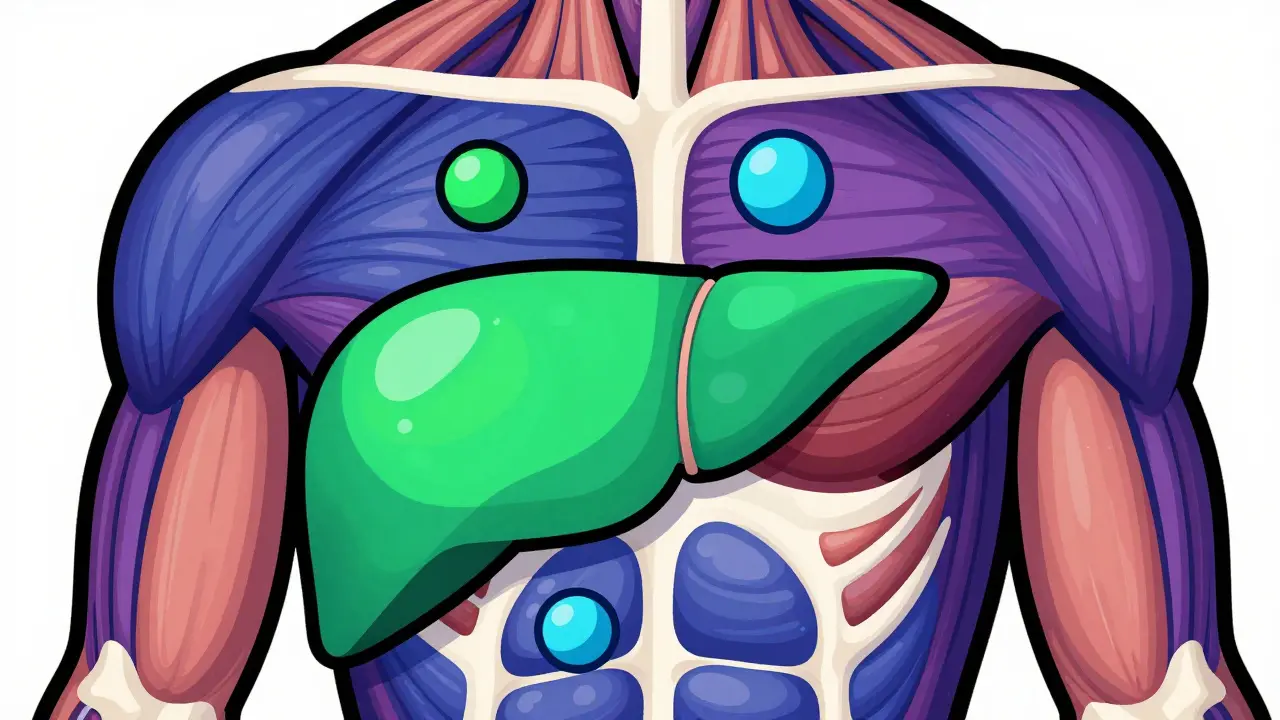
To fix the problem, we first need to understand the mechanism. Statins work by blocking an enzyme called HMG-CoA reductase in your liver. This stops your body from making too much cholesterol. However, this same pathway also produces coenzyme Q10 (CoQ10). CoQ10 is essential for your mitochondria-the power plants inside your cells-to create energy.
When you take a statin, your CoQ10 levels drop. Skeletal muscles are heavy users of energy. If they don’t have enough CoQ10, they fatigue faster and recover slower after exercise. This doesn’t mean everyone will get hurt, but it explains why some people feel that deep, lingering soreness after a workout that others shake off in hours.
| Statin Type | Solubility | Muscle Penetration | Risk Profile |
|---|---|---|---|
| Lipophilic (e.g., Atorvastatin, Simvastatin) | Fat-soluble | High | Higher risk of muscle symptoms during intense exercise |
| Hydrophilic (e.g., Rosuvastatin, Pravastatin) | Water-soluble | Low | Lower risk; stays mostly in the liver |
Notice the difference between lipophilic and hydrophilic statins. Lipophilic statins dissolve in fat, so they travel easily into muscle tissue. Hydrophilic statins dissolve in water and tend to stay in the liver where they’re needed. If you are prone to muscle pain, switching to a water-soluble option might be worth discussing with your doctor.
Moderate vs. Vigorous Exercise: The Critical Difference
Not all workouts are created equal when you are on medication. A major study published in the *Journal of the American College of Cardiology* in 2023 looked at this exact issue. Researchers had participants cycle for 45 minutes at 60% of their maximum oxygen uptake (VO2max). This is considered moderate-intensity exercise.
The results were clear: moderate exercise did not cause significant muscle damage in statin users compared to non-users. Their strength remained stable. However, other studies, like the one tracking Boston Marathon runners, showed a different story. Runners on statins had significantly higher creatine kinase (CK) levels-a marker of muscle breakdown-after the race compared to those not on statins.
Here is the takeaway: Moderate exercise is generally safe. Vigorous, high-intensity exertion increases the risk of microscopic muscle injury. If you love CrossFit or marathon running, you need to be more cautious than someone who enjoys brisk walking or light cycling.
Practical Prevention Strategies
You don’t have to guess your way through your fitness routine. Here are specific, evidence-based steps to protect your muscles while staying active.
- Stick to the "Talk Test": Aim for moderate intensity. You should be able to hold a conversation while exercising. If you are gasping for air, you are likely pushing into the vigorous zone where muscle injury risk spikes. Keep your effort level around a 5 or 6 on a scale of 10.
- Progress Slowly: Your muscles adapt differently on statins. Increase your workout duration or intensity by no more than 10% per week. Sudden jumps in volume are the fastest way to trigger inflammation.
- Time Your Dose: While direct evidence is limited, taking your statin at night (if prescribed once daily) may align better with your body’s natural cholesterol production cycle and potentially lower peak drug concentration during daytime workouts. Check with your pharmacist about your specific drug’s half-life.
- Check Your Vitamin D: Low vitamin D levels are linked to higher rates of statin-associated muscle symptoms. Ask your doctor for a blood test. If your serum 25-hydroxyvitamin D is below 30 ng/mL, supplementation can help reduce muscle pain.
- Avoid Drug Interactions: Never combine statins with fibrates (like gemfibrozil) unless strictly supervised. This combination increases the risk of severe muscle damage (myopathy) by 3 to 5 times.

Listening to Your Body: Warning Signs
Pain is data. You need to know the difference between normal post-workout soreness and something dangerous. Delayed Onset Muscle Soreness (DOMS) usually peaks 24-48 hours after exercise and fades away. Statin-induced issues often feel different.
Watch for these red flags:
- Soreness that lasts longer than 72 hours after a moderate workout.
- Weakness rather than just pain. If you struggle to lift your arms overhead or stand up from a chair, stop exercising immediately.
- Dark urine. This looks like tea or cola and indicates rhabdomyolysis-a serious condition where muscle tissue breaks down rapidly and releases proteins that can damage your kidneys. Seek emergency care if this happens.
If you experience persistent pain, do not just quit your statins. Talk to your healthcare provider. They might suggest an "alternate-day" dosing strategy. For example, taking rosuvastatin every other day can maintain cholesterol control while giving your muscles a break from constant exposure.
The Bigger Picture: Why You Should Keep Moving
It is easy to let fear win. About 18.6% of people stop taking statins within the first year because of muscle concerns. But stopping the medication removes a powerful shield against heart attacks and strokes. Stopping exercise removes another layer of protection.
Research shows that regular physical activity reduces cardiovascular events by 20-30%. Statins reduce them by 25-35%. Together, they create a synergistic effect that is far stronger than either alone. The goal is not to avoid movement; it is to manage the interaction. By choosing moderate activities, monitoring your symptoms, and communicating with your doctor, you can enjoy a long, active life with a healthy heart.
Can I take CoQ10 supplements to prevent statin muscle pain?
While statins lower CoQ10 levels, clinical trials have shown mixed results regarding whether supplementing CoQ10 actually prevents muscle pain. Some patients report feeling better, but large-scale studies haven't proven it works for everyone. It is generally safe to try, but discuss it with your doctor first, as it can interact with blood thinners like warfarin.
Which statin is least likely to cause muscle problems?
Hydrophilic statins like pravastatin and rosuvastatin are less likely to enter muscle tissue because they are water-soluble. Lipophilic statins like atorvastatin and simvastatin penetrate muscle more easily and may cause more symptoms during intense exercise. Switching types may help, but only under medical supervision.
Is it safe to do high-intensity interval training (HIIT) on statins?
HIIT involves vigorous bursts of activity that significantly increase the risk of muscle injury markers in statin users. If you currently do HIIT and experience muscle pain, consider switching to moderate continuous cardio like cycling or swimming. If you must do HIIT, monitor your CK levels regularly and ensure you are well-trained before starting.
How long does statin-induced muscle pain last?
Normal post-exercise soreness resolves within 2-3 days. Statin-related muscle discomfort can persist longer or recur with each workout. If pain lasts more than 72 hours or worsens over time, it is not normal DOMS. Consult your doctor to adjust your dosage or switch medications.
Does age affect my risk of muscle injury on statins?
Yes. Older adults are more susceptible to statin-associated muscle injury, especially during vigorous exercise. The Boston Marathon study found that older athletes on statins had higher creatine kinase levels than younger ones. Seniors should prioritize low-impact, moderate-intensity exercises and progress very slowly.