Warfarin and Generic Switching: What You Need to Know About INR Monitoring and Safety
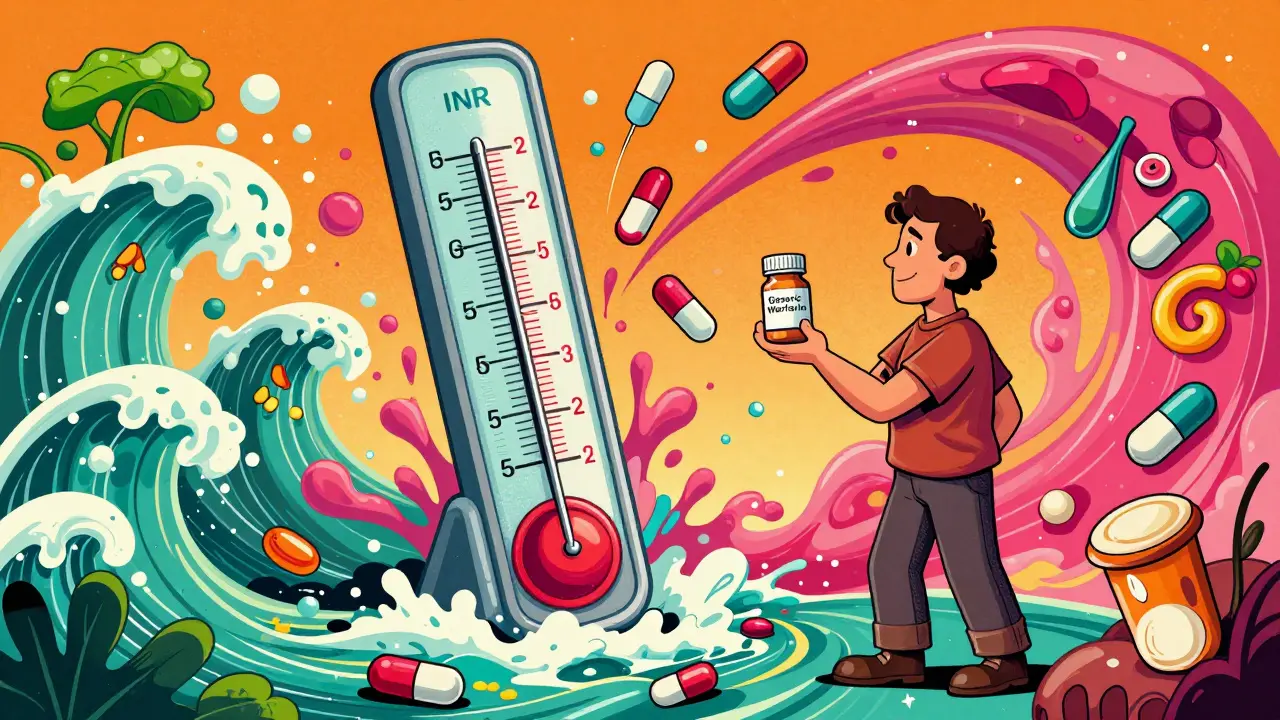
Switching from brand-name warfarin to a generic version sounds simple-cheaper pill, same drug. But for someone on warfarin, even a small change can mean the difference between a safe day and a trip to the ER. This isn’t just about cost. It’s about INR monitoring, precision, and the hidden risks of switching without proper care.
Warfarin is one of the oldest and most widely used blood thinners in the world. It’s been around since the 1950s, and despite newer drugs hitting the market, it’s still the go-to for millions of people-especially those with mechanical heart valves, severe kidney problems, or who can’t afford the $300-to-$500 monthly price of newer anticoagulants. In the U.S., over 1.2 million Medicare beneficiaries still rely on it. And here’s the catch: more than 90% of those prescriptions are filled with generic warfarin today. But that doesn’t mean all generics are the same in practice.
Why Warfarin Is Different from Other Medications
Most drugs have a wide safety window. Take ibuprofen: 400 mg, 600 mg, 800 mg-it’s not a big deal if your dose is a little off. Warfarin? Not even close. Its therapeutic range is razor-thin: an INR between 2.0 and 3.0 for most people. Go below 2.0, and you’re at risk of a clot. Above 3.0, and you’re at risk of bleeding-sometimes fatally. The FDA added a black box warning in 2010 for this exact reason.
What makes warfarin tricky is how your body handles it. It’s broken down by liver enzymes-CYP2C9 and CYP3A4-and even small changes in how fast or slow those enzymes work can send your INR flying. A new antibiotic, a change in your spinach intake, or even switching from one generic brand to another can shift your INR by 20-50% in just 72 hours. That’s why monitoring isn’t optional. It’s life-saving.
Generic Switching: The Data Says One Thing, Real Life Says Another
Studies have shown that switching from Coumadin (the brand) to a single generic version-like the one made by Barr Laboratories-is generally safe. One study tracked 182 patients over a year after switching. No increase in clots. No increase in bleeding. No major changes in INR control. Sounds reassuring, right?
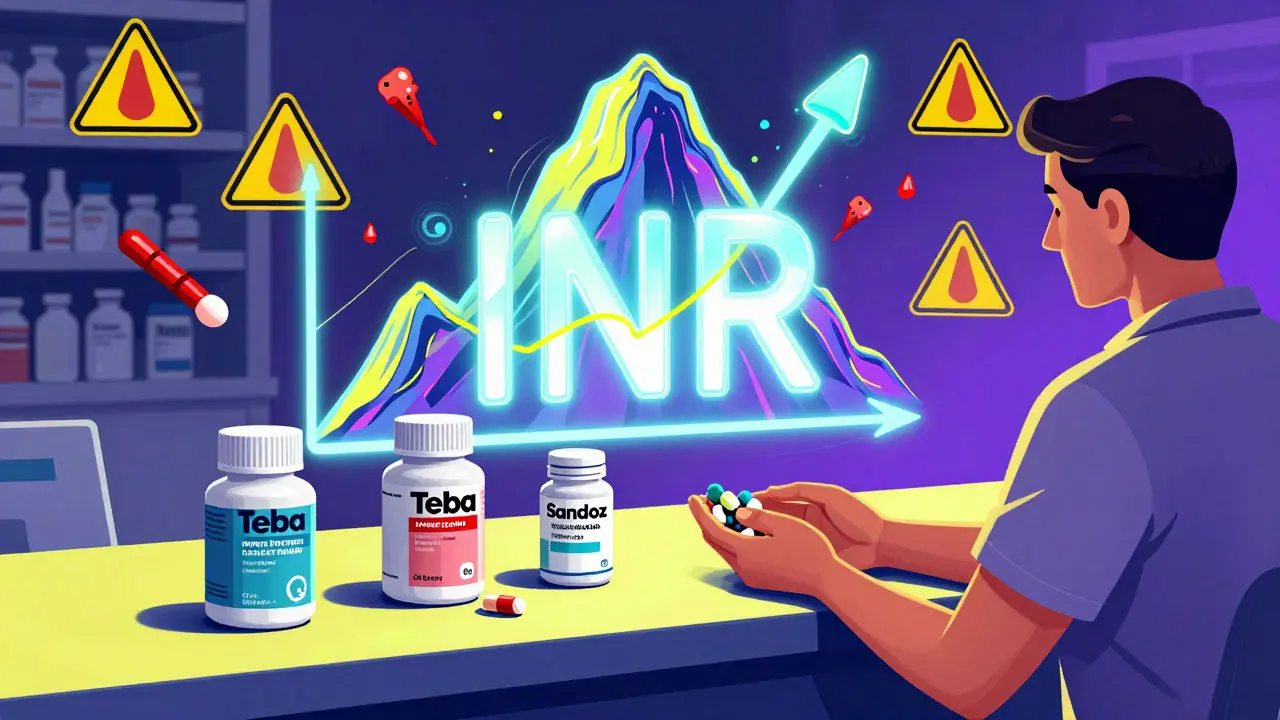
But here’s the problem: most real-world switches aren’t that clean. Patients don’t just switch once. They get refilled from different pharmacies, different distributors, different manufacturers. Teva. Mylan. Sandoz. Each makes a generic warfarin. All are FDA-approved. All are labeled as bioequivalent. But bioequivalence doesn’t mean identical.
The FDA requires generics to match the brand in how much drug gets into your bloodstream-80% to 125% of the original. That’s a 45% range. For a drug where a 0.3 INR shift can mean disaster, that’s not enough. One study found that when patients switched between different generic manufacturers, about 15-20% had noticeable INR fluctuations. Some went out of range. Some needed emergency dose adjustments. No one died. But many came close.
When You Switch, Don’t Just Wait
If you’re switching from Coumadin to a generic, or from one generic to another, don’t assume everything will be fine. The Cleveland Clinic, the American Heart Association, and the American Family Physician all agree: monitor more closely. Right after the switch, check your INR every 2-3 days for the first week. Then every 4-5 days for the next two weeks. Only after two stable readings should you go back to monthly checks.
Here’s what you need to do:
- Ask your pharmacist: Which manufacturer’s warfarin are you giving me? Write it down.
- When you refill, check if the pill looks different-color, shape, markings. If it does, ask why.
- Don’t wait for symptoms. Get your INR checked even if you feel fine.
- Keep a log: date, dose, INR number, any changes in diet or meds.
One patient I spoke to in Leeds switched from Teva to Mylan warfarin and didn’t think anything of it. Two weeks later, her INR jumped to 5.2. She had a nosebleed that wouldn’t stop. She ended up in the hospital. No one told her to check her INR after the switch. She didn’t know to ask.
What Else Can Throw Off Your INR?
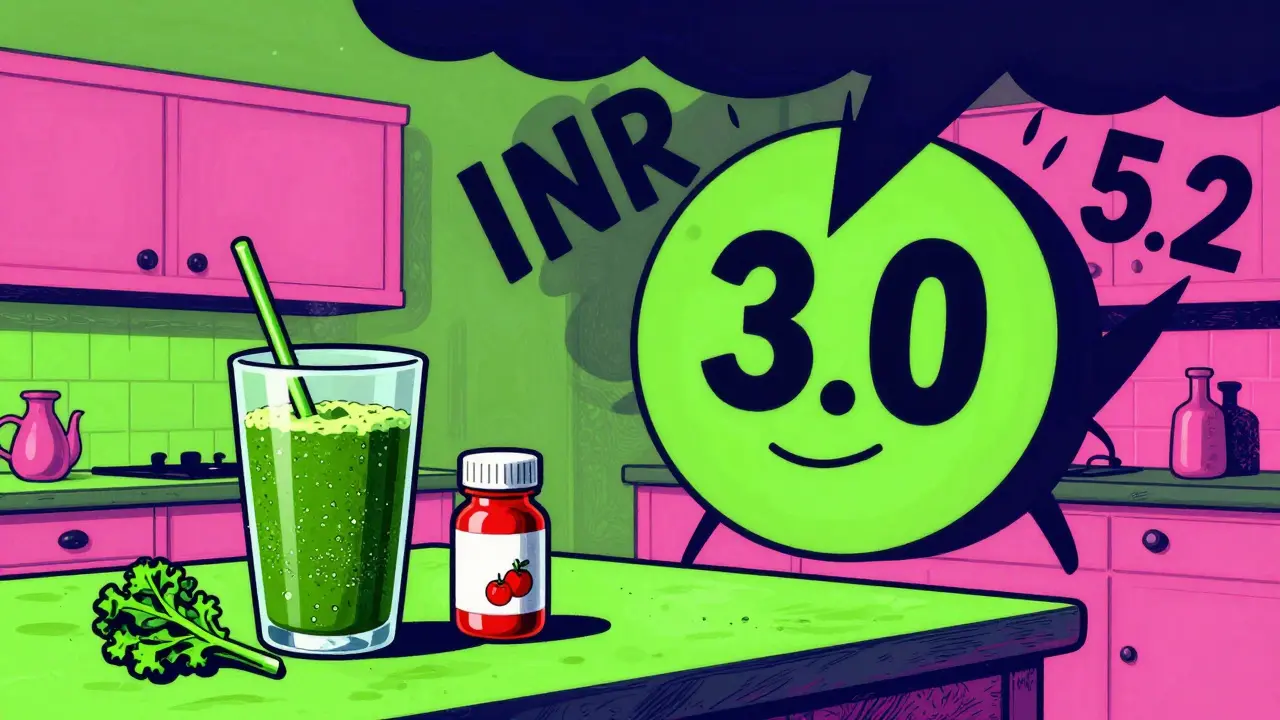
Switching generics isn’t the only risk. Diet matters. Vitamin K, found in leafy greens, broccoli, and Brussels sprouts, directly fights warfarin’s effect. A sudden increase in your kale smoothie intake can make your INR drop. A sudden decrease? It can spike it. The same goes for alcohol, cranberry juice, and herbal supplements like garlic, ginseng, or St. John’s wort.
Medications are even bigger culprits. Antibiotics, antifungals, anti-seizure drugs, even some heart medications-over 300 of them interact with warfarin. A single dose of amoxicillin can push your INR into danger territory. That’s why doctors ask you to list every pill, supplement, and over-the-counter drug you take. Don’t leave anything out. Not even the aspirin you take for headaches.
Why DOACs Aren’t Always the Answer
Direct oral anticoagulants (DOACs) like apixaban or rivaroxaban don’t need INR checks. That’s their big selling point. But they’re not for everyone. They’re expensive. They don’t reverse easily if you bleed. And for people with mechanical heart valves-especially mitral valves-they’re often not even approved.
Warfarin still wins in three key areas: cost, reversibility, and specific medical needs. A month’s supply of generic warfarin costs $4 to $10. A DOAC? $300 to $500. If you’re on Medicare, that’s a huge difference. And if you have a major bleed, doctors can reverse warfarin with vitamin K or fresh frozen plasma. DOACs need expensive, hard-to-get antidotes. Not every hospital keeps them on hand.
That’s why warfarin isn’t going away. Evaluate Pharma predicts it’ll still make up 15-20% of the anticoagulant market in 2028. It’s not outdated. It’s essential.
What to Do If You’re on Warfarin
Here’s the bottom line:
- If you’re stable on warfarin, don’t switch unless you have to.
- If you must switch, get your INR checked within 3-5 days after the change.
- Always know which manufacturer’s product you’re taking. Ask your pharmacist. Write it down.
- Never change your dose without talking to your doctor-even if your INR seems fine.
- Keep your diet consistent. Don’t suddenly start eating a pound of kale every day.
- Report any unusual bruising, bleeding, dizziness, or dark stools immediately.
Anticoagulation clinics exist for a reason. They’re not just about checking numbers. They’re about catching problems before they become emergencies. If you’re on warfarin and your clinic is closed, ask your doctor if you can be referred. It could save your life.
Final Thought: It’s Not About the Drug. It’s About the Process.
Warfarin isn’t dangerous because it’s a bad drug. It’s dangerous because it demands precision. And precision doesn’t come from a pill bottle. It comes from attention, consistency, and communication. Generic switching works-when it’s managed. When it’s rushed, ignored, or assumed to be safe without monitoring, it becomes a gamble.
Millions of people take warfarin safely every day. But safety doesn’t happen by accident. It happens because someone remembered to check the INR. Because they asked the pharmacist. Because they didn’t assume.
Can I switch between different generic brands of warfarin without checking my INR?
No. Even though all generic warfarin products are FDA-approved as bioequivalent, switching between different manufacturers can cause your INR to fluctuate. Studies show that 15-20% of patients experience changes in INR after switching generics. Always check your INR 3-5 days after switching and again in 7-10 days to ensure stability.
Why does my INR change when I eat more greens?
Leafy greens like spinach, kale, and broccoli are high in vitamin K, which counteracts warfarin’s effect. If you suddenly increase your intake, your INR will drop. If you cut back, your INR may rise. The key is consistency-not elimination. Eat about the same amount of vitamin K-rich foods every week, and your doctor can adjust your dose accordingly.
Is warfarin safer than newer blood thinners like apixaban?
It depends. For most people without mechanical valves, newer drugs are safer because they don’t require frequent monitoring and have fewer food interactions. But for patients with mechanical heart valves, severe kidney disease, or those who can’t afford the high cost of DOACs, warfarin remains the safest and most effective option. The choice isn’t about which drug is better-it’s about which one fits your medical needs and lifestyle.
How often should I get my INR checked if I’m stable on warfarin?
Once you’re stable, most guidelines recommend checking every 4 to 6 weeks. But if you’ve recently switched generics, changed your dose, started a new medication, or altered your diet, check every 1-2 weeks until you’re stable again. Never go longer than 8 weeks without a test, even if you feel fine.
What should I do if my INR is too high or too low?
Don’t change your dose on your own. If your INR is too high (above 4.0), you may need to skip a dose or get vitamin K. If it’s too low (below 2.0), you may need a higher dose. But both situations require medical advice. Call your doctor or anticoagulation clinic immediately. Do not wait for symptoms like bruising, bleeding, or chest pain.
Aisling Maguire
March 6, 2026 AT 10:00Alex Brad
March 8, 2026 AT 06:32Sharon Lammas
March 9, 2026 AT 22:13Divya Mallick
March 11, 2026 AT 00:32Jane Ryan Ryder
March 11, 2026 AT 08:29Milad Jawabra
March 13, 2026 AT 03:02Renee Jackson
March 13, 2026 AT 03:09Shivam Pawa
March 15, 2026 AT 02:37Callum Duffy
March 16, 2026 AT 19:31Deborah Dennis
March 17, 2026 AT 06:21Stephen Vassilev
March 18, 2026 AT 13:22Pankaj Gupta
March 19, 2026 AT 20:28marjorie arsenault
March 21, 2026 AT 00:58