Autoimmune Hepatitis: What It Is, How It's Diagnosed, and How It's Treated
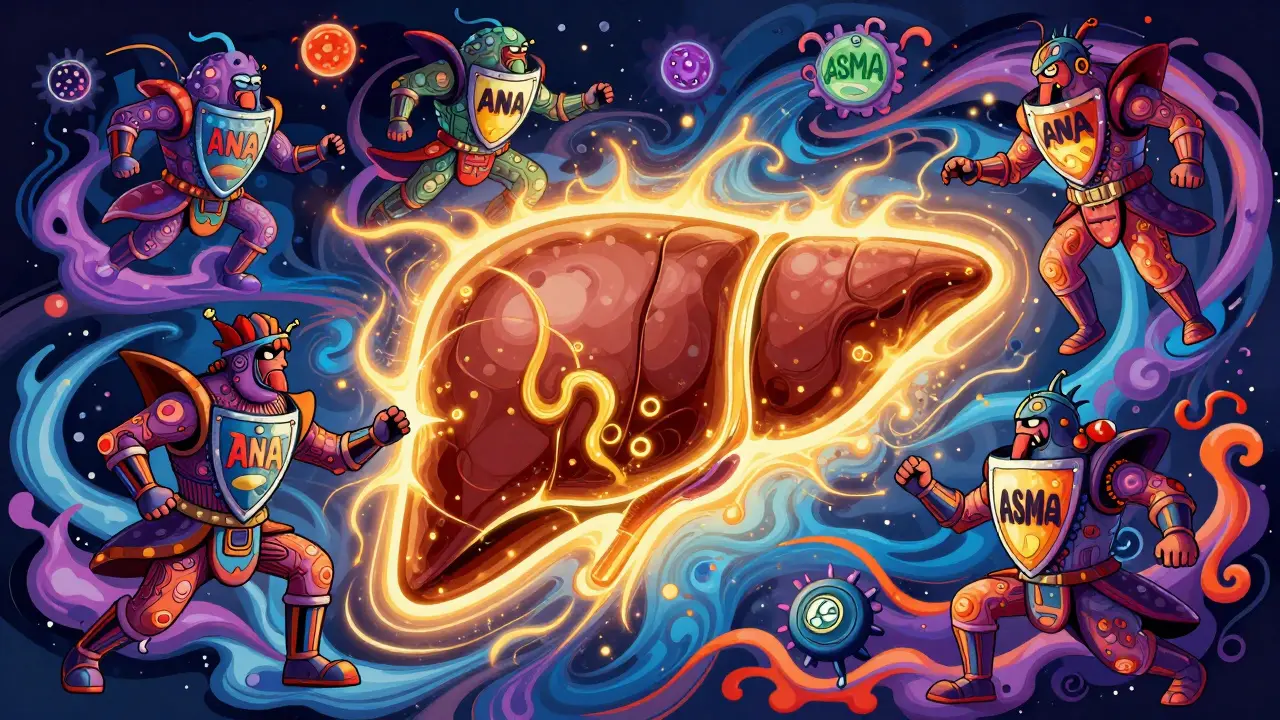
Autoimmune hepatitis isn't something you catch from someone else. It’s not caused by alcohol, viruses, or poor diet. It happens when your own immune system turns against your liver, attacking healthy liver cells like they’re invaders. This mistake leads to ongoing inflammation, scarring, and over time, serious liver damage. Left untreated, it can lead to cirrhosis or liver failure. But here’s the good news: if caught early, most people can control it and live normal, healthy lives.
What Exactly Is Autoimmune Hepatitis?
Autoimmune hepatitis (AIH) is a chronic condition where your body’s immune system - the same one that fights off colds and infections - mistakenly targets your liver. It’s not a single disease but a group of conditions with similar features. There are two main types: Type 1 and Type 2.
Type 1 is the most common, making up 80-90% of cases in North America and Europe. It often shows up in teens and young adults, but it can strike at any age. Type 2 is rarer and mostly affects children between 2 and 14 years old. Women are far more likely to develop it than men - about 4 times more for Type 1, and up to 8 times more for Type 2.
What makes AIH different from other liver diseases? Unlike hepatitis B or C, which are caused by viruses, AIH has no infectious trigger. It’s also not the same as fatty liver disease or alcohol-related damage. The immune system attacks liver cells directly, not the bile ducts like in primary biliary cholangitis. This distinction matters because treatment is completely different.
How Do You Know If You Have It?
Many people with autoimmune hepatitis don’t feel sick at first. That’s why it’s often found by accident during routine blood tests. But when symptoms do appear, they can be vague and easily mistaken for something else: extreme tiredness, joint pain, nausea, dark urine, or yellowing of the skin and eyes (jaundice).
Some patients - about 25-35% - suddenly feel very ill, with symptoms that look like a viral infection. Others have a slow, quiet progression over months or years. Around 15-20% show no symptoms at all until liver damage is already advanced.
Doctors look for three main clues:
- Blood tests: Liver enzymes (ALT and AST) are usually 5 to 10 times higher than normal. IgG levels - a type of antibody - are also elevated, often more than 1.5 times the upper limit.
- Antibody markers: Type 1 AIH typically shows antinuclear antibodies (ANA) or anti-smooth muscle antibodies (ASMA). Type 2 is linked to anti-LKM-1 or anti-LC-1 antibodies. These aren’t found in healthy people, so their presence strongly points to AIH.
- Liver biopsy: A small sample of liver tissue shows clear signs of inflammation at the edges of liver lobules (called interface hepatitis), along with immune cell buildup and sometimes early scarring.
The Revised International AIH Group Scoring System, updated in 2022, combines these findings into a diagnostic tool with 97% accuracy when used by experienced hepatologists. It’s not perfect - about 15-20% of cases are initially confused with drug-induced liver injury - but it’s the best tool we have.
How Is It Treated?
There’s no cure for autoimmune hepatitis, but there is effective treatment. The goal isn’t to eliminate the disease - it’s to shut down the immune attack and stop liver damage.
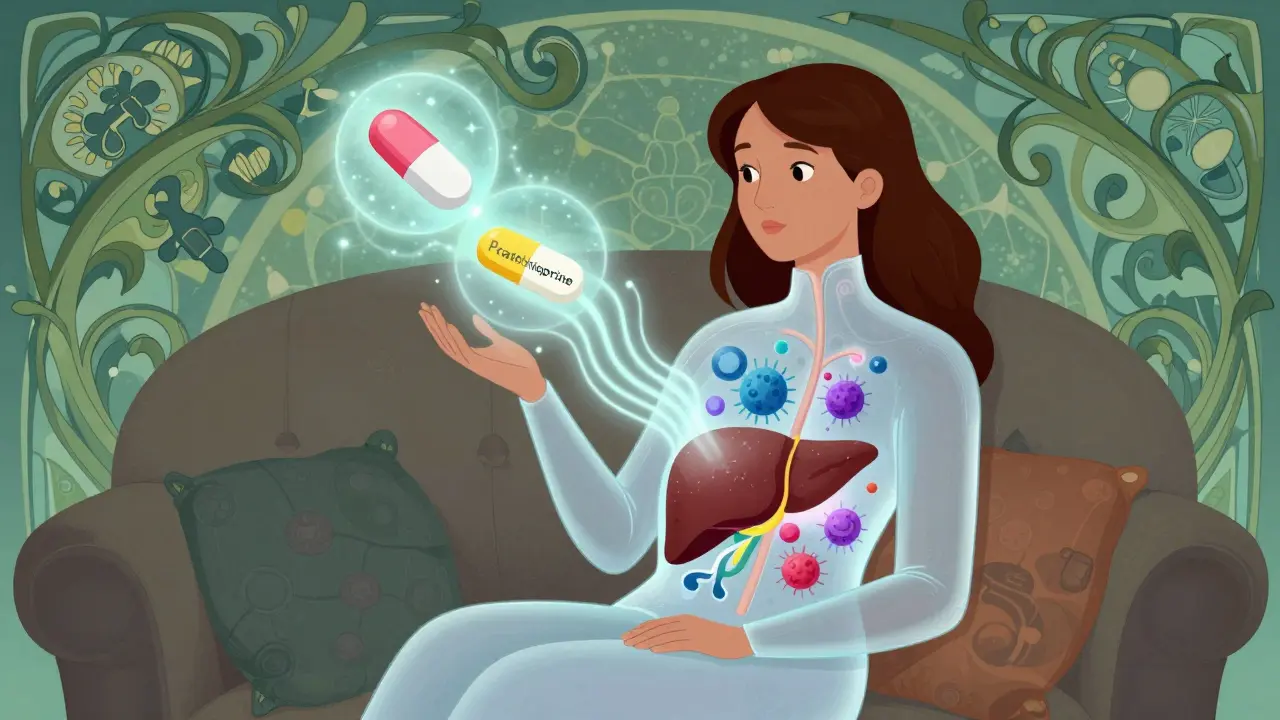
The standard first-line treatment is a combination of two drugs: prednisone (a corticosteroid) and azathioprine (an immunosuppressant). Prednisone works fast to calm the immune system. Azathioprine helps maintain control and lets doctors lower the steroid dose over time, reducing side effects.
Typically, treatment starts with a higher dose of prednisone - around 0.5 to 1 mg per kilogram of body weight - and azathioprine at 50 mg daily. After 3 to 6 months, if liver enzymes drop and symptoms improve, doctors slowly reduce the prednisone. Most people reach remission within 18 to 24 months.
Remission means normal liver enzyme levels and normal IgG levels for at least two years. About 65-80% of patients achieve this with standard treatment. Long-term studies show that without treatment, only 10% of patients survive 10 years. With treatment, that jumps to 94%.
What Are the Side Effects?
Medication works, but it comes with costs. Prednisone can cause weight gain, mood swings, trouble sleeping, increased appetite, and thinning bones. Azathioprine can lower white blood cell counts, making you more prone to infections.
On patient forums like the American Liver Foundation’s site, 82% of those on prednisone report weight gain. Two-thirds say they struggle with insomnia. More than half report anxiety or depression linked to the drugs. These aren’t just side effects - they’re life-altering.
That’s why doctors try to use the lowest effective dose. For patients who can’t tolerate azathioprine, mycophenolate mofetil is a common second choice. It works for 70-80% of those who switch, and it’s easier on the body.
Everyone on these drugs needs regular blood tests - every 2 to 4 weeks at first - to check liver function and blood cell counts. Bone health is also a concern. Doctors recommend calcium and vitamin D supplements to protect against osteoporosis.
What Happens If Treatment Fails?
Most people respond well. But about 10% don’t. These are called treatment-refractory cases. Even with full doses of steroids and azathioprine, their liver enzymes stay high, and scarring keeps progressing.
For them, the next step is liver transplantation. Autoimmune hepatitis is now the fourth most common reason for adult liver transplants in the U.S., accounting for 6.2% of all transplants. Transplant success rates are high - over 85% survive five years post-transplant.
But transplantation isn’t a cure. The immune system can still attack the new liver. That’s why transplant patients need lifelong immunosuppression, just like before.
What’s New in Research?
The field is moving fast. In 2023, the International Autoimmune Hepatitis Group added a new antibody - anti-SLA/LP - to diagnostic criteria. It boosts accuracy to 99%, helping avoid misdiagnosis.
New drugs are in the pipeline. Rituximab and vedolizumab, originally developed for rheumatoid arthritis and Crohn’s disease, are now being tested in Phase 2 and 3 trials for AIH. Early results are promising.
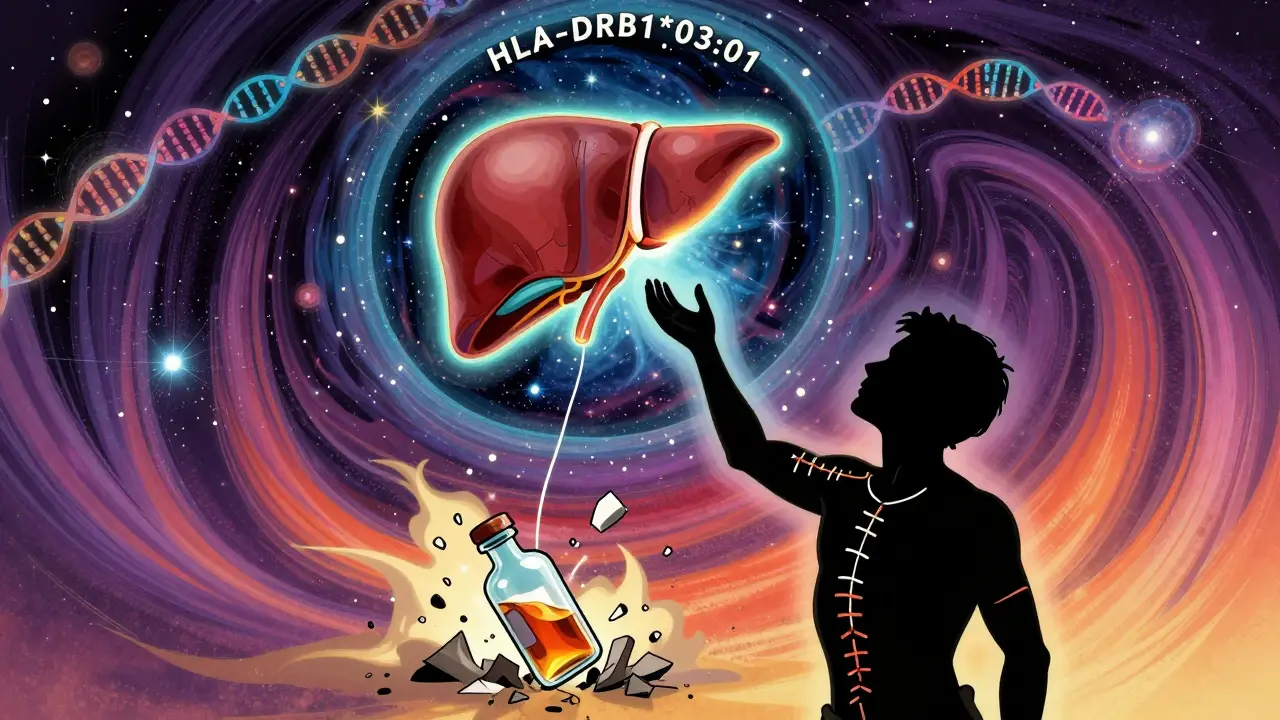
One of the most exciting developments is personalized medicine. Researchers have found that certain genetic markers - especially HLA-DRB1*03:01 and *04:01 - are strongly linked to AIH. People with these genes tend to respond better to specific drugs. In the next 5 to 7 years, doctors may use genetic testing to choose the right drug for the right patient, reducing trial-and-error and side effects.
Obeticholic acid, a drug originally for primary biliary cholangitis, got orphan drug status in Europe in 2022 after showing 45% remission rates in a 24-week trial - nearly double the placebo rate.
Living With Autoimmune Hepatitis
It’s not easy. Fatigue is the most common complaint - 78% of patients say it’s their biggest challenge. Joint pain, anxiety about the future, and difficulty keeping a job are also common. One patient on Reddit wrote, “I feel like a prisoner to my medication.” Another said, “I went from running marathons to needing a nap after brushing my teeth.”
But many also share success stories. A woman named Sarah K. posted on CaringBridge in 2023: “My ALT dropped from 480 to 32 in six weeks. I’m back to teaching yoga. I didn’t think I’d ever feel normal again.”
Sticking to your treatment plan is the most important thing. Missing doses or stopping meds without talking to your doctor can cause rapid liver damage. Regular blood tests, a healthy diet, no alcohol, and avoiding unapproved supplements are non-negotiable.
Support groups matter. Talking to others who get it - whether online or in person - helps reduce isolation and anxiety. The American Liver Foundation and UK Liver Foundation offer resources, webinars, and peer connections.
When to See a Doctor
If you have unexplained fatigue, joint pain, dark urine, or jaundice - especially if you’re a woman in your 20s to 50s - get your liver enzymes checked. If you’ve been diagnosed with ‘chronic hepatitis’ without a clear cause, ask if autoimmune hepatitis has been ruled out.
Early diagnosis saves lives. The sooner treatment starts, the less scarring occurs. People who start treatment before cirrhosis develops have an 89% chance of surviving 10 years without needing a transplant. Those who wait? That number drops to 40%.
You don’t have to live with constant fatigue or fear. With the right care, autoimmune hepatitis can be managed - not just controlled, but lived with.
Is autoimmune hepatitis the same as viral hepatitis?
No. Viral hepatitis (like hepatitis B or C) is caused by a virus infecting the liver. Autoimmune hepatitis happens when your immune system attacks your liver for no clear reason. Treatment is completely different: antivirals for viral hepatitis, immunosuppressants for autoimmune hepatitis.
Can autoimmune hepatitis be cured?
There’s no cure yet, but most people can achieve long-term remission with medication. Many live normal lives with no symptoms, as long as they take their drugs and get regular checkups. Stopping treatment usually leads to relapse.
How long do I need to take medication?
Most people need treatment for years, often for life. After achieving remission (normal liver tests for at least 2 years), some patients can try tapering off slowly under close supervision. But about 25% will relapse, so many stay on low-dose maintenance therapy indefinitely.
Can I drink alcohol with autoimmune hepatitis?
No. Alcohol adds extra stress to your liver and speeds up scarring. Even small amounts can be harmful. Complete abstinence is required for anyone with autoimmune hepatitis.
Are there any new treatments on the horizon?
Yes. Drugs like rituximab, vedolizumab, and obeticholic acid are in clinical trials and showing promise. Genetic testing to match patients with the best drug is also being developed. Within the next 5-7 years, treatment could become much more personalized and effective.
Does autoimmune hepatitis run in families?
It’s not directly inherited, but genetics play a role. People with certain gene variants - especially HLA-DRB1*03:01 and *04:01 - are more likely to develop it. If a close relative has an autoimmune disease (like type 1 diabetes or rheumatoid arthritis), your risk is slightly higher.
If you’ve been diagnosed, you’re not alone. Thousands are managing this condition successfully. The key is early detection, sticking to your treatment, and staying informed. Your liver can heal - if you give it the chance.
Pankaj Singh
January 13, 2026 AT 15:22Let’s be real-this post is just a glorified drug ad. Prednisone turns you into a trembling, moon-faced zombie, and azathioprine? That’s just chemotherapy with a nicer name. You’re trading one disease for another. The real cure? Fasting, turmeric, and quitting your toxic job. But no, let’s keep pumping people full of immunosuppressants while the pharma execs laugh all the way to the bank.
jefferson fernandes
January 14, 2026 AT 19:55Important clarification: autoimmune hepatitis is NOT a lifestyle disease-but it IS a disease that demands lifestyle discipline. No alcohol. No supplements without consulting your hepatologist. No skipping bloodwork. And yes-this means you can’t just ‘feel better’ and stop meds. I’ve seen too many people relapse into cirrhosis because they thought they were ‘cured.’ You’re not cured. You’re in remission. And remission requires vigilance.
Kimberly Mitchell
January 15, 2026 AT 21:17Wow. So much jargon. Can someone summarize this in English? Like, what’s the bottom line? Do I take pills forever or what?
Jesse Ibarra
January 16, 2026 AT 13:51Of course the article ignores the elephant in the room: the mental health toll. You’re not just managing a liver-you’re managing depression, insomnia, and the crushing guilt of being a burden. And nobody talks about how your friends slowly ghost you because you can’t go out anymore. This isn’t a medical condition-it’s a slow social death. And the system? It just hands you more pills.
Gregory Parschauer
January 16, 2026 AT 18:04It’s pathetic how casually people treat autoimmune hepatitis like a minor inconvenience. This isn’t a ‘diet and yoga’ problem. This is an immune system that’s gone rogue-and if you’re not on full immunosuppression, you’re playing Russian roulette with your liver. The 15-20% who don’t respond to standard therapy? They’re the ones who end up on transplant lists. And yes, transplants work-but you’re still on immunosuppressants for life. There’s no escape. Only management. And if you’re not taking it seriously? You deserve what happens to you.
Anny Kaettano
January 17, 2026 AT 23:53Just wanted to say: I was diagnosed with Type 1 AIH at 28. I was a marathoner. Now I nap after showering. But I’m in remission for 5 years now. Prednisone wrecked my bones, but I take calcium, D3, and alendronate. Azathioprine gave me mild neutropenia-so we switched to mycophenolate. It’s been smoother. I still have fatigue, but I teach yoga twice a week. You can live. It’s not easy. But it’s possible. Don’t give up. And please-don’t stop your meds. Ever.
Vinaypriy Wane
January 18, 2026 AT 22:54Thank you for mentioning the genetic markers-HLA-DRB1*03:01 and *04:01. That’s critical. My sister has type 1 AIH, and she carries both. My brother has type 1 diabetes. Our mom has RA. This isn’t coincidence. This is a family-wide immune system glitch. We need more research on familial clustering-not just individual cases. And yes, it’s terrifying to think your kids might inherit this. But knowledge is power.
vishnu priyanka
January 19, 2026 AT 14:53Man, this hit different. I’m from Mumbai, and here, people think liver problems = drinking too much. I told my uncle I had AIH-he said, 'But you don't drink!' and then asked if I was 'possessed.' I had to explain it like it was a software bug in my body's antivirus. Took him three chai breaks to get it. Still, he sends me turmeric powder every month. Bless his heart.
Angel Tiestos lopez
January 20, 2026 AT 12:57remission isn't a finish line… it's just a pause button 😔 but hey, at least we're alive to press it again. i used to cry every time i saw my bloodwork. now i just say ‘good job, liver’ and take my pill. 🤝🫂
Robin Williams
January 20, 2026 AT 19:21we're not patients-we're warriors. the liver doesn't care if you're tired, it just wants you to show up. and you show up. even when the meds make you feel like a ghost. even when your friends don't get it. you keep going. because your liver? it's fighting for you too. and that? that's sacred.
Acacia Hendrix
January 21, 2026 AT 12:31It’s fascinating how the 2022 Revised International AIH Group Scoring System integrates serological, histological, and clinical parameters with such high specificity-97% accuracy is remarkable, especially given the phenotypic heterogeneity of Type 1 versus Type 2. Yet, the persistent diagnostic confusion with DILI remains a critical limitation. The addition of anti-SLA/LP as a biomarker in 2023 represents a paradigm shift, yet its clinical adoption lags due to cost and accessibility barriers in low-resource settings. We need global standardization-not just in diagnostics, but in equitable access to mycophenolate and novel biologics.
mike swinchoski
January 22, 2026 AT 12:40Look. I don't care what your bloodwork says. If you're taking steroids, you're not healthy. You're just less dead. And the fact that we're calling this 'remission' is just corporate speak for 'we haven't killed you yet.' You think you're winning? You're just on a treadmill of side effects. And don't even get me started on how they make you feel guilty for wanting to drink a beer. You don't get to have a life. You just get to not die. That's not medicine. That's damage control.
Diana Campos Ortiz
January 24, 2026 AT 03:26my dr said if i miss one blood test, i might as well skip my pill. so i do both. every 2 weeks. no excuses. i know it’s boring. but it’s the only thing keeping me here.
Nelly Oruko
January 25, 2026 AT 16:47Remission doesn't mean cured. It means the immune system is temporarily exhausted. The body remembers. The attack can return. And when it does, it's often faster, harder, crueler. So we don't celebrate remission. We respect it. We maintain it. We survive it. One pill. One test. One day at a time.