Common Cold vs Flu: Symptoms, Complications, and When Antivirals Actually Help
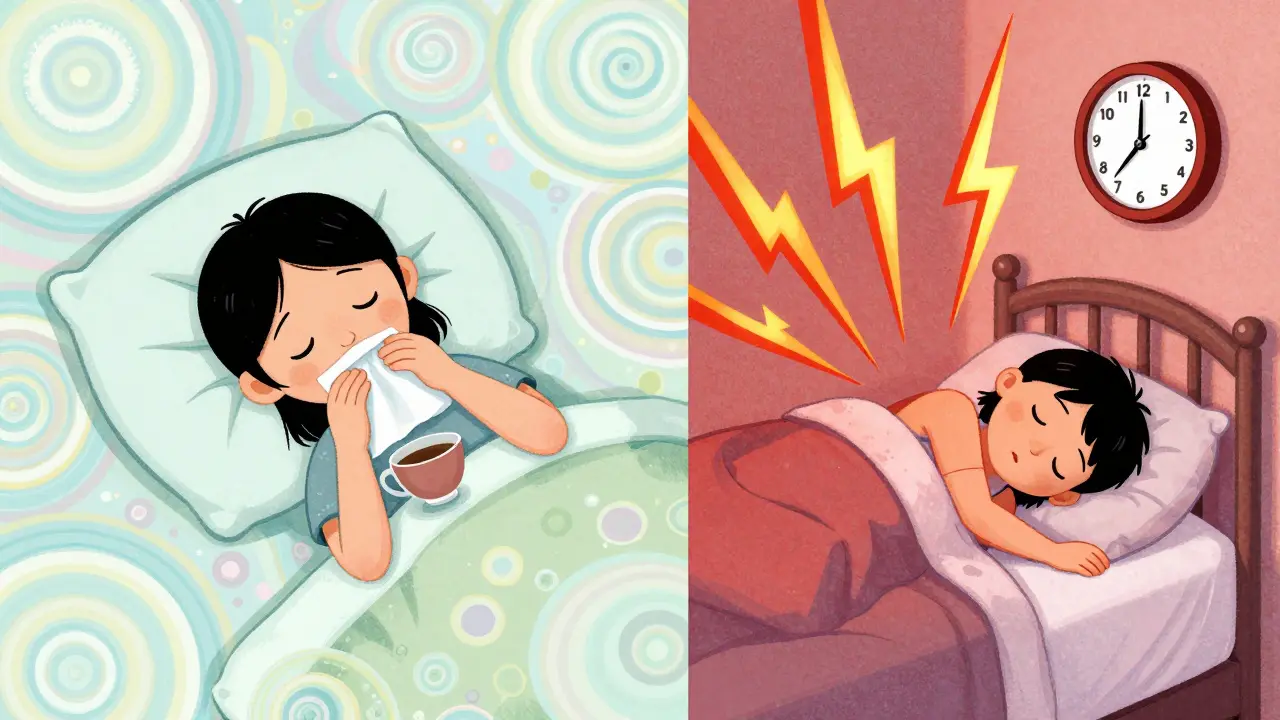
Every winter, people in Leeds and across the UK start wondering: is this just a cold, or is it the flu? It’s easy to mix them up. Both make you feel awful. Both come with coughing, sore throat, and fatigue. But the difference isn’t just in how bad you feel-it’s in what happens next. One can knock you out for a week. The other can land you in the hospital. And only one has treatments that actually work if you act fast.
How Do You Know It’s a Cold and Not the Flu?
The common cold starts slow. You wake up with a tickle in your throat. By midday, your nose is running. By day two, you’re sneezing and congested. Fever? Rare in adults. Most people never break 99.5°F. Symptoms peak around day three and fade by day seven. Some hang on for two weeks, but you’re usually back to normal.
The flu hits like a truck. One minute you’re fine. The next, you’re shivering, achy, and dizzy. Fever hits fast-often 102°F or higher. Headaches are sharp. Muscles feel like they’ve been hit with a sledgehammer. Fatigue isn’t just being tired-it’s exhaustion so deep you can’t get out of bed for days. Coughs are dry and chest-deep. You might feel nauseous or even vomit, especially in kids. This isn’t exaggeration. Eighty percent of flu patients report severe muscle pain. Sixty percent say they’ve never felt this drained before.
Here’s what colds don’t do: cause high fever, major body aches, or extreme fatigue that lasts weeks. If you’ve got those, it’s not a cold. It’s the flu.
Why the Difference Matters
It’s not just about feeling worse. The flu can kill. In the UK and US, flu leads to 12,000 to 52,000 deaths every year. Most of those are people over 65, pregnant women, or those with weak immune systems. But even healthy adults can end up in the hospital with pneumonia. About 15-30% of people hospitalized for flu develop it. That’s not rare. That’s common enough to be scary.
Colds? They rarely go beyond a sinus infection or earache-especially in kids. Even then, it’s usually mild. You don’t need antibiotics for a cold. Most of the time, your body clears it on its own. But with flu, waiting too long can cost you your health.
Antivirals: What Works, and When
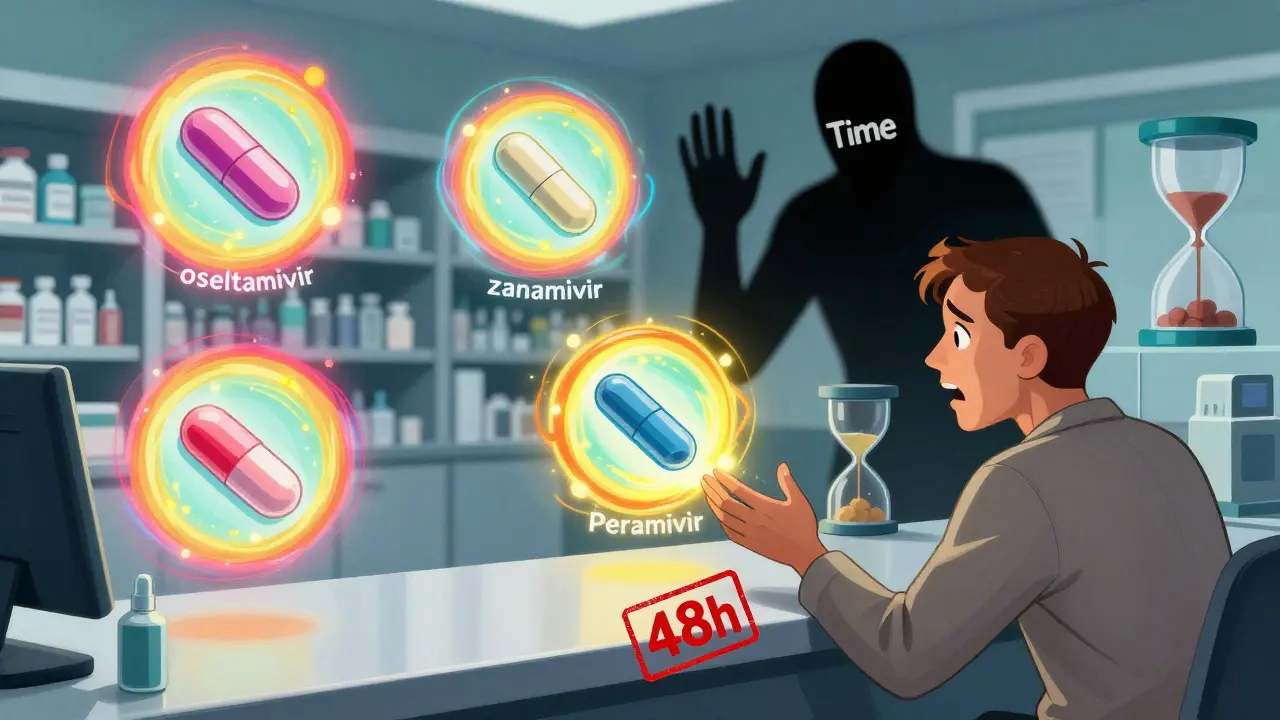
There are four antiviral drugs approved for flu in the UK and US: oseltamivir (Tamiflu), zanamivir (Relenza), peramivir (Rapivab), and baloxavir (Xofluza). None of them work for colds. None. Not even close.
They only help if you start them within 48 hours of symptoms showing up. After that, their power drops fast. If you wait three days, you’re basically just paying for a placebo. But if you take them early, they can cut your illness short by one to two days. For high-risk people, they can cut hospital stays by a third.
Oseltamivir is the most common. Generic versions cost £15-£30 in the UK. Brand-name Tamiflu? Around £100. Baloxavir (Xofluza) is a single pill. It’s expensive-up to £180-but it knocks down the virus faster than anything else. One study showed a 99% drop in virus levels within 24 hours.
Side effects? Nausea happens in about 10% of people on oseltamivir. Zanamivir can cause breathing issues in people with asthma. But compared to the risk of pneumonia or hospitalization, the side effects are minor.
What About Cold Treatments?
There’s no antiviral for the common cold. Rhinoviruses-responsible for half of all colds-have over 160 different strains. That makes a vaccine impossible. So treatment is all about feeling better, not curing.
Pseudoephedrine helps with congestion. It works. Studies show it clears nasal passages by 30-40%. Acetaminophen brings down fever and aches. Zinc lozenges? Some studies say they can shorten a cold by 1.6 days-if you start them within 24 hours of the first sniffle. But they taste awful. A lot of people quit after day two because of the metallic taste. And long-term use? Could cause copper deficiency. So use them short-term, and don’t overdo it.
Rest, fluids, and time are your best friends. No magic pill. Just patience.
What About COVID-19? How Do You Tell?
Flu and COVID-19 look almost identical. Both cause fever, cough, fatigue, sore throat. But one key difference: loss of taste or smell. That happened in 80% of early COVID cases. It’s rare in flu. Also, diarrhea and vomiting are more common with COVID.
Still, you can’t rely on symptoms alone. A rapid flu test at your GP or pharmacy gives you a clear answer in 15 minutes. It costs around £25-£50. If you’re high-risk-over 65, pregnant, diabetic, or have heart or lung disease-getting tested is worth it. Don’t guess. Test.
When to Go to the Doctor
You don’t need to see a doctor for every sniffle. But if you have flu symptoms and any of these, get help right away:
- Difficulty breathing or shortness of breath
- Chest pain or pressure
- Confusion or dizziness
- Severe vomiting
- Fever that goes away, then comes back with worse cough
These are red flags. They mean your body is struggling. That’s when flu turns dangerous. Don’t wait. Don’t hope it gets better. Go.
What People Are Really Saying
Thousands of patients online share their stories. One man in Manchester started Tamiflu 12 hours after his fever hit. He was back at work in three days. Normally, he’d be out for a week. Another woman waited three days because she thought it was just a bad cold. By day five, she had pneumonia. She spent a week in hospital.
On Reddit, people say: "I wish I’d known antivirals worked so fast." Others say: "I paid £180 for Xofluza and felt no difference. I had a mild case. Not worth it."
Here’s the truth: antivirals aren’t for everyone. If you’re young, healthy, and your symptoms are mild, you might not need them. But if you’re over 65, pregnant, or have asthma, diabetes, or heart disease-they’re lifesavers. Don’t let cost or hesitation stop you.
Prevention: Vaccines and Beyond
The flu vaccine isn’t perfect. It’s usually 40-60% effective. But it still cuts your risk of hospitalization by half. And if you do get the flu after the shot? Your symptoms are milder. You’re less likely to end up in ICU.
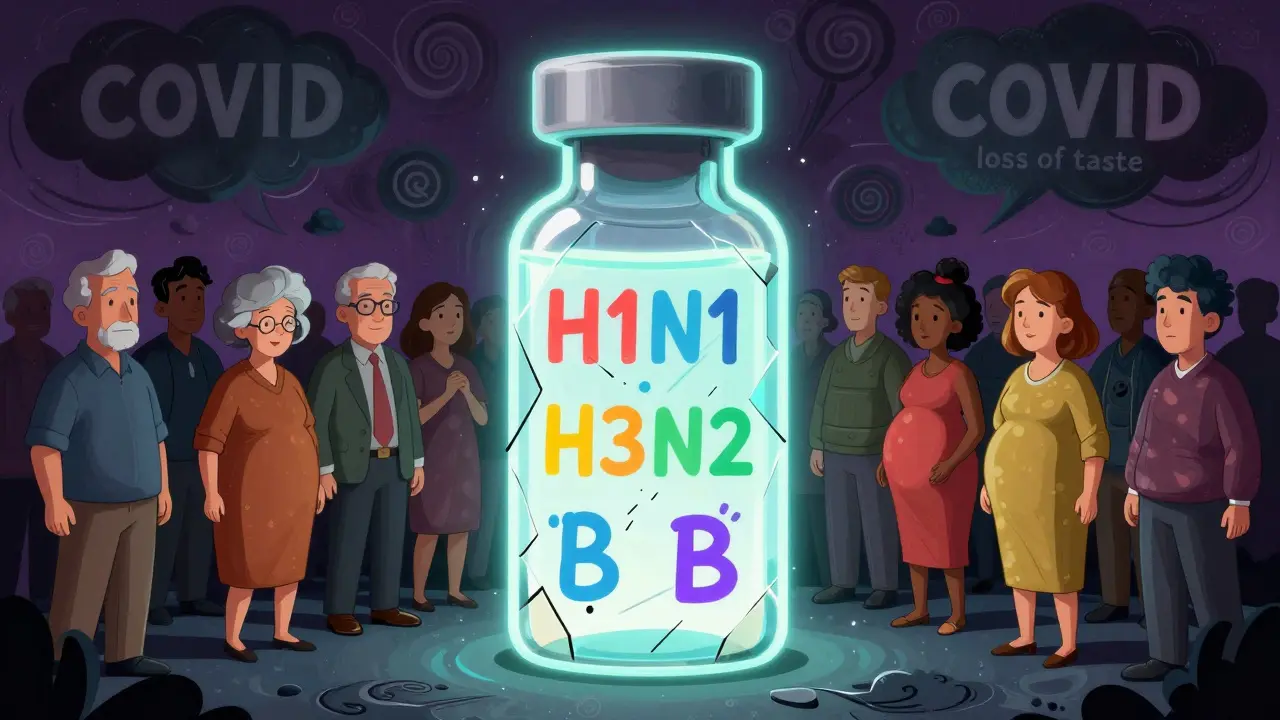
This year’s vaccine covers four strains: H1N1, H3N2, and two B strains. It’s available free on the NHS for at-risk groups. If you’re eligible, get it. Even if it’s late December.
Washing your hands, avoiding crowds when you’re sick, and covering your mouth when you cough-these still matter. Flu spreads through droplets. You don’t need to live in fear. Just be smart.
What’s Coming Next
Scientists are working on a universal flu vaccine. One in trials at the NIH showed 70% protection across multiple flu strains in monkeys. If it works in humans, we might never need a yearly shot again.
Also, mRNA flu vaccines-like the ones used for COVID-are in late-stage testing. Moderna’s version could be available by 2026. That means faster production, better matching to circulating strains, and possibly better protection.
For now, the tools we have work-if you use them right. Know the difference. Act fast. Protect the vulnerable.
Can you get the flu from the flu vaccine?
No. The flu vaccine contains either inactivated virus or just a piece of the virus-it can’t cause infection. Some people feel sore at the injection site, or get a low-grade fever or muscle aches for a day or two. That’s your immune system responding, not the flu. If you get sick right after the shot, you were already exposed before vaccination or caught another virus.
Do antivirals work if you’ve had symptoms for more than 48 hours?
They’re much less effective. The best results happen when taken within 48 hours of symptom onset. After that, the virus has already spread widely. But for high-risk patients-even after 48 hours-doctors may still prescribe antivirals to reduce complications like pneumonia. It’s not about shortening symptoms anymore; it’s about preventing serious illness.
Is zinc really helpful for colds?
Some studies show zinc lozenges can shorten a cold by about 1.6 days-if you start them within 24 hours of symptoms and take at least 75mg of elemental zinc per day. But many people can’t tolerate the bad taste or metallic aftertaste. Long-term use can interfere with copper absorption and cause nerve damage. Use them only briefly, and don’t rely on them as a cure.
Why can’t we make a vaccine for the common cold?
There are over 160 different strains of rhinovirus, the main cause of colds. They mutate quickly, and immunity to one strain doesn’t protect you from others. Trying to make a vaccine that covers all of them is like trying to hit 160 moving targets at once. It’s not impossible-but it’s not practical either. Right now, it’s easier to treat symptoms than to prevent every cold.
How do I know if I have the flu or just allergies?
Allergies don’t cause fever or body aches. They cause sneezing, itchy eyes, and runny nose-often in response to pollen, dust, or pets. Flu symptoms come on suddenly and include fever, chills, and exhaustion. If you’re sneezing constantly but feel fine otherwise, it’s likely allergies. If you’re achy, feverish, and wiped out, it’s probably flu. A rapid test can confirm.
Should I go to work if I have a cold or the flu?
If you have a cold, you might be able to work if you feel okay and don’t have a fever. But if you have the flu-especially with fever, chills, or body aches-stay home. You’re contagious for up to seven days. Going to work risks spreading it to others, especially those who are vulnerable. Plus, you’ll recover faster if you rest.
Katherine Blumhardt
December 25, 2025 AT 21:43Linda B.
December 26, 2025 AT 14:30Christopher King
December 26, 2025 AT 16:13Bailey Adkison
December 26, 2025 AT 18:19Gary Hartung
December 27, 2025 AT 12:52Ben Harris
December 28, 2025 AT 07:20Mussin Machhour
December 29, 2025 AT 20:05Zabihullah Saleh
December 31, 2025 AT 08:45Rick Kimberly
December 31, 2025 AT 16:19Terry Free
January 1, 2026 AT 00:39sagar patel
January 1, 2026 AT 03:40Michael Dillon
January 2, 2026 AT 15:44Lindsay Hensel
January 2, 2026 AT 18:39