Diabetes Foot Care: Ulcer Prevention and Daily Inspection Checklist
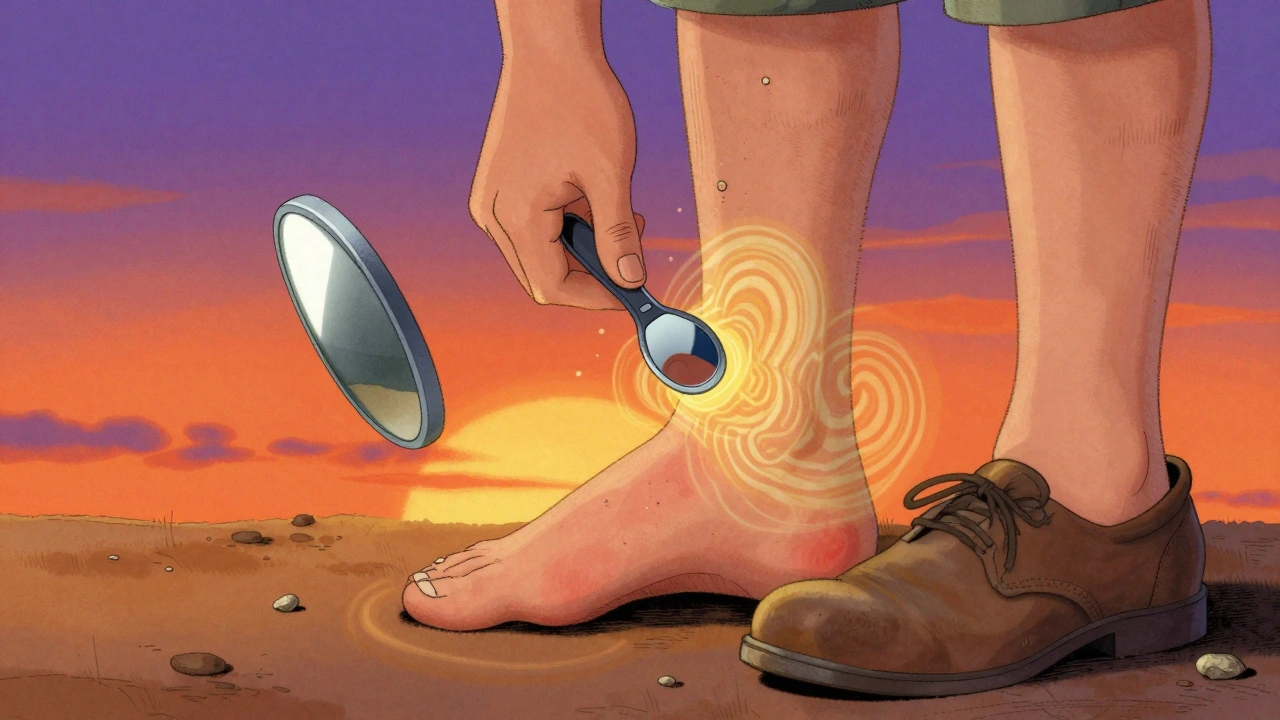
Every year, over 82,000 people in the U.S. lose a foot or leg because of diabetes-related complications. Most of these amputations are preventable. The key? Consistent, correct foot care. If you have diabetes, your feet are at risk-not because of something dramatic, but because of small, unnoticed problems that grow worse over time. A tiny blister, a cut you didn’t feel, a shoe that rubs just right-these can turn into ulcers. And once an ulcer forms, the path to infection, hospitalization, and even amputation becomes much more likely.
Why Diabetic Foot Ulcers Happen
Diabetes doesn’t just raise blood sugar. It damages nerves and blood vessels, especially in the feet. Nerve damage, called neuropathy, means you might not feel pain, heat, or pressure. So you can step on a sharp object, develop a blister, or rub your foot raw inside your shoe-and never know it until it’s too late. At the same time, poor circulation slows healing. Even a small wound can fester for weeks without showing signs of improvement.The International Working Group on the Diabetic Foot (IWGDF) says that 15-25% of people with diabetes will develop a foot ulcer in their lifetime. And once you’ve had one, your chance of getting another jumps dramatically. The good news? Most ulcers start with something small. And if you catch them early, you can stop them before they become serious.
The Daily Foot Inspection Checklist
This isn’t optional. It’s non-negotiable. Every single day. Here’s what you need to do, step by step.- Wash your feet daily in lukewarm water-between 90°F and 95°F. Test the temperature with your elbow or a thermometer. Hot water can burn you without you realizing it.
- Dry thoroughly, especially between your toes. Moisture trapped there invites fungal infections and skin breakdown.
- Inspect every surface of both feet. Use a mirror or ask someone to help. Look at the soles, between toes, heels, and tops. Don’t skip anything. Many ulcers start under the ball of the foot or near the big toe.
- Look for these warning signs:
- Blisters larger than 3mm
- Cuts or scrapes deeper than 1mm
- Redness spreading more than 1cm
- Swelling that makes your foot feel tighter than usual
- Warmth in one spot-more than 99°F compared to the other foot
- Ingrown toenails or thick, yellow nails (signs of fungus)
- Apply moisturizer to dry skin, but never between your toes. Dry skin cracks. Cracks let bacteria in.
- Trim toenails straight across, leaving about 1-2mm of nail beyond the tip of your toe. Don’t cut into the corners. Curved nails lead to ingrown toenails, which are a common cause of ulcers.
- Check your shoes before putting them on. Shake them out. Look for pebbles, torn linings, or rough seams. A single foreign object can cause a pressure ulcer in minutes.
The CDC says 68% of foot ulcers start from injuries that were never noticed-because inspections weren’t done consistently. Do this at the same time every day. Natural daylight between 10 a.m. and 2 p.m. is best. Your body temperature changes throughout the day, and checking in consistent lighting helps you spot real changes, not just normal variations.
Footwear: Your First Line of Defense
Shoes aren’t just about comfort-they’re medical equipment if you have diabetes. The wrong pair can cause more damage than walking barefoot.The IWGDF says that 87% of forefoot ulcers in people with nerve damage come from shoes that press too hard. That’s not an accident. It’s a design flaw. Here’s what to look for:
- Space at the toe: At least 0.5 inches (12.7mm) between your longest toe and the end of the shoe. Your toes need room to move.
- Width: Your foot should fit without squeezing. Allow for 15mm of toe splay-your toes should naturally spread out.
- Heel support: The back of the shoe (heel counter) should be firm, not floppy. A weak heel lets your foot slide, causing friction.
- No barefoot walking: Even indoors. The CDC found that walking barefoot for just 5 minutes a day increases your ulcer risk by more than 11 times.
Therapeutic shoes aren’t just for people with amputations or severe deformities. If you have neuropathy-even mild-you should be wearing shoes designed to reduce pressure. Many insurance plans, including Medicare, cover them. Ask your doctor for a prescription.

What Not to Do
Some common practices can actually hurt you.- Don’t use heating pads or hot water bottles on your feet. You can’t feel the heat, and burns happen fast.
- Don’t cut calluses yourself. Use a pumice stone gently after bathing. Let a podiatrist remove thick skin.
- Don’t use over-the-counter corn removers. These contain acid that can burn your skin.
- Don’t ignore a red spot. If you see redness that doesn’t fade after 24 hours, call your provider. Don’t wait for pain.
- Don’t assume you’re low-risk. Even if you feel fine, nerve damage can be silent. The IWGDF classifies risk levels: Risk 0 (no neuropathy), Risk 1 (neuropathy without deformity), Risk 2 (neuropathy with deformity), and Risk 3 (history of ulcer or amputation). Your risk level determines how often you need professional checks.
When to See a Professional
You should have a comprehensive foot exam at least once a year. But if you’re at higher risk, you need more frequent visits.- Risk 0: Annual screening for nerve damage (10g monofilament test) and circulation (ankle-brachial index).
- Risk 1: Every 6 months.
- Risk 2 or 3: Every 1-3 months. That’s not optional. That’s life-saving.
If you notice any of these, call your doctor immediately:
- A wound that hasn’t started healing in 2 days
- Drainage, pus, or foul smell
- Red streaks spreading up your leg
- Fever or chills
- Swelling that won’t go down
Antibiotics won’t fix an uninfected ulcer. The IDSA says using them preventatively increases antibiotic resistance without helping healing. Treatment isn’t about pills-it’s about offloading pressure, cleaning the wound, and managing blood sugar.
Real Barriers-And How to Overcome Them
Let’s be honest: Doing this every day is hard. Studies show only 42% of people with diabetes do a full daily inspection. Why?- Vision problems: If you can’t see well, use a mirror or ask a family member to help. Smartphone apps like FootCheck AI can take photos and flag abnormalities-though they need good internet.
- Neuropathy: The worse your nerve damage, the less likely you are to check. That’s why reminders matter. Set a daily alarm. Put your mirror next to your toothbrush.
- Cost: Therapeutic shoes and smart socks can be expensive. But many Medicare and Medicaid plans cover them. Ask your provider. Some clinics offer loaner shoes.
- Summer heat: People switch to sandals. Big mistake. Sandals expose feet and increase pressure on the ball of the foot. Look for diabetic sandals with cushioned soles and closed heels.
Integrated care works. Programs that connect your primary doctor, podiatrist, diabetes educator, and orthotist reduce ulcers by over 35%. If your care team isn’t talking to each other, ask them to. You’re not just a patient-you’re the center of your own care team.
The Bigger Picture
The CDC wants to cut diabetes-related amputations by 25% by 2030. That’s possible. But it won’t happen with fancy gadgets or new drugs. It’ll happen because people check their feet every day. Because they wear the right shoes. Because they don’t ignore a red spot.This isn’t about being perfect. It’s about being consistent. One missed day won’t cause an ulcer. But a pattern of missed days? That’s how it starts.
You don’t need to be a medical expert. You just need to be committed. Your feet carry you through your life. Protect them like you would your eyes or your heart. Because in diabetes, your feet are just as vital.
How often should I inspect my feet if I have diabetes?
You should inspect your feet every single day. This is non-negotiable. Even if you feel fine, nerve damage can prevent you from noticing injuries. Daily checks are the most effective way to catch small problems before they become ulcers. The CDC reports that 68% of ulcers start from injuries that went unnoticed because inspections were inconsistent.
Can I walk barefoot at home if I have diabetes?
No. Walking barefoot-even inside your house-increases your risk of foot ulcers by more than 11 times, according to the CDC. You might not feel a sharp object, a hot floor, or a rough seam on the carpet. Always wear shoes or slippers with closed toes and good support, even when you’re just moving around the kitchen or bathroom.
Do I need special shoes if I don’t have foot problems yet?
Yes-if you have neuropathy, even mild. The IWGDF found that 87% of forefoot ulcers in people with nerve damage are caused by ill-fitting or unsupportive shoes. You don’t need to wait for a wound to form. If you have loss of sensation, your shoes should reduce pressure on high-risk areas like the ball of your foot. Many insurance plans, including Medicare, cover therapeutic footwear with a doctor’s prescription.
What should I do if I find a small cut or blister?
Clean it gently with mild soap and water. Pat it dry. Cover it with a sterile, non-stick dressing. Don’t use hydrogen peroxide or alcohol-they delay healing. Monitor it daily. If it doesn’t start healing within 48 hours, or if you see redness, swelling, or drainage, call your doctor immediately. Never try to drain a blister yourself. Let a professional handle it.
Can I use over-the-counter products to treat calluses or corns?
No. Over-the-counter corn and callus removers contain acids that can burn your skin, especially if you have nerve damage. Even a small burn can turn into a serious ulcer. Use a pumice stone gently after bathing to smooth thick skin. For persistent calluses, see a podiatrist. They can safely remove them with professional tools.
How often should I see a podiatrist?
It depends on your risk level. If you have no neuropathy (Risk 0), an annual exam is enough. If you have neuropathy without deformity (Risk 1), you need checkups every 6 months. If you have foot deformities or a past ulcer (Risk 2 or 3), you need to be seen every 1 to 3 months. These aren’t suggestions-they’re evidence-based guidelines from the IWGDF. Skipping visits increases your risk of amputation.
Are smart socks or temperature-monitoring mats worth the cost?
They can be helpful, but they’re not required. Devices like Siren Socks or Podimetrics mats detect temperature differences that predict ulcers days before they form. Studies show they’re 73% accurate. But they cost $150-$300 upfront plus monthly fees. For many people, especially those on Medicaid, they’re out of reach. The best tool is still a mirror and daily visual inspection. Use tech if you can afford it and it helps you stay consistent-but don’t rely on it as a replacement for checking your feet yourself.
Can exercise cause foot ulcers?
Unsupervised exercise can. The Diabetic Medicine journal found that patients doing unsupervised ankle exercises without gait analysis had a 22% higher risk of ulcers. Walking is safe and encouraged-but only if you wear proper shoes and inspect your feet afterward. Avoid high-impact activities like running if you have neuropathy. Stick to low-impact options like swimming, cycling, or seated exercises. Always check your feet after any activity.
Kyle Flores
December 7, 2025 AT 06:54man i just found out my dad’s been skipping his foot checks for months. he says he ‘feels fine’ but now i’m gonna start leaving mirrors next to his coffee maker. this post hit home.
Helen Maples
December 7, 2025 AT 12:34Insufficient adherence to daily foot inspection protocols is the single largest modifiable risk factor for lower-limb amputation in diabetic populations. The data is unequivocal. This checklist is not optional-it’s clinical best practice. Period.
Ashley Farmer
December 8, 2025 AT 18:39I used to think this was overkill until my cousin lost her toe. Now I help my mom check her feet every night after dinner. It’s weird at first, but it becomes routine. You’re not just protecting feet-you’re protecting independence.
David Brooks
December 9, 2025 AT 20:16THIS. IS. LIFE. OR DEATH. I used to roll my eyes at my grandma’s foot mirror routine. Then I saw her scar. Then I saw her wheelchair. Don’t wait for the pain. Check your feet. TODAY. Your future self will beg you to start now.
Jennifer Anderson
December 11, 2025 AT 11:18so i started using that foot check app last week and it actually flagged a red spot i didnt even see. i went to the doc and it was just a tiny blister. saved me a whole mess. thanks for the tip!
Sadie Nastor
December 13, 2025 AT 06:18daily foot check = my new morning ritual 🌞🪞
same time as brushing teeth. no excuses. i even got a cute little mirror with a stand. it’s kinda meditative now? weird, but good.
Nicholas Heer
December 13, 2025 AT 19:39they want you to check your feet daily because they don’t want you walking around barefoot in the Walmart parking lot. they’re scared you’ll sue them if you step on a nail. this whole thing is corporate fear-mongering wrapped in medical jargon. wear socks. done.
Sangram Lavte
December 13, 2025 AT 23:52I live in India, and here most people with diabetes don’t even know what neuropathy is. I printed this checklist and gave it to my uncle. He cried. Said he never thought his feet could be this important. Small things matter.
Oliver Damon
December 15, 2025 AT 10:32There’s an epistemological paradox here: if you can’t feel damage, how can you trust your perception of safety? The checklist externalizes proprioception. It’s not just hygiene-it’s a cognitive prosthetic. We rely on tools to compensate for biological failure. This is human adaptation in microcosm.
Kurt Russell
December 16, 2025 AT 06:30you think this is hard? try doing this after a 12-hour shift, with kids screaming and your own sugar spiking. i do it. every. single. day. because i’m not losing my feet. period. you got this. i believe in you.
Stacy here
December 17, 2025 AT 11:40the system doesn’t want you to know that therapeutic shoes are covered by Medicare. they want you to pay $800 out of pocket. then they profit from your amputations. this is capitalism. check your feet… but also check your insurance policy.
Ryan Sullivan
December 17, 2025 AT 18:13While the checklist is technically sound, its efficacy is undermined by the lack of longitudinal compliance data. The 42% adherence rate cited is not a reflection of patient negligence-it is a symptom of systemic neglect in diabetic education infrastructure. This is not a behavioral problem. It is a structural one.
Wesley Phillips
December 18, 2025 AT 05:09so i asked my podiatrist about the shoes and he said ‘just wear Crocs’ lol
nope. not buying it. got my Medicare-approved ones. my feet thank me. also i look like a nerd. worth it.
Olivia Hand
December 19, 2025 AT 19:40if you have neuropathy and you’re still walking barefoot indoors… why? what’s the logic here? you wouldn’t touch a hot stove blindfolded. why risk your feet on a carpet you can’t feel?