Dizziness and Lightheadedness as Medication Side Effects: What You Need to Know
Medication Dizziness Risk Calculator
Calculate Your Dizziness Risk
Select medications you're taking to estimate your risk of dizziness. Our calculator uses real-world data from medical studies to show your personalized risk level.
Your Dizziness Risk Level
What This Means
Recommendations
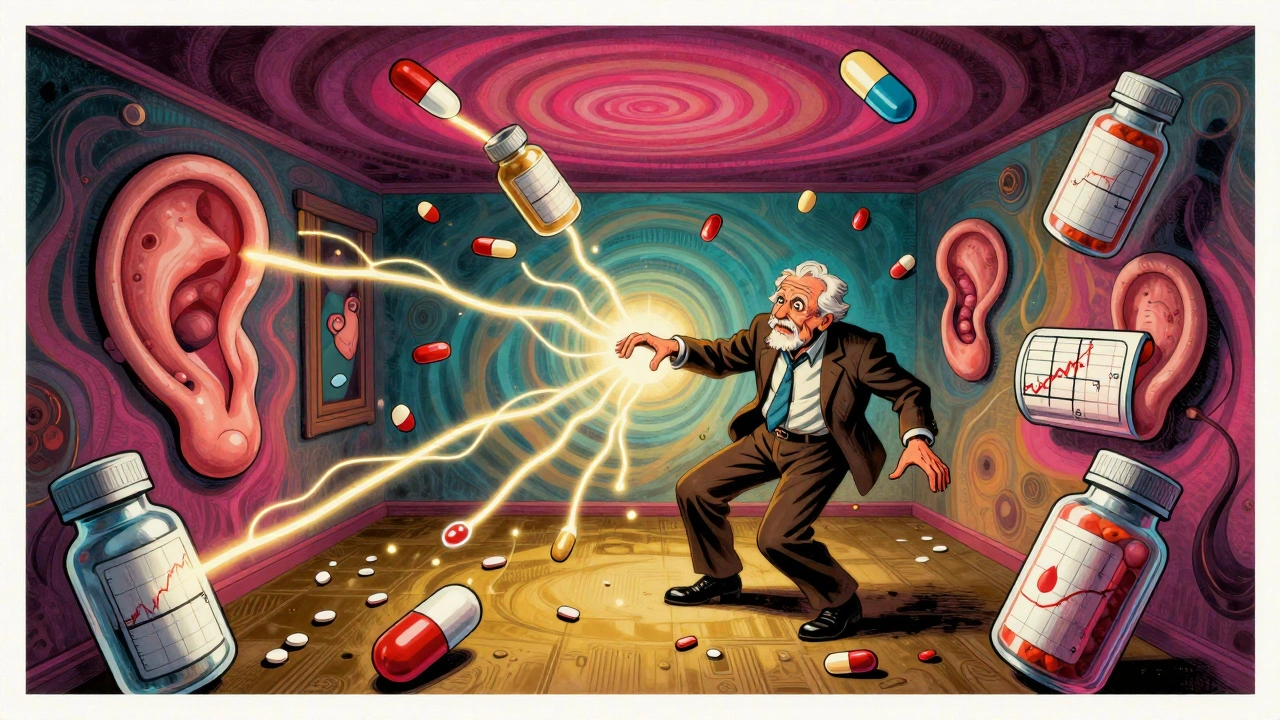
Feeling dizzy or lightheaded after taking a new medication isn’t just annoying-it’s common, and often overlooked. If you’ve ever stood up too fast and felt like the room spun, or walked into a room and suddenly felt faint, you’re not alone. About 15-20% of adults experience dizziness every year, and nearly a quarter of those cases are linked directly to medications. It’s not always the drug’s fault, but when it is, the consequences can be serious-especially for older adults, where dizziness is one of the top reasons for falls.
How Medications Make You Feel Dizzy
Dizziness isn’t one thing. It can mean the world is spinning (vertigo), you’re about to pass out (lightheadedness), or you just feel unsteady on your feet. Medications cause these sensations by messing with three key systems in your body: your inner ear, your blood pressure control, and your brain’s ability to process balance signals.The inner ear, or vestibular system, is your body’s built-in gyroscope. Some drugs, especially certain antibiotics like gentamicin, can permanently damage the tiny hair cells in your inner ear. Studies show that up to 40% of patients on long-term gentamicin therapy develop lasting vestibular problems. Chemotherapy drugs like cisplatin are even more damaging-up to 65% of patients end up with permanent balance issues.
Other medications, like blood pressure pills, cause dizziness by dropping your blood pressure too much. When you stand up, your body normally adjusts quickly to keep blood flowing to your brain. But drugs like beta-blockers (propranolol), diuretics (furosemide), and ACE inhibitors (lisinopril) can slow that response. That’s why you might feel faint when you get out of bed. In fact, 22.1% of people taking furosemide report dizziness as a side effect.
Then there are the brain-altering drugs-antidepressants, anti-seizure meds, and even some painkillers. SSRIs like fluoxetine and sertraline can trigger dizziness in up to 25% of users during the first few weeks. This isn’t just about serotonin levels. These drugs interfere with how your brain combines signals from your eyes, muscles, and inner ear. When the signals don’t match, your brain gets confused. That’s when you feel off-balance.
Which Medications Are Most Likely to Cause Dizziness?
Not all drugs are created equal when it comes to dizziness. Some are far more likely to cause trouble than others. Here’s a breakdown of the most common culprits based on real-world data:| Medication Class | Example Drug | Dizziness Incidence |
|---|---|---|
| Antiepileptic | Carbamazepine | 29.7% |
| Antiepileptic | Pregabalin | 26.1% |
| Antidepressant (Tricyclic) | Amitriptyline | 28.4% |
| Antidepressant (SSRI) | Fluoxetine | 25.3% |
| Diuretic | Furosemide | 22.1% |
| Beta-blocker | Propranolol | 19.7% |
| ACE Inhibitor | Lisinopril | 14.2% |
| Aminoglycoside Antibiotic | Gentamicin | 17-40% |
| Proton Pump Inhibitor | Omeprazole | 5.2% |
What’s surprising is how common even low-risk drugs are. Proton pump inhibitors like omeprazole cause dizziness in only about 5% of users-but because so many people take them daily for heartburn, they still contribute to 3.2% of all emergency visits for dizziness in the U.S.
Why Older Adults Are at Higher Risk
If you’re over 65, dizziness from medication isn’t just uncomfortable-it’s dangerous. The CDC reports that 35% of older adults fall at least once a year. Medications are a major reason why. A single drug might slightly increase your risk. But when you’re taking five, six, or more pills-a situation called polypharmacy-your risk jumps by 300%.The American Geriatrics Society’s Beers Criteria, updated every few years, lists 17 medications that older adults should avoid because they raise fall risk. These include:
- Benzodiazepines (like diazepam)-increase fall risk by 50%
- First-generation antihistamines (like diphenhydramine)-42% higher fall risk
- Muscle relaxants (like cyclobenzaprine)-37% higher fall risk
Even newer drugs are being flagged. SGLT2 inhibitors, used for type 2 diabetes, showed a 9.3% dizziness rate in post-market data through September 2023. That’s enough to make regulators watch closely.
The problem isn’t just the drugs themselves. As we age, our kidneys and liver don’t clear medications as efficiently. That means drugs stick around longer, building up in your system. A dose that was fine at 50 might be too strong at 75.
What to Do If You Feel Dizzy
If you start feeling dizzy after starting a new medication, don’t panic-but don’t ignore it either. Here’s what works:- Keep a symptom diary. Write down when you feel dizzy, what you were doing, and when you took your meds. In 68% of cases, dizziness happens within a few hours of taking the drug. That pattern is a huge clue.
- Don’t stop cold turkey. Stopping blood pressure meds or seizure drugs suddenly can be deadly. A 2023 study found that quitting antiseizure meds without medical help tripled seizure risk.
- Ask your doctor about alternatives. There’s often another drug in the same class that’s less likely to cause dizziness. For example, if propranolol is making you dizzy, metoprolol might be gentler on your balance.
- Get checked for orthostatic hypotension. The American Heart Association now defines it as a drop of 20 mmHg systolic or 10 mmHg diastolic within 3 minutes of standing. If you have this, compression stockings and standing up slowly can cut symptoms by 45%.
When Dizziness Won’t Go Away
Sometimes, the dizziness sticks around even after you stop the drug. That’s especially true with ototoxic drugs like gentamicin or cisplatin. The damage to your inner ear doesn’t heal. But that doesn’t mean you’re stuck feeling awful.Vestibular rehabilitation therapy (VRT) is a type of physical therapy that retrains your brain to rely on other balance signals-your eyes and your feet-instead of your damaged inner ear. Studies show it works in 70-80% of cases. Most people see improvement after 6-8 weekly sessions with a certified therapist.
Even newer options are showing promise. A 2023 trial in The Lancet Neurology tested virtual reality-based VRT. Patients wore VR headsets and did balance exercises in simulated environments. After treatment, 82% reported major improvement in dizziness. It’s not widely available yet, but it’s coming.

What’s Next for Medication Safety
The future of managing drug-induced dizziness is personal. Researchers are now looking at genetics. A 2023 study in Nature Communications found 17 genetic variants that make people more likely to get dizzy from blood pressure meds. In the next 5-10 years, a simple DNA test might help your doctor pick a drug that won’t make you feel off-balance.The NIH’s All of Us program is collecting balance data from 1 million people to build predictive models. Imagine a future where your doctor says, “This drug works well for most people, but your genes suggest you’re at higher risk for dizziness. Let’s try something else.”
Regulators are also stepping up. The FDA now requires black box warnings on aminoglycoside antibiotics. The European Medicines Agency recommends routine balance tests for patients on platinum chemotherapy. These aren’t just paperwork-they’re lifesavers.
Bottom Line: Don’t Suffer in Silence
Dizziness from medication is common, but it’s not normal. If you’re feeling off, it’s not just “getting older.” It might be your meds. Talk to your doctor. Keep track of your symptoms. Ask about alternatives. And never stop a drug without guidance.The good news? You don’t have to live with dizziness. Whether it’s switching pills, starting therapy, or adjusting your routine, help is available. Your balance matters-not just for walking, but for staying independent, safe, and in control of your life.
Can over-the-counter meds cause dizziness?
Yes. Common OTC drugs like antihistamines (Benadryl), motion sickness pills (Dramamine), and even some cold medicines can cause dizziness. Diphenhydramine, for example, increases fall risk by 42% in older adults. Always check the label for dizziness as a side effect, and avoid these if you’re over 65 or already taking other meds that affect balance.
How long does medication-induced dizziness last?
It depends. For most people, dizziness from SSRIs or blood pressure meds fades within 1-4 weeks as the body adjusts. But with ototoxic drugs like gentamicin or cisplatin, the damage can be permanent. If dizziness lasts longer than 6 weeks after stopping a drug, see a vestibular specialist. Persistent symptoms often need targeted therapy, not just time.
Is dizziness a sign of something worse than a side effect?
Sometimes. While most dizziness is medication-related, it can also signal heart problems, inner ear infections, or neurological conditions like Parkinson’s or multiple sclerosis. If you have additional symptoms-like chest pain, vision changes, slurred speech, or numbness-seek medical help immediately. Dizziness alone is often harmless, but paired with other signs, it’s a red flag.
Can I drive if I feel dizzy from my meds?
No-not safely. Even mild dizziness slows reaction time and impairs spatial awareness. Studies show drivers with medication-induced dizziness have a 2.5x higher crash risk. If your meds cause dizziness, avoid driving until you’ve spoken to your doctor and your symptoms are under control. Many states require reporting if a medical condition affects driving ability.
Are there natural ways to reduce medication-related dizziness?
Yes, but they’re supportive, not replacements. Stay hydrated-dehydration worsens dizziness. Move slowly when standing. Use handrails. Avoid alcohol, which amplifies dizziness. Try balance exercises like standing on one foot (with support). And consider vestibular rehab if symptoms persist. Supplements like ginger or ginkgo biloba have limited evidence and can interact with meds-talk to your doctor before trying them.
What to Ask Your Doctor
If you’re on multiple meds and feeling dizzy, here are five questions to ask at your next appointment:- Could any of my medications be causing my dizziness?
- Is there a lower-risk alternative for any of these drugs?
- Should I be tested for orthostatic hypotension?
- Would vestibular rehabilitation help me?
- Can we review all my meds together to cut unnecessary ones?
Many people don’t realize their doctor can help them reduce their pill count. A 2022 study found that just cutting one unnecessary medication reduced dizziness in 60% of older adults. You don’t have to live with it. You just have to speak up.
Billy Schimmel
December 6, 2025 AT 21:56So basically, if you’re on more than three pills, you’re just a walking human glitch?
My grandma takes seven meds and still beats me at chess. She just leans on the fridge when she gets dizzy. Practical.
Shayne Smith
December 8, 2025 AT 01:00I took that one blood pressure pill and felt like I was on a tilt-a-whirl. Thought I was dying. Turns out? Just my body saying ‘hey, chill out.’
Now I stand up like a turtle. Slow. Deliberate. Safe.
Max Manoles
December 8, 2025 AT 21:39The data presented here is statistically robust and clinically significant. The 29.7% incidence rate for carbamazepine, for instance, aligns with the 2022 FDA Adverse Event Reporting System (FAERS) meta-analysis. What’s concerning is the normalization of polypharmacy in geriatric populations without systematic vestibular screening.
Additionally, the omission of drug-drug interactions-particularly between SSRIs and diuretics-is a critical gap. The cumulative effect on orthostatic tolerance is not merely additive; it’s multiplicative. Clinicians need to treat medication lists like circuit boards: one faulty component can cascade into systemic failure.
Annie Gardiner
December 10, 2025 AT 11:18Oh wow, so the government and Big Pharma didn’t tell you that medicine can make you dizzy? Shocking.
Next you’ll tell me water is wet and gravity exists.
Also, have you considered that maybe your body just hates being chemically manipulated? Just a thought.
Rashmi Gupta
December 11, 2025 AT 02:48In India, we don’t even get proper prescriptions. You walk into a pharmacy, say ‘I feel dizzy,’ and they hand you five pills in a bag labeled ‘For Balance.’ No doctor. No blood test. Just faith and turmeric.
So yes, we know dizziness. We live it.
Andrew Frazier
December 11, 2025 AT 13:47USA got the best meds in the world. If you’re dizzy, you probably just ain’t got the discipline to stand up right. My grandpa took 14 pills a day and still mowed his lawn. You weak? Then fix yourself.
Also, VR therapy? That’s a Silicon Valley scam. Real men use gravity.
Mayur Panchamia
December 12, 2025 AT 15:15Listen here, America-you think you’re the only ones with dizziness?! In India, we have Ayurvedic doctors who’ve been treating vertigo with herbs for 5,000 years-before your pills even had a barcode! You people swallow chemicals like candy and then cry about side effects?!
Try ashwagandha. Try yoga. Try not being so fragile.
Also, your FDA is a joke. We don’t need your black boxes-we need your humility.
brenda olvera
December 14, 2025 AT 06:53I’m from Mexico and we don’t always have fancy tests but we know when something’s off
My abuela says if your head spins, sit down and eat something sweet
And pray
And drink agua de jamaica
It’s not science but it’s love
And love works too
olive ashley
December 14, 2025 AT 23:03Did you know the WHO secretly tracks dizziness as a metric for population compliance?
Every time someone gets dizzy from a pill, it’s a signal-your body is rejecting the system.
And guess what? The same companies that make your blood pressure meds also make the VR headsets they’re pushing now.
It’s a loop. They make you sick. They sell you the cure. Then they patent the data from your brain when you do the therapy.
They’re not fixing you. They’re harvesting you.
Chris Park
December 15, 2025 AT 21:13Let me guess-you’re one of those people who believes in ‘clinical studies’ and ‘FDA approvals.’
Meanwhile, in Nigeria, people take traditional remedies and never get dizzy because they don’t trust Western medicine.
Why do you think the West is full of anxious, dizzy people? Because you’re poisoning your DNA with synthetic molecules.
And now you want to test my genes? No. I’ll test your ethics.
Nigel ntini
December 17, 2025 AT 14:25Just wanted to say-this post is a lifeline for so many people who feel dismissed by doctors.
If you’re reading this and you’re dizzy? You’re not crazy. You’re not weak. You’re just a human caught in a system that moves too fast.
Keep a diary. Ask the questions. Find a PT who specializes in vestibular rehab. It’s not magic-but it’s real.
You’ve got this. And you’re not alone.
Ashish Vazirani
December 19, 2025 AT 10:10They say ‘don’t stop cold turkey’… but what if the whole damn system is the problem?
What if your ‘medication’ is just a Band-Aid on a bullet wound?
What if your dizziness isn’t a side effect… but a warning?
And what if your doctor doesn’t want to hear it because they’re paid to keep you on the pills?
Think deeper. Look wider. Question everything.
And if you’re still dizzy after all this? Maybe… you’re not supposed to be walking upright anymore.