Drug Recalls and Safety Alerts: How to Stay Informed About FDA Warnings
Drug Recall Checker
Check Your Medication for Recalls
Enter your medication name to see if it's been recalled by the FDA
Recall Status
No Recalls FoundEnter a medication name to check for recalls
Understanding Recall Classes
Class I Recall
Most serious. Use could cause serious harm or death. Example: Contaminated injectables or pills with wrong dosages.
Class II Recall
May cause temporary health problems or low risk of serious harm. Example: Labeling error that could confuse patients.
Class III Recall
Unlikely to cause harm but violates FDA regulations. Example: Misprinted expiration date.
Important Steps
If your medication is recalled:
- Class I: Stop taking immediately and consult your doctor
- Class II: Check with your pharmacist about next steps
- Class III: Check expiration dates and proper storage
- Always: Report side effects to FDA via MedWatch
Every year, hundreds of prescription drugs, over-the-counter medicines, and even supplements are pulled from shelves because of hidden dangers. Some have contaminated ingredients. Others cause rare but deadly side effects that only show up after thousands of people take them. These aren’t hypothetical risks-they happen, and they can be life-threatening. The FDA is the main system in the U.S. that catches these problems and warns the public. But if you don’t know how to find those alerts, you’re flying blind.
What You Need to Know About Drug Recalls
A drug recall isn’t always a full removal from the market. Sometimes it’s a label change, a warning added to the package, or a limited batch pulled because of contamination. The FDA classifies recalls into three levels:- Class I - Most serious. Use of the drug could cause serious harm or death. Examples include contaminated injectables or pills with wrong dosages.
- Class II - May cause temporary health problems or a low risk of serious harm. Think of a drug with a labeling error that could confuse patients.
- Class III - Unlikely to cause harm, but violates FDA regulations. Might be a misprinted expiration date.
How the FDA Spots Problems Before It’s Too Late
The FDA doesn’t wait for a crisis to act. Its system, called MedWatch, collects reports of bad reactions from doctors, pharmacists, and patients. In 2023, over 1.3 million reports came in. About 85% were from healthcare pros, but 15% came from regular people like you. Here’s how it works: A patient takes a new blood pressure drug and ends up in the ER with a severe rash. Their doctor files a report. Another patient does the same. Then another. After a few dozen reports, the FDA’s AI system flags it as a possible safety signal. They dig into the data. If the pattern holds, they issue a Drug Safety Communication (DSC)-a public alert. In May 2023, the FDA issued a DSC for all ADHD stimulants after linking them to a rare but dangerous increase in blood pressure. That alert led to updated boxed warnings-the strongest kind-on every prescription in that class. That’s how the system saves lives.Where to Find Real-Time Alerts (Not Just News Headlines)
Most people hear about drug recalls from the news. But by then, it’s often too late. The FDA doesn’t wait for reporters. They post alerts directly on their website. Here’s how to get them before they go viral:- Subscribe to FDA Drug Safety Communications - Go to fda.gov/medwatch, click "Subscribe," and choose email alerts for Drug Safety Communications. As of 2023, over 457,000 people get these. They’re sent out immediately when a serious risk is confirmed.
- Use the MedWatch App - Available for iOS and Android, the free MedWatch app lets you report side effects in under 5 minutes. It also pushes critical alerts to your phone. Over 187,000 people have downloaded it since 2020.
- Check the FDA Drug Recalls Page - fda.gov/drugs/drug-safety-and-availability/drug-recalls. This page is updated daily. No fluff. Just recalls, with dates, lot numbers, and what to do.
- Follow FDA on Twitter/X - @FDA_Drug_Recalls is a real-time feed of recalls and safety notices. It’s faster than email.
What the FDA Can’t Do (And What You Need to Watch For)
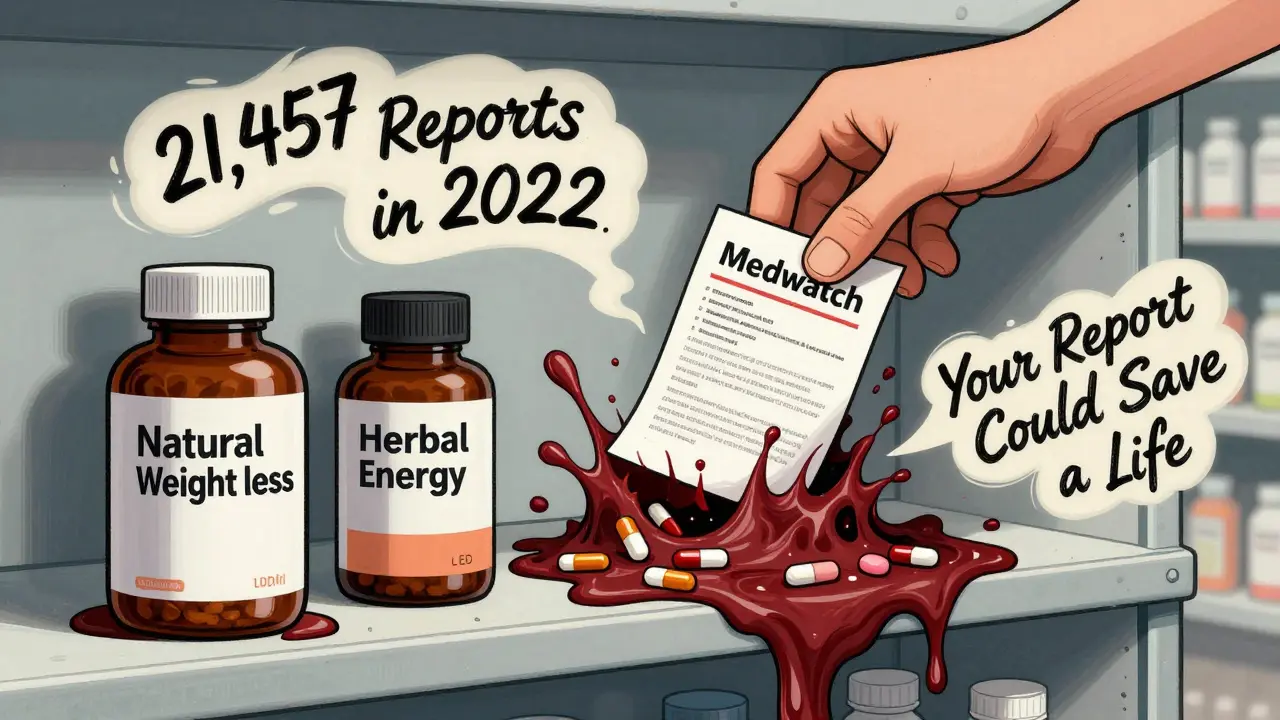
The FDA has limits. They don’t review supplements before they hit the shelf. That’s why in 2022, there were 2,750 adverse event reports for dietary supplements-but only 12 formal safety alerts. Many of those supplements contained hidden prescription drugs like steroids or erectile dysfunction meds. If you take anything labeled "natural," "herbal," or "weight loss aid," assume it’s untested. Also, the FDA doesn’t track every single batch of every drug. They rely on reports. If no one reports a bad reaction, they won’t know it’s happening. That’s why your report matters. And here’s the harsh truth: Even when alerts are issued, many people ignore them. A 2023 Medscape poll found 68% of doctors skip safety alerts because they get too many. One hospital pharmacist told me, "I get 67 alerts a week. Only two are actually urgent. The rest are noise." That’s why you need to be smarter about how you consume them.How to Use Alerts Without Getting Overwhelmed
You don’t need to read every alert. You need to know which ones affect you. Here’s how to filter:- Know your meds - Keep a list of everything you take, including dosages. Update it every 3 months.
- Check for your specific drug - If you’re on metformin, don’t read about statin recalls. Go straight to the FDA’s recall page and search your drug’s name.
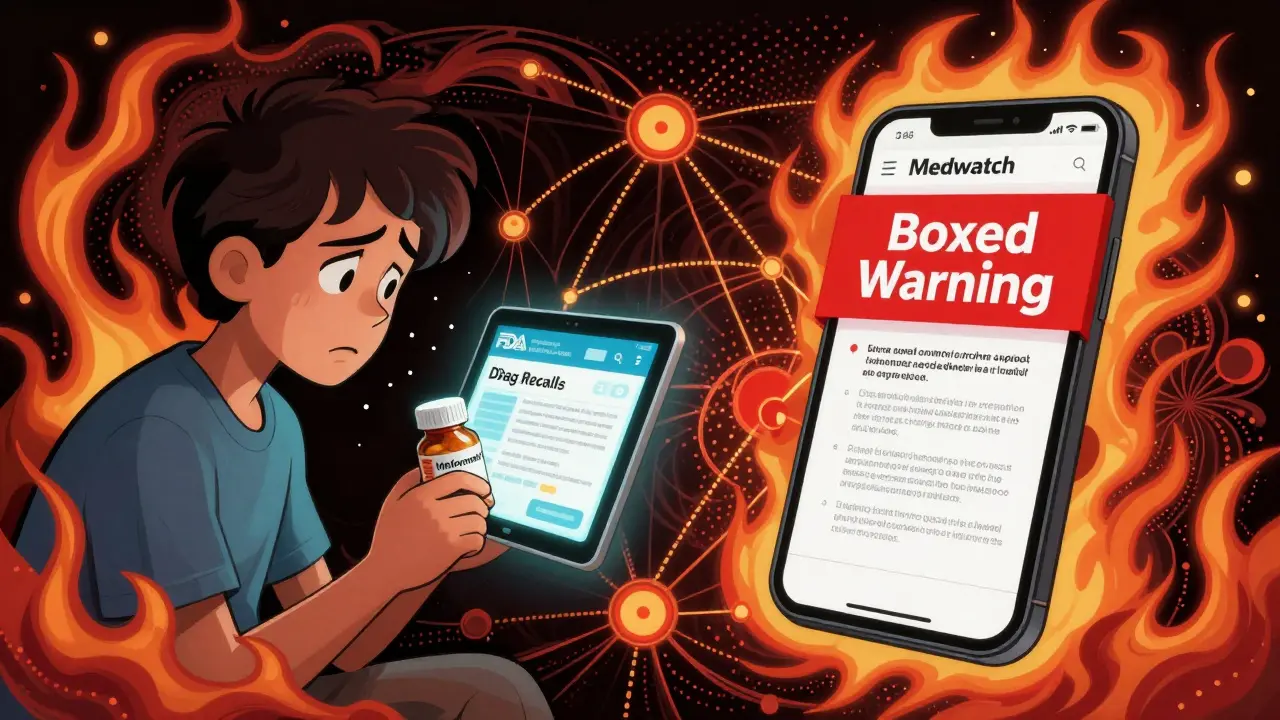
- Look for "Boxed Warning" - This is the FDA’s red flag. If your drug has one, pay attention. It means the risk is real and documented.
- Ask your pharmacist - They get the same alerts. Ask: "Has there been any new safety info on my meds this month?" Most will check for you.
What to Do If You Experience a Bad Reaction
If you or someone you know has a serious side effect-like chest pain after taking a new pill, sudden swelling, or unexplained bleeding-do this:- Call your doctor or 911 if it’s an emergency.
- Save the pill bottle-lot number and expiration date matter.
- Report it to the FDA using MedWatch: fda.gov/medwatch or the app.
- Keep a written record of symptoms, dates, and times.
Global Alerts and What They Mean for You
The FDA doesn’t work alone. It shares data with the European Medicines Agency (EMA) and the World Health Organization’s VigiBase. If a drug is recalled in Germany or Japan, the FDA often follows within weeks. But here’s the catch: Not all countries report equally. The U.S. has one of the most active systems. If you take a drug made in India or China, the FDA might not catch a problem until it’s already in U.S. pharmacies. That’s why checking the FDA’s site regularly is even more important for imported or generic drugs.Bottom Line: Stay Proactive, Not Reactive
Drug recalls aren’t something you wait for. They’re something you prepare for. The system works-but only if you use it. You don’t need to be a doctor. You don’t need to understand pharmacology. You just need to know where to look and how to act. Set up your FDA email alerts today. Download the MedWatch app. Keep a list of your meds. Ask your pharmacist one question every month. That’s it. That’s how you protect yourself-and your family-from preventable harm.How do I know if my medication has been recalled?
Go to fda.gov/drugs/drug-safety-and-availability/drug-recalls and search by drug name, manufacturer, or lot number. You can also sign up for FDA email alerts that notify you the moment a recall is issued. Don’t rely on your pharmacy’s website or news headlines-they’re often slower than the FDA’s official site.
Can I report a bad reaction myself?
Yes. The FDA’s MedWatch system accepts reports from patients and caregivers. You can file a report online at fda.gov/medwatch, by phone at 1-800-FDA-1088, or using the free MedWatch app. Even if you’re not sure it was the drug, report it. The FDA needs all data to spot patterns. Over 15% of reports come from consumers-and many recalls started with just one or two reports.
Are supplements checked for safety by the FDA?
No. The FDA does not review dietary supplements for safety or effectiveness before they’re sold. They only act after problems are reported. In 2022, there were 2,750 adverse event reports for supplements, but only 12 formal safety alerts. Many supplements contain hidden drugs-like steroids or erectile dysfunction meds-that aren’t listed on the label. Always assume supplements are untested unless proven otherwise.
Why do I get so many drug alerts from my pharmacy app?
Many pharmacy apps send every possible alert, even minor ones, to avoid liability. This causes "alert fatigue"-where doctors and patients start ignoring them all. The FDA only issues high-priority Drug Safety Communications. Your pharmacy’s alerts may include routine updates, drug interactions, or insurance changes. Focus only on those labeled "Boxed Warning," "Serious Risk," or "Immediate Action Required."
How long does it take for the FDA to act on a safety signal?
The FDA aims to issue a Drug Safety Communication within 30 days of confirming a serious safety signal. In 2022, they met that goal 92% of the time. But it depends on how clear the data is. If only a few reports exist, they may wait for more. If there’s a pattern-like 20+ similar cases-they move fast. The system isn’t perfect, but it’s designed to act quickly when evidence is strong.
Mario Bros
January 11, 2026 AT 19:51Jake Nunez
January 12, 2026 AT 03:57Christine Milne
January 12, 2026 AT 16:34Bradford Beardall
January 14, 2026 AT 05:47McCarthy Halverson
January 14, 2026 AT 11:10Michael Marchio
January 15, 2026 AT 20:42Jake Kelly
January 16, 2026 AT 13:03neeraj maor
January 18, 2026 AT 01:13Kunal Majumder
January 19, 2026 AT 06:10