Esophageal Cancer Risk from Chronic GERD: Key Warning Signs You Can't Ignore
If you’ve had heartburn for years-maybe even decades-you might think it’s just part of life. But chronic GERD isn’t just uncomfortable. It’s a silent driver behind one of the most dangerous cancers you’ve never heard of: esophageal adenocarcinoma. The good news? You don’t have to wait for symptoms to get worse. The bad news? Most people do.
Why Chronic GERD Is a Silent Threat
Gastroesophageal reflux disease (GERD) affects about 20% of adults in the U.S. That’s one in five people. Most of them never connect their daily heartburn to cancer. But here’s the hard truth: if you’ve had acid reflux for five or more years, your risk of esophageal cancer jumps by more than three times, according to a major 2023 NIH study. That’s not a small increase. That’s a red flag. The problem starts with your esophagus. It’s not meant to handle stomach acid. When acid keeps coming up-night after night, year after year-your body tries to protect itself. It changes the lining of your esophagus to look more like the lining of your stomach. That’s called Barrett’s esophagus. It’s not cancer. But it’s the only known precursor to esophageal adenocarcinoma. And once it’s there, the clock starts ticking.Who’s Really at Risk?
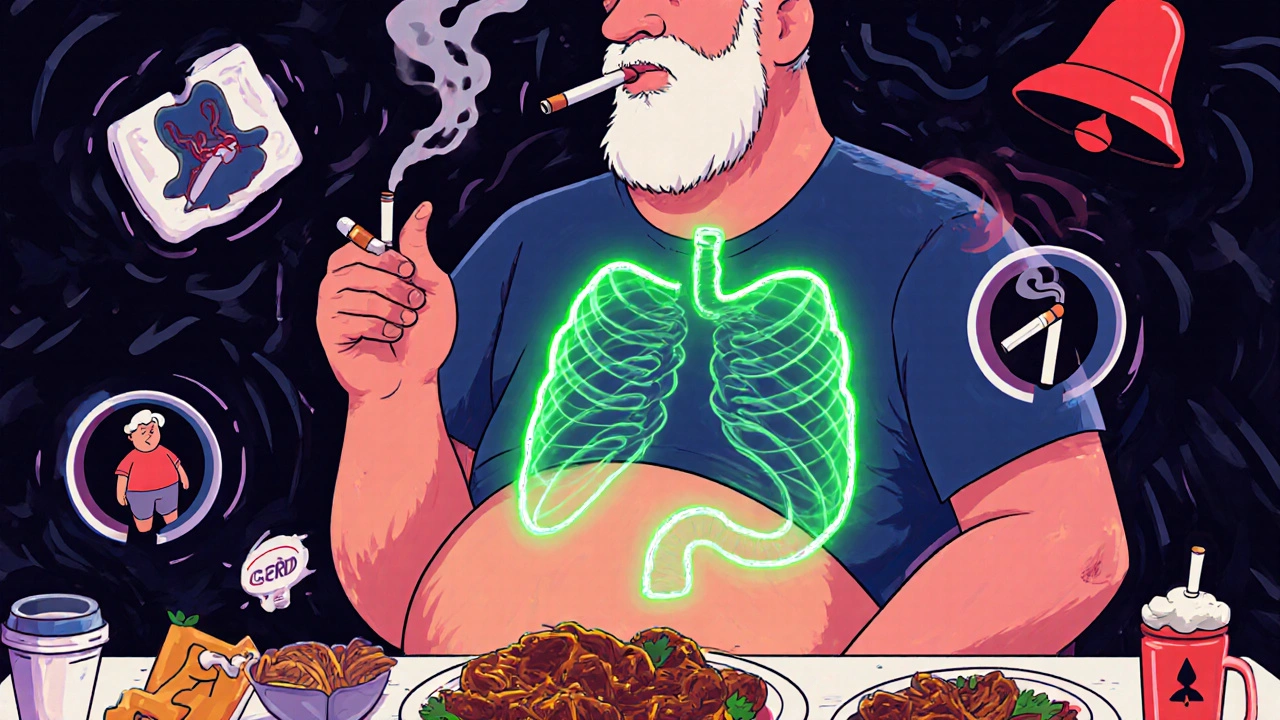
Not everyone with GERD gets Barrett’s esophagus. Only about 10-15% do. But certain people are far more likely to cross that line. The risk isn’t random. It’s predictable.- Men are 3 to 4 times more likely than women to develop this cancer.
- Age over 50 is the biggest demographic marker. Nine out of ten cases happen in people over 55.
- White, non-Hispanic individuals have three times the risk of Black Americans.
- Obesity (BMI over 30) doubles or triples your risk by increasing pressure on your stomach.
- Smoking adds another 2-3 times the risk, and it doesn’t matter if you quit years ago-past use still counts.
- Family history of esophageal or stomach cancer raises your risk, even if you don’t have other factors.
The Red Flags You Can’t Afford to Ignore
Cancer doesn’t always scream. Sometimes it whispers. And by the time it shouts, it’s often too late. Here’s what you need to watch for:- Dysphagia-feeling like food gets stuck in your chest or throat. This happens in 80% of diagnosed cases. It usually starts with solids, then moves to liquids. Don’t brush it off as "just old age."
- Unexplained weight loss-more than 10 pounds in six months without trying. If you’re eating normally but dropping weight, that’s your body screaming for help.
- Heartburn that won’t quit-if you’re having it two or more times a week for five years or more, you’re in the danger zone.
- Food impaction-food getting stuck so badly you have to drink water or even vomit to clear it. This isn’t normal.
- Chronic hoarseness or cough-if you’ve had a sore throat or cough for over two weeks with no cold or allergy, it could be acid burning your vocal cords.
- New reflux after age 50-if you never had heartburn before but suddenly do after 50, especially with other risk factors, get checked.
What You Can Do to Stop It Before It Starts
You’re not powerless. There are proven ways to cut your risk dramatically.- Quit smoking. Within 10 years of quitting, your risk drops by half.
- Lose weight. Shedding just 5-10% of your body weight reduces GERD symptoms by 40% in obese people.
- Limit alcohol. One drink a day for women, two for men. Heavy drinking doesn’t raise adenocarcinoma risk much, but it spikes squamous cell cancer-another form of esophageal cancer.
- Treat GERD properly. Proton pump inhibitors (PPIs) like omeprazole or esomeprazole, taken consistently for five years or more, can reduce cancer risk by 70% in people with Barrett’s esophagus.
- Get screened. If you’re a white male over 50 with chronic GERD and at least two other risk factors (obesity, smoking, family history), the American College of Gastroenterology says you should have an upper endoscopy. It’s a simple, quick procedure. A camera goes down your throat to check for Barrett’s esophagus. If found, you get monitored. If not, you get peace of mind.
What Happens If Barrett’s Esophagus Is Found?
Finding Barrett’s esophagus isn’t a death sentence. It’s a warning light. Most people with it never develop cancer. But if it’s caught early, you can stop it cold. If your biopsy shows no dysplasia (pre-cancer), you’ll get an endoscopy every 3-5 years. If low-grade dysplasia is found, you’ll be monitored every 6-12 months. High-grade dysplasia? That’s the reddest of red flags. Doctors may recommend an endoscopic procedure to remove the abnormal tissue. These procedures-like radiofrequency ablation or endoscopic mucosal resection-remove the bad cells before they turn cancerous. Studies show they cut cancer-related deaths by 60-70%. And it’s getting better. New tools like narrow-band imaging and confocal laser endomicroscopy help doctors spot changes faster. There’s even a pill-sized sponge called Cytosponge that you swallow. It collects cells from your esophagus and can detect Barrett’s with nearly 80% accuracy-no scope needed. It’s not everywhere yet, but it’s coming.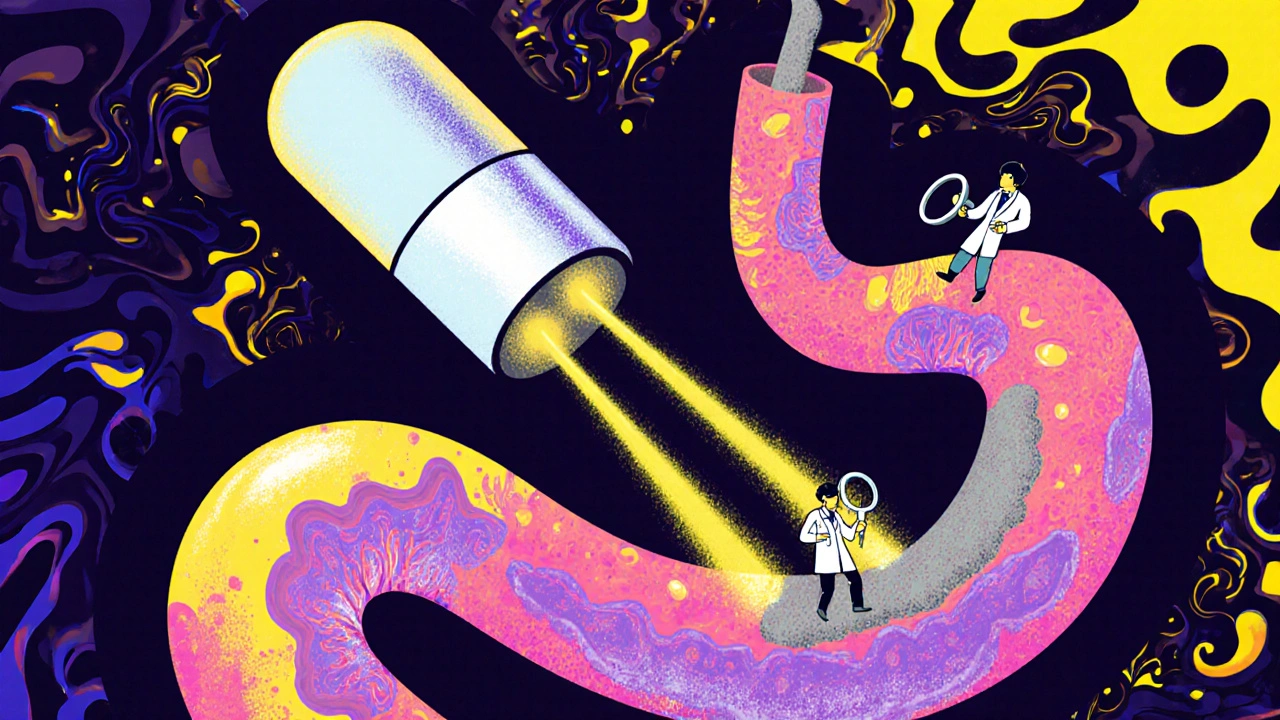
Why This Matters More Than Ever
Since 1975, esophageal adenocarcinoma has increased by 850%. Why? Because we’re heavier. Because we eat more processed food. Because we ignore heartburn. And because we think "it’s just acid." The survival rate for esophageal cancer is only 21% overall. But if it’s caught early-before it spreads-the survival rate jumps to 50-60%. That’s not a small difference. That’s life or death. The truth is, most people who die from this cancer didn’t have to. They just didn’t know the signs. Or they thought they’d wait it out. Or they didn’t think their doctor would take them seriously. Don’t be one of them.Is GERD the same as occasional heartburn?
No. Occasional heartburn-once a month or less-is common and usually harmless. GERD is diagnosed when you have symptoms two or more times a week for at least three months. Chronic GERD means your body is under constant acid stress, which can lead to Barrett’s esophagus and, eventually, cancer.
Can I get esophageal cancer without having GERD?
Yes, but it’s rare. Most esophageal adenocarcinoma cases (over 90%) are linked to long-term GERD. Other types, like squamous cell carcinoma, are tied to smoking, heavy alcohol use, or hot beverages-but these are less common in the U.S. today.
Does taking PPIs cure GERD?
PPIs control acid and reduce damage to your esophagus, but they don’t fix the underlying cause-like a weak valve or obesity. You still need lifestyle changes: lose weight, avoid late meals, quit smoking, and elevate your head while sleeping. PPIs are a shield, not a cure.
Is endoscopy dangerous?
It’s very safe. You’re sedated, and the procedure takes about 10-15 minutes. Complications like bleeding or perforation happen in less than 1 in 1,000 cases. The risk of missing Barrett’s esophagus far outweighs the risk of the test.
If I have Barrett’s esophagus, will I definitely get cancer?
No. Only 0.2-0.5% of people with Barrett’s esophagus develop cancer each year. That’s low, but because it’s so common, it adds up. Regular monitoring catches changes early. Many people live with Barrett’s for decades without ever developing cancer.
Should I get screened if I’m under 50?
Only if you have multiple risk factors-like severe GERD for 10+ years, obesity, smoking, and a family history of esophageal cancer. Otherwise, routine screening isn’t recommended under 50. But if you have red flag symptoms, talk to your doctor regardless of age.
Sue Barnes
November 29, 2025 AT 07:01People still ignore this? Wow. I had GERD for 12 years and thought it was just "bad digestion." Then I got Barrett’s and had to get ablation. No joke-this isn’t "take Tums and call it a day." If you’re over 50 and have heartburn, get an endoscopy. Now. Not next month. Not when it "gets worse."
jobin joshua
November 30, 2025 AT 00:57Brooo 😭 I’m 32, Indian, obese, and have had heartburn since 2018. Just read this and my stomach dropped. I’ve been popping omeprazole like candy but never thought about cancer. Time to quit soda, lose weight, and book that endo. 🙏
Sachin Agnihotri
December 1, 2025 AT 21:33Hey, I’m not a doctor, but I’ve seen this in my family-my uncle had it, and he didn’t get checked until he couldn’t swallow soup. It’s not just "acid." It’s your esophagus slowly turning into something it wasn’t meant to be. PPIs help, but they’re not magic. Lifestyle changes? Non-negotiable. And yes, I’m talking to you, midnight pizza guy. 🍕⏰
Also, that Cytosponge thing? I read about it in a med journal last year. It’s not perfect, but it’s way better than waiting for symptoms to scream. If your doc won’t order it, ask for a referral to GI. Seriously.
Diana Askew
December 3, 2025 AT 19:06They’re hiding this from us. Why? Big Pharma doesn’t want you to know you can prevent this with lifestyle changes-because pills = profits. And why is it mostly white men? Because they’re the ones with money to get screened. The rest of us? We get told to "take antacids" and shut up. 😒
Also, did you know the FDA approved that sponge in 2021? But most doctors still don’t mention it. Coincidence? I think not.
King Property
December 4, 2025 AT 03:17You’re all missing the point. The real problem isn’t GERD-it’s the medical system’s laziness. Doctors don’t screen because they’re overworked, underpaid, and don’t give a damn. I’m a nurse. I’ve seen it. People come in with dysphagia, and the doc says, "Try avoiding spicy food." Meanwhile, their esophagus is turning into a science experiment. And don’t even get me started on how PPIs are overprescribed like candy. Half these people don’t even have GERD-they just eat too fast.
Also, the 850% increase since 1975? That’s not just obesity. It’s processed food, high-fructose corn syrup, and corporate greed. You think McDonald’s wants you to live to 90? Nah. They want you to keep buying fries.
Yash Hemrajani
December 4, 2025 AT 21:22Oh wow, someone finally wrote this without sounding like a medical textbook. 👏
Let me translate this for my cousins in Delhi: "Your heartburn isn’t just spicy food. It’s your esophagus begging for mercy." And yes, if you’re a 55-year-old guy with a beer belly and a 20-year smoking habit? You’re basically playing Russian roulette with your throat. Get the scope. No excuses.
And yes, PPIs help-but if you’re still eating at 11 PM and sleeping on your stomach? You’re wasting your money. Stop blaming the medicine. Blame your life choices. (I’m looking at you, uncle.)
Pawittar Singh
December 5, 2025 AT 00:50I just turned 52, had GERD since 30, and just got screened last month. No Barrett’s. Thank God. 😌 But I’m telling you all-this isn’t fear-mongering. It’s fact. I lost 35 lbs, quit smoking, and now sleep with my head elevated. I still take my PPIs, but I’m not relying on them. This is a marathon, not a sprint.
To anyone reading this: you’re not too young, too busy, or too broke to get checked. Talk to your doctor. Ask for a referral. If they say no, go to a clinic. Your life is worth more than a 15-minute appointment. 💪❤️
Josh Evans
December 5, 2025 AT 17:46Just wanted to say thanks for posting this. I’m 48, male, had GERD since 35, and never thought it was a big deal. I’m scheduling my endoscopy tomorrow. Honestly, I’ve been putting it off because I was scared. But reading this? It’s not scary anymore-it’s urgent. And I’m ready.