Exercise Modifications for Fatigue on Beta-Blockers and Other Drugs
Exercise Intensity Calculator for Beta-Blocker Users
How to Use This Calculator
This tool calculates your adjusted exercise duration and intensity based on beta-blocker recommendations. Enter your current exercise routine, and we'll show you how to modify it for safe, effective workouts.
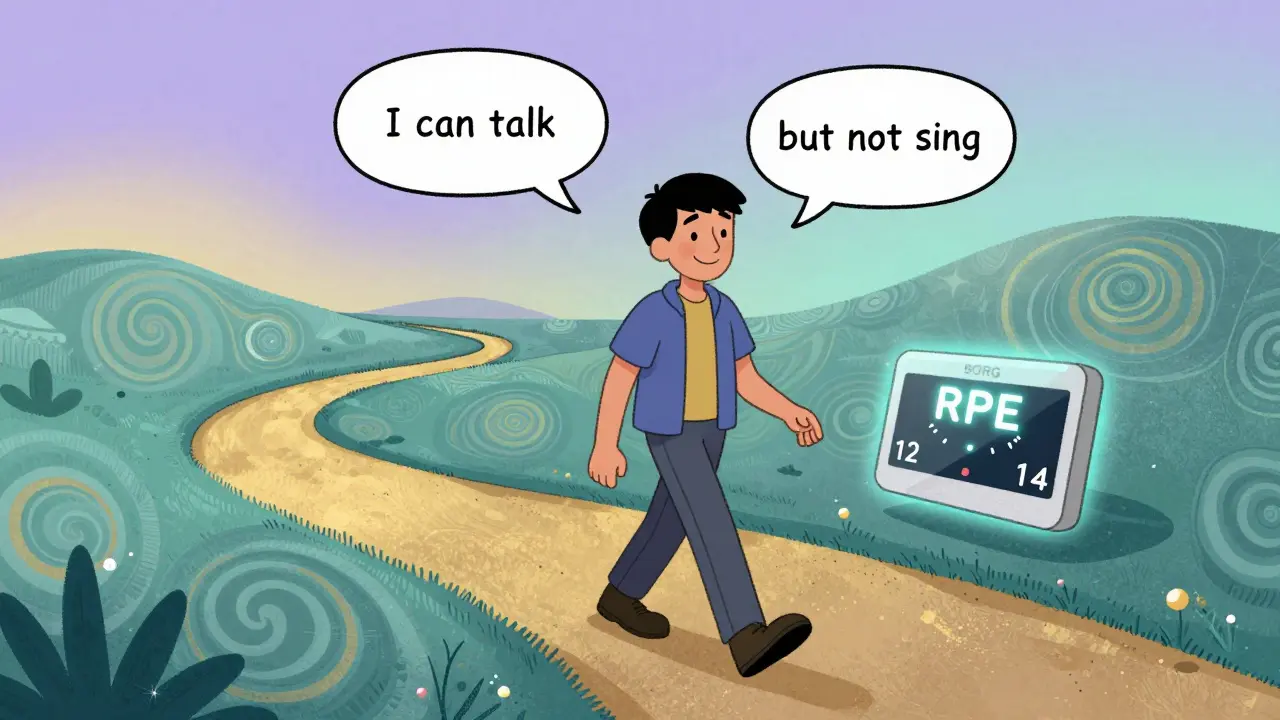
When you're on beta-blockers for high blood pressure, heart rhythm issues, or heart failure, you might notice something surprising: your usual workouts don't feel the same. You're putting in the same effort, but you're tired faster. Your heart doesn't race like it used to. You might even feel like you're not getting any benefit from exercise anymore. That’s not in your head. It’s a direct effect of the medication. Beta-blockers work by slowing down your heart rate and reducing how hard your heart pumps. That’s great for lowering blood pressure and protecting your heart after a heart attack. But it also means your body can’t ramp up its energy supply during exercise the way it used to. Your heart rate might only reach 120-130 beats per minute during a hard workout, even if you used to hit 160 or higher. That’s not a failure-it’s the drug doing its job. But it does mean you need to change how you exercise. Heart rate monitoring is useless on beta-blockers. If you’re using a fitness tracker or chest strap to hit a target heart rate zone, you’re setting yourself up for frustration. The device will show you’re not working hard enough, but you’re actually giving it everything you’ve got. Pushing harder to hit that number won’t help-it’ll just make you more tired or even dizzy. You need a new way to measure effort. The tell is in how you feel. The American Heart Association recommends the talk test. If you can talk comfortably during exercise but can’t sing a song, you’re in the right zone. That’s moderate intensity. If you can only say a few words before needing to catch your breath, you’re pushing too hard. If you can carry on a full conversation easily, you can go a little harder. This works because it measures how hard your lungs and muscles are working, not just how fast your heart is beating. Another reliable tool is the Borg Rating of Perceived Exertion (RPE) scale. It’s a 6-to-20 scale where 6 means no effort at all and 20 means maximum effort. Most people on beta-blockers should aim for 12 to 14 for moderate exercise-that’s the level where you feel like you’re working, but you’re not gasping. If you used to aim for 16 or 17 before starting beta-blockers, you’ll likely need to drop down to 14 or even 13 now. It’s not about being lazy-it’s about adjusting to your new physiology. Your warm-up needs to be longer. Instead of five minutes of light walking, take 10 to 15 minutes. This gives your heart and blood vessels time to adjust slowly. Jumping straight into a brisk walk or cycling can cause a sudden drop in blood pressure, leading to lightheadedness. Slow and steady wins the race here. You’ll also need to do more total exercise time to get the same benefit. Since you can’t go as hard, you have to go longer. The standard recommendation is 150 minutes of moderate exercise per week. On beta-blockers, aim for 180 to 188 minutes. That’s about 30 minutes a day, five to six days a week. If walking is your thing, add 10 minutes to each session. If you’re doing water aerobics or cycling, extend your session by 15 minutes. The goal isn’t intensity-it’s consistency. Resistance training still works. Beta-blockers don’t weaken your muscles. But they do reduce your heart’s ability to support heavy lifting. So instead of lifting heavy weights for fewer reps, go lighter and do more reps. Reduce your weight by 15 to 20%, but keep the number of reps the same. Do three sets of 12 to 15 reps instead of three sets of 8 to 10. You’ll still build strength, just more safely. Watch for warning signs. If your resting heart rate drops below 45 beats per minute and you feel dizzy, faint, or confused, stop exercising and call your doctor. That’s not normal fatigue-it could mean your heart rate is too slow. Also, if your systolic blood pressure drops below 90 mmHg during exercise, that’s a red flag. You might feel cold, clammy, or nauseous. These are signs your body can’t keep up, and you need to rest. Some people on beta-blockers notice they don’t sweat as much or feel dry-mouthed during light activity. That’s not a sign you’re not working hard-it’s a side effect of the medication reducing your body’s natural stress response. But it does mean you’re at higher risk for dehydration. Drink water before, during, and after exercise, even if you don’t feel thirsty. Aim for at least 8 ounces every 15 to 20 minutes during activity. Not all beta-blockers affect exercise the same way. Propranolol tends to cause more fatigue than metoprolol. Atenolol is often milder. Nebivolol (Bystolic) is newer and appears to have less impact on exercise capacity-studies show it reduces VO₂ max by only 8 to 10%, compared to 10 to 15% with older versions. If fatigue is wrecking your motivation, talk to your doctor about switching. It’s not about quitting the medication-it’s about finding the right one for your lifestyle. Interval training can be a game-changer. Instead of walking for 30 minutes straight, try walking for 3 minutes, then slow down for 1.5 minutes. Repeat. This pattern gives your heart time to recover between efforts, making it easier to sustain activity without crashing. Research from Oregon Health & Science University shows this approach improves endurance better than steady-state exercise for people on beta-blockers. Technology is catching up. Apple Watch’s latest software (version 9.1, released in September 2023) now includes beta-blocker-adjusted heart rate zones. It doesn’t replace the talk test or RPE scale, but it can help you see if your heart rate is responding as expected. Still, don’t rely on it. Your body’s signals-how you breathe, how tired you feel-are more accurate. The bottom line: You can still be active. You can still improve your heart health. You just can’t rely on the same methods you used before. Exercise isn’t about hitting numbers-it’s about staying strong, feeling good, and protecting your heart. Adjust your expectations. Listen to your body. And keep moving-just differently.
| Traditional Approach | Modified Approach for Beta-Blocker Users |
|---|---|
| Target heart rate zone (e.g., 60-80% max HR) | Use talk test or Borg RPE scale (12-14 for moderate) |
| 5-10 minute warm-up | 10-15 minute warm-up |
| 150 minutes/week moderate exercise | 180-188 minutes/week moderate exercise |
| Heavy weights, 8-10 reps | Lighter weights, 12-15 reps |
| Continuous steady-state cardio | Interval training (2:1 work-to-rest ratio) |
| Rely on fitness tracker heart rate | Ignore heart rate data; focus on perceived effort |
Some people give up on exercise because they think the fatigue means they’re getting worse. It doesn’t. It just means they need to change how they move. One woman on metoprolol told her cardiologist she’d stopped walking because she felt like she was failing. When she switched to the talk test and extended her walks by 10 minutes, she went from barely making it around the block to walking 3 miles three times a week. Her energy improved. Her blood pressure dropped. Her mood lifted. All because she stopped chasing a number and started listening to her body. If you’re on beta-blockers and feeling exhausted during exercise, you’re not broken. You’re just on a different path. The goal isn’t to fight the medication-it’s to work with it. Your heart is protected. Your muscles are still strong. You just need a new map.
Can I still do high-intensity workouts on beta-blockers?
High-intensity workouts like sprinting or heavy interval training are generally not recommended. Beta-blockers blunt your heart’s ability to respond to sudden demands, which can lead to dangerous drops in blood pressure or extreme fatigue. Instead, focus on moderate, steady activity with intervals built in-like 3 minutes of brisk walking followed by 1.5 minutes of slow walking. This gives your body time to recover and still improves cardiovascular fitness safely.
Why does my heart rate stay so low even when I’m sweating?
Beta-blockers block adrenaline from speeding up your heart. Even if you’re working hard, your heart can’t increase its rate the way it used to. That’s why you might feel exhausted but your heart rate doesn’t climb. It’s not a sign you’re not trying hard-it’s the drug working. Sweat is not a reliable indicator of intensity on these medications. Rely on how you feel, not how much you sweat.
Is it safe to use a fitness tracker while on beta-blockers?
Yes, but not for heart rate targets. Your tracker’s heart rate data will likely be inaccurate or misleading because your heart rate is artificially lowered. You can still use it to track steps, activity time, or sleep. But don’t use it to tell you if you’re working hard enough. Use the talk test or Borg RPE scale instead.
What if I feel dizzy during exercise?
Stop immediately and sit down. Dizziness can mean your blood pressure is dropping too low. Check your pulse-if it’s below 45 bpm, call your doctor. If you feel nauseous, cold, or clammy, that’s a sign your body is struggling. Don’t push through it. These symptoms need medical evaluation, not more exercise.
Do beta-blockers cause muscle weakness?
No. Beta-blockers don’t weaken your muscles. Studies show muscle strength remains unchanged. What changes is your heart’s ability to deliver oxygen during effort. That makes you feel tired sooner, but your muscles are still capable. That’s why lighter weights with more reps work-you’re training endurance, not raw strength.
Charlotte Dacre
February 14, 2026 AT 11:41So let me get this straight - we’re telling people to ignore their fancy fitness trackers and just… feel their way through a workout? Like we’re back in 1997 and I’m using a stopwatch and a prayer? I love it. My Apple Watch just cried into its charging cable.
Also, 188 minutes a week? That’s not exercise, that’s a part-time job. But hey, if I can walk for 30 minutes while arguing with my cat about why she stole my socks, I’ll take it. My heart’s not racing, but my dignity is.
Esha Pathak
February 14, 2026 AT 21:09Life is a river, and beta-blockers? They’re the quiet stones beneath the surface - not slowing the flow, just changing its song. 💫
You don’t chase the heart rate like a ghost. You dance with the breath. You listen to the whisper of muscles, the sigh of lungs. Sweat is not the measure of worth - presence is.
One woman walked 3 miles. Not because she crushed a number. But because she finally stopped fighting herself. That’s not fitness. That’s alchemy.
Let your body speak. It’s been waiting.
Mike Hammer
February 16, 2026 AT 13:30bro this is actually super chill advice. i was gonna quit exercising cause i felt like a failure - my watch kept yelling at me for not hitting 140 bpm and i was like ‘but i’m sweating!!’
turns out i was just being a dumbass. now i do my 3 min walk / 1.5 min chill cycles and honestly? it’s kinda meditative. like a walking zen thing. also, i drink way more water now. weirdly, my skin’s not dry anymore.
also pro tip: if you’re on metoprolol and still trying to do burpees… you’re not strong. you’re just stubborn.
Daniel Dover
February 17, 2026 AT 11:03Agreed. Talk test works. No need to overcomplicate.
Chiruvella Pardha Krishna
February 17, 2026 AT 11:04The modern world worships metrics. Heart rate. Calories. Steps. As if the soul can be quantified by a number on a screen. But the body remembers what the algorithm forgets - patience. Rhythm. The quiet dignity of persistence.
On beta-blockers, you are not broken. You are recalibrating. Like an ancient river that learned to flow around the mountain rather than crash against it.
Strength is not in the sprint. It is in the return. Every step, every breath, every drop of water - not for the tracker. For you.
Joe Grushkin
February 19, 2026 AT 01:11188 minutes a week? That’s not a modification - that’s a surrender. And this ‘talk test’? Sounds like something a yoga instructor made up after a kombucha bender.
Real athletes push through fatigue. If your heart won’t race, maybe you’re just out of shape. Or worse - lazy.
And don’t get me started on ‘lighter weights, more reps.’ That’s not training. That’s stretching with weights.
Also, nebivolol? Sounds like a Scandinavian tax loophole.
Virginia Kimball
February 21, 2026 AT 00:18OMG I LOVE THIS. I’ve been on metoprolol for 3 years and I thought I was just getting old and weak 😭
Then I tried the talk test and extended my walks by 10 mins - and guess what? I started smiling again. Like, actual smiling. Not just ‘I’m alive’ smiling but ‘I’m kinda vibing’ smiling.
Also, I started doing water aerobics and now I’m basically a mermaid. No lie. My legs feel like they’re 25 again. My BP is lower. My therapist says I’m ‘less grumpy.’
You’re not failing. You’re upgrading. And your heart? It’s still your best friend. Just… quieter now. And that’s okay.
Kapil Verma
February 21, 2026 AT 01:23Western medicine has failed you. In India, we don’t need fancy scales or watches. We walk 5 km before sunrise. We eat turmeric. We chant. We don’t complain. You are weak because you rely on machines.
My uncle, 72, on beta-blockers since 2008 - walks 10 km daily. No talk test. No RPE. Just discipline. You call this science? We call it dharma.
Stop making excuses. Your ancestors didn’t have Apple Watches. They still lived.