Future Practice Trends: How Healthcare Provider Attitudes Are Changing by 2025
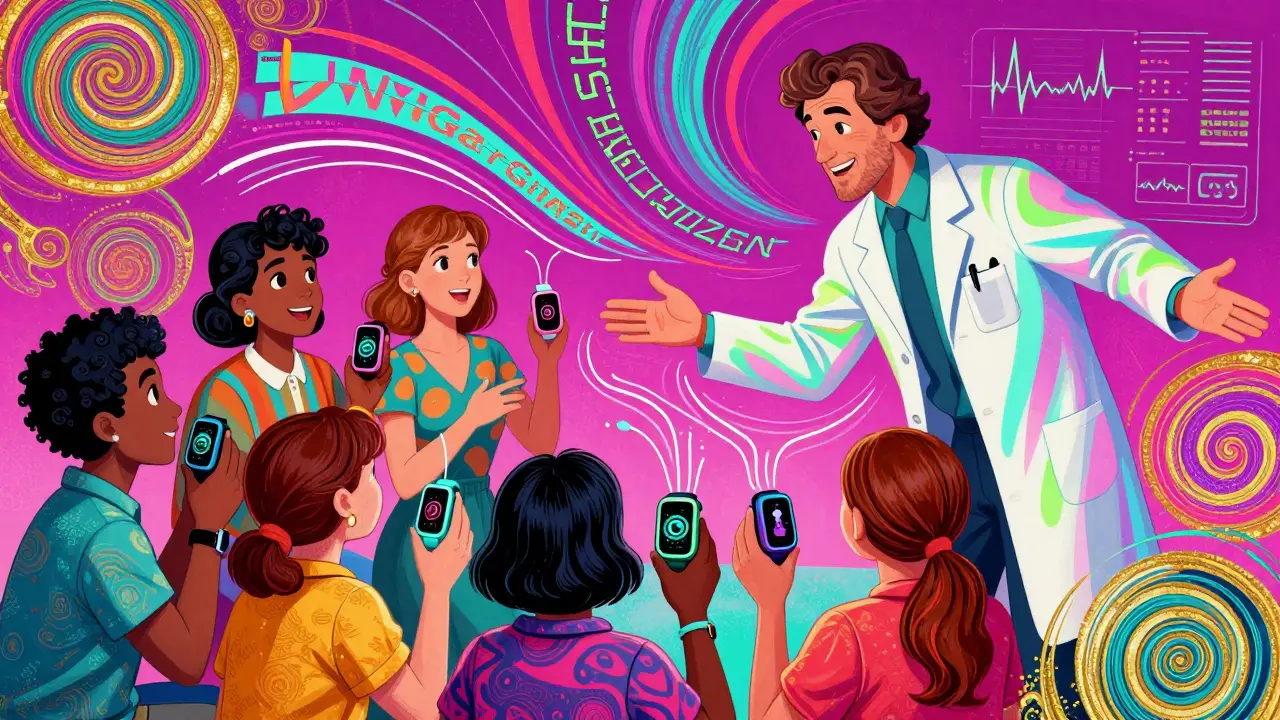
By 2025, the way healthcare providers think about their jobs is no longer just about treating illness-it’s about partnering with patients, using data smarter, and working differently. The old model of the doctor as the sole authority, making decisions behind closed doors, is fading fast. Today’s patients walk in with wearables synced to their phones, apps tracking sleep and heart rate, and Google searches ready to debate treatment options. Providers who resist this shift aren’t just falling behind-they’re becoming irrelevant.
Patients Are No Longer Passive
Five years ago, a patient might say, “I’ve been feeling tired.” Now, they say, “My Apple Watch shows my resting heart rate spiked 20% last week, and my Oura ring says my sleep efficiency dropped to 68%. I’ve been skipping meals because I’m too tired to cook.” This isn’t rare. Over half of Americans now own a wearable device that tracks biometrics. Providers who still treat these inputs as noise are missing the point. The data isn’t a distraction-it’s the new vital sign.
Doctors in 2025 aren’t just diagnosing symptoms. They’re interpreting trends. A glucose monitor showing overnight spikes? A fitness tracker revealing inconsistent activity patterns? These aren’t just numbers. They’re clues to lifestyle-driven conditions that meds alone can’t fix. Providers who learn to read this data, ask the right follow-up questions, and co-create plans with patients are seeing better outcomes-and fewer repeat visits.
Technology Isn’t Optional-It’s the New Stethoscope
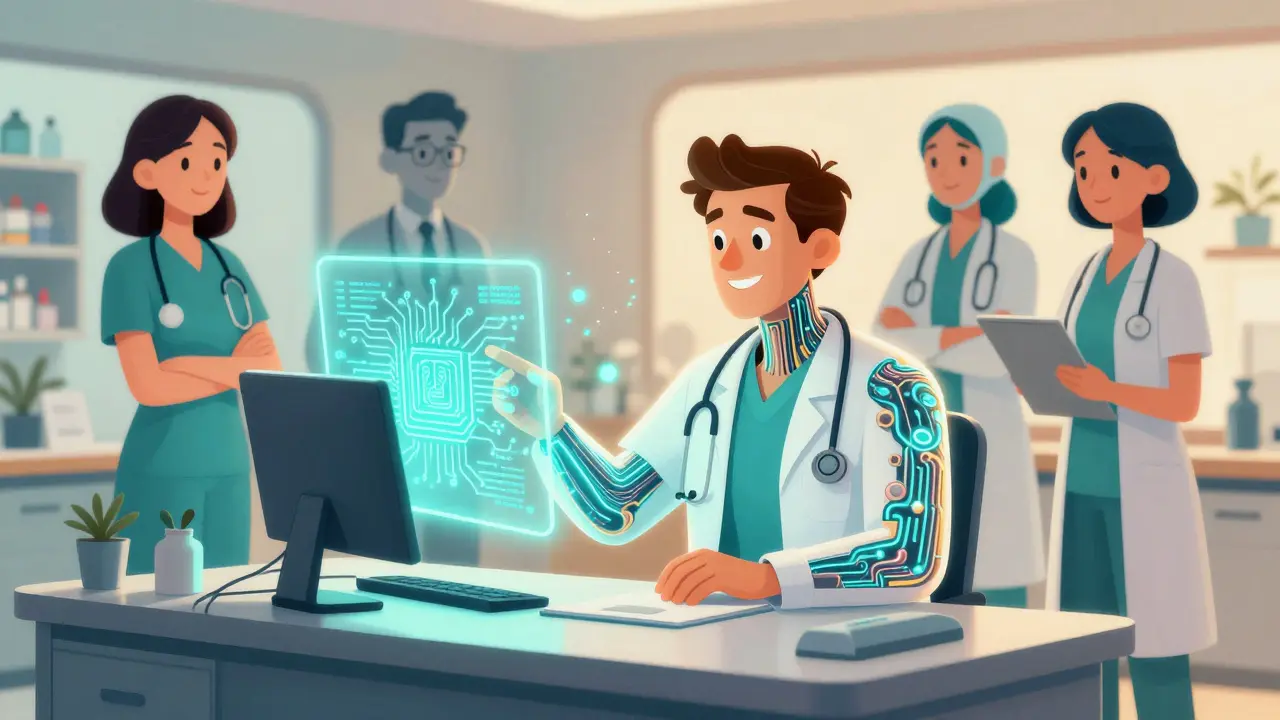
AI in healthcare isn’t about replacing doctors. It’s about giving them superpowers. Tools that analyze thousands of patient records in seconds to flag early signs of heart failure. Algorithms that predict which diabetic patients are most likely to miss appointments. Systems that auto-schedule follow-ups based on real-time biometric alerts. These aren’t sci-fi fantasies-they’re live tools in clinics from Manchester to Miami.
But adoption isn’t automatic. Many providers still fear AI will make them obsolete. The truth? AI makes them more essential. When an algorithm spots a pattern a human might miss, the provider’s job shifts from data collector to meaning-maker. They interpret the alert. They explain it to the patient. They decide what action to take. The tech handles the heavy lifting. The human handles the humanity.
Organizations that succeed are training staff-not punishing them-for AI use. They’re building governance frameworks that ensure fairness, privacy, and transparency. And they’re being honest: when a recommendation comes from an algorithm, they say so. Patients trust authenticity more than polished, AI-generated brochures. Real talk beats robotic perfection.
The Care Team Is Expanding-And It’s Not Just Doctors
Remember when a clinic meant a doctor, a nurse, and a receptionist? That’s gone. In 2025, care teams include certified medical assistants, pharmacy technicians, remote health coaches, and even AI-powered virtual assistants. The Bureau of Labor Statistics shows 70% of employers now require certifications for these roles. Why? Because quality care isn’t just about MDs. It’s about a well-oiled system where everyone has clear skills and responsibilities.
And it’s working. Employers who pay bonuses for certifications report 20% higher retention. Staff who feel valued and trained stay longer. Patients get more consistent care. One clinic in Leeds cut no-show rates by 35% after hiring certified health navigators to help elderly patients book virtual visits and manage medication reminders. That’s not magic. That’s structure.
Providers who still think “I’m the only one who matters” are setting themselves up for burnout. The future belongs to those who lead teams, delegate wisely, and trust their support staff to do their jobs.
Work Is No Longer a Place-It’s a Flow
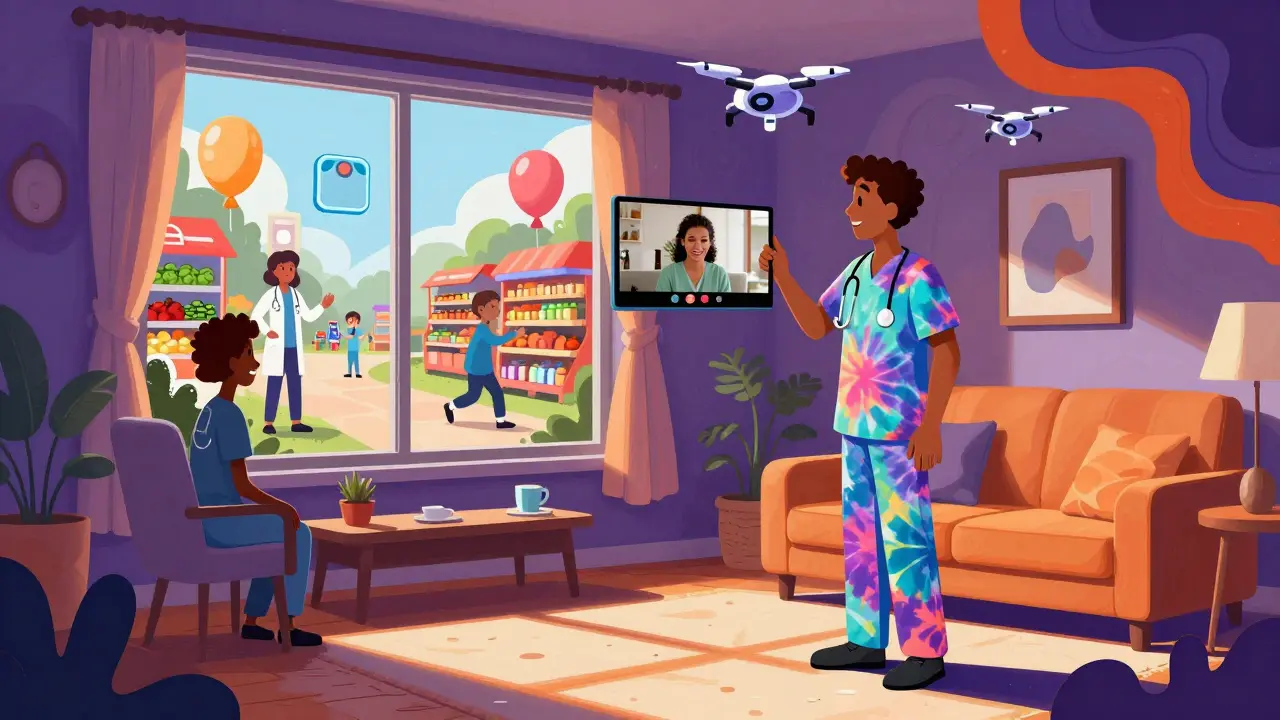
Doctors used to clock in at 8 a.m. and leave at 6 p.m. Now, many see patients from their living rooms at 7 p.m. or answer messages from a coffee shop during lunch. Virtual care isn’t a backup plan anymore-it’s the norm. A 2025 NIH study found 68% of primary care visits can be handled remotely without loss of quality.
This flexibility isn’t just nice to have. It’s a retention tool. With 53% of healthcare employers saying staff retention is their biggest challenge, offering work-life balance isn’t a perk-it’s survival. Providers who cling to rigid schedules are losing talent to organizations that offer hybrid models, compressed workweeks, and mental health days built into the calendar.
And it’s not just about location. It’s about time. The most successful clinics are moving from appointment-based care to continuous care. Instead of waiting for a patient to get sick, they monitor them. They send gentle nudges. They adjust meds before a crisis hits. That’s prevention. That’s efficiency. That’s the future.
Providers Are Becoming Ecosystem Players
The old model-hospital, insurance, doctor, patient-is collapsing. In its place is a sprawling network: tech companies, wearable makers, grocery chains offering nutrition coaching, employers funding wellness programs, and AI startups building diagnostic tools. PwC predicts a $1 trillion shift away from traditional providers toward these new ecosystems.
That means providers can’t operate in isolation. A cardiologist in 2025 might partner with a smart scale company to track weight trends in heart failure patients. A primary care group might integrate with a local food bank to address food insecurity-a known driver of diabetes. These aren’t side projects. They’re core to patient outcomes.
Providers who see themselves as part of a larger health ecosystem are the ones thriving. They’re not just treating disease. They’re solving social problems. They’re partnering with non-medical players. And they’re getting paid for results-not just visits.
The Biggest Hurdle? Culture, Not Tech
Here’s the hard truth: most healthcare organizations have the tech. They have the data. They have the funding. What they lack is culture.
Forrester found that 70% of “digital transformation” initiatives fail-not because the tools don’t work, but because staff don’t believe in them. Leaders preach innovation but still punish mistakes. They roll out AI tools but don’t train staff. They talk about patient-centered care but schedule 10-minute visits.
Change doesn’t come from software. It comes from rituals. From leaders who model the behavior they want. From teams who celebrate small wins. From feedback loops that actually get heard. One clinic in Leeds started monthly “What Worked” circles-where staff shared one thing that improved a patient’s outcome. No blame. No metrics. Just stories. Within six months, morale jumped 40%.
Technology follows culture-not the other way around.
What This Means for You
If you’re a provider, here’s what you need to do right now:
- Start asking patients: “What health data are you tracking?” Not “Do you exercise?”
- Learn one new digital tool this quarter-not because you have to, but because it helps you listen better.
- Advocate for certification support for your team. Pay for it if you can. It’s the best retention tool you have.
- Push for flexible scheduling. If you’re still working 60-hour weeks, you’re not sustainable.
- Stop trying to do everything yourself. Build a team. Trust it.
The future of healthcare isn’t about doing more. It’s about doing differently. It’s about letting go of control to gain impact. It’s about trading rigid traditions for flexible, human-centered care.
The providers who thrive won’t be the ones with the fanciest equipment. They’ll be the ones who listened-really listened-to their patients, their teams, and the changing world around them.
Aurora Daisy
December 22, 2025 AT 16:49Oh wow, another Silicon Valley fantasy dressed up as healthcare reform. Let me guess-next you’ll tell us the AI will also do our paperwork and cry when our patients die? 🙄 In the real world, nurses are quitting because they’re overworked, not because they don’t have an Apple Watch. This whole ‘patient as co-pilot’ nonsense ignores that most people can’t tell a glucose spike from a gluten allergy. Stop romanticizing tech and fix the damn staffing crisis first.
Paula Villete
December 24, 2025 AT 02:44Y’know what’s wild? The fact that we’re still treating data like it’s some magical oracle when half the wearables out there are calibrated with the precision of a drunk dart thrower. My Fitbit once told me I ‘slept like a baby’… while I was awake watching Netflix at 3am. But hey, if your doctor’s gonna base a diagnosis on my step count from a $20 gadget bought on Amazon Prime Day, then sure, let’s call it ‘the new stethoscope.’ Just don’t be mad when your ‘AI-powered’ treatment plan recommends kale smoothies for a patient with stage 4 pancreatic cancer. 🤷♀️
Georgia Brach
December 25, 2025 AT 07:11The premise of this article is fundamentally flawed. It assumes that patient-generated data is reliable, actionable, and clinically valid. It ignores the overwhelming body of peer-reviewed literature demonstrating that consumer-grade biometric devices have error margins exceeding 30% for critical metrics like heart rate variability and oxygen saturation. Furthermore, the notion that ‘AI makes providers more essential’ is a rhetorical smokescreen to justify cost-cutting through automation. In reality, the algorithmic recommendations are often opaque, biased, and legally non-accountable. The ‘human touch’ is being outsourced to a black box while clinicians are rebranded as interpreters of noise. This is not progress-it is institutionalized negligence dressed in buzzwords.
Katie Taylor
December 26, 2025 AT 18:19Enough with the half-measures. If we’re serious about change, we need to burn the old system down and rebuild it from scratch. Stop treating patients like passive recipients and start treating them like partners-actually listen, not just nod while typing into EHR. Pay your nurses a living wage. Let your staff work from home if they want. Hire health coaches. Stop punishing people for using tech. This isn’t ‘innovation’-it’s survival. If you’re not ready to change, get out of the way. The future doesn’t wait for the stubborn.
siddharth tiwari
December 27, 2025 AT 19:28they say wearables help... but what if the watch is hacked? what if the gov uses your sleep data to flag you as 'unpatriotic' because you sleep less than 7 hours? i heard in china they already do this. and ai? dont trust it. the deep state uses it to control who gets care. why do you think they push all this tech? so they can track us. and the 'team' thing? they're just replacing doctors with robots and cheap workers. next thing you know, your appointment is with a chatbot named 'nurse bob' who says 'have you tried yoga?'
claire davies
December 28, 2025 AT 21:20I’ve been working in a rural clinic for 18 years, and let me tell you-this piece? It’s not just spot-on, it’s the breath of fresh air we’ve been gasping for. We started letting patients bring in their Oura rings last year. One woman came in crying because her sleep efficiency had been hovering at 55% for months. We didn’t just prescribe melatonin-we asked her about her work schedule, her kids, her husband’s new job. Turns out she was staying up to watch her elderly dad’s livestreams from his nursing home. We connected her with a community volunteer who sat with him on Zoom during her sleep hours. Three months later, her efficiency hit 82%. No new meds. No fancy tech. Just someone who cared enough to listen to the story behind the number. That’s the future. Not the gadgets. The humanity. And yeah, we hired a health navigator too. She’s the quiet hero who got 87-year-old Mrs. Henderson to her telehealth visits by walking her through Zoom on her iPad… while they ate scones together. That’s care. That’s magic. And it’s happening right now, in places no one’s writing about.
Harsh Khandelwal
December 29, 2025 AT 14:00lol so now doctors are gonna be data janitors? you think people actually know what their 'resting heart rate spike' means? nah they just see a red number and panic. then they show up at the ER with their apple watch like it's a magic 8-ball. and ai? please. the last time i checked, an algorithm recommended i take ibuprofen for a broken arm. i'm not even mad. just disappointed. we don't need more tech. we need more doctors who aren't burnt out. and less blog posts pretending tech fixes everything.
Christine Détraz
December 31, 2025 AT 11:27What Claire said. I’ve seen both sides-the sterile, rushed 8-minute visits and the slow, human-centered ones where we actually sit down and ask, ‘What’s been going on for you?’ The tech is a tool, not the destination. But the culture shift? That’s the real win. When my team started having those monthly ‘What Worked’ circles, something shifted. People started sharing stories instead of complaints. One PA told how she used a free diabetes app to help a patient track meals, and they lost 18 pounds without ever stepping into a clinic. That’s the power of trust, not tech. We’re not replacing the doctor. We’re expanding the circle of care. And honestly? It’s the first time in 10 years I’ve felt proud to show up for work.