Garlic Supplements and Anticoagulants: What You Need to Know About Bleeding Risks

Garlic Supplement Safety Checker
Check Your Garlic Supplement Safety
This tool helps you determine if your garlic supplement is safe to take with your blood thinner medication. Based on the type of supplement and your anticoagulant, it will show your bleeding risk level.
If you're taking a blood thinner like warfarin, apixaban, or rivaroxaban, and you're also popping garlic supplements for your heart or immune system, you might be putting yourself at serious risk. It's not a myth. It's not speculation. It's documented in hospital records, surgical reports, and emergency room visits. Garlic supplements can make your blood thinner work too well - and that can lead to uncontrolled bleeding.
How Garlic Interferes with Blood Thinning Medications
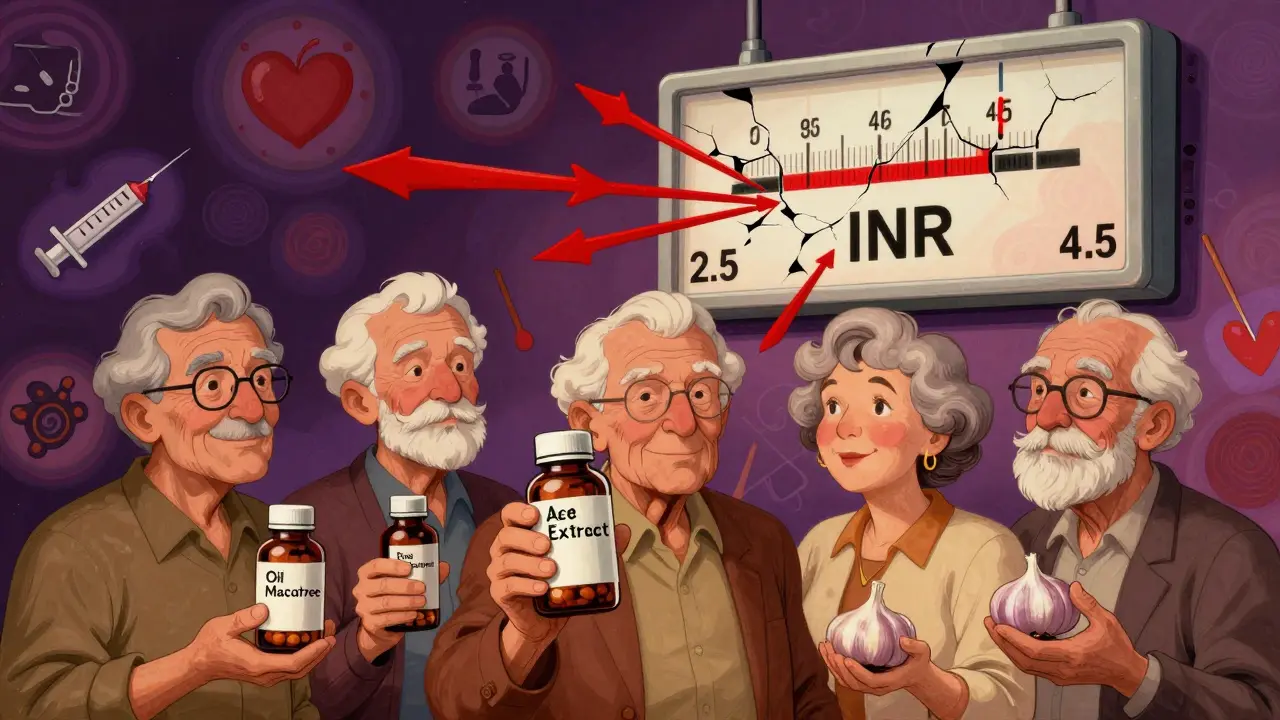
Garlic isn't just a flavoring for pasta or a home remedy for colds. The active compound in garlic supplements - called ajoene - directly interferes with how platelets stick together. Platelets are the tiny blood cells that form clots to stop bleeding. When you're on an anticoagulant, your blood already takes longer to clot. Add garlic supplements, and that clotting time gets stretched even further.This isn't a minor effect. Studies show garlic supplements can reduce platelet function by 20% to 40% in healthy people. In people on warfarin, this can push their INR (a blood test that measures clotting time) up by 1 to 2.5 points. That might sound small, but if your INR goes from 2.5 (safe) to 4.5 (dangerous), you're at risk for spontaneous bleeding - even without injury.
The problem? Garlic’s effect lasts for days. Unlike aspirin, which wears off in hours, garlic’s inhibition of platelets is irreversible. Your body has to make new platelets to recover. That takes 7 to 10 days. So even if you stop taking garlic today, you’re still at risk for the next week.
Who’s Most at Risk?
You might think, “I only take one pill a day - it can’t be that bad.” But here’s the catch: garlic supplements vary wildly in strength. One brand might contain 0.1 mg of ajoene per capsule. Another might have 1.0 mg - ten times more. And most labels don’t say which.The real danger zone is older adults. In the U.S., nearly 1 in 5 people over 65 take garlic supplements. And nearly 1 in 4 of them are also on blood thinners. That’s over 3 million Americans combining these two without knowing the risk.
It’s not just warfarin. People on DOACs - like apixaban (Eliquis) or rivaroxaban (Xarelto) - are also affected. A Reddit user in March 2023 reported nosebleeds lasting over 30 minutes after combining 900 mg of garlic with apixaban. He ended up in the ER. That’s not rare. It’s reported in medical journals.
Real Cases, Real Consequences
In 2012, two patients in the UK had routine laparoscopic colorectal surgery. Both had no history of bleeding disorders. Neither was on blood thinners. But both had been taking garlic supplements daily for months. During surgery, their tissues wouldn’t stop oozing blood. Surgeons had to switch from minimally invasive to open surgery. One patient needed a temporary ileostomy. Why? Because the bleeding was so uncontrolled, they couldn’t safely close the surgical site.In another case, an elderly man developed a spinal epidural hematoma - a pool of blood pressing on his spinal cord - after taking 2,400 mg of garlic daily. He didn’t fall. He didn’t get hurt. The bleeding just happened. He needed emergency surgery to remove the clot.
And it’s not just surgery. People on blood thinners who take garlic supplements have reported bleeding gums, bruising without cause, prolonged nosebleeds, and even bleeding in the brain. These aren’t isolated incidents. They’re in peer-reviewed journals, hospital case reports, and FDA warnings.

Not All Garlic Is the Same
Here’s something most people don’t know: not all garlic supplements are created equal. There are three main types:- Oil macerates - made by soaking crushed garlic in oil. These have the highest ajoene content - up to 1.0 mg per gram. Highest risk.
- Powdered garlic - dried and ground. Typical dose: 600-1,200 mg per day. Contains 0.1-0.3 mg ajoene per gram. Moderate risk.
- Aged garlic extract - fermented for months. Contains almost no ajoene. Lowest risk.
If you're on a blood thinner and want to take garlic, aged garlic extract is your safest bet - but even then, talk to your doctor. Some studies show even aged garlic can have mild effects. And no supplement is risk-free when mixed with anticoagulants.
What Doctors Say
The American Society of Anesthesiologists doesn’t mince words. They list garlic as a “high-risk herbal product” and recommend stopping it 14 days before any surgery. The European Society of Anaesthesiology says 7 days. Why the difference? Because the evidence is strong enough that they can’t ignore it.Dr. Pieter Cohen from Harvard says garlic supplements can increase the effects of blood thinners - leading to bleeding - and also interfere with cholesterol and blood pressure meds. The American Heart Association says the same: use garlic supplements with extreme caution if you’re on anticoagulants.
And here’s the kicker: most patients don’t tell their doctors. A 2022 survey found 83% of garlic supplement users didn’t know it could interact with blood thinners. Two-thirds never discussed it with their provider. Why? Because they think of garlic as “just food.” But when it’s in pill form, it’s a drug.
What You Should Do
If you’re on a blood thinner:- Stop all garlic supplements - including pills, capsules, and garlic oil - at least 7 to 14 days before any surgery, dental work, or procedure where bleeding is a concern.
- Don’t assume “natural” means safe. Garlic supplements are not regulated like prescription drugs. Potency varies by brand. Some have 15 times more active ingredient than others.
- Ask your doctor - not just your pharmacist. Say: “I take garlic pills. Are they safe with my blood thinner?” Don’t say “herbs.” Say “garlic supplements.”
- Consider aged garlic extract if you want the antioxidant benefits without the bleeding risk - but still check with your provider.
- Monitor for signs of bleeding: unusual bruising, blood in urine or stool, prolonged nosebleeds, headaches with vision changes, or swelling in joints.
If you’re a healthcare provider: ask specifically about garlic. Don’t just ask, “Do you take any supplements?” Patients will say no. Ask: “Do you take garlic pills, garlic oil, or garlic extract?” Then write it down. Document it. Because if someone bleeds during surgery and you didn’t ask, you missed a preventable danger.
The Bigger Picture
Garlic supplements are a $1.27 billion industry. Sales are growing fast. But regulation hasn’t kept up. The FDA issued a warning in 2021 about inconsistent potency. Only 42% of brands label ajoene content correctly. The European Medicines Agency now requires garlic supplements to carry a warning about anticoagulant interactions. In the U.S., that’s still voluntary.Some companies are responding. Kyolic’s aged garlic extract claims 98% less antiplatelet activity than raw garlic. But independent studies haven’t confirmed this yet. Until standards are enforced, you can’t trust the label.
The bottom line? Garlic supplements aren’t harmless. When mixed with anticoagulants, they’re a quiet, invisible threat. People don’t die from garlic. They die from bleeding that could have been prevented - because no one asked, no one told, and no one knew.
If you’re on a blood thinner, don’t guess. Don’t assume. Stop the garlic supplements. Talk to your doctor. Your life might depend on it.
Can I take garlic supplements while on warfarin?
No. Garlic supplements can significantly increase your INR, pushing you into a dangerous range where spontaneous bleeding becomes likely. Even small doses can raise INR by 1 to 2.5 points. The safest choice is to stop all garlic supplements at least 7 to 14 days before any medical procedure and avoid them entirely while on warfarin unless your doctor approves it after monitoring your blood levels.
Is aged garlic extract safer than other garlic supplements?
Yes, aged garlic extract is significantly safer because it contains almost no ajoene - the compound responsible for antiplatelet effects. Most of the bleeding risk comes from raw garlic, oil macerates, and powdered supplements. Aged garlic retains antioxidant benefits without the strong blood-thinning action. Still, it’s not risk-free. Always check with your doctor before taking any garlic product while on anticoagulants.
How long does garlic stay in your system?
The antiplatelet effects of garlic last 7 to 10 days after you stop taking it. That’s because garlic irreversibly blocks platelet function, and your body needs that long to replace the affected platelets with new ones. This is why doctors recommend stopping garlic supplements 14 days before surgery - to be extra safe. Even if you feel fine, the risk remains until your platelet count resets.
Do all garlic supplements cause bleeding risks?
No. The risk depends on the type and potency. Oil macerates and powdered garlic contain high levels of ajoene and carry the highest risk. Aged garlic extract has negligible ajoene and poses minimal risk. However, since labels rarely state ajoene content, you can’t assume safety. If it’s labeled as “standardized garlic extract” or “high allicin,” it’s likely risky. Stick to aged garlic if you must take something.
What should I do if I’ve been taking garlic and my blood thinner?
Stop taking the garlic supplement immediately. Contact your doctor or pharmacist and tell them exactly what you’ve been taking - including brand names and dosage. Ask for an INR test if you’re on warfarin. If you notice any signs of bleeding - like unexplained bruising, nosebleeds, blood in urine, or black stools - go to the ER. Don’t wait. This is a known, preventable interaction.
Can I eat garlic in food while on blood thinners?
Yes. Eating garlic in normal culinary amounts - like a clove or two in your pasta sauce - is safe and doesn’t pose a bleeding risk. The problem is concentrated supplements. You’d need to eat over 10 cloves of raw garlic daily to reach the dose found in one supplement pill. Cooking also reduces potency. So enjoy garlic in your meals. Just avoid the pills.
Why don’t supplement labels warn about blood thinners?
Because the FDA doesn’t require it - yet. While the European Medicines Agency mandates warning labels, U.S. supplement manufacturers are not legally required to list drug interactions. Only 42% of brands comply with voluntary labeling standards. A 2021 FDA warning pushed for better labeling, but enforcement is weak. Until regulations change, you can’t trust the label. Always assume garlic supplements interact with blood thinners unless proven otherwise.
Next Steps
If you’re on a blood thinner and take garlic supplements, here’s what to do right now:- Check your medicine cabinet. Find every garlic product - pills, capsules, oils, powders.
- Stop taking them immediately.
- Call your doctor or anticoagulation clinic. Tell them exactly what you’ve been taking.
- If you’re scheduled for surgery, dental work, or a procedure, inform your provider that you’ve been using garlic supplements - even if you stopped.
- Keep a written list of all supplements you take. Bring it to every appointment.
This isn’t about fear. It’s about control. You can still take care of your health - just do it safely. Garlic supplements aren’t the enemy. Ignorance is.
Angela Spagnolo
December 27, 2025 AT 21:03I had no idea garlic supplements could do this... I’ve been taking them for my immune system since last winter, and I’m on warfarin. I just stopped today. I’m so scared I might’ve already messed something up. I’ll call my doctor tomorrow. Please, someone tell me I’m not the only one who didn’t know this?!
Sarah Holmes
December 29, 2025 AT 11:48It is not merely a matter of pharmacological interaction; it is a systemic failure of regulatory oversight, consumer education, and corporate accountability. The commodification of botanicals under the guise of ‘natural wellness’-without rigorous, enforceable labeling standards-is an ethical abomination. The FDA’s inaction is tantamount to negligence. This is not ‘alternative medicine.’ This is pharmaceutical malpractice disguised as dietary supplement.
Jay Ara
December 31, 2025 AT 01:01bro this is wild i never thought garlic pills could be this dangerous
my grandma takes them and blood thinner too
gonna send her this post right now
Michael Bond
December 31, 2025 AT 17:56Stop the pills. Eat the garlic. Done.
Kuldipsinh Rathod
January 1, 2026 AT 00:26thank you for this. i thought garlic was just good for colds. never knew it could be like a drug. i’ll tell my uncle hes on warfarin too. he’s gonna be shocked.
SHAKTI BHARDWAJ
January 1, 2026 AT 04:20OMG I’M SO GLAD I READ THIS BECAUSE I TOOK 3 GARBAGE PILLS YESTERDAY AND I’M ON XARELTO 😭 I’M GONNA BLEED OUT IN MY SLEEP AHHHHHHH
Matthew Ingersoll
January 2, 2026 AT 16:58As someone who grew up in a household where garlic was medicine, food, and ritual, I find this both validating and tragic. My mother used to crush cloves on her chest for colds. But supplements? Never. That’s not garlic-it’s chemistry. We need more clarity, not fear. And yes, aged extract is the only way forward if you must supplement.
carissa projo
January 3, 2026 AT 14:44There’s something quietly beautiful about how something so simple-garlic, a humble bulb-can become so dangerously misunderstood when abstracted into a pill. We’ve forgotten that nature doesn’t come in standardized doses. It comes in context: in soil, in spice, in simmering pots. The real tragedy isn’t the supplement-it’s that we’ve outsourced our intuition to a label we don’t read, and a system that doesn’t care enough to make it legible.
Let’s not demonize garlic. Let’s restore reverence to it. Eat it. Savor it. Let it live in your kitchen, not your medicine cabinet.
david jackson
January 4, 2026 AT 13:01Okay, so I’m a 58-year-old with atrial fibrillation on apixaban. I’ve been taking 1200mg of garlic supplement every day for 5 years because my ‘wellness coach’ told me it ‘cleanses the arteries.’ I just found out my INR was 3.8 last month and my doctor didn’t even ask about supplements. I thought he was just being thorough. Now I realize he was being negligent. I’ve had nosebleeds for months, thought it was dry air. I’ve had bruises on my thighs I didn’t remember getting. I thought I was just getting old. Turns out, I’ve been slowly poisoning myself with a $12 bottle of pills from GNC. I’m not mad-I’m just devastated. I’m canceling my next appointment to go to the ER first. I need a full blood panel. And I need to warn everyone I know.
Jody Kennedy
January 5, 2026 AT 16:15You’re not alone. I’m a nurse. I’ve seen this exact scenario three times in the last year. One patient had a brain bleed after taking garlic oil for ‘brain health.’ Another bled out during a colonoscopy prep. We ask about supplements. They say ‘no.’ We need to ask again-specifically. Say ‘garlic.’ Say ‘ajoene.’ Say ‘oil macerate.’ People don’t know what they’re taking. But now they do. Share this. Save a life.