How to Check for Drug Interactions That Increase Overdose Risk
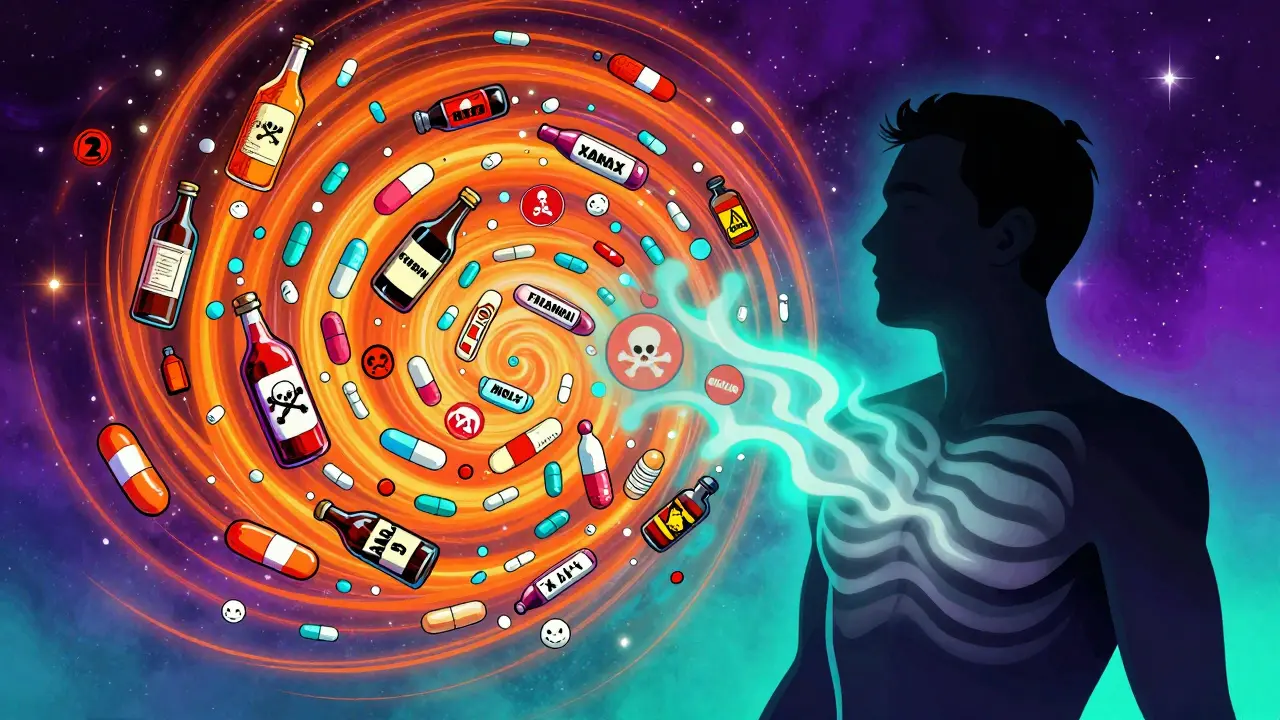
Every year in the U.S., over 107,000 people die from drug overdoses. Many of these deaths aren’t caused by one drug alone-they happen when substances mix in ways that silently shut down breathing. The most dangerous combinations? Opioids with benzodiazepines, alcohol, or street drugs laced with fentanyl. These aren’t rare accidents. They’re predictable-and preventable.
Why Some Drug Mixes Are Deadly
Not all drug interactions are the same. Some cause nausea or dizziness. Others kill. The real danger comes from CNS depressants-drugs that slow down your central nervous system. When you mix two or more of these, your brain loses the ability to tell your lungs to breathe. Opioids like oxycodone or heroin already do this. Add benzodiazepines like Xanax or Valium, or even alcohol, and the effect multiplies.
A 2022 study in JAMA Internal Medicine found that people who took opioids with benzodiazepines were 10.3 times more likely to die from an overdose than those who took opioids alone. Alcohol doesn’t just add to the risk-it changes how your body processes the drugs. NIH research from 2021 showed opioid-alcohol combinations increase respiratory depression by 67%. That means your breathing gets slower, shallower, and eventually stops.
It’s not just prescription drugs. Street drugs are unpredictable. What you think is heroin might be fentanyl-laced cocaine. Fentanyl is 50 to 100 times stronger than morphine. Even a tiny amount can kill, especially if you’ve been sober for a few days. Tolerance drops fast-by 30% to 50% within 72 hours of stopping use. That’s why people who relapse after weeks or months are at the highest risk.
How Healthcare Providers Check for Risks
Clinicians don’t just guess. They use proven tools. The CDC’s Opioid Risk Tool (ORT) is a five-question screening used in doctor’s offices. It takes less than two minutes and catches 95% of people at risk for misuse. But the real key isn’t the tool-it’s the question.
Instead of asking, “Are you taking other medications?” which invites a yes or no, providers are trained to say: “Do you ever take medicines not prescribed to you?” That small change increases honest answers by 52%, according to a 2022 study in Addiction. People are more likely to admit to using Valium from a friend’s medicine cabinet or drinking while on painkillers if they don’t feel judged.
Doctors also use urine drug tests when self-reports seem unreliable. One ER nurse in Reddit’s r/StopRelapsing community shared that in 12 years, she saw 217 overdose cases where patients denied using benzodiazepines-until after naloxone was given. Then, 82% admitted they’d been mixing them with opioids.
The Beers Criteria, updated every two years by the American Geriatrics Society, helps doctors avoid dangerous combinations in older adults. It lists 56 specific drug pairs that raise overdose risk in people over 65, like mixing opioids with antihistamines or sleep aids.
Digital Tools You Can Use
If you’re on prescription meds, you can check for interactions yourself. The FDA’s Drug Interaction Checker is updated monthly and covers over 1,200 medications. MedlinePlus, run by the National Library of Medicine, has data on 10,000+ drugs, including over-the-counter pills and supplements.
These tools are great-but they have a blind spot. They only know about legal, named medications. They don’t know about “Molly,” “benzos,” “downers,” or “fent.” And that’s where they fail. A 2023 SAMHSA survey found that 63% of dangerous interactions involve substances not listed in digital databases.
That’s why tools like Medscape’s Drug Interaction Checker, which updates weekly with data from 250+ clinical trials, still miss the mark in real-world settings. They’re accurate for 89% of prescription interactions-but useless when someone’s using a pill bought off the street.
What to Do If You Don’t Have a Doctor
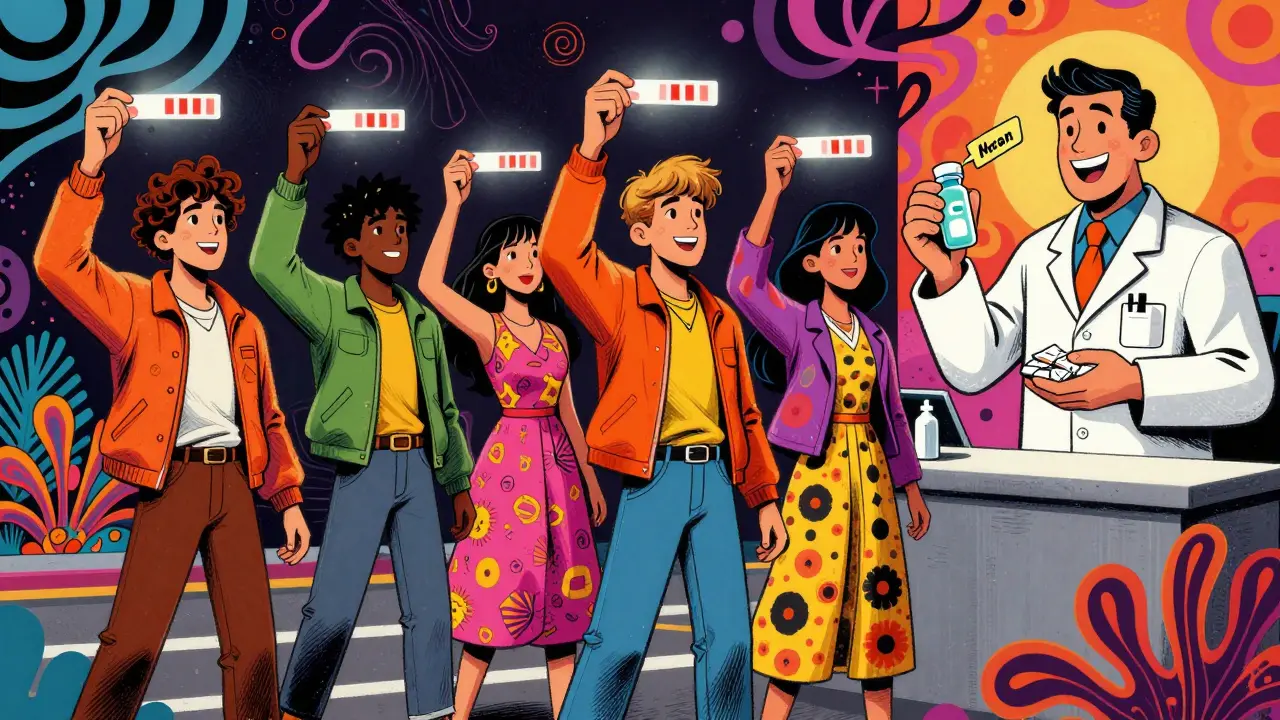
Not everyone has access to a clinic. Harm reduction groups have created simple, no-judgment tools for people who use drugs outside the medical system. The Overdose Risk Assessment Card, used by the National Harm Reduction Coalition, lists 23 common substances-not by medical names, but by street terms: “Xanax,” “K2,” “crack,” “speed,” “fent,” “heroin.”
The question isn’t “Are you taking any drugs?” It’s: “Have you used any of these in the last week?” This approach reduces stigma and gets better answers. In field testing, it identified 94% of dangerous combinations-far more than digital tools.
The National Harm Reduction Coalition also offers a free online Overdose Risk Self-Check tool. It’s available in 12 languages and asks 10 straightforward questions:
- Have you taken any drugs not prescribed to you?
- Have you used alcohol or marijuana with opioids or sedatives?
- Have you injected drugs recently?
- Have you been sober for more than 3 days?
- Do you have asthma, COPD, or another breathing condition?
- Have you taken more than one pill at once?
- Do you feel dizzy, confused, or very sleepy after taking drugs?
- Have you ever passed out after using drugs?
- Do you know what’s actually in the drugs you’re using?
- Have you ever needed help breathing after using drugs?
Answering “yes” to two or more means you’re at high risk. The tool doesn’t diagnose-it tells you to carry naloxone and avoid mixing substances.
The Critical Gap: Illicit Drugs and Street Names
One of the biggest reasons people overdose isn’t ignorance-it’s misidentification. “Molly” isn’t always MDMA. In 2023, NIDA reported that 73% of drugs sold as “Molly” in the U.S. were actually fentanyl. Same with “Xanax” pills bought online-they’re often fake, laced with fentanyl or etizolam.
Dr. Wilson Compton from NIDA put it plainly: “Current digital tools miss 78% of dangerous interactions involving illicit fentanyl analogs.” That’s why asking about substance names isn’t enough. You need to ask about what people think they’re taking.
Know the street names:
- Fentanyl: “China White,” “Dance Fever,” “Apache,” “Tango & Cash”
- Benzodiazepines: “Benzos,” “Downers,” “Vallies,” “Xannies”
- MDMA: “Molly,” “Ecstasy,” “E,” “Adam”
- Cocaine: “Coke,” “Snow,” “Blow,” “Crack”
If someone says they’re using “Molly,” ask: “What did it look like? Did it taste bitter? Did it make you feel really wired or really sleepy?” Those details can reveal if it’s pure MDMA-or deadly fentanyl.
What to Do If You’re at Risk
Here’s what works:
- Carry naloxone. It reverses opioid overdoses. You don’t need a prescription in most states. Get it from pharmacies, harm reduction centers, or online.
- Never use alone. If you’re going to use, have someone with you who knows how to use naloxone.
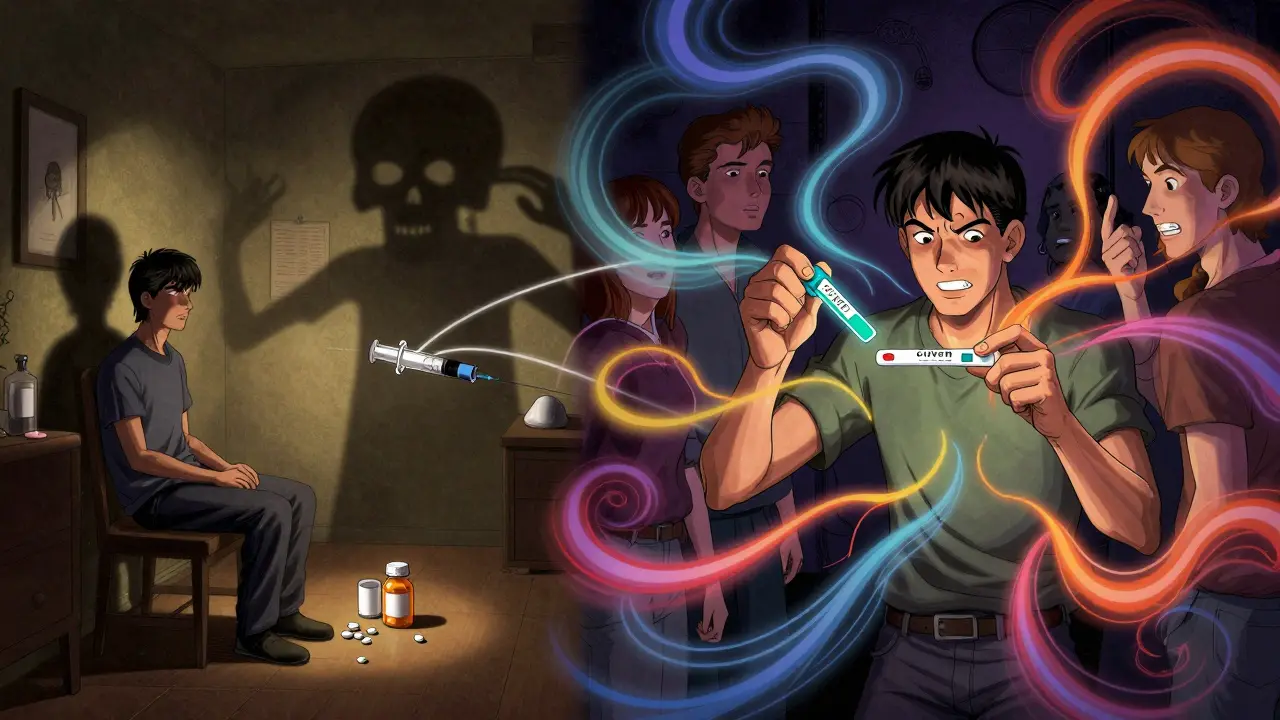
- Test your drugs. Fentanyl test strips cost less than $1 each. They’re available for free from many harm reduction groups. Just dissolve a tiny bit of the drug in water, dip the strip, and wait a few minutes.
- Start low. If you’ve been away from drugs, use half your usual dose. Tolerance drops fast.
- Don’t mix. Even one extra substance can be deadly. Alcohol, sleep aids, muscle relaxers, and anti-anxiety meds are the biggest killers.
What’s Changing in 2025
Things are shifting. In 2024, the FDA updated its Drug Interaction Checker to include 47 new fentanyl analogs and 12 synthetic opioids. SAMHSA now requires all federally funded harm reduction programs to screen for illicit substances using the updated Overdose Risk Assessment Protocol.
More hospitals are training staff to ask about non-prescribed use. In 2019, only 22% of U.S. hospitals did this. By 2023, that number jumped to 63%.
But funding is still a problem. Only 17% of syringe service programs have access to a pharmacist who can check for interactions. That means most people who need help the most aren’t getting it.
The future might include AI that predicts overdose risk from electronic health records. A 2023 study showed machine learning could predict dangerous polydrug use with 92% accuracy. But privacy and bias are real concerns. For now, the best tool is still a human asking the right question.
Final Thought: Prevention Starts With One Question
You don’t need a medical degree to save a life. You just need to ask: “Have you ever mixed your drugs with anything else?”
That question-asked gently, without judgment-has saved lives. One Reddit user wrote: “My pharmacist asked if I ever took medicines not prescribed to me. I admitted I was mixing Xanax with my oxycodone. She gave me naloxone and told me how to use it. That saved my life.”
Overdose isn’t inevitable. It’s a system failure. We can fix it-not with more pills, but with better questions, better tools, and more honesty.
Can I check for drug interactions on my phone?
Yes, but with limits. Apps like the FDA’s Drug Interaction Checker or MedlinePlus can tell you if your prescription meds interact. But they won’t warn you about street drugs, fake pills, or substances without medical names. For real-world safety, use the National Harm Reduction Coalition’s free Overdose Risk Self-Check tool-it’s designed for people who use non-prescribed drugs.
Is it safe to mix alcohol with painkillers?
No. Mixing alcohol with opioids or even over-the-counter painkillers like acetaminophen (Tylenol) can cause severe liver damage or stop your breathing. Alcohol increases how much of the drug your body absorbs and slows how fast it’s cleared. This raises overdose risk by 67% with opioids, according to NIH research. Even one drink with your pain meds can be dangerous.
Why do people overdose after being sober for a while?
Your body loses tolerance quickly. After just 72 hours without using opioids, your tolerance drops by 30% to 50%. If you use the same dose you used before quitting, your body can’t handle it. That’s why relapse is one of the biggest causes of overdose. Always start with half your usual dose if you’ve been sober-even for a few days.
Do fentanyl test strips really work?
Yes. Fentanyl test strips detect the presence of fentanyl in drugs with over 90% accuracy. They’re cheap, easy to use, and widely available for free from harm reduction centers. If the strip shows fentanyl, don’t use the drug. If you do, use less, have naloxone ready, and never use alone. They don’t catch every analog, but they stop many deaths.
Can I get naloxone without a prescription?
In most U.S. states, yes. You can get naloxone at pharmacies without a prescription. Some states allow pharmacists to give it out for free. You can also order it online from harm reduction organizations like Naloxone4All or GetNaloxoneNow. Keep it with you, even if you don’t use drugs-someone you know might need it.
What if I’m worried about getting in trouble for admitting drug use?
You won’t. Harm reduction programs and healthcare providers who use evidence-based practices are focused on saving lives, not punishment. In fact, the CDC and SAMHSA recommend asking about non-prescribed use because people are more likely to be honest when they don’t fear judgment. Your safety matters more than stigma.
Kylie Robson
December 29, 2025 AT 05:51The CNS depressant synergism between opioids and benzos is a pharmacokinetic nightmare-CYP3A4 inhibition, GABA-A receptor potentiation, and respiratory center depression in the medulla oblongata. The 10.3x relative risk isn't just statistically significant-it's clinically catastrophic. Most providers still rely on outdated screening tools that don't account for polypharmacy cascades. You need to integrate the Beers Criteria with the CDC ORT and cross-reference with Lexicomp or Micromedex for real-time risk stratification.
Paula Alencar
December 29, 2025 AT 12:46Every life lost to this silent, preventable tragedy is not just a statistic-it’s a mother who never got to hear her child laugh again, a father who missed his granddaughter’s first steps, a friend whose laughter can no longer fill a room. We have the tools. We have the science. We have the compassion. What we lack is the collective will to stop treating addiction as a moral failing and start treating it as the public health emergency it is. Let us choose mercy over judgment, knowledge over stigma, and action over silence.
Nikki Thames
December 30, 2025 AT 12:34Let me be perfectly clear: if you’re using substances outside a clinical context, you are not just risking your life-you are betraying the responsibility that comes with being a sentient human being. The fact that we’ve normalized harm reduction as a ‘solution’ instead of addressing the root moral decay is the true tragedy. No tool, no strip, no naloxone can fix a soul that has abandoned its own dignity. You don’t need a test strip-you need a conscience.
Chris Garcia
December 30, 2025 AT 22:20In my village in Nigeria, we say: ‘When the wind blows, the grass bends-but the tree stands firm.’ Too many of us are bending under the pressure of addiction, thinking the system will catch us. But the system is broken. That’s why I carry fentanyl test strips in my pocket like a prayer. They cost less than a cup of tea, yet they’ve saved lives in Lagos and Atlanta alike. Knowledge is power-but only if you share it. Pass the strip. Tell your cousin. Speak up before it’s too late.
James Bowers
January 1, 2026 AT 17:44The notion that asking ‘Have you taken medicines not prescribed to you?’ increases honesty by 52% is statistically misleading. The real issue is that patients lie because they fear consequences-not because of judgment. The solution isn’t reworded questions-it’s mandatory reporting and stricter enforcement. If someone admits to mixing benzos with opioids, they should be flagged, monitored, and referred to treatment-not handed naloxone like a participation trophy.
Will Neitzer
January 3, 2026 AT 12:50This is one of the most comprehensive, compassionate, and clinically rigorous overviews I’ve ever read on opioid-related overdose prevention. The integration of the Beers Criteria, the Overdose Risk Assessment Card, and the emphasis on street-named substances reflects a true understanding of the lived reality of substance use. The shift from ‘Are you using?’ to ‘Have you used any of these in the last week?’ is a masterclass in trauma-informed care. Thank you for centering humanity in a field too often dominated by clinical detachment.
Olivia Goolsby
January 4, 2026 AT 12:06Let’s be real-this whole ‘harm reduction’ movement is a government-funded scam to keep addicts alive so they keep voting for the same politicians who fund these programs! Fentanyl test strips? They’re probably laced with synthetic cannabinoids themselves! And naloxone? It’s just a placebo that makes people feel better about enabling destruction. The REAL solution? Lock them up. Rehab doesn’t work. Punishment does. And don’t even get me started on the ‘street names’ list-they’re just code words for the government to track us!
Gerald Tardif
January 4, 2026 AT 19:40Man, I’ve seen this play out too many times. I used to run a community center in Ohio. We’d hand out test strips like candy. One guy came in, said he was using ‘Xanax’ he bought off Instagram. Tested it-fentanyl positive. He cried. Said he just wanted to sleep. We got him on a waitlist for MAT. Two months later, he was clean, working at the gas station, coaching his kid’s soccer team. Tools don’t fix people. But showing up? That does.
Monika Naumann
January 6, 2026 AT 02:19In India, we have a tradition of respecting elders and honoring discipline. To promote harm reduction tools like test strips is to encourage reckless behavior among the youth. Why do we not focus on strengthening moral education, family values, and spiritual grounding instead of providing paraphernalia for self-destruction? This Western obsession with enabling addiction through technology is a cultural invasion. We must reject these tools and return to principles of restraint and honor.
Babe Addict
January 7, 2026 AT 17:30Bro, the FDA checker is a joke. I used it last week on my ‘Xanax’ I got off the dark web. It said ‘low risk’ with oxycodone. Then I tested it-fentanyl popped up. The FDA’s database hasn’t been updated since 2020. Meanwhile, new analogs like cyclopropylfentanyl are flooding the streets. They’re playing chess while we’re playing Jenga with our lives. Use the harm reduction tool. Ignore the corporate apps. And for god’s sake, don’t trust anything with a .gov domain after 2023.
Satyakki Bhattacharjee
January 8, 2026 AT 12:36People die because they are lazy. If you don't know what you are taking, you deserve what happens. Why not just stop? Why not go to mosque? Why not pray? Drugs are haram. Naloxone is not the answer. The answer is faith. Simple.
Kishor Raibole
January 8, 2026 AT 18:40There is a great cosmic irony here: we have created machines that can predict the stars, yet we cannot predict when a single pill will end a life. The algorithm of fate does not run on data-it runs on the silence between heartbeats. We have turned death into a checklist. But no form can capture the trembling hand, the tear that falls before the breath stops. The real risk is not in the mix-it is in the loneliness that drove someone to mix in the first place.
Liz MENDOZA
January 8, 2026 AT 20:06I work in ER nursing and I’ve held people as they died from this. I’ve seen the same faces come back-over and over. But I’ve also seen the ones who got naloxone, who went to treatment, who started calling their moms again. It’s not about being perfect. It’s about being alive long enough to try again. If you’re reading this and you’re scared-reach out. You’re not alone. We’re here. And we’re not going anywhere.
Jane Lucas
January 10, 2026 AT 20:05