How to Check for Generic Medication Alternatives for Your Prescription in the UK
Switching to a generic medication can save money, but in the UK, the NHS already uses generics for most prescriptions. Still, knowing how to check if a generic is available for your specific prescription is useful. Here's how to do it.
Why check for generic medication availability?
Most prescriptions in the UK are for generic drugs by default. But sometimes, your doctor might prescribe a specific brand, especially for medications where small differences matter, like blood thinners or epilepsy treatments. Knowing whether a generic is available helps you ensure you're getting the right treatment without unnecessary costs. In the UK, the NHS system prioritises cost-effective treatment, but not all medications have interchangeable generics. For example, drugs like warfarin (a blood thinner) or levothyroxine (for thyroid issues) need careful monitoring because even minor differences between brands can affect how well they work.
Step 1: Ask your pharmacist
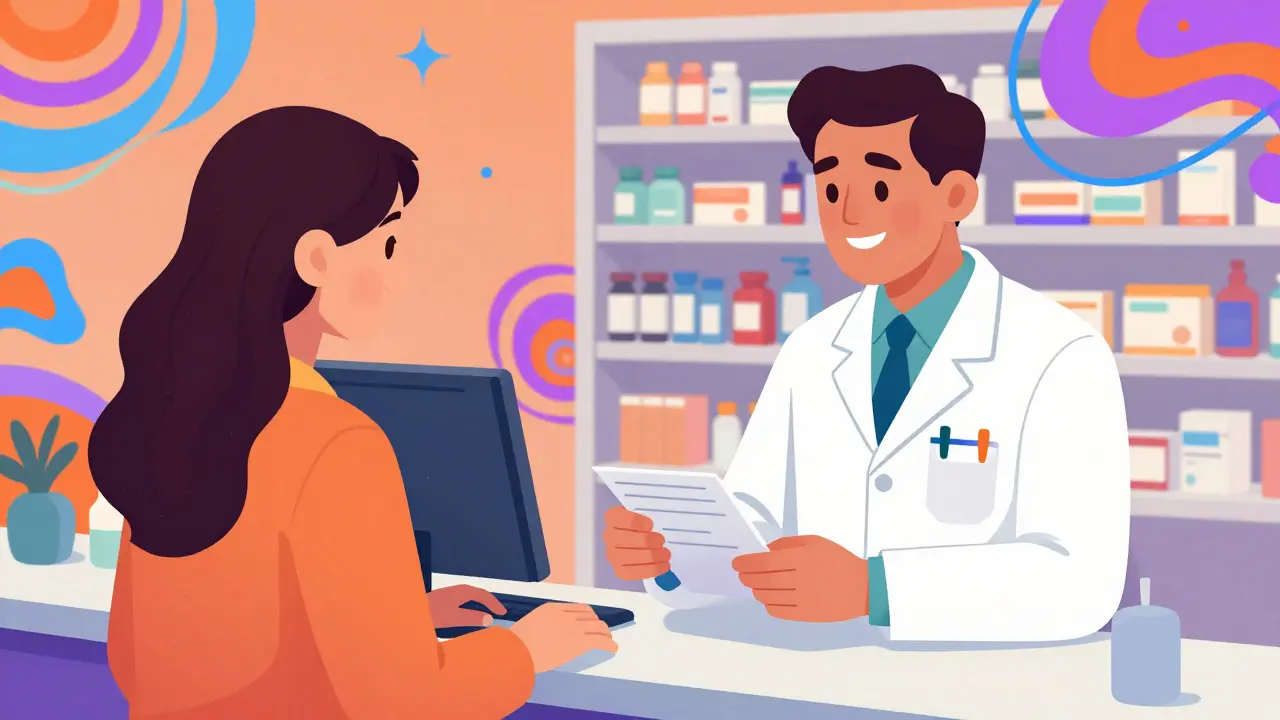
Pharmacists are your best resource. When picking up your prescription, simply ask, "Is there a generic version available for this medication?" Pharmacists have real-time access to the NHS formulary system and can quickly check. In fact, they correctly identify generic alternatives 98.7% of the time according to recent studies. For example, if you're prescribed a brand-name drug like Atorvastatin (brand name Lipitor), the pharmacist can confirm if the generic version is available and appropriate for your condition. Most major pharmacy chains like Boots or Superdrug automatically check for generics during prescription processing. Just say "Can I use a cheaper generic?" - it's a routine part of their job.
Step 2: Check the NHS app or website
The NHS app shows your prescription details. Open the app, go to "Prescriptions", and look at your current medications. If it says "generic" or lists the generic name, that's your answer. If it shows a brand name, ask your pharmacist. The app updates in real-time and is reliable for NHS prescriptions. For instance, if you're taking Metformin, the app might display "Metformin 500mg tablets" instead of a brand name like Glucophage. This is especially useful if you're managing long-term conditions like diabetes, where consistent medication matters.
Step 3: Use the Electronic Medicines Compendium (eMC)
The Electronic Medicines Compendium (eMC) is the UK's official database for medicine information. Go to emc.net and search for your drug's brand name. If there's a generic version, it will show up under "Generic equivalents". For example, searching for Simvastatin (brand Zocor) will show multiple generic alternatives. The eMC also provides detailed information on therapeutic equivalence, which is important for certain medications. To use it: type the brand name into the search bar, click "Product Information", and look for "Generic equivalents" under the "Therapeutic Group" section. This is especially helpful if you're comparing multiple options for chronic conditions like high cholesterol.
Step 4: Check the 'Do not substitute' label
Your prescription label may include instructions like "Do not substitute". This means the pharmacist must dispense the exact brand prescribed. It's common for medications where small differences matter, like blood thinners or certain epilepsy drugs. If you see this label, you can't switch to a generic without consulting your doctor. But most prescriptions don't have this label. For example, if your prescription says "Lipitor 20mg" without any special instructions, your pharmacist can substitute a generic atorvastatin. Always check the label before picking up your prescription. In the UK, pharmacists are legally required to follow these instructions, so never ignore "Do not substitute" notes.
Step 5: When a generic might not be suitable
Some medications require specific brands due to narrow therapeutic index. For example, drugs like Warfarin (blood thinner) or Levothyroxine (thyroid medication) need careful monitoring. In these cases, your doctor may specify a brand to ensure consistent dosing. Always consult your doctor before switching. The MHRA (Medicines and Healthcare products Regulatory Agency) warns that for drugs with a narrow therapeutic index, even small differences in how the body absorbs the medication can cause serious side effects. If you're unsure, ask your doctor: "Is there a generic alternative that's safe for my condition?"
| Method | How it works | Time required | Reliability |
|---|---|---|---|
| Pharmacist consultation | Ask your pharmacist during pickup; they check the NHS system in real-time | 2-5 minutes | Very high (98.7% accuracy) |
| NHS app | View prescription details in the app; shows generic status | 3-4 minutes | Moderate (depends on app version) |
| eMC website | Search drug name for generic equivalents | 5-10 minutes | High (official source) |
| GP surgery | Contact your GP for clarification | 1-2 days | High (but slow) |
Common mistakes to avoid
Many people assume all generics are identical, but that's not always true. For example, some generic versions of levothyroxine might have slightly different inactive ingredients, which can affect absorption. Always check with your pharmacist if you notice changes in how you feel after switching. Also, never skip asking about generics - pharmacists won't automatically suggest them unless you ask. In the UK, over 90% of prescriptions are filled with generics, but patients only ask about them 40% of the time. Another mistake is ignoring "Do not substitute" labels. These exist for good reason: switching could lead to health risks for certain conditions.
Real-world examples
Take Sarah, a 52-year-old from Leeds who was prescribed the brand-name drug Crestor for high cholesterol. She asked her pharmacist, who confirmed a generic version (rosuvastatin) was available and equally effective. Her prescription cost dropped from £10.50 to £2.00 per month. Similarly, Mark, a 68-year-old with diabetes, used the NHS app to see his metformin prescription was already listed as generic. He saved £78 a year without changing anything. These examples show how simple it is to check and save money when you know where to look.
Can I ask my pharmacist for a generic version of my prescription?
Yes, absolutely. Pharmacists are trained to identify generic alternatives and can usually switch your prescription unless the label says "Do not substitute". Just ask during pickup - it's a routine part of their job. In fact, most UK pharmacists expect this question and will check immediately.
What does 'Do not substitute' mean on my prescription?
This instruction means the pharmacist must dispense the exact brand prescribed. It's common for medications where small differences matter, like blood thinners or certain epilepsy drugs. If you see this label, you can't switch to a generic without consulting your doctor. The MHRA requires this for drugs with narrow therapeutic indexes to ensure patient safety.
Are all generic medications safe?
Yes, all generics approved in the UK must meet the same strict standards as brand-name drugs. The MHRA ensures they contain the same active ingredients, work the same way, and are equally safe. However, some people might react differently to inactive ingredients (like fillers or dyes), so always tell your pharmacist about any allergies.
How do I know if my prescription is for a brand or generic?
Check the prescription label. If it lists a brand name like "Lipitor" or "Zocor", it's a brand. If it says "Atorvastatin" or "Simvastatin", it's generic. Your pharmacist will also tell you when dispensing. In the UK, most prescriptions are written generically by default, but doctors sometimes specify brands for specific reasons.
What if my GP won't prescribe a generic?
GPs usually prescribe generics unless there's a medical reason not to. If your GP refuses, ask why. For most conditions, generics are equally effective. If they say "this brand is better for you", request a written explanation. You can also ask your pharmacist to check if a generic is available - they often know more about substitution options than GPs.
Can I switch to a generic without telling my doctor?
For most medications, yes. Pharmacists in the UK can substitute generics unless the prescription says "Do not substitute". However, for drugs like warfarin or levothyroxine, always check with your doctor first. These require precise dosing, and even small changes can affect your health. Your pharmacist will advise you if it's safe to switch.
Albert Lua
February 6, 2026 AT 15:59Pharmacists in the UK automatically check for generics when processing prescriptions.
They can confirm availability in real-time using the NHS system.
This saves time and money without any hassle.
Always ask your pharmacist about generic options-they're there to help.
Thorben Westerhuys
February 6, 2026 AT 17:34Pharmacists in the UK routinely check for generic alternatives during prescription processing.
They have real-time access to the NHS system and can confirm availability within seconds.
This is a standard procedure.
Laissa Peixoto
February 7, 2026 AT 16:25Understanding the difference between brand and generic is crucial.
The NHS uses generics for most prescriptions, but some medications like warfarin require specific brands due to narrow therapeutic index.
Always verify with your pharmacist to ensure safety and efficacy.
Nancy Maneely
February 9, 2026 AT 15:14Actually, the NHS is doing a great job with generics, but some people don't check properly.
Always look for 'Do not substitute' labels-those are there for a reason.
Don't risk your health for a few pounds.
Phoebe Norman
February 11, 2026 AT 05:02Always check the 'Do not substitute' label.
Lana Younis
February 12, 2026 AT 22:09For most meds, generics are totally safe.
I've been on generic metformin for years with no issues.
Just check with your pharmacist if you're unsure.
They'll let you know if there's a brand-specific reason.
Dr. Sara Harowitz
February 13, 2026 AT 06:30Actually, it's not 'totally safe' for everyone.
Some people react to fillers in generics.
Always check with your doctor.
The NHS isn't perfect-don't assume generics work for you without verification!!!
Kieran Griffiths
February 13, 2026 AT 13:33I've used the eMC website to check for generics.
It's straightforward: search your brand name, look under 'Generic equivalents'.
Saves time compared to calling the GP.
Highly recommend it for chronic conditions like high cholesterol.