How to Recognize Overdose from Sedatives and Sleep Medications

Every year, thousands of people in the U.S. and UK end up in emergency rooms because someone didn’t recognize the signs of a sedative overdose until it was too late. It’s not always obvious. Sometimes, the person just looks deeply asleep-too deep. Maybe they’re snoring softly, their skin is cool, and their breathing is slow. You might think they’re just exhausted. But that could be the last normal thing you see before they stop breathing. Sedative overdose doesn’t always come with screaming or chaos. Often, it’s quiet. And that’s what makes it so dangerous.
What Counts as a Sedative Overdose?
Sedatives and sleep medications are designed to calm your brain and slow down your nervous system. That’s why they help you fall asleep. But when you take too much-or mix them with alcohol, opioids, or even some painkillers-your brain starts shutting down. The most common culprits are benzodiazepines like alprazolam (Xanax), lorazepam (Ativan), and diazepam (Valium), and the so-called "Z-drugs" like zolpidem (Ambien) and eszopiclone (Lunesta). Even over-the-counter sleep aids like Tylenol PM or Benadryl, which contain diphenhydramine, can cause overdose at high doses.It’s not just about taking an extra pill. Overdose often happens when someone takes more than prescribed because they think it’ll help them sleep better. Or when they combine it with alcohol after a long day. Or when they’ve built up tolerance and need more to feel the same effect. The line between "just one more" and "too much" is thinner than most people realize.
Early Warning Signs You Can’t Ignore
The first signs of overdose are easy to mistake for deep sleep or drunkenness. But there are key differences. Here’s what to watch for:- Unresponsiveness: Can you wake them up? Shout their name. Shake their shoulder. Try a sternal rub (rub your knuckles hard on the center of their chest). If they don’t respond at all-even to pain-they’re in serious trouble.
- Slurred speech: If they’re awake but can’t form words, or their speech is thick and slow, this is a major red flag. Studies show this happens in 87% of benzodiazepine overdoses.
- Confusion or disorientation: They might not know where they are, who you are, or what time it is. They can’t answer simple questions like "What’s your name?" or "Where are you?"
- Loss of coordination: They might stumble, fall over, or drop things. Their movements look like they’re drunk-even if they haven’t had alcohol.
These aren’t normal side effects. They’re signs your brain is being suppressed. If you see even one of these, don’t wait. Call for help.
The Life-Threatening Signs
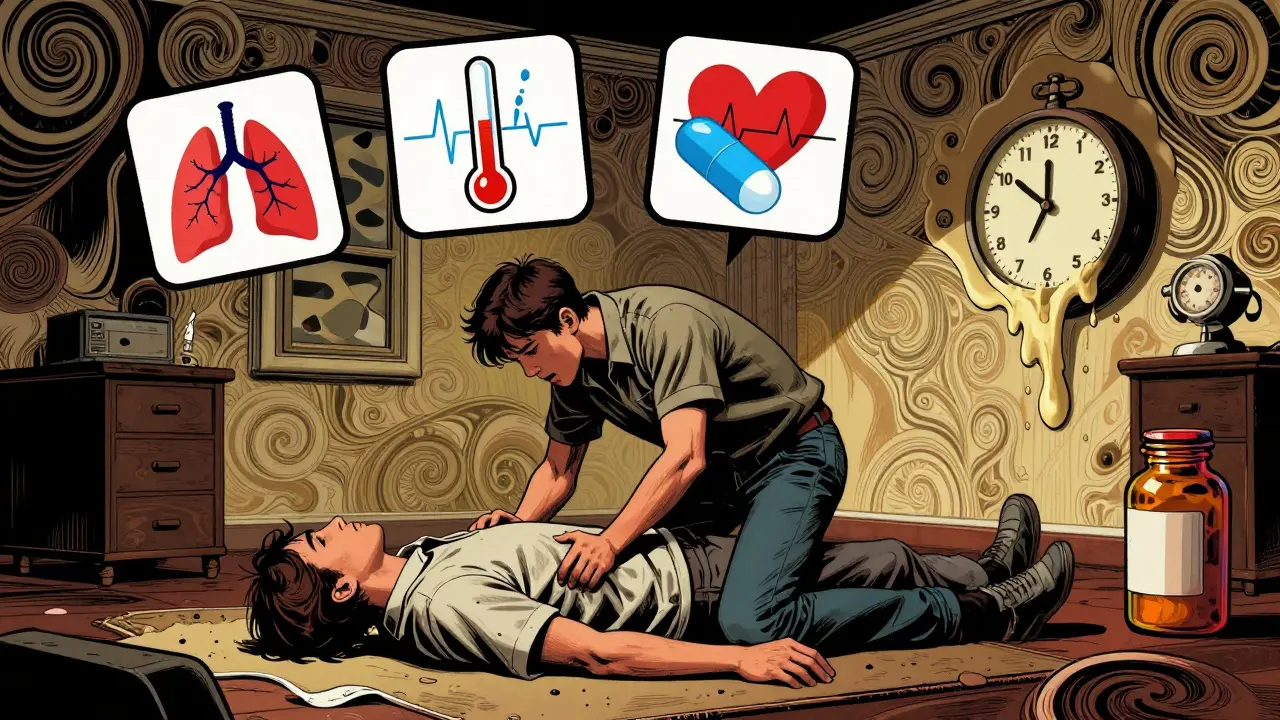
If the early signs are ignored, the body starts shutting down. This is where it turns deadly.- Slow breathing: Normal breathing is 12 to 20 breaths per minute. In overdose, it drops below 8. Count for 30 seconds. If you see fewer than 4 breaths, it’s an emergency. Breathing that’s shallow, irregular, or stops entirely means the brain is no longer controlling basic functions.
- Cyanosis: Look at their lips, fingertips, and nail beds. If they’re turning blue or gray, oxygen is failing. This is a late sign-but it’s a final warning.
- Cold, clammy skin: Their body temperature drops. Skin feels wet and cool to the touch. This happens because the nervous system is slowing down circulation.
- Heart rate drops: Below 50 beats per minute. In severe cases, the heart can stop.
- Coma: If they’re completely unconscious and don’t respond to any stimulus, they’re in a drug-induced coma. Survival depends on immediate medical intervention.
Respiratory depression causes 92% of deaths from pure sedative overdoses. That means the person isn’t dying because of a heart attack or seizure-they’re dying because they stop breathing. And that can happen fast.
What Makes It Worse?
Not all overdoses are the same. Some medications are more dangerous than others.Barbiturates (like phenobarbital) are rarely prescribed today, but if someone is still taking them, the risk of overdose is much higher-even at lower doses. They cause deeper, faster respiratory failure than benzodiazepines.
Over-the-counter sleep aids like diphenhydramine (Benadryl) can cause overdose too, but the symptoms are different. Instead of just slowing breathing, they can trigger hallucinations, seizures, or a racing heart. These are dangerous too-but not always fatal.
Melatonin? It’s much safer. Even taking 60 times the normal dose rarely causes breathing problems. The real danger comes from prescription drugs.
The biggest risk? Mixing sedatives with other depressants. Alcohol, opioids like heroin or fentanyl, or even some painkillers like oxycodone can multiply the effect. The CDC found that 23% of benzodiazepine overdose deaths in 2021 also involved fentanyl. That combination is deadly. Even a small amount of fentanyl can turn a "manageable" overdose into a fatal one.
What You Should Do-Right Now
If you suspect an overdose, don’t wait. Don’t try to wake them by slapping them or pouring water on their face. Don’t assume they’ll sleep it off. Here’s what to do:- Check responsiveness: Shout their name. Shake their shoulders. Try a sternal rub. If no response, move to step two.
- Check breathing: Look at their chest. Count breaths for 30 seconds. If fewer than 4, they’re not getting enough oxygen.
- Call 999 immediately: Say "suspected sedative overdose." Tell them if alcohol or other drugs might be involved.
- Start rescue breathing if they’re not breathing: Tilt their head back, lift their chin, pinch their nose, and give one breath every 5 seconds. Don’t stop until help arrives.
- Stay with them: Turn them on their side if they’re breathing but unconscious. This prevents choking if they vomit.
- Bring the medication bottle: If you can find it, take it with you to the hospital. It helps doctors know what they’re dealing with.
Do not give them coffee, cold showers, or induce vomiting. These don’t work and can make things worse. And don’t try to give them flumazenil-the only antidote for benzodiazepines. It’s dangerous without medical supervision and can trigger seizures in people who are dependent on these drugs.
Why People Miss the Signs
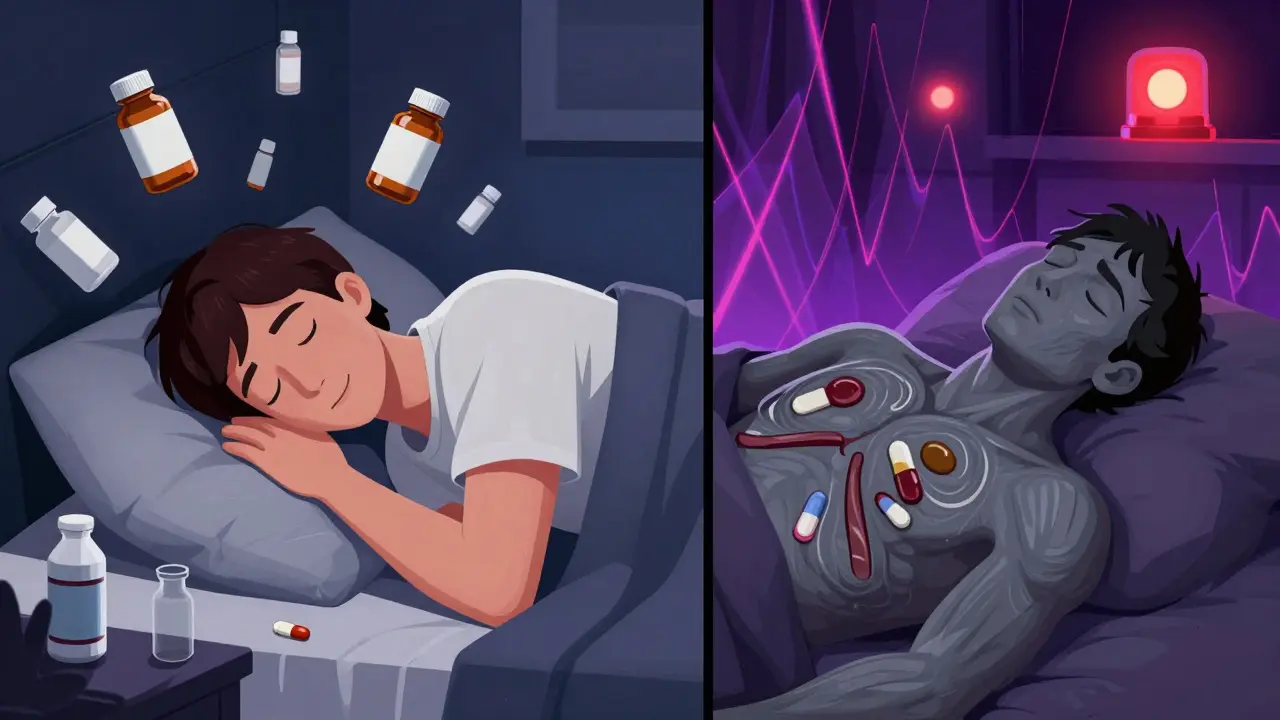
A 2022 study found that nearly 70% of bystanders thought someone overdosing was just "really tired" or "drunk." Reddit users share stories like, "I thought my roommate was just exhausted from work," or "I assumed the slurred speech was from drinking."That’s the problem. Sedative overdose doesn’t look like a movie overdose. No convulsions. No screaming. Just silence. A person who used to be loud and alert becomes still. Their breathing gets slower. Their skin gets cold. And then-they stop.
Many people delay calling for help because they’re scared of getting in trouble. But emergency responders don’t care about who took what. They care about saving a life. In the UK, the Good Samaritan law protects people who call for help during an overdose.
Who’s at Highest Risk?
It’s not just people with addiction. Many overdoses happen to people who were prescribed these drugs for anxiety or insomnia. Older adults are especially vulnerable because their bodies process drugs slower. But the biggest rise in overdoses is among adults aged 25 to 54. In 2021, over 12,500 people in the U.S. died from benzodiazepine overdoses-up from just over 1,100 in 2010.West Virginia has the highest rate, but it’s happening everywhere. In Leeds, emergency services report a steady increase in sedative-related calls over the last three years. Many of these cases involve people who took their own medication but didn’t realize how much was too much.
What’s Being Done to Help?
Hospitals are starting to screen for sedative misuse. The American College of Emergency Physicians now recommends a simple 8-question test to identify people at risk. In California, pharmacies now hand out free overdose recognition cards with pictures of the key signs. Early results show a 22% improvement in bystander recognition.New devices are being tested too-wearable pulse oximeters that monitor oxygen levels while you sleep. If your oxygen drops too low, it alerts you or your phone. This could give people 15 to 20 minutes to act before breathing stops completely.
But the most powerful tool is still awareness. Knowing the signs. Knowing what to do. Knowing that silence doesn’t mean safety.
Final Thought: Don’t Wait for the Worst
If someone you care about is taking sedatives or sleep aids, talk to them. Ask if they’ve ever felt like they needed more to get the same effect. Ask if they ever take it with alcohol. Ask if they’ve ever passed out after taking it.If you’re taking these drugs yourself, know your dose. Don’t mix them. Keep the bottle handy. Tell someone you trust what you’re taking and how much. Keep naloxone (Narcan) on hand if you’re also using opioids-it won’t reverse sedatives, but it might save you if you’ve mixed drugs.
Sedative overdose doesn’t have to be a death sentence. But it needs to be recognized fast. The difference between life and death is often less than ten minutes.
Can you overdose on melatonin?
Yes, you can take too much melatonin, but it’s very unlikely to cause a life-threatening overdose. Even doses as high as 240mg (60 times the normal dose) typically only cause headaches, dizziness, nausea, or vivid dreams. Unlike prescription sedatives, melatonin doesn’t suppress breathing or cause coma. It’s not considered dangerous in the same way as benzodiazepines or barbiturates.
Is flumazenil safe to give at home?
No. Flumazenil is the only antidote for benzodiazepine overdose, but it’s extremely dangerous to use outside a hospital. It can trigger seizures in people who are physically dependent on these drugs-even if they didn’t overdose intentionally. The FDA has documented 17 fatal seizures from improper use. Never attempt to give it yourself. Only trained medical staff should administer it.
Can you overdose on sleeping pills if you take them as prescribed?
It’s rare, but it can happen. Some people develop tolerance and start taking more than prescribed. Others accidentally double-dose because they don’t remember taking it. Older adults are especially at risk because their bodies clear the drug slower. Even "as prescribed" can become dangerous if combined with alcohol, other medications, or if health conditions like liver disease develop.
How long does it take for sedative overdose symptoms to appear?
It depends on the drug. Z-drugs like Ambien can cause symptoms within 30 to 60 minutes. Benzodiazepines like Xanax take 1 to 2 hours. Barbiturates can act faster, sometimes within 15 minutes. If you’ve taken more than prescribed or mixed it with alcohol, symptoms can come on quickly. Don’t wait for symptoms to get worse-act at the first sign of trouble.
What should I do if I find an empty pill bottle next to someone who’s unresponsive?
Call 999 immediately. Don’t wait. Don’t try to figure out what it was. Just say, "Someone is unresponsive and there’s an empty pill bottle nearby." Emergency responders are trained to handle this. Your quick action could save a life. Keep the bottle with you when you go to the hospital-it helps them choose the right treatment.
Are there any warning signs before someone overdoses?
Yes. Many people show signs of increasing tolerance-needing more to sleep, taking pills earlier than prescribed, or mixing them with alcohol. They might start nodding off during conversations, forgetting things more often, or stumbling when walking. These aren’t normal aging or stress symptoms. They’re early signs of dangerous use. If you notice these patterns, talk to them before it turns into an emergency.
Can sedative overdose be reversed?
Yes-if treated fast. Hospitals can give flumazenil for benzodiazepine overdoses, use breathing machines to support oxygen, and monitor vital signs until the drug clears. But reversal only works if help arrives before breathing stops completely. The longer the brain goes without oxygen, the less likely full recovery is. That’s why recognizing the signs early is everything.
Is it safe to let someone "sleep off" a suspected overdose?
Absolutely not. Sedative overdose doesn’t resolve on its own. The body can’t metabolize the drug fast enough to prevent respiratory failure. Many people die because someone assumed they were just sleeping. If they’re unresponsive, breathing is slow or shallow, or their skin is cold and blue-call 999 immediately. Waiting could be fatal.
Shanahan Crowell
January 1, 2026 AT 22:32This is the kind of post that saves lives-seriously. I used to think if someone was just "sleeping too hard," I should let them be. Now I know better. I’ve got a friend who mixes Xanax with wine, and I’ve started checking on them every night. If they’re not responding to a sternal rub? I call 911. No hesitation. No shame. Life is louder than stigma.
Kerry Howarth
January 1, 2026 AT 23:40Slow breathing under 8 per minute = emergency. Call 999. Don’t wait.
Angela Fisher
January 2, 2026 AT 02:47They don’t want you to know this, but the FDA and Big Pharma are pushing these drugs so they can sell more naloxone and rehab beds. Melatonin is safer? Of course it is-because it’s not patented. They want you dependent. Look at the stats: overdoses up 1000% since 2010? Coincidence? No. It’s a business model. And now they’re pushing "wearable pulse oximeters"-like that’s the solution, not stopping the damn prescriptions in the first place. 😒
Brittany Wallace
January 3, 2026 AT 17:50It’s funny how we fear the loud crashes but ignore the quiet ones. We’re taught to recognize drama-but not decay. A person fading into silence isn’t lazy. They’re not weak. They’re just caught in a system that tells them to numb out. I’ve seen it in my grandma. Took her years to admit she was taking extra pills because the anxiety came back. We need more compassion, not just checklists. ❤️
Michael Burgess
January 3, 2026 AT 23:51Man, this hit different. I used to work ER nights in Chicago. One time, a 28-year-old girl came in after her roommate "thought she was just passed out." Turned out she’d taken 12 Ambien and a shot of whiskey. Skin like ice. Lips gray. We had to intubate her. She woke up three days later and asked why everyone was crying. No one told her she almost died. That’s the thing-these drugs don’t scream. They whisper. And by the time you hear them? It’s too late. 🙏
Liam Tanner
January 4, 2026 AT 23:40Good breakdown. I’ve shared this with my book club. We’re all over 50. Most of us take something for sleep. It’s scary how little we know about the risks. Thanks for making it clear without being alarmist.
Hank Pannell
January 6, 2026 AT 04:47There’s an ontological paradox here: sedatives induce a state of reduced consciousness to restore consciousness (sleep), yet their misuse induces a state of irreversible unconsciousness. The pharmacological intent-homeostasis-is subverted by neurochemical feedback loops amplified by cultural normalization. We’ve pathologized insomnia and commodified sedation. The rise in overdoses isn’t just medical-it’s existential. We’ve outsourced our rest to molecules. And now we’re paying the price in breaths uncounted.
Ian Ring
January 7, 2026 AT 07:20Spot on. I’m from Leeds, and we’ve seen a real uptick-especially with people mixing Z-drugs and alcohol after lockdown. I’ve started carrying a little card with the signs printed on it. Gave one to my neighbor last week. She cried and said she didn’t know her husband was at risk. Small acts matter. 👍
Vincent Sunio
January 8, 2026 AT 02:51The article is technically accurate, but the tone is dangerously sentimental. There is no "quiet overdose"-only negligence. People who take benzodiazepines without medical supervision are engaging in reckless behavior. The solution is not awareness campaigns; it is stricter prescribing protocols and criminal liability for those who self-medicate. This piece indulges in emotional manipulation rather than enforcing responsibility.
JUNE OHM
January 8, 2026 AT 19:44Why is this only happening in the U.S.? In China, they don’t even allow these pills over the counter. And now they’re pushing wearable gadgets? That’s just capitalism. They want you dependent, then they sell you the fix. They’re selling fear so they can sell more. I don’t trust any of this. 😡
Philip Leth
January 10, 2026 AT 12:00My cousin took a whole bottle of Benadryl once thinking it’d help her sleep. Ended up in the psych ward screaming at the walls. Didn’t stop breathing, but she thought she was seeing aliens. Wild. Point is-don’t assume OTC = safe. That stuff’s a beast.
Angela Goree
January 11, 2026 AT 20:33They say "call 999"-but what if you’re in the middle of nowhere? What if you’re scared of the cops? What if they take your kid away? This post sounds like it was written by a hospital PR team. Real people don’t just call 999 because someone’s breathing slow. We’re scared. We’re confused. We don’t know if it’s a crime. You need to say it louder: CALL. 999. NOW. No excuses.