How to Switch Back from a Generic to a Brand Medication Safely
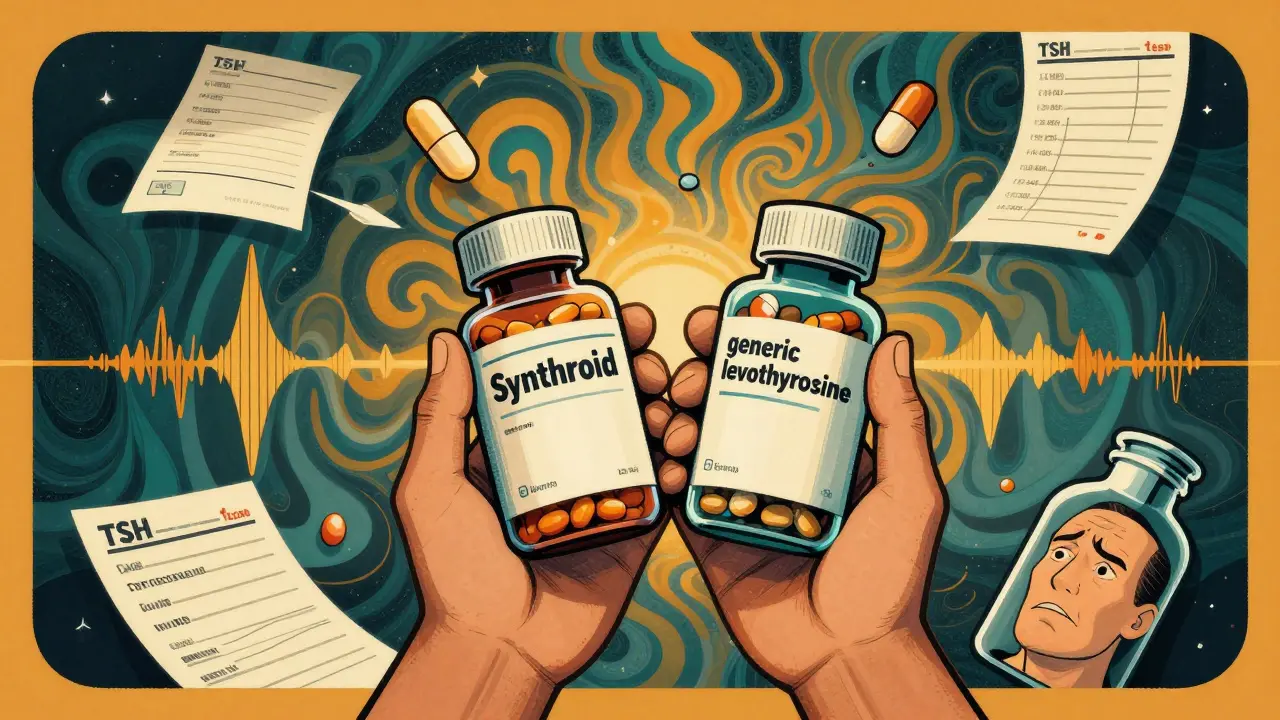
Switching from a generic medication back to its brand-name version isn’t just about preference-it’s a medical decision that can affect your health, your wallet, and your daily routine. Many people assume generics and brand-name drugs are identical, and for most, they are. But when your body reacts differently-when your seizures return, your thyroid levels go haywire, or you break out in a rash-you need to know how to switch back safely. This isn’t about brand loyalty. It’s about safety, control, and getting the right treatment for your body.
Why You Might Need to Switch Back
Generic drugs are required by the FDA to contain the same active ingredient, strength, and dosage form as the brand-name version. They must also be bioequivalent, meaning they deliver the same amount of medicine into your bloodstream within an 80%-125% range of the brand. Sounds perfect, right? But here’s the catch: the inactive ingredients-fillers, dyes, coatings, preservatives-can vary. And for some people, those differences matter.Take levothyroxine, the most common thyroid medication. Even tiny shifts in absorption can throw off your TSH levels. A 2022 study in Neurology found that patients with epilepsy who switched between different generic versions-or back to brand-had a 27% higher chance of breakthrough seizures. For warfarin, a blood thinner with a narrow therapeutic window, small changes in absorption can lead to dangerous clots or bleeding. Patients with inflammatory bowel disease, organ transplants, or severe mental health conditions often report similar issues.
Real stories back this up. One patient on PatientsLikeMe developed a painful rash after switching to a generic version of her antidepressant. The brand she’d been on for years didn’t contain the dye that triggered her allergy. Another, on Reddit, described how his blood pressure spiked after a pharmacy switched his generic lisinopril without warning. His doctor confirmed the generic had a different coating that slowed absorption. These aren’t rare cases. The FDA’s adverse event database recorded over 1,200 switching-related errors in 2022, with 38% of them due to failing to specify the brand when medically necessary.
When Switching Back Is Medically Necessary
Not every complaint about generics means you need the brand. But there are clear situations where switching back isn’t just allowed-it’s critical. The FDA and major medical groups agree: if you’re on a narrow therapeutic index (NTI) drug, switching between formulations-even between two generics-can be risky.NTI drugs include:
- Warfarin (Coumadin)
- Levothyroxine (Synthroid)
- Phenytoin (Dilantin)
- Cyclosporine (Neoral)
- Sirolimus (Rapamune)
- Lithium
For these, the acceptable bioequivalence range is tighter-often 90% to 111%-because even small differences can cause harm. If you’ve been stable on a brand for months and suddenly your lab results change after a generic switch, your doctor may need to switch you back. Same if you develop a new side effect: nausea, dizziness, skin reactions, or worsening symptoms. Document everything: dates, symptoms, lab values. That’s your evidence.
The 7-Step Safe Switching Process
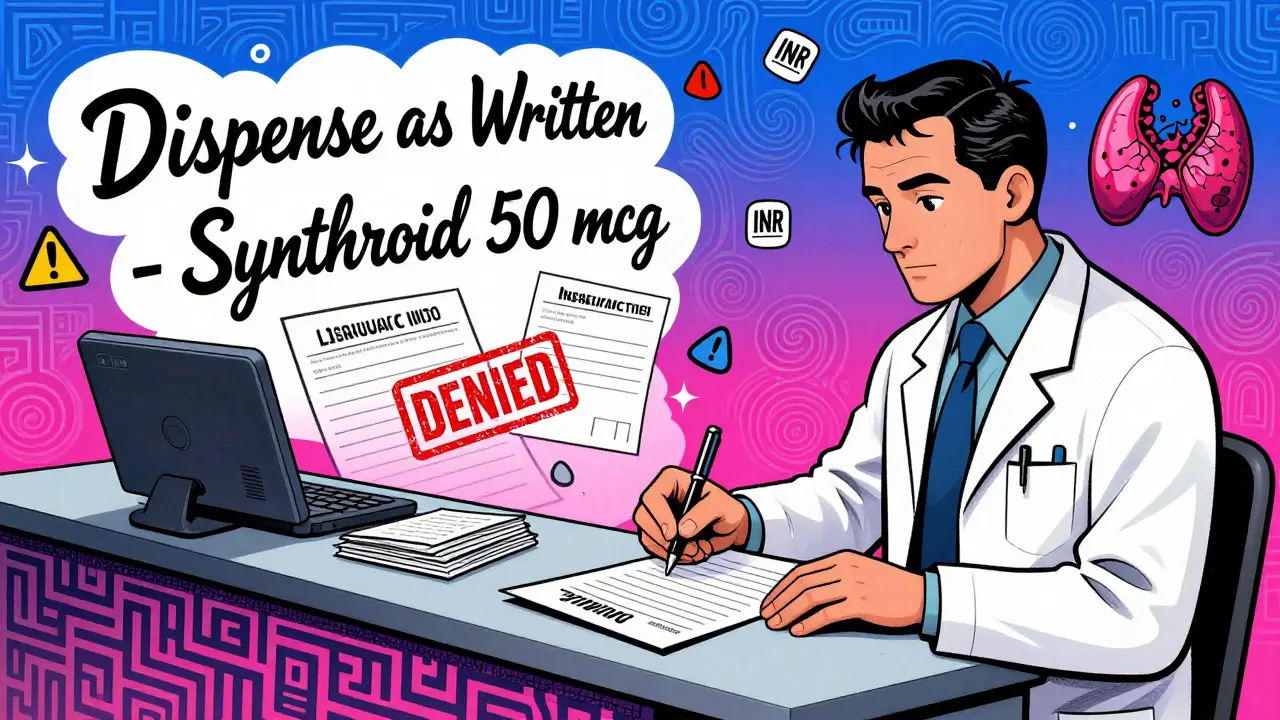
Switching back isn’t as simple as asking your pharmacist. It’s a process that involves your doctor, your pharmacy, and your insurance. Here’s how to do it right:- Document the problem. Don’t just say, “I feel worse.” Record specifics: ‘My INR jumped from 2.4 to 4.1 two weeks after switching to generic warfarin,’ or ‘My TSH went from 1.8 to 6.2 after switching to generic levothyroxine.’ Include dates and lab reports.
- Ask your doctor to write ‘Dispense as Written’ or ‘Brand Medically Necessary’. This is non-negotiable. The prescription must include the exact brand name-e.g., ‘Synthroid 50 mcg,’ not just ‘levothyroxine.’ Some states require a signed form (like CMS Form 1490S) to justify the switch.
- Specify the exact brand. Don’t assume all brands are equal. For levothyroxine, Synthroid, Tirosint, and Levoxyl aren’t interchangeable. Your doctor must name the one you need.
- Submit prior authorization. Most insurance plans require this. Your doctor’s office will fill out forms, attach lab results, and explain why the generic failed. Don’t wait-start this as soon as possible. Medicare Part D claims take an average of 14 days to process.
- Follow up with your pharmacy. Pharmacies sometimes refuse to dispense brand-name drugs without proof. Call ahead. Ask if they carry the brand. If not, ask them to order it. Keep a record of who you spoke to and when.
- Get therapeutic drug monitoring. For NTI drugs, your doctor may want to check blood levels before and after the switch. This confirms the brand is working as expected.
- Schedule a follow-up. Within 7-10 days, check in with your doctor. Your body may need time to adjust. Don’t assume the switch fixed everything.
Studies show that when this process is followed, medication errors drop by nearly half. When it’s skipped, adverse events rise. One 2023 study found that 58% of initial insurance requests for brand-name drugs were denied-but 64% of appeals succeeded when proper documentation was provided.
Insurance and Cost Challenges
The biggest barrier isn’t medical-it’s money. Brand-name drugs cost 3 to 5 times more than generics. A monthly supply of Synthroid might cost $110. The generic? $12. That’s why insurance companies push back.Medicare Part D plans deny brand-name requests in 68% of cases when a generic exists. Private insurers like Blue Cross Blue Shield have denial rates as high as 82% for patients who request brand-name switches. But you can fight it.
Here’s how:
- Ask your doctor to write a detailed letter of medical necessity.
- Include lab results, previous prescriptions, and patient history.
- Appeal immediately. Most insurers have a 30-day window for appeals.
- Ask if the brand offers a patient assistance program. Many do-Synthroid has a savings card that can cut costs to $10/month for eligible patients.
Some patients report success with “authorized generics”-brand-name drugs sold under a generic label by the same manufacturer. These are chemically identical to the brand but priced lower. Ask your doctor or pharmacist if an authorized generic exists for your medication.

What to Avoid
Don’t switch back on your own. Never stop your medication or swap pills without consulting your doctor. Even if you think the generic made you sick, stopping suddenly can be dangerous-especially with blood thinners, seizure meds, or antidepressants.Also avoid assuming all generics are the same. Two different generic versions of the same drug can have different inactive ingredients. If you switch from one generic to another, you might still have problems. Stick with the same manufacturer when possible.
And don’t ignore the pharmacy. Some pharmacists don’t know the rules. If they refuse to fill your brand-name prescription, ask to speak to the pharmacist in charge. Show them the ‘Dispense as Written’ notation. If they still refuse, file a complaint with your state board of pharmacy.
What Comes Next
The system is changing. In 2024, Medicare Part D will launch a new ‘Medically Necessary Brand Exception’ pathway with a 72-hour processing guarantee for NTI drugs. The FDA is also pushing manufacturers to label generic drugs with their inactive ingredients more clearly. But until then, you need to be your own advocate.If you’ve been stable on a brand, and a generic caused trouble, you’re not imagining it. You’re not being difficult. You’re responding to real biological differences. The key is to act quickly, document everything, and work with your doctor-not against your insurance.
Switching back isn’t about spending more. It’s about getting the right medicine for your body. And sometimes, that means going back to the brand.
Can I just ask my pharmacist to give me the brand name instead of the generic?
No, pharmacists are legally allowed to substitute generics unless the prescription says ‘Dispense as Written’ or ‘Brand Medically Necessary.’ Even then, they may refuse if your insurance doesn’t approve it. Always get your doctor to write the exact brand name and check with your insurance first.
Is it safe to switch back to brand if I’ve been on a generic for months?
Yes, if you’ve had a documented reaction or therapeutic failure. The body doesn’t ‘get used to’ generics-symptoms like unstable INR, rising TSH, or new rashes indicate a real issue. Switching back can restore stability. But always do it under medical supervision.
Why do some people say generics are just as good as brand-name drugs?
They’re right-for most people, they are. About 92% of generic switches work without issue. But for those with narrow therapeutic index drugs, autoimmune conditions, or allergies to dyes, even small differences in fillers or coatings can cause problems. It’s not about quality-it’s about individual biology.
What if my insurance denies my request to switch back?
Appeal. Most denials are overturned with proper documentation. Ask your doctor to write a letter explaining why the generic failed and how the brand is medically necessary. Include lab results, previous prescriptions, and patient history. If the appeal fails, ask about patient assistance programs or authorized generics.
Are there any brands that are safer than others for switching back?
For drugs like levothyroxine, Synthroid and Tirosint are often preferred because they have fewer inactive ingredients and more consistent absorption. For warfarin, Coumadin is the original brand and is often recommended over generics due to its long track record. Always ask your doctor which specific brand they recommend.
Gary Mitts
February 4, 2026 AT 10:22Done.
clarissa sulio
February 4, 2026 AT 18:29Anthony Massirman
February 6, 2026 AT 11:10jay patel
February 7, 2026 AT 12:57Ansley Mayson
February 9, 2026 AT 02:32Bob Hynes
February 9, 2026 AT 20:19Marc Durocher
February 10, 2026 AT 13:00larry keenan
February 11, 2026 AT 08:15Nick Flake
February 12, 2026 AT 11:24Bridget Molokomme
February 13, 2026 AT 09:47Monica Slypig
February 13, 2026 AT 16:31Becky M.
February 15, 2026 AT 12:17Hannah Gliane
February 15, 2026 AT 19:52