How to Use an Epinephrine Auto-Injector for Anaphylaxis: Step-by-Step Guide
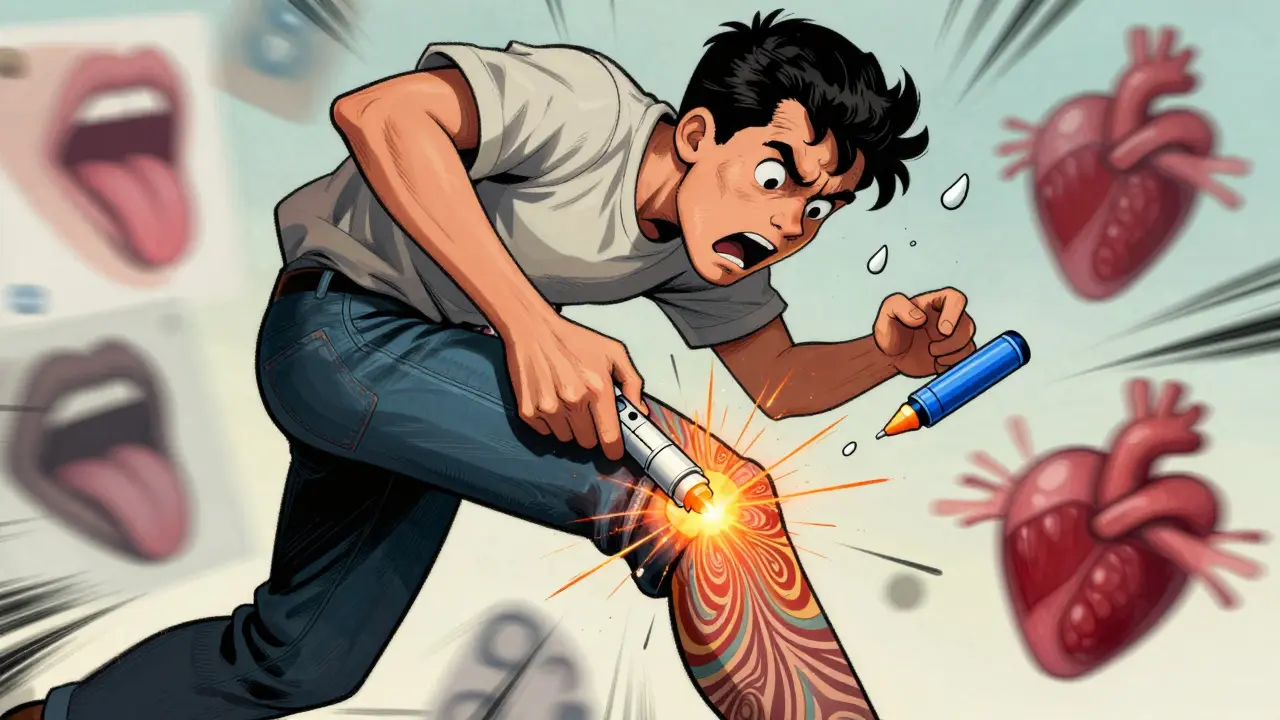
When anaphylaxis strikes, you don’t have minutes-you have seconds. A swollen throat, a racing heart, a sudden drop in blood pressure-these aren’t just scary symptoms. They’re signs your body is shutting down. And the only thing that can stop it? Epinephrine. But if you’ve never used an auto-injector before, you might freeze. You might fumble. You might wait too long. That’s deadly. This guide cuts through the noise. No fluff. Just what you need to do, exactly how to do it, and why every second matters.
What Happens During Anaphylaxis
Anaphylaxis isn’t just a bad allergy. It’s a full-body emergency. Your immune system overreacts to something-peanuts, bee stings, shellfish, even medications-and floods your body with chemicals that cause blood vessels to leak, airways to swell, and your heart to struggle. Within minutes, you can go from feeling off to barely breathing. Without epinephrine, death can happen in under 30 minutes. That’s why the American Academy of Allergy, Asthma & Immunology says epinephrine is the only first-line treatment. Antihistamines? They help with itching or hives, but they won’t stop your airway from closing. Waiting for them to work is like waiting for a fire extinguisher to put out a gas line explosion.Which Auto-Injector Do You Have?
Not all epinephrine devices are the same. You need to know yours inside and out.- EpiPen: The most common. Comes in 0.15mg (for kids 33-66 lbs) or 0.3mg (for anyone over 66 lbs). You see the orange tip. You don’t touch it until you’re ready.
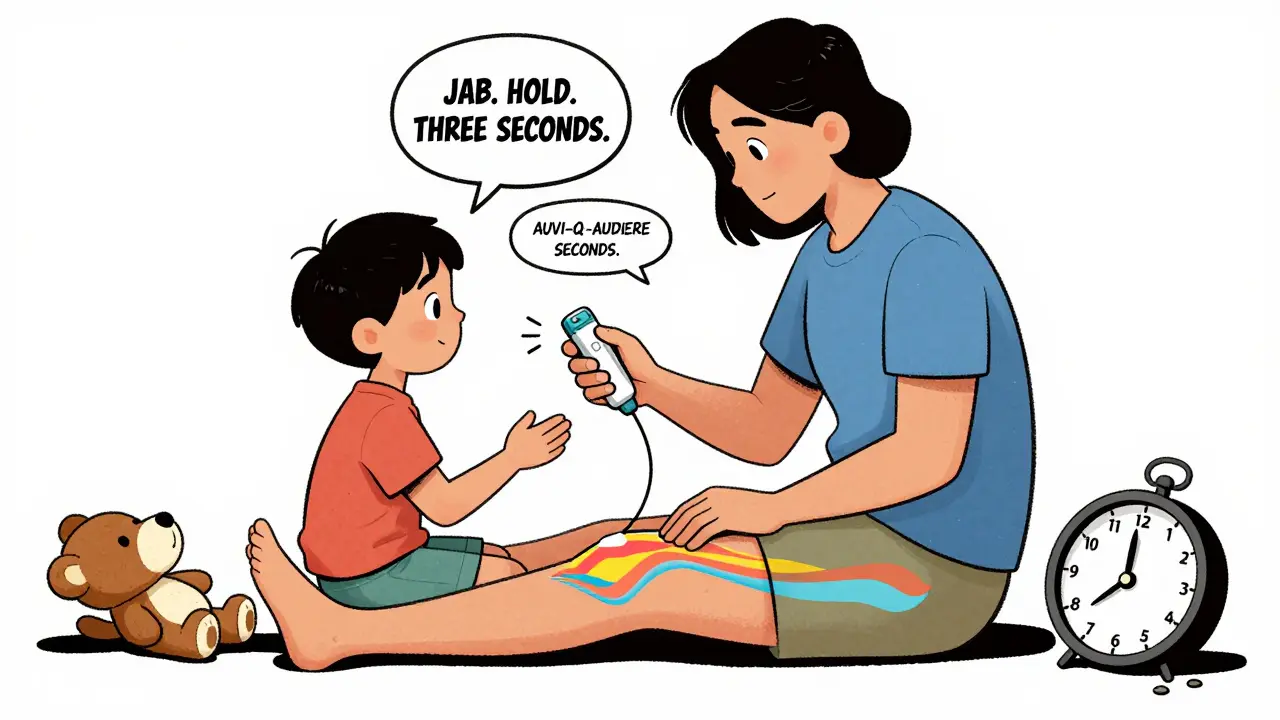
- Auvi-Q: Smaller. Has voice instructions. It talks you through each step. If you panic, it tells you what to do. It’s the best choice if you’re nervous about forgetting steps.
- Adrenaclick: Cheaper. But it doesn’t auto-deploy. You have to pull off two caps and press a button. More steps. More room for error.
- Neffy: New in 2023. No needle. You spray it into one nostril. Works for 81% of severe cases. But if you don’t seal your nose right, it fails. Not for everyone.
Most people in the U.S. have an EpiPen. But if you’re on a tight budget, Adrenaclick is a valid option-if you practice. If you’re scared of needles, Neffy might be worth asking your doctor about. But don’t switch devices without training. Your muscle memory matters.
How to Use an Epinephrine Auto-Injector (Step by Step)
Step 1: Recognize the signs Don’t wait for all symptoms. If you see any of these, act:- Hives, swelling of lips or tongue
- Difficulty breathing, wheezing
- Dizziness, fainting, confusion
- Stomach cramps, vomiting, diarrhea
- Rapid or weak pulse
One symptom is enough. Don’t think, “Maybe it’s just a rash.” If you have a known allergy and you’re reacting-use the injector.
Step 2: Grab the device Don’t fumble. Remove it from its case. Hold it in your dominant hand. The orange tip is the end that goes into the thigh. The blue cap is the safety release. Never point it at yourself or anyone else.
Step 3: Remove the blue safety cap Pull straight off. Don’t twist. Don’t hesitate. This is where most people mess up. In school drills, 58% of errors happen because the blue cap wasn’t removed. You need to hear the click. If you don’t, you didn’t pull hard enough.
Step 4: Aim for the outer thigh Place the orange tip against the middle of the outer thigh. You can inject through clothing-jeans, leggings, even thick pants. No need to undress. The needle is designed to go through fabric. Don’t aim for the buttocks, arm, or abdomen. The thigh is the only approved site. It’s the thickest muscle, closest to the heart, and absorbs the drug fastest.
Step 5: Jab and hold Push hard until you hear a click. That means the needle fired. Keep pushing for 3 full seconds. Don’t pull away early. Even if you feel better. Even if the person screams. Hold. Count: “One-Mississippi, Two-Mississippi, Three-Mississippi.”
For kids, hold their leg still. For adults, tell them to lie flat. Don’t let them stand or walk. That can cause a sudden drop in blood pressure and collapse.
Step 6: Remove and massage After 3 seconds, pull the device away. Massage the injection site for 10 seconds. This helps the epinephrine absorb faster. It’s not just a formality-it makes a difference.
Step 7: Call 911 immediately Even if you feel better. Epinephrine wears off in 10-20 minutes. Anaphylaxis can come back worse. This is called a biphasic reaction. Delaying 911 increases your risk of dying by 300%, according to Johns Hopkins. Don’t wait. Don’t drive yourself. Don’t call a friend. Dial 911 the second you use the injector.
Step 8: Use a second dose if needed If symptoms don’t improve-or get worse-after 5 to 10 minutes, give a second dose. You’re allowed to use both injectors if you have them. Many people are afraid to give a second dose. But if you’re still struggling to breathe, the second shot isn’t dangerous. The risk of not giving it is.
Common Mistakes (And How to Avoid Them)
Most people who use an auto-injector make at least one mistake. Here’s what goes wrong-and how to fix it:- Waiting too long: 42% of people don’t use epinephrine until symptoms are severe. Don’t wait for the worst. Use it at the first sign.
- Not holding long enough: 61% of users pull away before 3 seconds. You need the full time. Set a timer if you have to.
- Injecting in the wrong spot: The buttocks and belly are common errors. Only use the outer thigh.
- Forgetting to call 911: 48% of users don’t call immediately. That’s deadly. Epinephrine buys time. Paramedics save lives.
- Not practicing: 72% of school nurses report mistakes during drills. Practice every 6 months with a trainer device. Don’t wait for an emergency to learn.
Storage and Expiration
Epinephrine doesn’t last forever. It breaks down in heat and light. Keep it at room temperature-between 59°F and 86°F. Don’t leave it in the car. Don’t store it in the fridge. Don’t put it in a hot drawer. Check the expiration date every month. Most devices expire after 18 months. Replace them on time. Expired epinephrine can still help in a pinch, but it’s not reliable. If you’re out of date, get a new one now.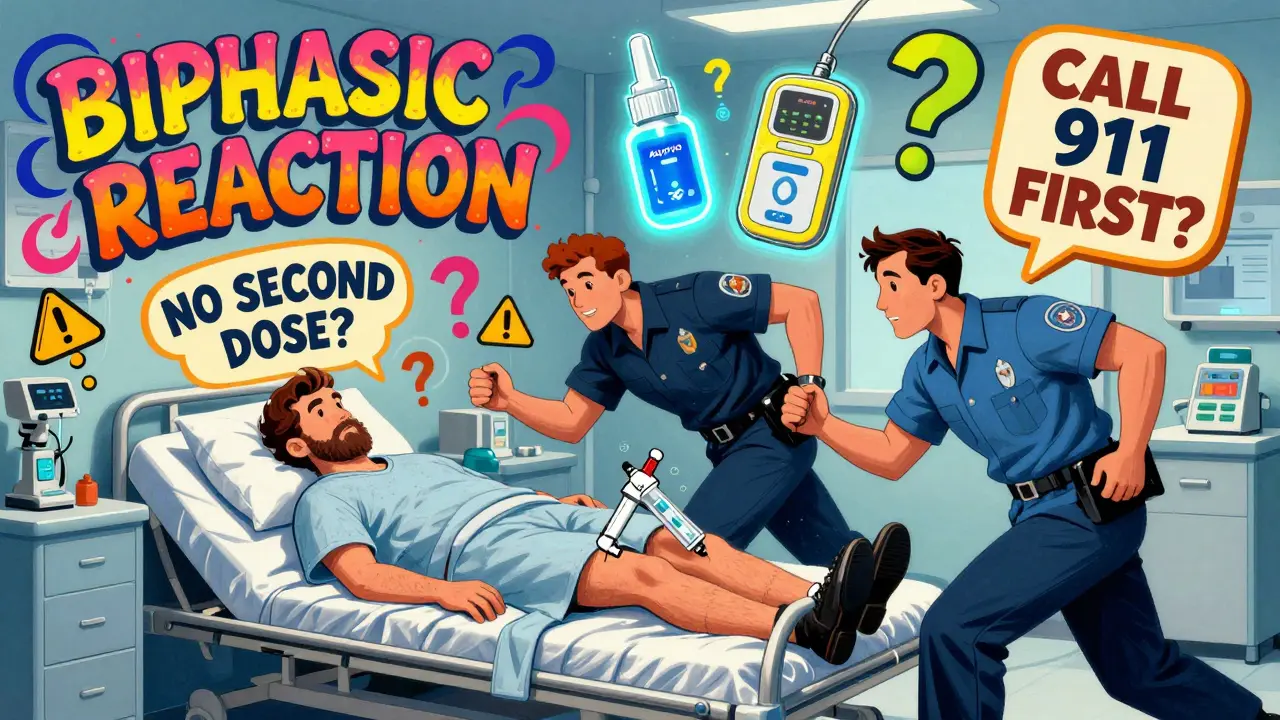
What to Do After the Injection
Once you’ve used it:- Stay lying down. Elevate legs if possible.
- Loosen tight clothing.
- Keep the used injector with you. Paramedics need to know what was given.
- Don’t give any other medication unless told by EMS.
- Even if you feel fine, go to the ER. You need monitoring for at least 4-6 hours.
Side effects of epinephrine? A racing heart, shaking, anxiety, headache. They’re scary, but they’re normal. They last less than 30 minutes. They’re the price of staying alive.
Training and Practice
You can’t learn this by reading once. You need to practice. Get a trainer device from your pharmacy. It looks like the real thing but has no needle or medicine. Practice with a friend. Time yourself. Do it in the dark. Do it with gloves on. Do it while stressed. The more you practice, the less you’ll panic.Parents of kids with allergies should train everyone who cares for them: teachers, babysitters, grandparents, coaches. Schools in 47 states are required to have epinephrine on hand. But only 28 states require staff to be trained. Don’t assume they know. Show them. Teach them. Save a life.
What’s New in 2026
Neffy, the nasal spray, is now available. It’s a game-changer for needle-phobic people. But it’s not for everyone. If you have a stuffy nose, it won’t work. And 32% of people in trials didn’t use it right. So if you’re considering switching, talk to your allergist. Also, Auvi-Q’s new model with Bluetooth alerts is rolling out in early 2026. It can automatically send your location and time of injection to emergency contacts. That’s huge.Epinephrine auto-injectors are no longer just a medical device. They’re a lifeline. And like any lifeline, they only work if you know how to use them.
Can I use an epinephrine auto-injector on someone else?
Yes. Epinephrine auto-injectors are designed for emergency use by bystanders. If someone is having an anaphylactic reaction and has their own device, help them use it. If they don’t have one and you do, use yours. There’s no legal risk in saving a life. In fact, 47 U.S. states have Good Samaritan laws protecting people who administer epinephrine in emergencies.
What if I accidentally inject myself?
If you accidentally inject your finger, hand, or another area, go to the ER immediately. Epinephrine in the wrong spot can cause tissue damage or cut off blood flow. Don’t wait. Call 911 or have someone drive you. Even if you feel fine, you need medical evaluation. Accidental injections happen more often than you think-especially with EpiPen’s orange tip design.
Do I need to carry two auto-injectors?
Yes. The American College of Allergy, Asthma & Immunology recommends carrying two at all times. About 20% of people need a second dose. If you only have one and it’s used, you’re unprotected if symptoms return. Many insurance plans cover two devices. If cost is an issue, ask about patient assistance programs-most manufacturers offer them.
Can children use epinephrine auto-injectors?
Yes. Children as young as infants can be treated with epinephrine if they have a life-threatening reaction. The 0.15mg dose is for kids weighing 33-66 pounds. The 0.3mg dose is for anyone over 66 pounds, including teens and adults. Parents and caregivers should practice with trainer devices on stuffed animals or each other. Schools are required to have epinephrine available, but they’re not always trained to use it. Be the advocate for your child.
Is epinephrine safe during pregnancy?
Yes. Anaphylaxis during pregnancy is far more dangerous than epinephrine. The medication crosses the placenta, but it’s lifesaving for both mother and baby. Delaying epinephrine increases the risk of fetal death. The American College of Obstetricians and Gynecologists strongly supports immediate epinephrine use in pregnant women with anaphylaxis. Never withhold it out of fear.
Why do I need to go to the ER after using epinephrine?
Epinephrine is a temporary fix. It lasts 10-20 minutes. Anaphylaxis can come back stronger-this is called a biphasic reaction, and it happens in up to 20% of cases. ER staff can monitor your breathing, blood pressure, and heart. They can give more epinephrine, steroids, or IV fluids if needed. Going to the ER isn’t optional. It’s mandatory. Skipping it could cost you your life.
Can I reuse an auto-injector?
No. Auto-injectors are single-use only. The needle is designed to lock after firing. Even if it looks like it didn’t work, never try to reuse it. If you’re unsure whether it fired, use a second one. Better to give two doses than none.
Neil Ellis
January 22, 2026 AT 17:45Man, this guide is like a lifeline wrapped in a superhero cape. I used to think epinephrine was something only doctors handled-turns out, it’s just a jab and a countdown. I practiced with my trainer pen while watching Netflix. Now I carry two like spare batteries. If you’ve got a kid with allergies? Do this. Don’t wait for a crisis to become a funeral. 🙌
Lana Kabulova
January 23, 2026 AT 17:16Wait-so you’re telling me I don’t need to strip my kid down before injecting? I’ve been terrified of missing the thigh. And now you say jeans are fine? I’m printing this out. And laminating it. And taping it to the fridge. And my husband’s phone. And the school nurse’s desk. And the car door. And my yoga mat. Seriously. This changes everything.
Rob Sims
January 24, 2026 AT 21:4472% of school nurses mess up drills? That’s not incompetence. That’s negligence. If your kid’s life depends on this, you’re not allowed to be ‘not a morning person.’ Practice. Every. Six. Months. Or stop complaining when your kid ends up in the ER. And no, ‘I thought it was just a rash’ isn’t a defense. It’s a death sentence with a side of regret.
Lauren Wall
January 26, 2026 AT 19:41Used mine last year. Felt like a hero. Then cried for an hour. The shaking? The panic? The way your body just… stops? I didn’t know epinephrine made you feel like you’d been hit by a truck. But I’d take that truck any day over the alternative.
arun mehta
January 27, 2026 AT 11:54From India, where epinephrine pens are rare and expensive. But I carry one now-thanks to this guide. I trained my niece’s teacher. She cried. I cried. We hugged. Now she carries a trainer in her bag. One day, someone will live because we didn’t wait. 🙏❤️
Alec Amiri
January 28, 2026 AT 21:07Let’s be real-Neffy’s a gimmick. 32% of people don’t use it right? That’s not a product failure. That’s a human failure. If you can’t seal your nose for 5 seconds, maybe you shouldn’t be trusted with a life-saving device. Stick with the needle. It’s been saving lives since 1987. Stop chasing shiny things.
Patrick Roth
January 30, 2026 AT 17:51Wait, you say the thigh is the only approved site? What about the deltoid? I read a 2021 study in the Journal of Allergy and Clinical Immunology that showed faster absorption in the upper arm. And you’re telling me to ignore that? This guide is outdated. Also, why are you not mentioning subcutaneous vs intramuscular differences? This is basic pharmacology. You’re doing a disservice.
Keith Helm
January 31, 2026 AT 07:02Epinephrine auto-injectors are not toys. They are medical devices requiring formal training, certification, and regulatory compliance. Failure to adhere to the FDA’s 2023 guidelines on storage and administration constitutes a breach of standard of care. I have reviewed your document. It lacks citations. It is inadequate.
Tatiana Bandurina
February 1, 2026 AT 21:38So you’re telling me I should give a second dose? Even if the person is shaking and screaming? Even if I’m terrified? Even if I think I might be overdoing it? You’re right. I’m a coward. I’ve had two pens for three years. Never used them. I’m getting rid of them. I can’t handle this responsibility.
Chiraghuddin Qureshi
February 2, 2026 AT 20:43My cousin in Delhi just got her first EpiPen. She’s 12. She’s scared. But she showed her whole class how to use the trainer pen. Now they all know. We’re not waiting for tragedy. We’re teaching like our lives depend on it. 🌏❤️