Managing Formulary Changes: How to Handle Prescription Drug Coverage Updates
What Exactly Is a Formulary?
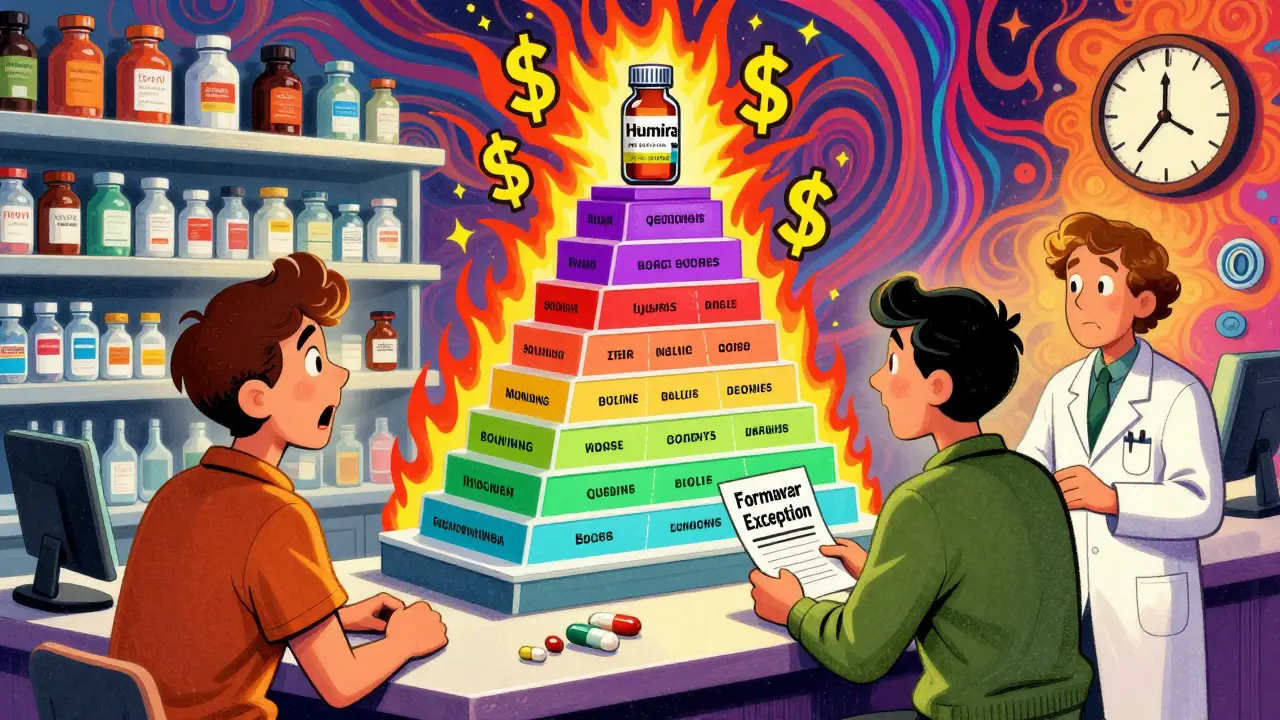
A formulary is simply the list of prescription drugs your health plan will pay for. It’s not just a catalog-it’s a decision-making tool that tells you which medications are covered, at what cost, and under what conditions. Most plans use a tiered system: Tier 1 is usually generic drugs with the lowest copay, Tier 2 is preferred brand-name drugs, and higher tiers like Tier 3 or 4 include non-preferred brands or specialty drugs with much higher out-of-pocket costs. Some plans even have a Tier 5 for the most expensive treatments, like cancer or rare disease therapies, where you might pay 30% or more of the price.
In 2024, 92% of Medicare Part D plans and 87% of commercial insurance plans used tiered formularies. That means if your medication moves from Tier 2 to Tier 4, your monthly cost could jump from $30 to $300 overnight. It’s not just about price-it’s about access. If your drug isn’t on the list at all, you might need to switch, get prior authorization, or appeal the decision.
Why Do Formularies Change?
Formularies aren’t set in stone. They get updated regularly-often quarterly-because drug prices shift, new generics enter the market, or manufacturers change their rebate deals with insurers. For example, if a brand-name drug gets a cheaper generic version, the plan might move the original drug to a higher tier to encourage switching. Or if a drug’s safety profile changes after new FDA warnings, it could be pulled from coverage entirely.
Medicare Part D plans must cover at least two drugs per therapeutic class, but they’re allowed to exclude others. Commercial insurers have even more flexibility. A 2023 study found that 78% of large pharmacy benefit managers (PBMs) review formularies every three months. That means even if your drug was covered last year, it might not be this year.
And it’s not always about cost. Some plans now use value-based formularies, where they consider not just price but how well a drug works in real life. If a medication leads to fewer hospital visits or better long-term outcomes, it might get moved to a lower tier-even if it’s expensive. But if it’s costly and doesn’t show clear benefits, it could get bumped up or removed.
How Formulary Changes Hit Patients
For many people, a formulary change isn’t just an inconvenience-it’s a crisis. Take Humira, a common treatment for Crohn’s disease and rheumatoid arthritis. In 2024, thousands of patients saw their monthly cost jump from $50 to over $600 because their insurer moved it to a non-preferred specialty tier. Some had to fight for 3 weeks just to get temporary coverage while they applied for manufacturer assistance programs.
It’s worse for chronic conditions. Diabetes patients face the highest abandonment rates when their insulin moves to a higher tier-58% stop taking it because they can’t afford it. That’s not just a financial problem; it’s a health emergency. A 2023 report found that 22% of patients skip or cut pills because of formulary restrictions, leading to more ER visits and hospitalizations.
And the notification? Often too late. Commercial plans typically give patients just 22 days’ notice before a change takes effect. Medicare gives 30 to 60 days, but even that’s not enough if you’re not actively checking your plan details. Nearly 60% of patients say they didn’t know their drug was being removed until they got to the pharmacy and were told it wasn’t covered.
What You Can Do When Your Drug Is Removed
If your medication is taken off the formulary, you’re not out of options. First, check if your plan offers a formulary exception. This is a formal request asking your insurer to cover your drug anyway-usually because it’s medically necessary or alternatives won’t work. According to CMS data, 64% of these requests are approved when supported by your doctor’s note.
Your doctor can help. They need to submit a letter explaining why switching would harm your health. For example, if you’ve tried three other drugs and they caused side effects or didn’t work, that’s strong evidence. You can also ask for a transition fill-a one-time supply of your current medication while you appeal or switch. Medicare and many commercial plans are required to provide this for 30 to 60 days after a formulary change.
Don’t overlook manufacturer assistance programs. Companies like AbbVie (Humira’s maker) and Novo Nordisk (insulin makers) offer co-pay cards or free drug programs for eligible patients. In 2024, these programs covered over $6 billion in patient costs. You can find them through the drug’s official website or sites like NeedyMeds.org.
How Providers Can Prevent Disruptions
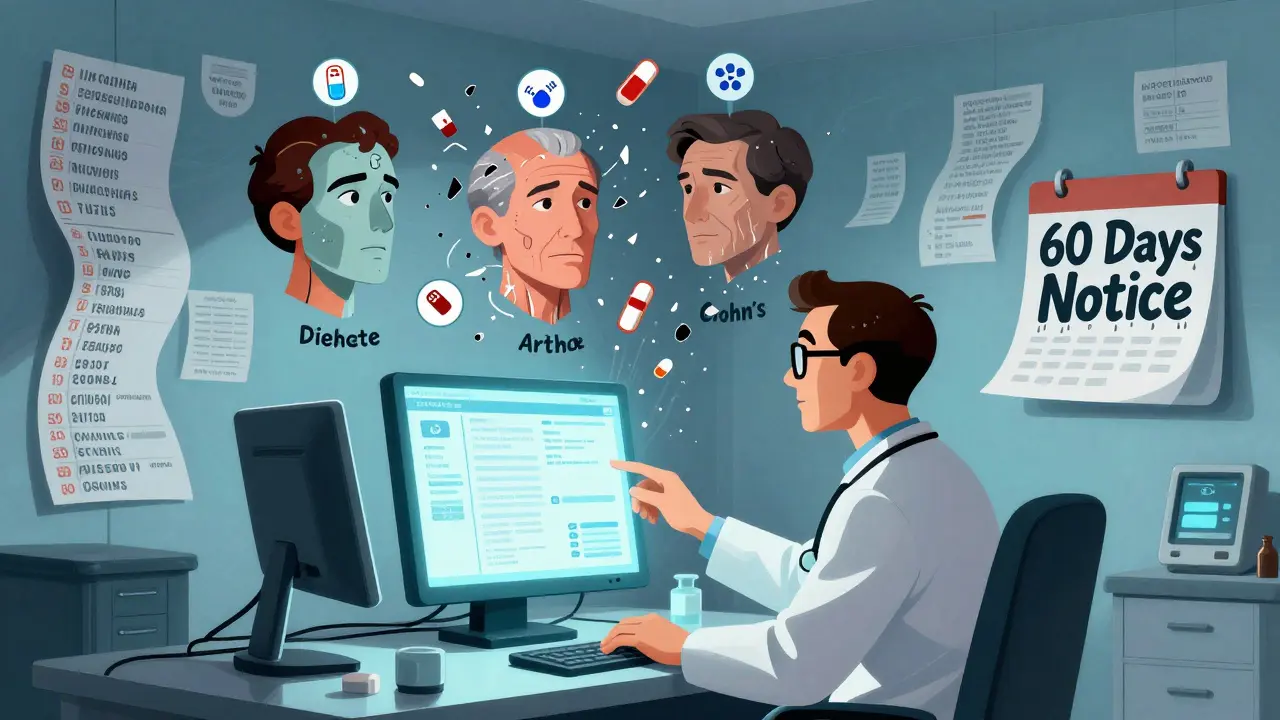
Doctors and clinics are on the front lines. When a formulary changes, patients often don’t know until they’re at the pharmacy. That’s why the best practices now involve proactive checks. Large medical groups use e-prescribing systems that check formulary status in real time before a prescription is sent. If your doctor’s system flags that your drug is no longer covered, they can switch you to an alternative before you even leave the office.
Top clinics now schedule formulary reviews every 60 days. They track upcoming changes from their insurer’s website or through alerts from pharmacy benefit managers. Some even have staff dedicated to managing formulary transitions-calling patients ahead of time to warn them and help them prepare.
For patients on long-term meds, this kind of advance notice is life-changing. One nurse on the AllNurses forum shared how her clinic started giving 60-day warnings: “We switched 80% of our patients to alternatives during routine visits. No one had to stop their meds. No one panicked.”

How to Stay Ahead of Changes
The best way to avoid surprises? Check your formulary before you need it. During open enrollment each fall, review your plan’s formulary document-don’t just look at premiums. Look for your medications by name. If you’re on Medicare, use the Plan Finder tool on Medicare.gov. It’s used by 68% of beneficiaries and lets you compare coverage across plans.
Set calendar reminders. Mark 60 days before your plan’s new formulary takes effect. That’s when insurers must release updated lists. If you’re on commercial insurance, check your insurer’s website monthly. Most have a searchable formulary tool, but you have to know where to look.
Also, keep a list of your medications-name, dose, why you take it-and share it with every provider. If your drug gets dropped, you’ll need to explain why alternatives won’t work. Having that info ready makes your exception request stronger.
What’s Changing in 2025 and Beyond
The Inflation Reduction Act is changing the game. Starting in 2025, Medicare beneficiaries will never pay more than $2,000 a year out-of-pocket for drugs. That means insurers can’t push patients into unaffordable tiers anymore. Plans will likely restructure formularies to avoid hitting that cap-possibly by moving more expensive drugs to lower tiers.
Also, 71% of commercial plans now use accumulator adjustment programs. These prevent manufacturer coupons from counting toward your deductible. So even if you get a $100 coupon, your plan still treats you as if you paid full price. That makes switching harder. But new CMS rules in 2025 will limit how these programs are used for Medicare Part D.
Looking ahead, AI is starting to predict which formulary changes will lead to patient non-adherence. One 2024 study showed AI models can predict abandonment risk with 89% accuracy. That means insurers might soon avoid removing drugs that patients rely on-even if they’re expensive-because the cost of poor health outcomes outweighs the savings.
Final Thoughts: Knowledge Is Your Best Defense
Formulary changes aren’t going away. They’re a tool insurers use to control costs, and they’ll keep evolving. But you don’t have to be passive. Understand your plan’s structure. Know your rights. Ask questions. If your drug disappears, act fast-don’t wait until your prescription is denied at the counter.
Every patient deserves access to the medication they need. Formularies should support that-not block it. By staying informed and speaking up, you can make sure yours does.
What happens if my medication is removed from the formulary?
If your medication is removed, you can request a formulary exception through your insurer. Your doctor must provide documentation showing why alternatives won’t work. You may also qualify for a transition fill-usually a 30- to 60-day supply of your current drug. Check manufacturer assistance programs or switch to a covered alternative.
How much notice do I get before a formulary change?
Medicare Part D plans must give 60 days’ notice for non-urgent changes. Commercial insurers typically give 22 to 30 days. Some plans notify you via mail or online portal, but many don’t. Always check your formulary document during open enrollment and monthly if you’re on a chronic medication.
Can I switch plans if my drug is removed?
Yes-but only during open enrollment (October 15 to December 7 for Medicare) or if you qualify for a Special Enrollment Period (like moving or losing other coverage). You can’t switch mid-year just because your drug was removed, unless you get an exception approved or your plan fails to provide a transition fill.
Are generic drugs always cheaper than brand names?
Usually, but not always. Sometimes a brand-name drug is on a lower tier than its generic because of a rebate deal. Always check your plan’s formulary tier list-not just the drug name. A generic might be in Tier 3 while the brand is in Tier 2, making the brand cheaper for you.
What’s the difference between a formulary exception and a prior authorization?
A prior authorization is when your doctor must get approval before the plan will cover a drug, usually because it’s expensive or has safety concerns. A formulary exception is when the drug isn’t on the list at all, and you’re asking the plan to make an exception. Both require documentation, but exceptions are harder to get.
Do all insurance plans have formularies?
Almost all do. Over 98% of Medicare beneficiaries and 89% of commercially insured Americans are on plans with formularies. The only exceptions are some very basic or grandfathered plans, but these are rare. Even Medicaid managed care plans use formularies, often with strict rules.