Medication Mistakes in Pediatric Emergencies: Real Cases and How to Prevent Them
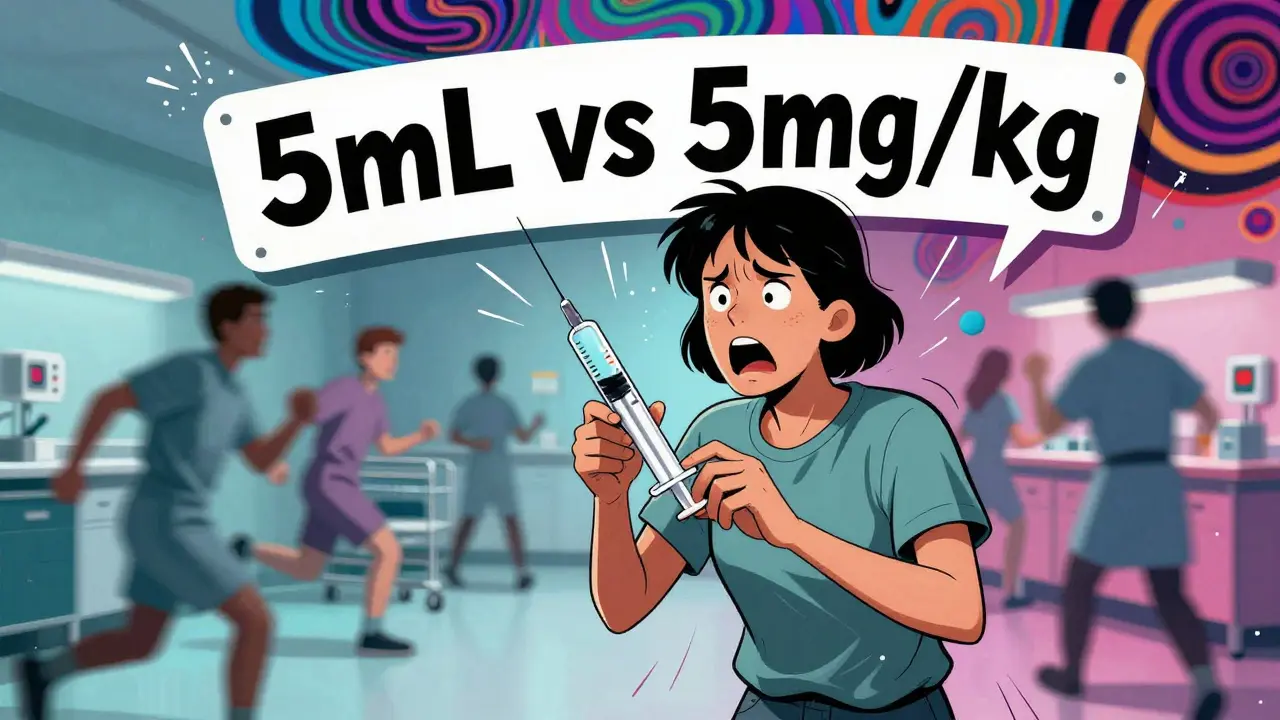
Every year, thousands of children end up in emergency rooms because of a simple mistake: the wrong dose of medicine. Not because parents are careless, but because the system is stacked against them. In pediatric emergencies, medication errors happen more than twice as often as in adults. One in three kids gets hit with a dosing mistake - and many of these aren’t caught until it’s too late.
Why Kids Are at Higher Risk
Adults get pills. Kids get drops, syringes, and liquid suspensions. That’s not just inconvenient - it’s dangerous. A 10kg child needs a different amount of medicine than a 20kg child. That means every single dose has to be calculated by weight. One wrong decimal point, one misread label, and you’re giving ten times the right dose.
Studies show that 60% to 80% of outpatient dosing errors involve liquid medications. Parents aren’t trained pharmacists. They’re tired, scared, and handed a syringe with tiny numbers they don’t understand. One mother gave her 10kg child 5mL of children’s acetaminophen thinking it was 5mg/kg. That’s a tenfold overdose. She didn’t know the difference between milliliters and milligrams. Neither did the nurse who handed her the bottle.
And it’s not just home mistakes. In the ER, time is tight. Doctors give verbal orders. Nurses rush. Weights aren’t always confirmed. A 2019 study found 0.78 errors per medication order in pediatric emergency departments. That’s almost one mistake for every three kids treated. And 13% of those errors caused real harm - vomiting, seizures, liver damage.
The Most Common Mistakes
Not all errors are the same. Some are simple. Others are systemic.
- Wrong dose - This is #1. 13% of all pediatric medication errors. Usually because of miscalculating mg/kg. A child weighing 15kg might get the dose meant for 25kg. Or worse - a parent uses a kitchen spoon because they lost the syringe.
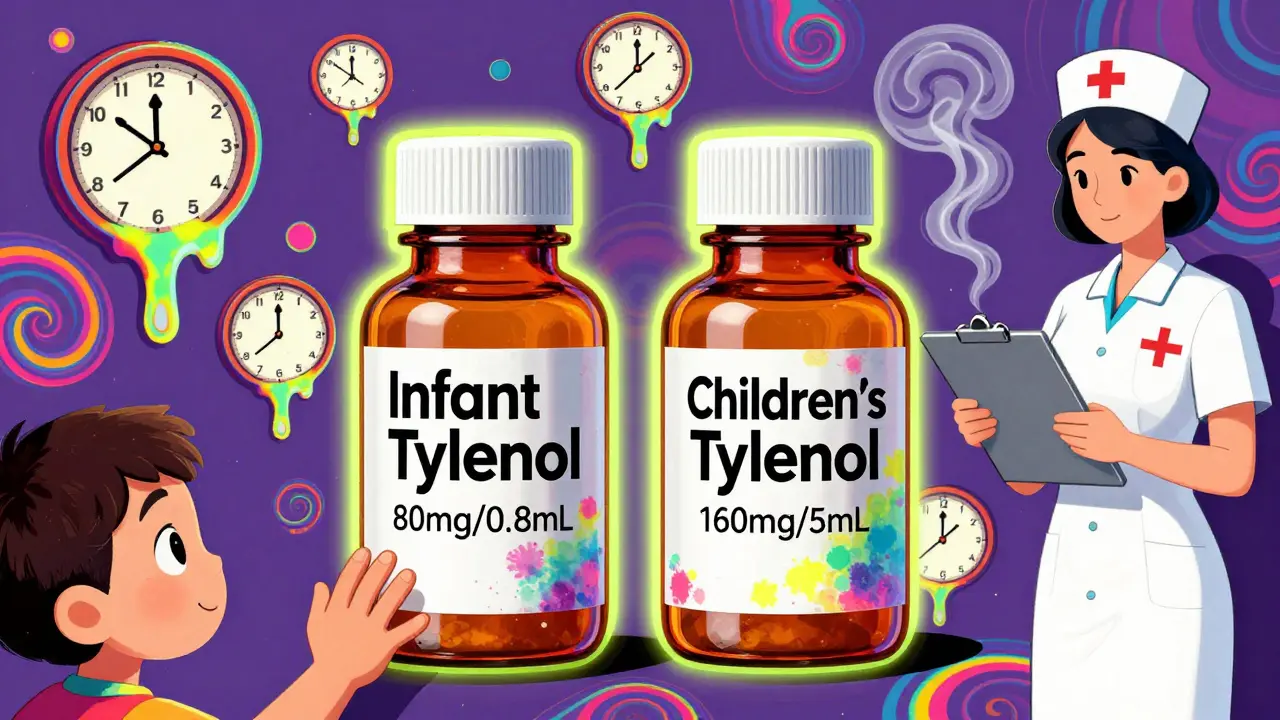
- Wrong medication - 4% of errors. Mixing up ibuprofen and acetaminophen. Giving adult-strength liquid instead of pediatric. Confusing “Infant Tylenol” with “Children’s Tylenol” - they have different concentrations.
- Wrong route - Giving something orally that should be IV. Or giving a suppository as a pill. Rare, but deadly.
- Duplicate dosing - 15% to 25% of cases. Mom gives Tylenol at the ER. Dad gives more at home because he doesn’t know it was already given. Both think they’re helping.
- Wrong concentration - This one kills. Infant Tylenol used to be 80mg/0.8mL. Children’s Tylenol was 160mg/5mL. Parents didn’t realize they were different. One drop of the wrong one = overdose.
And here’s the kicker: 98% of serious errors are caught before they hurt the child. That’s because someone - a nurse, a pharmacist, a parent - caught it. But 2% slip through. And those are the ones that end up in the news.
Who’s Most at Risk?
It’s not random. Certain families face higher risks - not because they’re less caring, but because the system doesn’t meet their needs.
Parents with low health literacy make 2.3 times more dosing mistakes. That’s not ignorance. It’s lack of clear, simple instruction. Spanish-speaking families have 32% higher error rates than English-speaking ones. Families on Medicaid have 27% higher rates than those with private insurance. Why? Because safety nets are patchy. Community hospitals don’t have the same tools as children’s hospitals.
One parent on Reddit shared: “I gave my 2-year-old 5mL of children’s Tylenol instead of infant concentrate. Didn’t realize they were different until my pediatrician called me back.” That’s not negligence. That’s a system failure.
What’s Being Done?
Some hospitals are fixing this. Nationwide Children’s Hospital in Ohio cut harmful medication events by 85% in five years. How? They didn’t just train staff. They changed the whole system.
- Every pediatric ED order now goes through pharmacy verification before it’s given.
- High-risk drugs like morphine and epinephrine require a double-check by two nurses.
- EMR systems now auto-calculate doses based on weight - and flag anything outside safe ranges.
- They use pictograms on discharge papers: a syringe with a red line at the right dose. No numbers. Just a picture.
Another program, called MEDS, added just 90 seconds to discharge time. Nurses showed parents the dose on a syringe, asked them to repeat it back, and gave them a visual guide. Result? Dosing errors dropped from 64.7% to 49.2%. And even after the program ended, the improvement stuck.
Children’s hospitals are now required to use pediatric-specific dosing calculators in their EMRs. But 68% of those are in big children’s hospitals. General ERs? Often still using adult systems. That’s a gap. A dangerous one.
What Parents Can Do Right Now
You can’t fix the system alone. But you can protect your child.
- Always ask for the dose in mg/kg - Not just “5mL.” Ask: “How many milligrams per kilogram?” Then ask them to write it down.
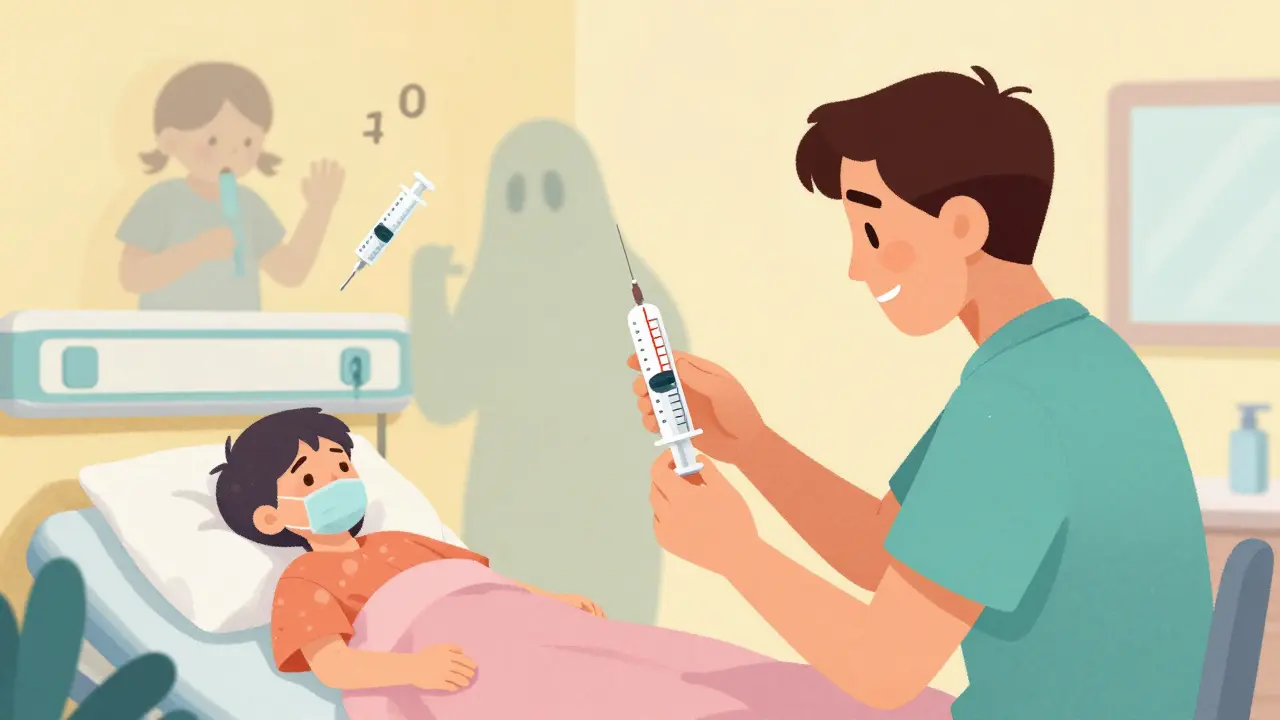
- Use only the syringe that comes with the medicine - Never use a teaspoon, a shot glass, or a kitchen spoon. Those are inaccurate.
- Know the difference between infant and children’s formulas - Infant Tylenol is stronger per drop. If you switch brands, check the concentration.
- Write down every dose - Time, amount, reason. Even if it’s just a note on your phone.
- Ask the nurse: “Can you show me how to give this?” - Then do it back to them. If they’re not willing to show you, that’s a red flag.
- Keep all meds out of reach - Kids grab bottles. One sip of adult ibuprofen can be fatal.
And if you’re ever unsure? Call your pediatrician. Or go to the ER again. Better safe than sorry. You’re not being a bother. You’re being a parent.
The Bigger Picture
This isn’t just about individual mistakes. It’s about how we design care for kids. We treat them like small adults - but their bodies don’t work like ours. Their kidneys, livers, brains - they process medicine differently. We’ve known this for decades.
Yet, we still hand out liquid meds with tiny print. We still rely on parents to do math under stress. We still don’t have a national standard for pediatric dosing labels.
The American Academy of Pediatrics is pushing for standardized metrics to track outpatient errors by 2025. That’s progress. But until every ER, every pharmacy, every home has the same tools - kids will keep getting hurt.
Medication safety in children isn’t about being perfect. It’s about building systems that forgive human error. Because when it comes to your child’s life, you shouldn’t have to be a pharmacist just to give them a pill.
What’s the most common pediatric medication error in emergency rooms?
The most common error is giving the wrong dose - usually because of miscalculating weight-based dosing (mg/kg). Studies show this accounts for 13% of all pediatric medication errors in emergency settings. Many of these happen when staff rush, weights aren’t confirmed, or verbal orders are misheard.
Why are liquid medications so dangerous for kids?
Liquid medications require precise measurements, often down to tenths of a milliliter. Parents frequently use kitchen spoons or improper syringes, leading to 60-80% of dosing errors. Also, confusion between infant and children’s concentrations - like 80mg/0.8mL vs. 160mg/5mL - can cause 10-fold overdoses if switched accidentally.
How often do pediatric medication errors cause harm?
About 13% of medication errors in pediatric emergency departments result in actual patient harm - including liver damage, seizures, or respiratory depression. Another 47% reach the child without harm, and 30% are caught before they reach the patient. But even near-misses indicate systemic failures.
What can parents do to prevent dosing mistakes at home?
Always use the syringe or dropper that comes with the medicine - never household spoons. Ask for the dose in mg/kg and write it down. Know the difference between infant and children’s formulas. Keep all meds out of reach. And if you’re unsure, call your pediatrician - don’t guess.
Are some families more at risk for medication errors?
Yes. Families with limited health literacy, non-English speakers, and those on Medicaid have significantly higher error rates - up to 2.3 times higher. This isn’t about parenting skills - it’s about access to clear instructions, visual aids, and support. Hospitals serving vulnerable populations often lack the resources to provide these tools.
What’s being done to reduce these errors in hospitals?
Leading children’s hospitals now use pharmacy verification for every pediatric order, double-checks for high-risk drugs, and EMR systems that auto-calculate doses by weight. Some use pictograms on discharge papers instead of text. Programs like MEDS added just 90 seconds to discharge time and cut dosing errors by 15%. These changes work - but they’re not yet standard everywhere.
kanchan tiwari
January 17, 2026 AT 09:53THIS IS A GOVERNMENT COVER-UP. THEY KNOW LIQUID MEDS ARE DANGEROUS BUT THEY KEEP THE SAME LABELS SO PHARMA CAN SELL MORE. I SAW A DOCUMENT LEAKED ON DARK WEB - THEY CALL IT 'KID DOSING PROFIT MODEL.' THEY PREFER KIDS GET OVERDOSED BECAUSE IT CREATES MORE ER VISITS = MORE REVENUE. 13% HARM? THAT’S JUST THE TIP OF THE ICEBERG. #STOPPHARMAKILLINGKIDS
Bobbi-Marie Nova
January 18, 2026 AT 10:26Okay but can we just appreciate how wild it is that we still make parents do math under panic mode? 🤦♀️ I gave my kid Tylenol once and forgot which concentration we had - spent 20 minutes on Google, sweating like I was defusing a bomb. If a 30-year-old mom with a college degree is this confused, imagine someone who just got off a double shift and doesn’t speak English. We need pictograms. Like, NOW. 🙏
Ryan Hutchison
January 18, 2026 AT 15:19Look, if you can’t read a syringe, maybe you shouldn’t be parenting. This isn’t rocket science. I’m a vet tech and I’ve seen 10kg kids get 5mL of meds and survive - because the parents actually read the label. We don’t need pictograms, we need accountability. Stop coddling people who can’t handle basic measurements. America’s falling apart because we treat adults like toddlers. The system isn’t broken - people are just lazy.
Stephen Tulloch
January 19, 2026 AT 18:38As someone who’s worked in pediatric pharmacology at a tier-1 Canadian hospital, let me just say - the fact that this is even a conversation is embarrassing. We’ve had weight-based auto-calculators since 2015. The US is still using paper forms and verbal orders like it’s 1998? 😂 Meanwhile, Toronto’s ERs use AI-flagged dosing with multilingual pictograms and mandatory parent teach-backs. It’s not that hard. It’s just that American healthcare is a glorified casino. 🎰
Melodie Lesesne
January 20, 2026 AT 21:38I love that you included the Reddit story - that’s exactly what happened to my cousin. She switched from infant to children’s Tylenol because the bottle looked ‘easier to handle.’ No one told her the concentrations were different. She didn’t even know there was a difference. We need simple, clear instructions in every language - not just English. And maybe someone should just hand out a laminated card with the syringe. One page. One picture. Done. 😊
Corey Sawchuk
January 21, 2026 AT 01:34My sister’s a nurse in a rural ER. She told me they don’t even have pediatric EMRs. Just a printout of an adult calculator with a sticky note that says 'divide by 5 for kids.' And sometimes the note is missing. I’ve seen her cry after a near-miss. This isn’t about blame. It’s about resources. We’re asking parents and nurses to fix a system that doesn’t care enough to fix itself.
Rob Deneke
January 22, 2026 AT 09:17Don’t let the haters get you down. You laid this out so clearly. The fact that 98% of errors are caught means people care - nurses, pharmacists, parents. We just need to scale what works. The pictograms? The teach-back? The double-checks? Those are low cost, high impact. Let’s make them mandatory. You’re not just writing a post - you’re lighting a fire. Keep going.
evelyn wellding
January 22, 2026 AT 23:57My 4yo once swallowed half a bottle of children’s ibuprofen because the cap wasn’t childproof and I left it on the counter. I panicked. Called 911. They said it was lucky I caught it. That’s when I started writing down every dose. Now I keep a little notebook in my purse. If it helps one parent avoid a nightmare? Worth it. 💪❤️