Medication Safety Basics: How to Use Prescription Drugs Responsibly
Every year, over 1.3 million people in the U.S. end up in the emergency room because of problems with their medications. Many of these cases aren’t accidents-they’re preventable. You take your pills as directed, right? But what if you’re missing key details? Or mixing something you shouldn’t? Or forgetting to tell your doctor about the supplements you’re taking? Medication safety isn’t just about following labels. It’s about understanding what you’re taking, why, and how to avoid mistakes that can hurt you-or worse.
Know Your Medications Inside and Out
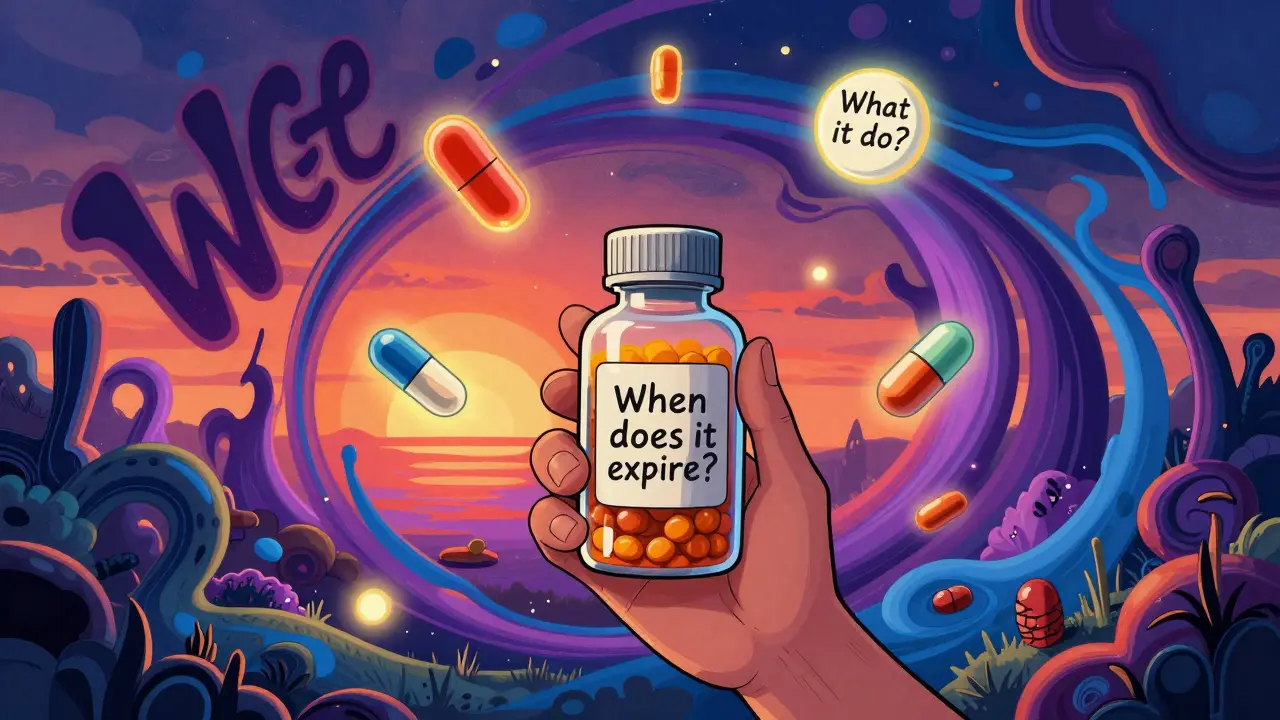
You wouldn’t drive a car without knowing how the brakes work. So why take a pill without knowing what it does? The FDA says patients should ask eight basic questions for every new prescription:- What’s the name of this drug-both brand and generic?
- What’s it supposed to do? (Not just ‘for blood pressure’-but how does it help you?)
- How much should you take, and when?
- How long should you keep taking it?
- What does it look like? (Size, color, markings-so you know if something’s changed.)
- When does it expire?
- What side effects are normal? Which ones mean you should call your doctor?
- What foods, drinks, or other meds should you avoid while taking it?
Write these answers down. Keep them in your phone or a small notebook. Don’t rely on memory. A 2021 study found that nearly 40% of patients couldn’t correctly say what their own medications were for. That’s not just confusing-it’s dangerous.
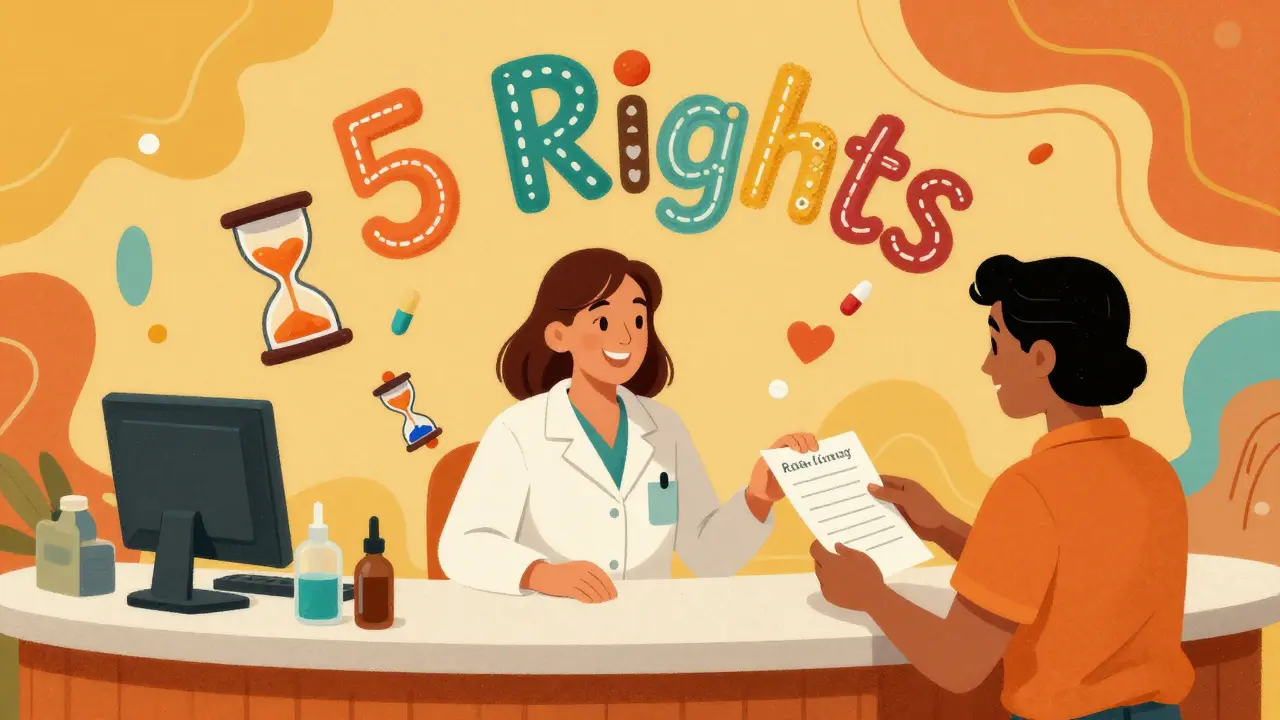
Use the ‘5 Rights’ Every Time
Healthcare workers follow the ‘5 Rights’ to prevent mistakes:- Right patient
- Right drug
- Right dose
- Right route (swallowed, injected, applied to skin, etc.)
- Right time
Even if you’re not a nurse, you should apply these to yourself. Before you take any pill:
- Check the label against your list.
- Is it the right color and shape? If it looks different from your last refill, ask the pharmacist.
- Does the dose match what your doctor told you? Sometimes pharmacies misread handwriting or abbreviations.
- Are you taking it at the right time? Some meds need to be taken with food. Others must be taken on an empty stomach.
One common error? Taking two pills because you forgot you already took one. That’s why people who use pill organizers reduce their mistakes by 35%, especially if they’re over 65.
Keep an Updated Medication List
Your list should include:- All prescription drugs
- All over-the-counter pills (like ibuprofen or antacids)
- All vitamins, herbs, and supplements
- Any injections or patches you use
Update it after every doctor’s visit, pharmacy trip, or hospital stay. Bring it with you to every appointment-even if you think they already have it. The CDC says half of all medication errors happen during care transitions, like moving from hospital to home. Why? Because no one has the full picture.
And don’t forget the supplements. A 2022 survey found that only 58% of U.S. hospitals consistently document what patients take outside of prescriptions. That means your doctor might not know you’re taking St. John’s Wort-which can make your antidepressant useless-or garlic pills that thin your blood before surgery.
Watch Out for High-Risk Medications
Some drugs are more dangerous if used wrong. These are called ‘high-alert medications’:- Insulin
- Warfarin (blood thinner)
- Heparin (another blood thinner)
- Intravenous oxytocin (used in labor)
These account for 30% of all medication errors that cause serious harm. Why? Because small mistakes can have big consequences. A tiny bit too much insulin? Low blood sugar. Too much warfarin? Internal bleeding. You need extra care with these.
Ask your pharmacist: ‘Is this a high-alert drug?’ If yes, make sure you understand the dose, timing, and warning signs. Never assume it’s ‘just another pill.’
Never Skip Doses-or Stop Early
It’s tempting. You feel better. The pain’s gone. Why keep taking it?But stopping antibiotics early is one of the top reasons they stop working. The FDA says 23% of antibiotic treatment failures happen because people quit too soon. Same with blood pressure meds or antidepressants. You might feel fine, but your body isn’t done healing.
And never double up because you missed a dose. If you forget, check the label or call your pharmacist. Most meds say what to do. If not, ask. Taking two at once could land you in the ER.
Use Technology Wisely
Smartphones aren’t just for scrolling. Use them to stay safe:- Set alarms for doses. Even simple ones work.
- Use a pill organizer with compartments for morning, afternoon, evening, night.
- Download the CDC’s free Medication Safety Checklist app (launched in January 2024). It helps you track meds, set reminders, and print lists.
Some pharmacies now offer text or email refill alerts. Sign up. It prevents running out-and the temptation to guess when to take the next pill.
And if you use telehealth? Be extra careful. A 2022 FDA report showed telehealth prescriptions had 200% more errors than in-person visits. Why? Doctors can’t see you, can’t check your skin for rashes, can’t confirm you’re holding the right bottle. Always ask for written instructions after a virtual visit.
Check for Look-Alike, Sound-Alike Drugs
Glimepiride and glyburide. Prednisone and prednisolone. These names look and sound almost the same. But they do very different things.One Reddit user wrote: ‘Took the wrong pill for three days before noticing my blood sugar crashed.’ That’s not rare. Pharmacists call this a ‘look-alike, sound-alike’ (LASA) error. It’s one of the most common causes of dispensing mistakes.
Pharmacies use something called ‘Tall Man Lettering’ to help-writing similar names with capital letters in different spots: predniSONE vs. predniSOLONE. But you still need to double-check. When you pick up a new prescription, hold it up to your last one. Are they the same color? Same shape? Same imprint? If not, ask.
Clean Out Your Medicine Cabinet
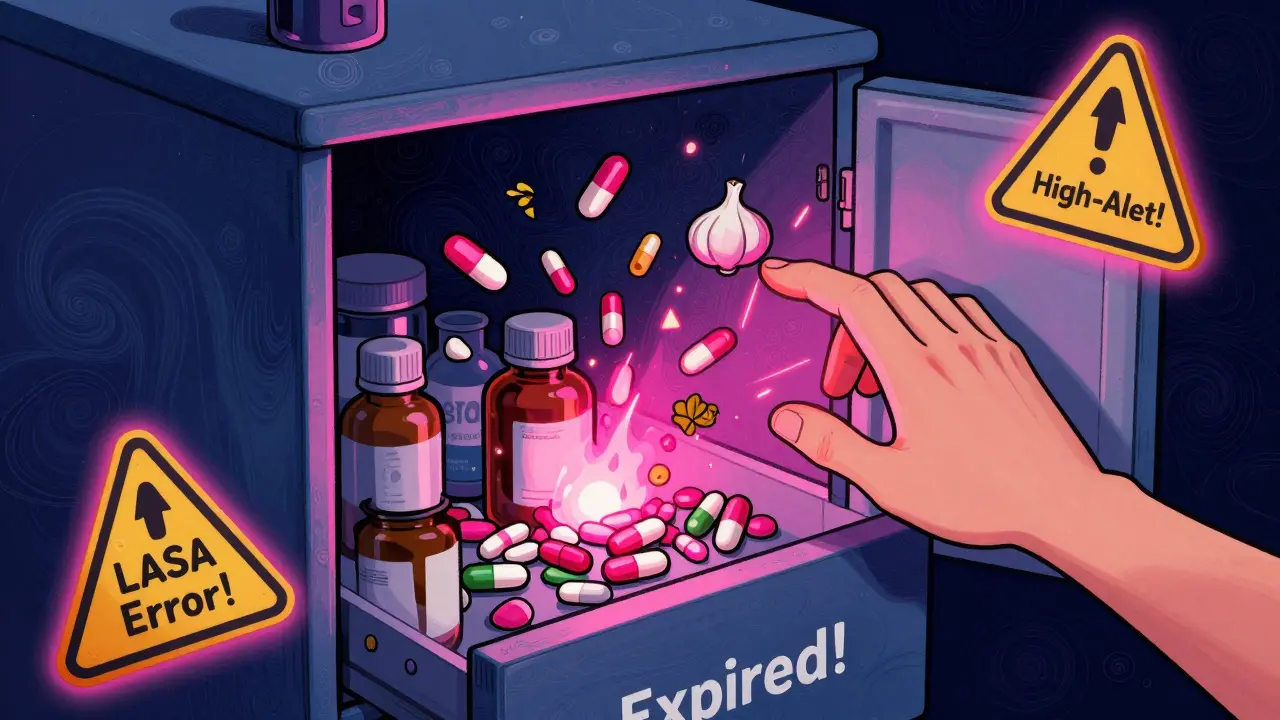
Expired meds? Old prescriptions? Unused antibiotics? They’re not just clutter-they’re risks.The Illinois Department of Public Health says 38% of accidental poisonings in kids happen because of expired or leftover pills in the home. And adults? They take them by accident. Or they think ‘it’s still good.’ It’s not.
Do a medicine cabinet clean-out twice a year. Toss anything that’s expired, changed color, smells odd, or you haven’t used in over a year. Don’t flush most pills down the toilet-check with your pharmacy for safe disposal options. Many offer drop-off bins.
Ask for the ‘Teach-Back’ Method
Too many doctors say: ‘Here’s your prescription. Take one pill daily.’ That’s not enough.The ‘teach-back’ method works better. Your provider asks: ‘Can you tell me how you’ll take this?’ Then you explain it back in your own words. If you say, ‘I take this when I feel dizzy,’ but it’s actually for cholesterol, you’ve got a problem.
Studies show patients who go through teach-back have 40% better adherence. It’s simple. It’s effective. And you have the right to ask for it. Say: ‘Can you help me make sure I understand this correctly?’
Pharmacists Are Your Secret Weapon
Most people think pharmacists just hand out pills. They’re wrong.Pharmacists are trained to spot drug interactions, catch dosage errors, and explain side effects in plain language. They’re the last line of defense before you swallow something. And they’re often more available than your doctor.
Next time you pick up a new prescription, ask: ‘Is there anything I should watch out for with this?’ Or: ‘Does this interact with my other meds?’ Patients who do this have 27% fewer medication errors.
Don’t wait until something goes wrong. Talk to them now.
What If You Make a Mistake?
You took the wrong pill. You missed a dose. You accidentally took two. Don’t panic. Don’t hide it.Call your pharmacist or doctor right away. They’ve seen it before. They know what to do. Waiting could make things worse.
And if you’re ever unsure-always ask. No question is too small. ‘Is this safe during pregnancy?’ ‘Can I drink coffee with this?’ ‘Will this affect my kidney function?’
Medication safety isn’t about being perfect. It’s about being aware. It’s about asking. It’s about double-checking. And it’s about not letting fear stop you from speaking up.
The goal isn’t to scare you. It’s to empower you. You’re not just a patient. You’re the most important person in your own care. Your life depends on it.
Kevin Motta Top
December 21, 2025 AT 08:25Just started using a pill organizer after reading this. Game changer. No more guessing if I took my blood pressure pill or not.
Simple, cheap, saves lives.
Nina Stacey
December 22, 2025 AT 15:20i never realized how many people dont know what their meds are even for like i had a friend who was on metformin but thought it was for her headaches lmao and she was taking it at night instead of morning and her sugar was all over the place and she didnt even know why she felt so tired all the time
its wild how much we just trust the bottle without asking anything and then wonder why stuff goes wrong
also why do pharmacies never tell you about the look alike ones like i got glimepiride once and it looked exactly like my old glyburide and i almost took it until i checked the label again thank god
you guys should always hold your new pill up to the last one i swear its the easiest thing and no one does it
Janelle Moore
December 23, 2025 AT 20:33they dont want you to know this but the FDA is hiding the truth about meds
every single pill has a microchip that tracks you
and the side effects they list? those are just the ones they want you to notice
the real ones are in the fine print and theyre used to control your mind
why do you think they push so hard for you to take them daily? its not for your health its for the surveillance
and dont get me started on the vaccines and the meds being linked to the same companies
theyre all connected
you think your pharmacist is helping you? hes on the payroll
ask yourself why they dont want you to ask questions
its because they know
Henry Marcus
December 24, 2025 AT 19:16Oh. My. God. This post is a godsend. Seriously. I just had a near-death experience last month because I mixed warfarin with a new turmeric supplement-no one told me. I was bleeding internally for three days before I figured it out. My doctor didn’t even ask about supplements. I’m not even mad-I’m just… stunned. How is this not mandatory training? Like, if you’re going to hand out a chemical that can kill you in 12 hours if you sneeze wrong, shouldn’t you at least have a 10-minute safety briefing? I’m printing this out and taping it to my fridge. And my doctor’s forehead. And my pharmacist’s nametag.
Isabel Rábago
December 25, 2025 AT 13:09You people are so careless. I’ve seen family members die because they didn’t take their meds seriously. It’s not just about forgetting a pill-it’s about arrogance. You think you know better than science? You think your gut feeling trumps a 10-year clinical trial? I don’t care how ‘chill’ you are. Medication isn’t a suggestion. It’s a lifeline. And if you’re too lazy to write down what you’re taking or ask a simple question, you don’t deserve to be alive. Period.
Matt Davies
December 25, 2025 AT 13:54My grandad used to say ‘if you don’t know what it’s for, don’t swallow it.’ He was a WWII medic. He carried a little notebook with every pill he ever took. At 87, he still did it. No phone. No app. Just pen and paper. And he lived longer than half his friends who had ‘smart’ systems. Sometimes the old ways are the smartest.
Also, never trust a pharmacy’s handwriting. I once got a script for ‘Hydrocodone’ that looked like ‘Hydralazine.’ I called them before swallowing. Saved my life. Don’t be lazy.
Mike Rengifo
December 27, 2025 AT 03:36Been on 7 different meds for 5 years. Learned the hard way. Now I take a pic of every pill bottle when I get it. Same color? Same shape? Same numbers? If not, I call the pharmacy before I open it. Zero drama. Zero ER trips. Just peace of mind.
Also, the CDC app? I use it. It’s actually decent. Not perfect, but better than my memory.
Dev Sawner
December 27, 2025 AT 22:16It is imperative to underscore that the prevailing paradigm of self-administered pharmaceutical consumption is fundamentally flawed. The absence of standardized, mandatory patient education protocols within the primary care infrastructure constitutes a systemic failure of public health governance. One must not conflate convenience with clinical efficacy. The empirical data presented herein, while commendable in its articulation, fails to address the structural inadequacies inherent in the American healthcare delivery model. A more robust, state-regulated pharmaceutical oversight system is required.
Moses Odumbe
December 28, 2025 AT 04:11YOOOOO THIS IS SO IMPORTANT 😭😭😭
Just got my new antidepressant and I was like ‘yep, looks like the last one’-then I checked the label and it was a DIFFERENT DOSE 😳
Pharmacist was like ‘oh yeah we switched to generic’-but no one told me the number changed from 20mg to 30mg
So now I take a pic of the bottle every time I get refilled and I send it to my phone notes
Also I use 📱⏰ for every dose. I’m basically a robot now. But alive. And that counts. 💪💊
Meenakshi Jaiswal
December 29, 2025 AT 00:31I’m a nurse in Mumbai and I’ve seen too many patients come in with confusion over their meds-especially when they’re taking Indian herbs like ashwagandha or turmeric with blood thinners. No one tells them it’s dangerous.
Here’s what I tell my patients: Make a list. Keep it on your phone. Show it to every doctor-even the one you’re seeing for your cold.
And if you’re unsure? Call your pharmacist. They’re paid to answer questions. No shame in asking. Seriously. I’ve had patients text me at 2am asking if they can take ibuprofen with their heart pill. I always reply. Because it’s not about being a nurse-it’s about being human.
Connie Zehner
December 29, 2025 AT 11:56YOU THINK THIS IS BAD? WAIT TIL YOU FIND OUT WHAT’S REALLY IN YOUR PILLS
They put fluoride in the water AND the meds to make you docile
And the labels? They’re lies. The real side effects are nightmares-depression, memory loss, suicidal thoughts-but they only list ‘mild headache’ because they don’t want you to panic
My cousin took lisinopril and started hallucinating-she thought her cat was talking to her
She went to the ER and they said ‘it’s just anxiety’
NO. IT WAS THE DRUG
And now they’re tracking your pill intake through your phone app-don’t you see? They’re building a database of your body’s weaknesses
They know when you skip a dose. They know when you’re not compliant.
And they’re using it to adjust your ‘treatment’
Don’t trust anyone. Not your doctor. Not your pharmacist. Not the app.
Check your pills. Every. Single. Time.
Kelly Mulder
December 30, 2025 AT 19:06How is it even possible that the average American is this ignorant about pharmacology? I mean, really. You wouldn’t drive a car without knowing how the engine works-yet you swallow a chemical compound with zero comprehension of its molecular mechanism? It’s not just irresponsible-it’s intellectually lazy. And the fact that this post is even necessary suggests a catastrophic collapse of basic education. You’re not ‘empowered’ by this checklist-you’re barely literate. Please, for the love of all that is rational, go back to high school biology.
Tim Goodfellow
December 30, 2025 AT 20:42THIS. RIGHT. HERE. I used to think ‘meds are meds’ until my wife had a stroke and we realized we had no clue what half her pills did.
So we made a color-coded chart: red = heart, blue = brain, green = pain, yellow = ‘ask the pharmacist’
Put it on the fridge. Now our 7-year-old knows not to grab the blue ones unless it’s Tuesday.
And we always ask the pharmacist: ‘Is this one of those scary ones?’
They laugh. Then they give us a 10-minute lecture. Worth it.
Life’s too short for guesswork.
mark shortus
December 31, 2025 AT 13:25IT WASN’T JUST A MISTAKE-IT WAS A TRAGEDY.
I took two doses of my blood pressure pill because I thought I’d missed one. I didn’t. I was just tired. I collapsed. My wife found me on the bathroom floor. Paramedics came. They said ‘if you’d waited 20 more minutes, you wouldn’t be here.’
They gave me a pill organizer. I cried. I was so embarrassed.
Now I have alarms. I have a notebook. I have a picture of my pills taped to my mirror.
And I tell everyone. Everyone. Because I almost died because I didn’t ask. Because I thought I knew.
Don’t be me.
Moses Odumbe
January 1, 2026 AT 20:34Bro I just saw your post and I’m crying. I did the exact same thing last year. Took two doses of my antidepressant because I thought I missed it. Felt like my heart was gonna explode. Called my doc at 3am. He said ‘thank god you called.’
Now I set TWO alarms. One on my phone. One on my smart speaker. And I say the name of the pill out loud before I take it. ‘This is sertraline. 50mg. Morning.’
It sounds dumb. But it works. You’re not alone.