Meniere’s Diet: How Sodium Restriction and Fluid Balance Reduce Vertigo and Hearing Loss
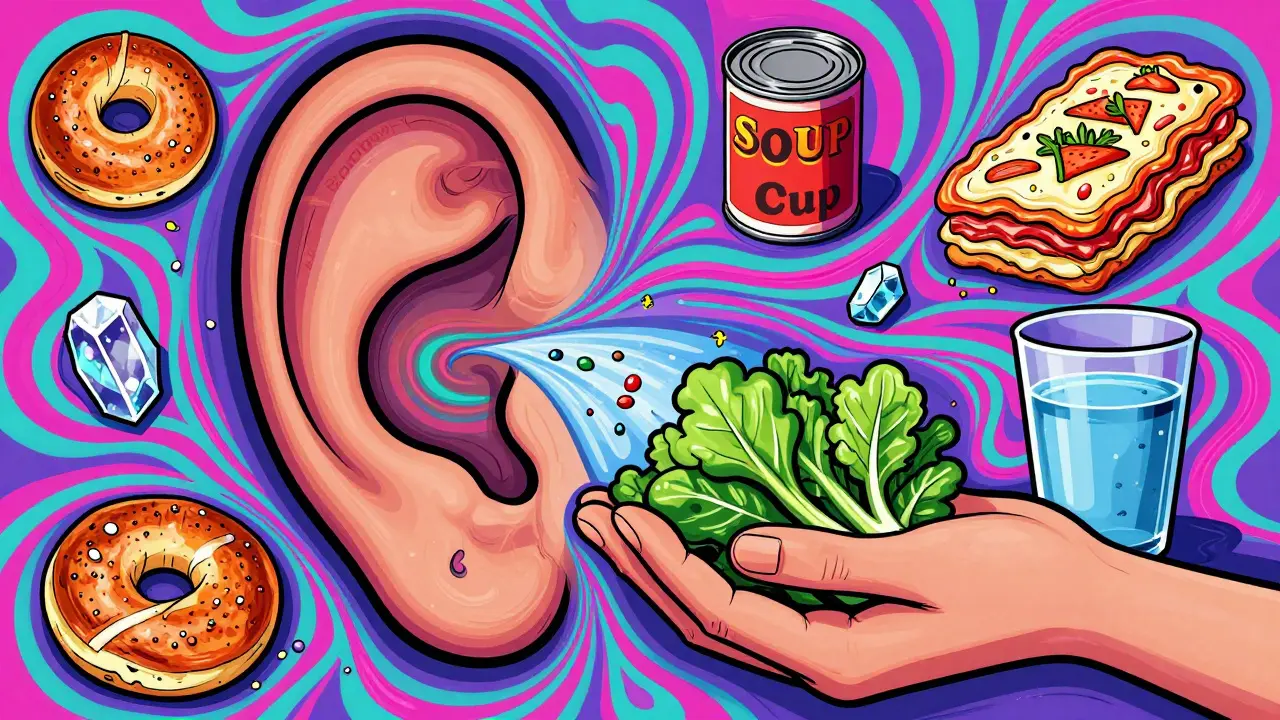
If you have Meniere’s disease, you know how sudden vertigo attacks can ruin your day - or even your week. The spinning, the muffled hearing, the ringing in your ear, the feeling that your head is stuffed with cotton: it’s not just annoying. It’s terrifying. And while doctors often reach for pills or injections, the most powerful tool you have might already be in your kitchen.
Why Salt Is the Real Enemy
Meniere’s disease isn’t caused by an infection or a tumor. It’s a mystery, but one key clue is fluid buildup in the inner ear. That fluid - called endolymph - normally flows in precise amounts. When it builds up too much, pressure spikes, and your balance and hearing systems go haywire. Salt doesn’t directly cause this, but it makes it worse. Every gram of sodium you eat pulls water into your bloodstream. Your body holds onto that water, and some of it ends up trapped in your inner ear. More fluid. More pressure. More attacks.That’s why doctors worldwide agree: cutting sodium is step one. Not step two. Not something to try if meds fail. It’s the foundation. The 2020 Clinical Practice Guideline from the American Academy of Otolaryngology-Head and Neck Surgery puts dietary changes right at the top of the treatment list - before diuretics, before injections. And it’s not just one study. Seven major medical sources all recommend it. No exceptions.
The target? 1,500 to 2,000 milligrams of sodium per day. That’s less than a teaspoon of table salt. Sounds impossible? It’s not - if you know where the salt hides.
What You’re Really Eating (It’s Not the Salt Shaker)
Most people think they’re cutting salt by skipping the shaker. That’s like trying to lose weight by not eating dessert while still drinking soda. Here’s the truth: 77% of the sodium in your diet comes from packaged, processed, and restaurant food. Not your home cooking. Not your salt shaker.Think about your typical day:
- Breakfast: a bagel with cream cheese (600 mg sodium)
- Lunch: canned soup and a sandwich (1,200 mg)
- Dinner: frozen lasagna and garlic bread (1,800 mg)
- Snack: pretzels or chips (300 mg)
That’s already 4,500 mg - more than double the upper limit. And you didn’t even add salt.
Here’s what to avoid:
- Soy sauce, Worcestershire sauce, ketchup, mustard, relish
- Canned vegetables, soups, beans (even "low sodium" ones can be over 400 mg per serving)
- Processed meats: bacon, deli turkey, sausages, hot dogs
- Fast food: burgers, fries, tacos - anything from a drive-thru
- Pre-seasoned rice, pasta mixes, frozen meals
- Bread: yes, bread. One slice can have 200 mg.
Check labels. Always. And remember: "low sodium" means 140 mg or less per serving - not per package. A box of crackers might have four servings. That’s 560 mg before you even open it.
Hydration Isn’t What You Think
You’ve probably heard to drink more water. That’s true - but not because you need to flush out salt. You need to keep your body’s fluid system balanced. When you’re dehydrated, your body clings to every drop of water it has - including in your inner ear. But if you drink too much water without controlling sodium, you’re just adding volume to an already swollen system.The 2024 study in Acta Otolaryngologica gave patients exactly 35 milliliters of water per kilogram of body weight each day. For a 70 kg person (about 154 lbs), that’s 2.45 liters - roughly 10 cups. Not 5. Not 15. Exactly that.
Spread it out. Sip throughout the day. Don’t chug it all at once. And don’t replace water with coffee, tea, or soda. Caffeine and alcohol constrict blood vessels in the inner ear, making symptoms worse. Stick to water, herbal teas, and diluted fruit juices.
Real Food, Real Results
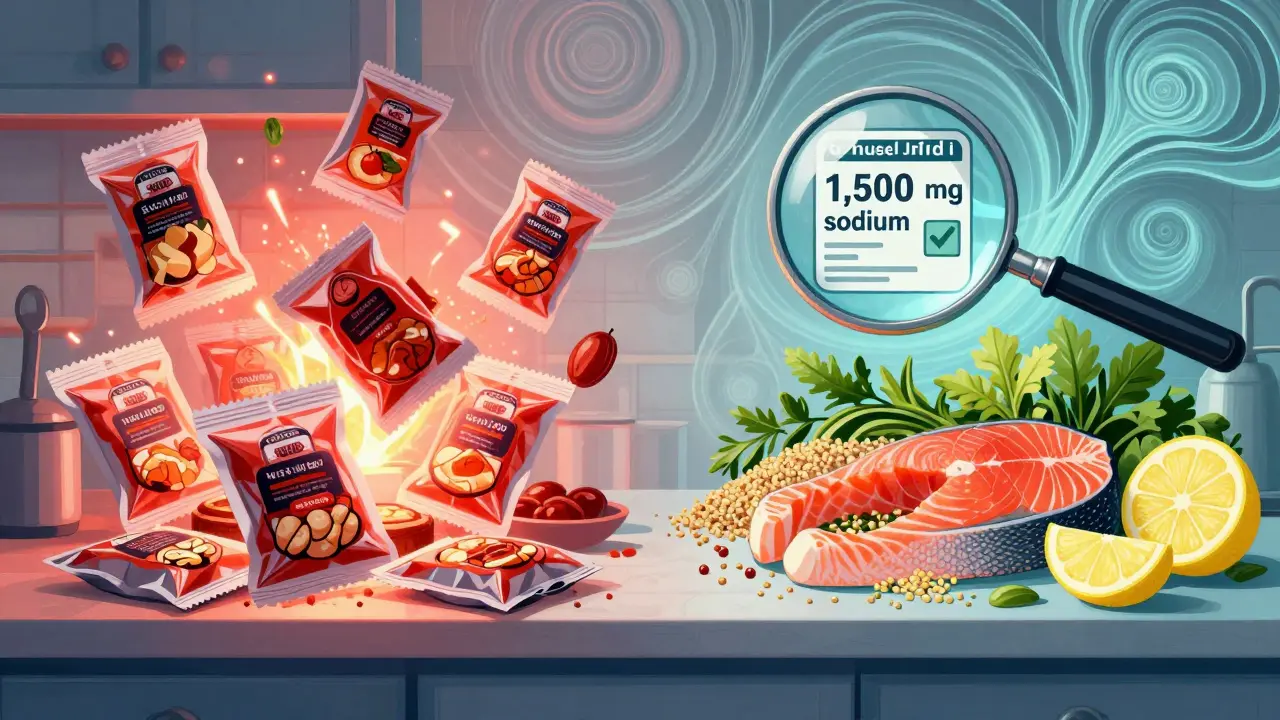
You don’t need special supplements or expensive diets. You need real food:- Fresh vegetables and fruits
- Unseasoned chicken, fish, turkey
- Plain rice, quinoa, oats
- Legumes (beans, lentils) - rinse canned ones well
- Plain yogurt (check labels - some have added salt)
- Nuts and seeds - unsalted only
Flavor it with garlic, lemon, herbs, black pepper, cumin, paprika, or vinegar. No salt. No salt blends. Even "herb salt" has sodium. Buy pure dried herbs and spices.
Meal example:
- Breakfast: Oatmeal with sliced banana and cinnamon (0 mg sodium added)
- Lunch: Grilled chicken salad with olive oil and balsamic vinegar, quinoa, cherry tomatoes
- Dinner: Baked salmon, steamed broccoli, brown rice
- Snack: Apple with almond butter (unsalted)
This meal plan stays under 1,500 mg sodium - and tastes better than you think.
What the Science Says - And What It Doesn’t
A 2024 randomized trial with 50 patients showed clear results. After six months on a 1,500 mg sodium diet and precise hydration:- Hearing improved by an average of 12.3 dB at key frequencies
- Vertigo attacks dropped by nearly half
- Tinnitus got quieter - scores fell from 58.7 to 32.4 on a standard scale
- Dizziness impact dropped from 62.3 to 28.9
That’s not a placebo. That’s measurable, objective change.
But here’s the catch: not every study agrees. Some show modest results. One 2018 study found no benefit from a special salt-protein diet. Why? Because those studies often didn’t control sodium tightly enough. Or they didn’t track hydration. Or patients cheated. The best results come from strict, consistent adherence.
Dr. Richard Miyashita from Tokyo Medical University says low-salt diets should be the first treatment - not the last. And he’s not alone. 92% of U.S. ENT doctors recommend it. Even the British Ménière’s Society says the same.
Why It Works Better Than Pills
Diuretics like hydrochlorothiazide are often prescribed. They make you pee more to reduce fluid. But they come with risks: low potassium, dizziness, kidney stones, dehydration. And they don’t fix the root problem - your body’s salt overload.With diet, you’re not fighting your body. You’re helping it work right. No side effects. No prescriptions. No monthly co-pays. Just food.
One study found 68% of patients on strict sodium restriction saw major symptom improvement - without drugs. Compare that to diuretics, which help 50-70% of people - but with side effects.

How to Stick With It
This isn’t a diet you do for a month. It’s a lifestyle. And it’s hard.Here’s how to make it stick:
- Remove the salt shaker from your table. Out of sight, out of mind.
- When eating out, ask for no salt. Say "I have a medical condition." Most restaurants will accommodate.
- Plan meals ahead. Grocery shop once a week. Stick to the perimeter of the store - fresh foods are there. Avoid the middle aisles.
- Keep a food journal. Write down everything you eat. You’ll be shocked at how fast sodium adds up.
- Find a buddy. Someone else with Meniere’s. Share recipes. Complain together. Celebrate small wins.
It gets easier. After two weeks, your taste buds reset. Food that once tasted bland starts to taste rich. You’ll notice the natural sweetness in carrots, the earthiness in mushrooms, the brightness in lemon.
What If It Doesn’t Work?
If you’ve been strict for 3-6 months and still have attacks, talk to your doctor. You might need:- Intratympanic steroid injections (dexamethasone) - 60-75% success rate
- Gentamicin injections - 80-90% vertigo control, but risk of hearing loss
- Oral steroids or vestibular rehab therapy
But don’t skip the diet. Even if you need other treatments, sodium control still helps. It reduces the dose of meds you need. It lowers your risk of side effects. It gives your body a better chance to heal.
The Big Picture
Meniere’s disease isn’t cured by diet alone. But for most people, it’s the most effective, safest, and cheapest way to take control. You’re not waiting for a miracle drug. You’re using what’s already in your hands - food, water, awareness.And the science is catching up. A major NIH-funded trial is now recruiting 300 patients across the U.S. to compare 1,500 mg vs. 2,300 mg sodium limits. Results will come in late 2025. But right now, the evidence is strong enough to act.
You don’t need to be perfect. Just consistent. Skip the processed snacks. Read the labels. Drink your water. Cook without salt. Your ears will thank you.
Doreen Pachificus
January 4, 2026 AT 04:36Been on this diet for 4 months now. My vertigo attacks dropped from 3-4 a week to maybe one every 6 weeks. Not magic, but real. I still get the ringing, but it’s quieter now. Funny how your taste buds change - I actually miss the salt less than I thought I would.
Stephen Craig
January 5, 2026 AT 03:03Fluid balance isn’t about volume. It’s about osmotic pressure. Sodium pulls water. Less sodium = less pull. Simple physics. The body doesn’t need to be ‘flushed’ - it needs to be balanced.
Charlotte N
January 7, 2026 AT 02:35so i tried cutting salt and now i just eat like 5 bananas a day and drink like 3 liters of water?? is that right?? i feel like my head is a balloon??
Rory Corrigan
January 9, 2026 AT 01:05My wife says I’ve become a kitchen monk. No salt. No soy. No sneaky sodium. I miss pizza. But I don’t miss the dizzy spiral after eating it. 🙏
Connor Hale
January 10, 2026 AT 18:46It’s not about being perfect. It’s about being aware. I still eat out sometimes. I ask for no salt, and they usually oblige. I carry my own olive oil and vinegar. It’s not a sacrifice - it’s a recalibration.
Justin Lowans
January 11, 2026 AT 06:03The science here is remarkably consistent across multiple international guidelines - and yet, the medical community still treats dietary intervention as a last resort. It’s almost as if pharmaceutical incentives overshadow clinical wisdom. The fact that 92% of ENTs recommend this, yet only 18% of patients are even counseled on it, speaks volumes about systemic neglect. This isn’t just nutrition - it’s a public health blind spot.
Michael Rudge
January 11, 2026 AT 23:43Oh wow, another ‘eat less salt’ miracle cure. Next you’ll tell me drinking water cures cancer. Did you also read that ‘sunlight heals depression’ and ‘breathing properly fixes anxiety’? Maybe if you just stopped being so weak, you wouldn’t need a diet to survive a Tuesday.
Ethan Purser
January 12, 2026 AT 13:16I’ve been living with this for 12 years. I’ve tried everything. Chiropractors. Cranial sacral. CBD gummies. Even a shaman in Oregon who yelled at my ears. But this? This is the first thing that made me feel like my body wasn’t a betrayal. I cried the first time I ate a plain grilled chicken breast and didn’t fall over. It’s not a diet. It’s a homecoming.
Jack Wernet
January 12, 2026 AT 19:50As someone who grew up in a household where salt was a sacred condiment, this shift was cultural as much as medical. My grandmother thought I’d lost my mind when I stopped salting her soup. But now she asks me for my recipes. Sometimes healing requires unlearning what we’ve been taught to love.
Roshan Aryal
January 14, 2026 AT 17:10Western medicine always wants to sell you pills. In India, we have Ayurveda - balance through natural rhythms, not lab-made chemicals. This diet? It’s just modern Ayurveda with a nutrition label. You don’t need a PhD to understand that too much salt ruins your body. But you do need to stop listening to Big Food.
Vicki Yuan
January 15, 2026 AT 18:02Just wanted to clarify something: the 35 mL/kg/day hydration guideline is based on total body water needs, not fluid volume for the inner ear. Dehydration triggers antidiuretic hormone, which increases sodium retention - so hydration helps regulate, not dilute. Also, herbal teas like ginger and peppermint are fine - they’re non-diuretic and anti-inflammatory. But chamomile? Avoid it - it’s a mild diuretic. Small details matter.
bob bob
January 16, 2026 AT 08:46Guys, I started this last week. I made a quinoa bowl with roasted veggies and lemon-tahini dressing. Tasted like a vacation. I didn’t even miss the salt. I’m already feeling calmer. Like my brain stopped screaming. If you’re thinking about it - just try it for two weeks. You’ve got nothing to lose but the dizziness.
Catherine HARDY
January 18, 2026 AT 01:03Wait… so you’re telling me the government and Big Pharma don’t want us to know this? That’s why they don’t tell doctors to tell patients? Because if everyone ate real food, they’d stop buying pills? And the FDA is in on it? I knew it. I’ve been seeing the signs - the salt packets at restaurants, the ‘low sodium’ labels that are still full of it… it’s all a trap.