Personal Health Records: Managing Medications Across Pharmacies
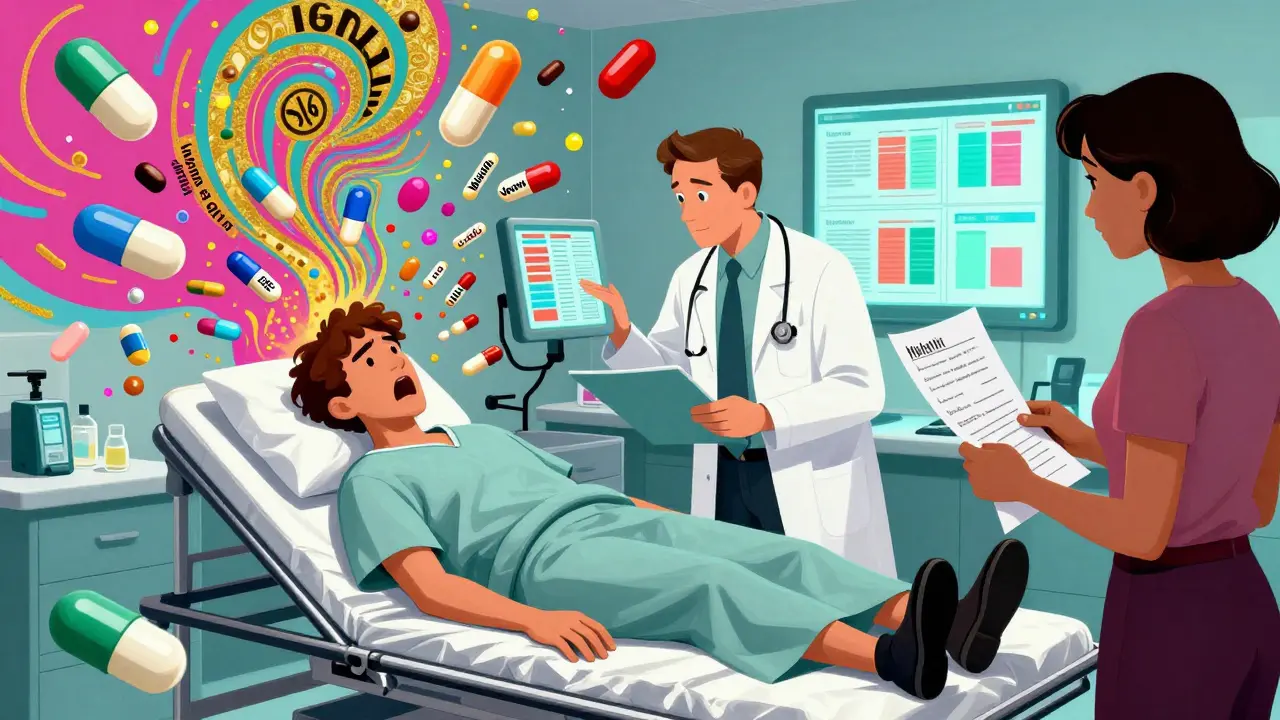
Imagine you’re rushed to the emergency room after a fall. You can’t remember all your meds. Your wife tries to help, but she’s not sure about the dosage of that blue pill you take for your blood pressure. The doctor pulls up your chart-only to find half your medications missing. This isn’t rare. In fact, 53% of patients admitted to hospitals have at least one error in their medication list. That’s not a glitch. It’s a systemic blind spot-and it’s fixable.
What personal health records actually do for your meds
A personal health record (PHR) isn’t just a digital notebook. It’s your living medication map. Unlike hospital EHRs, which belong to clinics, a PHR is yours. You control what goes in. You decide who sees it. And when you use one that pulls data from multiple pharmacies, it stops being a suggestion-it becomes your safety net. The best PHRs today don’t just list what you’re supposed to take. They show what you actually got. From CVS to your local independent pharmacy, from Walmart to the mail-order service you use for your diabetes meds-all of it can appear in one place. Apple Health Records, Surescripts, and Australia’s My Health Record have proven this works. These systems connect to pharmacy claims, dispense records, and even let you add over-the-counter pills and supplements. That’s critical. Because when you’re on six prescriptions, two blood pressure pills, a statin, a daily aspirin, and a handful of vitamins, forgetting one can land you in the hospital.How your meds get from pharmacy to your phone
Here’s how it works behind the scenes. When a pharmacy fills your prescription, that transaction gets sent to a national network like Surescripts. It’s not just big chains-smaller pharmacies use the same system. Surescripts handles over 22 billion transactions a year. It matches your name, birth date, address, and a few other data points to make sure your meds go to your record, not someone else’s. The system gets it right 99.2% of the time. But here’s the catch: not everything gets recorded. Cash purchases? Sometimes. Over-the-counter meds? Only about 37% of PHRs capture them. Why? Because pharmacies aren’t required to report them. And if you buy ibuprofen at the gas station, no one knows. That’s dangerous. If you’re on blood thinners, that extra ibuprofen could cause internal bleeding. A 2021 study found that nearly half of patients taking anticoagulants also used OTC painkillers without telling their doctor. Your PHR can also pull data from your pharmacy benefit manager (PBM)-the middleman that handles insurance claims. That covers 92% of your prescriptions. But if you pay cash for your thyroid med, or refill it at a different pharmacy because it’s cheaper that week, that info might not make it in unless you add it yourself.Why your phone’s health app isn’t enough
Apple Health Records looks sleek. It’s easy to use. And it’s free. But here’s the reality: it only shows about 68% of your full medication history. Why? Because it only pulls from pharmacies that feed data into Apple’s system. If your doctor’s clinic uses Epic, and your pharmacy uses a different system, Apple might miss half your list. Compare that to Surescripts. Used by hospitals, pharmacies, and insurers, it pulls from over 90% of U.S. pharmacies. It’s not flashy. But it’s complete. A 2022 JAMIA study found Surescripts captured 92% of medication data-almost 25% more than Apple. That’s not a small difference. That’s the difference between knowing you’re on 12 meds and thinking you’re on 9. And then there’s the human factor. A Duke University audit of 12,000 patient-entered records found that 61% had dosage errors. Someone writes “Lisinopril 10mg” but means “20mg.” Or they forget to update it after their doctor changed the dose. That’s why pharmacists spend an average of 8.3 minutes per patient just correcting what patients put in. It’s not that people are careless. It’s that medication lists are complicated. And if you’re managing six chronic conditions, you’re not a pharmacist.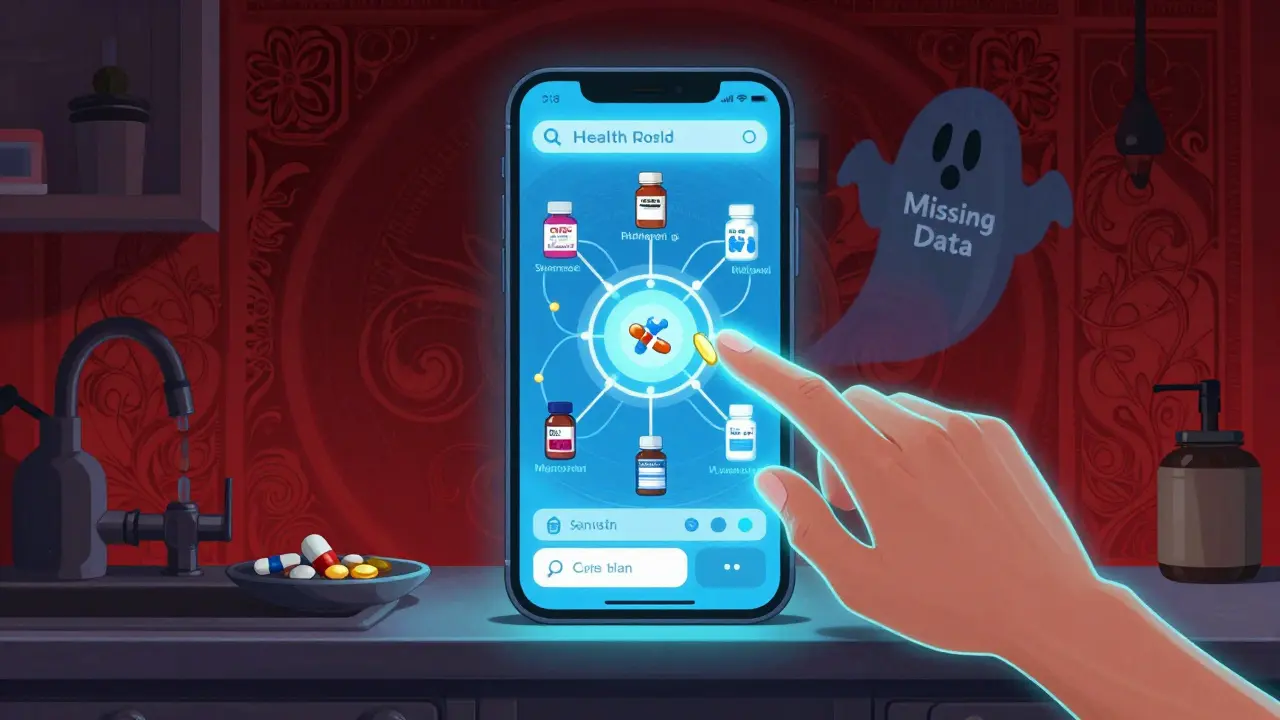
What works-and what doesn’t-in real-world use
In hospitals, PHRs cut reconciliation time from 12 minutes down to under 5. That’s huge. Pharmacists can focus on patient care instead of paperwork. One study showed they gained 7.2 hours a week back-time they could spend checking for drug interactions or counseling patients on side effects. But community pharmacies? It’s messier. A 2022 survey found 79% of pharmacists still had to verify patient-entered data. One Reddit user, a pharmacy tech, said they had to manually enter 30% of OTC meds because the system didn’t pick them up. That’s not a tech failure-it’s a workflow gap. Most community pharmacies aren’t trained to push data into PHRs. They’re busy filling scripts. Adding another step? It’s easy to skip. Australia’s system, My Health Record, is the closest thing to a national solution. By 2022, 93% of Australians were enrolled. Their system includes data from 7,800+ pharmacies. And it reduced duplicate prescribing by 28%. But even there, only 57% of pharmacists consistently added dispensed meds. Why? Because it slowed them down. They didn’t have time. Or the software didn’t make it easy.What you can do right now
You don’t need to wait for the system to fix itself. Here’s how to take control:- Download your PHR-Apple Health, My Health Record (if you’re in Australia), or your provider’s portal. If you’re in the U.S., check if your insurer offers one through Medicare or your PBM.
- Import your current list-Go to every pharmacy you’ve used in the last year. Call them. Ask for a printout of your fill history. Enter every pill, even the ones you only take occasionally.
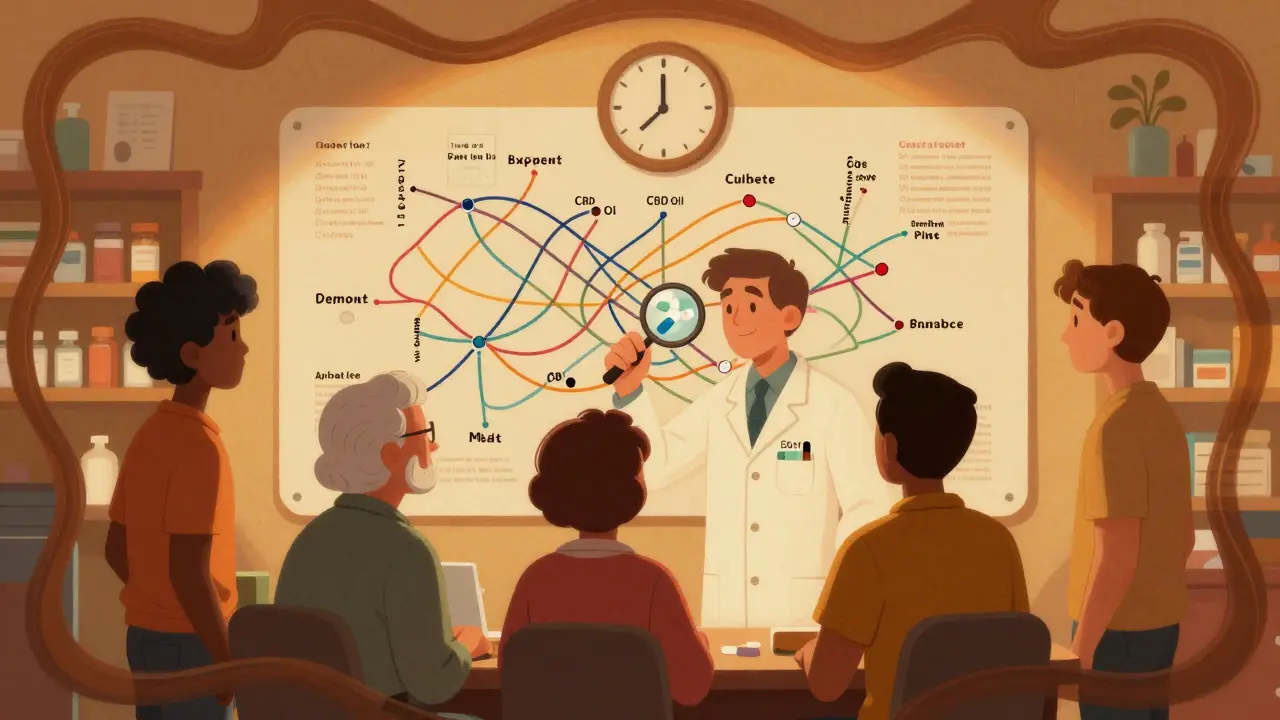
- Add everything-Vitamins. Herbal teas. CBD oil. That melatonin you take before flights. If you’re taking it, it belongs in the record.
- Update it every time you change something-Not once a year. Not when you’re sick. Every time your doctor adjusts a dose, or you stop a med, or start a new one. Set a monthly reminder.
- Share it-Give your primary doctor, pharmacist, and a trusted family member access. Don’t wait for an emergency.
The future is coming-but you can’t wait for it
New rules are forcing change. Starting July 2024, Medicare and private insurers must share 45 days of your medication history with your PHR if you give consent. That’s a big step. AI tools are being tested to predict missed meds based on refill patterns. Google Health’s prototype can spot discrepancies with 92% accuracy. But here’s the truth: technology won’t save you if you don’t use it. The average patient updates their PHR only once every 13 months. That’s worse than useless-it’s misleading. A PHR with outdated info is like a map with wrong street names. It might look right, but it’ll lead you off a cliff. The data is clear: PHRs that include pharmacy data reduce medication errors by 43%. Every $1 spent on them saves $4.37 in hospital costs. But those numbers only matter if you’re part of the solution. You’re not a passive patient. You’re the only one who knows what you actually took last Tuesday. Make sure your record knows too.Can I add over-the-counter meds to my personal health record?
Yes, and you should. Most PHRs let you manually add OTC drugs like ibuprofen, fish oil, or melatonin. Even if your pharmacy doesn’t report them, you can enter them yourself. This is critical-OTC meds can interact dangerously with prescriptions. For example, NSAIDs like ibuprofen can increase bleeding risk if you’re on warfarin. Don’t assume your doctor knows you’re taking them unless you tell them.
Why doesn’t my PHR show all my prescriptions?
PHRs rely on data feeds from pharmacies and insurers. If you paid cash at a small pharmacy, or your pharmacy uses outdated software, the info might not sync. Some systems only pull data from the last 12 months. Others miss mail-order refills. Even the best systems, like Surescripts, only capture about 92% of meds. That’s why you still need to review and manually add anything missing.
Is my medication data safe in a PHR?
Yes, if you use a certified system. Most top PHRs use AES-256 encryption, HIPAA-compliant storage, and let you control who sees your data. The U.S. Office of the National Coordinator found 98% of certified PHRs meet strict cybersecurity standards. You can also restrict access to specific providers. But never share your login details, and always use two-factor authentication if available.
Do I need to update my PHR every time I get a new prescription?
Absolutely. PHRs are only as good as the data you put in. If you forget to update it after your doctor changes your dose or stops a med, the system will show outdated info. That could lead to dangerous errors-like a pharmacist giving you a drug you’re no longer taking. Set a monthly reminder to check and update your list. Even five minutes a month can prevent a hospital visit.
Can my pharmacist see my PHR without me knowing?
No. In the U.S. and most countries with strong privacy laws, your PHR is under your control. Pharmacists can only view your record if you give them permission-either by logging them in during a visit or granting access through your app. Some pharmacies may ask you to confirm access before pulling your history, but they can’t access it secretly. Always check your privacy settings.
What to do if your PHR isn’t working
If your PHR is missing meds, doesn’t update, or feels unreliable, here’s what to do:- Call your pharmacy and ask if they send data to your PHR system. Many don’t know they can.
- Export your full fill history from each pharmacy and enter it manually.
- Use your insurer’s portal-if your PHR isn’t working, try their medication history tool.
- Ask your doctor’s office to print your EHR medication list and compare it to your PHR.
- If you’re still struggling, ask for help from a pharmacist. They’re trained to reconcile medication lists.
bob bob
January 6, 2026 AT 10:46Just started using Apple Health for my meds after my grandma almost got poisoned by a bad interaction. Best decision ever. I added every vitamin, every OTC pill, even that melatonin I take before flights. Now my pharmacist actually knows what I'm on. No more guessing games.
Charlotte N
January 6, 2026 AT 20:09I tried to update mine last week and it deleted half my list because I added a new pill and the app glitched I mean seriously how is this still a thing I just want to know what I'm taking without having to play detective with my own body
Stephen Craig
January 8, 2026 AT 16:59The real issue isn't the tech-it's the assumption that patients are responsible for maintaining systems designed by institutions that refuse to integrate properly. We're told to be proactive while the infrastructure remains fragmented. It's not negligence. It's abandonment.
Vicki Yuan
January 10, 2026 AT 09:17Every time I update my PHR, I double-check the spelling of every drug name and the exact dosage. One typo can be deadly. I also note the reason I'm taking it-like 'for anxiety, not pain'-because even pharmacists get confused. It takes five minutes, but it saves lives.
Justin Lowans
January 11, 2026 AT 21:14This isn't just about pills-it's about reclaiming agency in a system that treats you like a data point. My PHR is my armor. I've watched friends get misdiagnosed because their doctors didn't know they were taking St. John's Wort with their antidepressants. That's not a glitch. That's a crime.
Joseph Snow
January 11, 2026 AT 23:18Let’s be real: the entire PHR infrastructure is a corporate shell game. Surescripts? Owned by insurance giants. Apple Health? A marketing gimmick with a privacy loophole. The government pushes this as a 'solution' while quietly letting pharmacies off the hook for reporting OTCs. This isn't patient empowerment-it's surveillance disguised as care.
John Wilmerding
January 13, 2026 AT 03:17For anyone struggling with their PHR: reach out to your local pharmacist. They’re often underappreciated heroes who know the system better than anyone. I’ve helped three neighbors manually reconcile their lists over coffee. No app can replace human connection. And yes, it’s worth every minute.
Vikram Sujay
January 13, 2026 AT 03:59In India, we have no centralized system. I keep a physical notebook, color-coded by category: blue for prescriptions, red for OTC, green for supplements. I update it every Sunday evening. It’s analog, but it’s mine. Technology should serve us-not the other way around.
Mandy Kowitz
January 14, 2026 AT 22:07Wow, what a masterpiece of guilt-tripping. Next you’ll tell me I’m a bad person for not updating my PHR every time I sneeze. I take three pills. I’ve been on them for ten years. I don’t need an app to tell me what’s in my medicine cabinet.
Michael Rudge
January 15, 2026 AT 10:36Of course Apple Health only shows 68%. They don’t want you to know how much data they’re hoarding. The real danger isn’t missing meds-it’s who’s watching your refill patterns. You think your insurance company doesn’t use this to raise your premiums? Wake up.
Jack Wernet
January 15, 2026 AT 17:31While the technological and systemic challenges are undeniable, the underlying ethical imperative remains clear: patient safety must supersede convenience. The data presented in this post is not merely anecdotal-it is statistically significant and morally urgent. To neglect one’s personal health record is, in effect, to abdicate one’s duty of care to oneself and to those entrusted with one’s well-being.
Catherine HARDY
January 15, 2026 AT 19:21Did you know the government is using PHRs to track who’s taking antidepressants? They’re cross-referencing with credit card purchases to flag ‘high-risk’ individuals. That’s why my PHR is on a separate device, encrypted, and only synced when I’m offline. If they can’t see it, they can’t use it. This isn’t paranoia. It’s survival.