Pregnancy and Liver Disease: Understanding Cholestasis and Safe Treatment Options

When you're pregnant, your body goes through a lot of changes - but not all of them are normal. One rare but serious liver condition that can pop up in the second or third trimester is intrahepatic cholestasis of pregnancy (ICP), also called obstetric cholestasis. It doesn’t cause pain, but it does cause one thing most women notice right away: intense itching, especially on the palms of the hands and soles of the feet. No rash. No bumps. Just relentless itching that gets worse at night. If you’re experiencing this, it’s not just a dry skin issue - it could be your liver struggling to handle the hormonal shift of pregnancy.
What Exactly Is ICP?
ICP happens when pregnancy hormones - especially estrogen - interfere with how your liver releases bile. Normally, bile flows from your liver into your intestines to help digest food. But in ICP, that flow slows or stops, and bile acids build up in your blood. This isn’t something you caused. It’s not your diet, your lifestyle, or anything you did wrong. It’s a genetic and hormonal reaction that affects about 1 to 2 in every 1,000 pregnancies in the U.S., but rates jump to over 15% in places like Chile and among women of Latin American descent.
What makes ICP dangerous isn’t how it affects you - most mothers feel fine otherwise - but how it affects the baby. High bile acid levels in the mother’s bloodstream are linked to a higher risk of stillbirth, preterm birth, and fetal distress. The higher the bile acid level, the greater the risk. Levels above 100 µmol/L are considered severe, with stillbirth risk rising to 3.4%, compared to just 0.28% when levels stay under 100 µmol/L.
How Is ICP Diagnosed?
There’s no single symptom that confirms ICP. The itching is a red flag, but doctors need lab tests to be sure. The gold standard is measuring serum bile acids. If your levels are above 10 µmol/L, you’re diagnosed with ICP. Levels between 10 and 40 µmol/L are considered mild; above 40, moderate; and above 100, severe.
Doctors will also check your liver enzymes - ALT and AST. These often rise in ICP, but they’re not diagnostic on their own. Some women have normal enzyme levels but still have dangerously high bile acids. That’s why testing bile acids directly is critical. A newer test for autotaxin enzyme activity is showing up in research with 98.6% accuracy, but it’s not yet widely available.
One big problem? Many OB-GYNs don’t routinely screen for ICP unless you complain of itching. In the U.S., only 42% of practices test for it proactively. That means many women wait 7 to 10 days after symptoms start before getting tested. By then, bile acid levels may have already climbed into dangerous territory.
Who’s at Risk?
Some women are more likely to develop ICP. If you’ve had it in a previous pregnancy, you have a 60-70% chance of getting it again. If your mother or sister had it, your risk jumps 12 to 15 times higher. Multiple pregnancies - twins or triplets - increase your risk by 300-500%. Women who got pregnant through IVF are also twice as likely to develop ICP.
Geography matters too. In the UK, rates are around 0.7-1.5%. In Scandinavia, where universal screening started in 2018, stillbirth rates from ICP dropped by 35%. That’s because they catch it early and manage it aggressively. In the U.S., screening is still mostly reactive - you have to ask for it.

How Is ICP Treated?
The first-line treatment is ursodeoxycholic acid (UDCA), taken as a pill. The standard dose is 10 to 15 mg per kilogram of body weight per day. Studies show it reduces itching by about 70% and may lower the chance of preterm birth by 25%. But here’s the catch: while UDCA helps with symptoms, a 2022 Cochrane Review of 19 studies found there’s still not enough evidence to prove it reduces stillbirth risk. That’s why doctors don’t just rely on the medication - they combine it with close monitoring.
Other options exist, but they’re less proven. S-adenosyl methionine (SAMe) can help with itching in women who can’t take UDCA, but only small studies support it. Cholestyramine, a bile acid binder, is sometimes used, but it can block vitamin K absorption, which raises the risk of bleeding after delivery. That’s why many doctors avoid it.
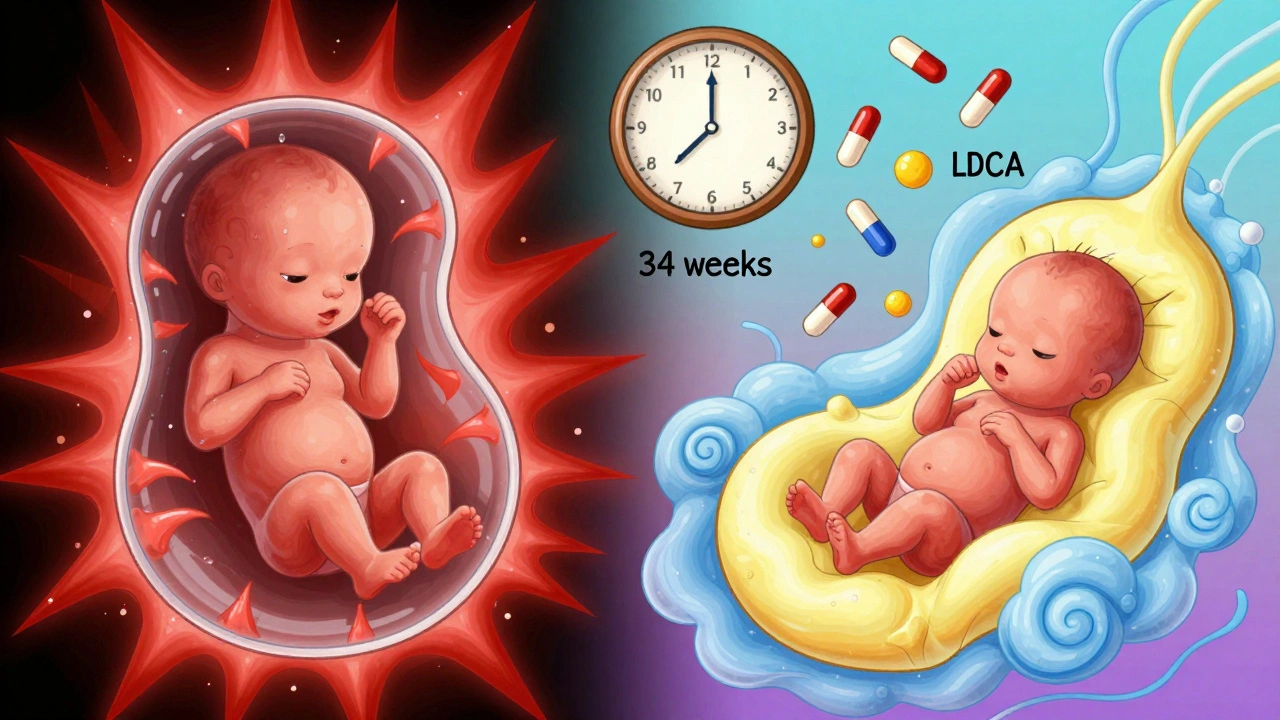
The real game-changer in treatment is monitoring. If your bile acids are above 40 µmol/L, you’ll likely be monitored twice a week with non-stress tests starting at 32 to 34 weeks. If levels hit 100 µmol/L or higher, delivery may be planned as early as 34 to 36 weeks. For mild cases, delivery at 37 to 38 weeks is often recommended. The goal isn’t to deliver early just because you can - it’s to deliver before the baby’s risk spikes.
What Happens After Delivery?
Good news: ICP disappears quickly after birth. In 95% of cases, bile acid levels return to normal within 1 to 3 days. The itching fades. Liver enzymes normalize. You can breathe again.
But here’s what most women don’t know: having ICP doesn’t just go away with the baby. Women who’ve had ICP are 3.2 times more likely to develop liver problems later in life - including gallstones, chronic hepatitis, and even hepatitis C. That’s why it’s important to mention your ICP history to your primary care doctor or hepatologist when you get routine blood work done in future years. Your liver might need extra attention down the road.
What’s New in ICP Care?
There’s real progress happening. In 2023, the FDA approved a new point-of-care test called CholCheck®. It gives results in 15 minutes instead of waiting 24 to 72 hours for lab results. It’s already in use in 65% of high-risk maternity hospitals in the U.S. That means faster diagnosis, faster treatment, and fewer babies at risk.
Researchers are also testing new drugs. Autotaxin inhibitors - which target the enzyme linked to bile acid buildup - are showing promise in early trials. One Phase II trial found a 68% drop in itching severity after just four weeks. These drugs could be the next step beyond UDCA.
But not everyone has access. Dr. Hiroshi Tanaka from Japan warns that in low-resource areas, doctors still have to guess based on symptoms alone. Without regular bile acid testing, they can’t tell if a woman’s condition is worsening. That’s when outcomes get worse - up to 40% more adverse events compared to places with monitoring.
What Should You Do If You’re Pregnant and Itching?
If you’re pregnant and your hands and feet are itching badly - especially at night - don’t wait. Don’t assume it’s just dry skin or a rash. Ask your provider for a bile acid test. If they say no, ask again. Bring up the research. Mention that ICP is linked to stillbirth risk and that early detection saves lives.
Also, get educated. Women who receive detailed information about ICP report 22% lower anxiety and 18% better adherence to treatment. Knowing what’s happening, why it matters, and what to expect reduces fear and helps you make smarter decisions.
And if you’ve had ICP before - or if it runs in your family - talk to your doctor early in your next pregnancy. You may want to start monitoring sooner, even before symptoms appear.
Final Thoughts
ICP is rare, but it’s not rare enough to ignore. It doesn’t show up on routine prenatal panels. It doesn’t cause obvious pain. But it can change the course of your pregnancy - and your baby’s life - in ways you won’t see coming. The tools to catch it and manage it are here. The question is: are you asking for them?
Don’t wait for the itching to get worse. Don’t wait for your doctor to bring it up. Be your own advocate. Ask for the bile acid test. Push for monitoring. Know your numbers. Because in ICP, timing isn’t just important - it’s everything.
Ruth Witte
December 8, 2025 AT 02:35Katherine Rodgers
December 8, 2025 AT 14:13Lauren Dare
December 10, 2025 AT 04:27Gilbert Lacasandile
December 10, 2025 AT 13:03Michael Robinson
December 11, 2025 AT 08:31Suzanne Johnston
December 12, 2025 AT 13:53Graham Abbas
December 12, 2025 AT 18:10Haley P Law
December 12, 2025 AT 23:32