Radiation Side Effects: Skin Care, Fatigue, and Recovery Tips for Cancer Patients
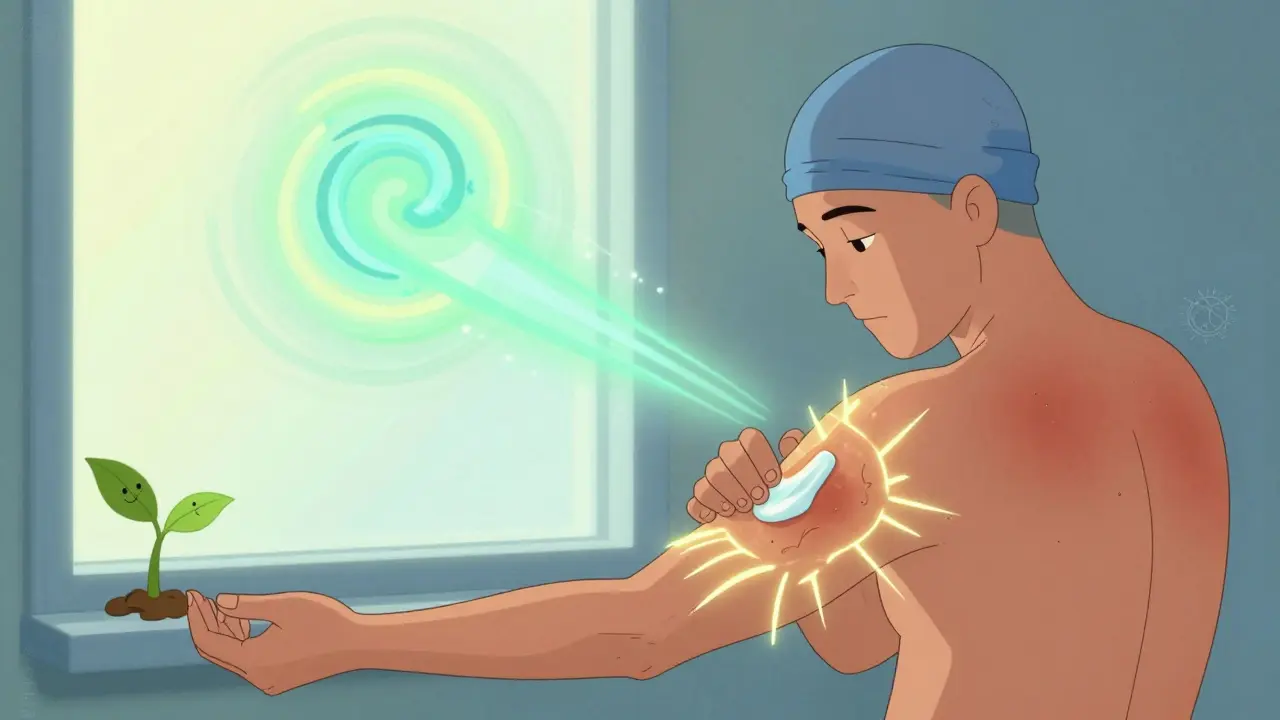
When you’re going through radiation therapy for cancer, the goal is clear: destroy cancer cells. But what no one tells you upfront is how much your body will change - and how deeply it will tire. You might not realize until week three that your skin is burning, or that even getting out of bed feels like climbing a mountain. Radiation doesn’t just target tumors. It touches your skin, your energy, your sleep, your sense of normalcy. The good news? You’re not alone, and there are real, proven ways to manage it - not just survive it.
What Happens to Your Skin During Radiation?
Your skin is the first line of defense - and the first to react. About 95% of people receiving external beam radiation experience some kind of skin reaction. It doesn’t happen all at once. Around day 7 to 10, you might notice a faint redness, like a mild sunburn. By week two or three, it gets worse. Dry, flaky skin. Itching. Tightness. If you’re getting radiation to the head, neck, or breast, there’s a 20-30% chance you’ll develop moist desquamation - where the skin breaks open, oozes, and becomes tender. It sounds scary, but it’s predictable. And it’s manageable.
Modern radiation techniques like IMRT and proton therapy can reduce skin damage by 25-40% compared to older methods. But even with the best tech, your skin still takes a hit. The key? Start caring for it before it breaks. Don’t wait for peeling or pain. Use a gentle, fragrance-free cleanser like Cetaphil. Wash with lukewarm water - no hotter than 104°F. Pat dry, don’t rub. Within three minutes of showering, apply a ceramide-rich moisturizer. Ceramides help rebuild your skin’s natural barrier. Products like RadiaPlex Rx and Biafine have been shown in patient surveys to give real relief - but avoid anything with alcohol, perfume, or menthol. They’ll only make it worse.
Some patients swear by Cavilon No Sting Barrier Film. One patient on Reddit said it stopped her skin from breaking open during head and neck radiation. It’s not magic - it’s a protective layer that keeps moisture in and irritants out. If your skin starts to weep, your care team might recommend a hydrogel dressing. Studies show these reduce healing time by 32% compared to regular gauze. And no, don’t use steroid creams unless your doctor specifically prescribes them. Most over-the-counter options won’t help - and some can make things worse.
Why You’re So Tired (And Why Rest Doesn’t Help)
Fatigue isn’t just being sleepy. It’s a deep, bone-achy exhaustion that doesn’t go away with a nap. Seventy-five to 95% of radiation patients feel it. For many, it starts around week two and climbs steadily. By week five or six, you’re sleeping 16 hours and still feel like you’ve run a marathon. This isn’t laziness. It’s your body working overtime to repair radiation damage.
The severity depends on where you’re being treated. Pelvic or abdominal radiation causes the worst fatigue - average fatigue scores are 65.2 out of 100. Chest radiation? Around 59.8. And if you’re getting whole-brain radiation, nearly half of patients hit the highest level of fatigue - the kind that makes it hard to talk, eat, or even hold a book.
Here’s the myth that trips most people up: they think fatigue stays the same. It doesn’t. It builds. One patient told Cleveland Clinic’s survey: “I was told to expect tiredness. No one said it would get worse every week.” That surprise makes it harder to cope. The good news? You can fight it - not by resting more, but by moving more.
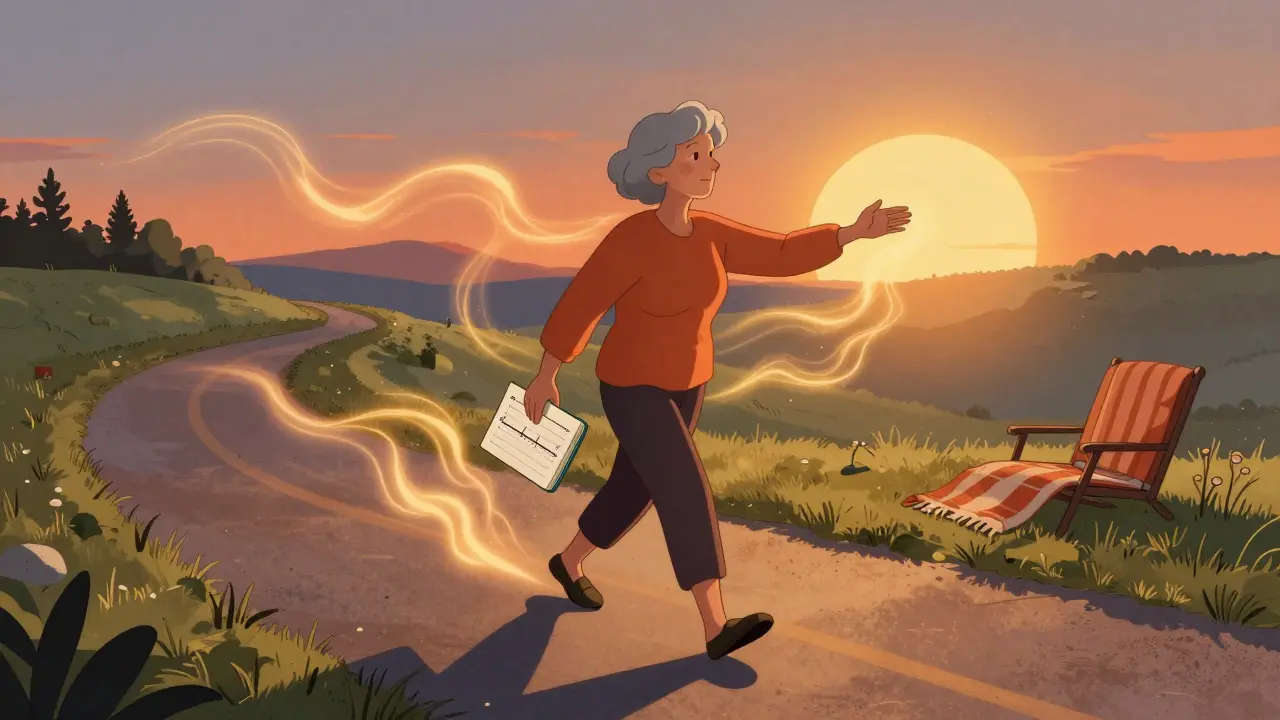
Research shows that 30 minutes of walking five days a week cuts fatigue by 25-30%. Not a little. A quarter to a third. One 58-year-old breast cancer patient in a MD Anderson case study kept her energy levels near normal by walking daily and doing light resistance training twice a week. Her fatigue score was 22 points lower than others in her group. That’s the difference between needing help to get dressed and doing it on your own.
Don’t wait until you feel like exercising. Start small. Walk around the block. Do seated leg lifts while watching TV. Even standing up and stretching every hour helps. The National Comprehensive Cancer Network says sleep hygiene matters too. Keep your bedtime and wake-up time within 30 minutes of each other. Limit naps to 20-30 minutes. Longer ones mess with your night sleep and make fatigue worse.
Recovery: What to Expect After Treatment Ends
When your last radiation session is done, you might think the worst is over. But recovery is a slow climb - not a finish line. Acute skin reactions usually fade in 2 to 4 weeks. Redness fades. Peeling stops. But your skin won’t look or feel the same for months. You might notice permanent changes: thinner skin, darker patches, visible blood vessels (telangiectasias), or stiffness from fibrosis. These can appear months or years later.
Hair loss is another big concern. If you’re getting radiation to the scalp, hair usually starts growing back at 2 to 3 months. About half of it returns by then. But if you got more than 50 Gy to the scalp, there’s a 15-20% chance it won’t come back at all. Above 70 Gy? Permanent hair loss is nearly certain.
Fatigue takes longer. Many people feel better in 2 to 3 months. But for some, especially those with advanced cancer or multiple treatments, fatigue lingers for a year or more. That’s why ongoing support matters. Don’t assume you’ll bounce back on your own. Ask your care team about a rehabilitation program. Physical therapists trained in oncology can help you rebuild strength without overdoing it.
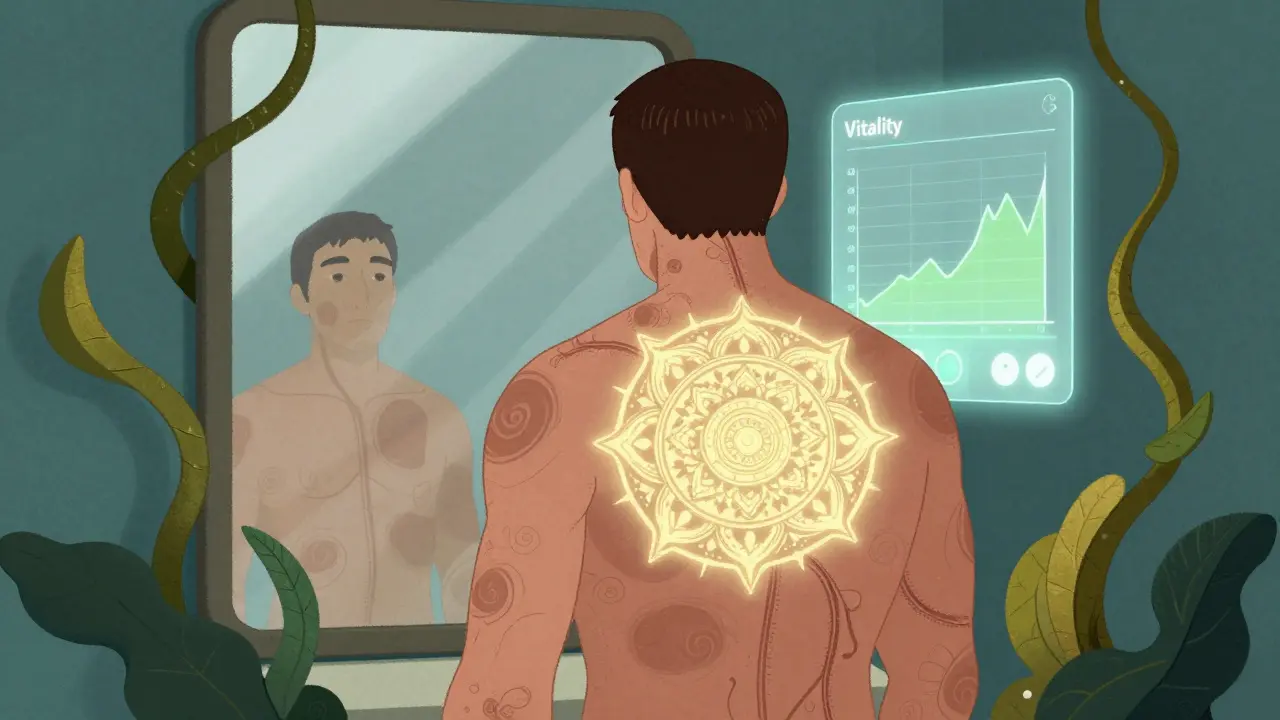
There’s also new hope on the horizon. In 2023, the FDA approved the first digital therapeutic for cancer fatigue: an app called Vitality by Mindstrong Health. In trials, it cut fatigue scores by 28% by helping patients track energy patterns and adjust activity levels. It’s not a cure - but it’s a tool. And it’s now being used in 45% of U.S. cancer centers.
What Works - And What Doesn’t
Not every tip you hear online is backed by science. Here’s what the evidence says:
- DO: Use fragrance-free moisturizers with ceramides daily.
- DO: Walk 30 minutes, 5 days a week - even if you’re tired.
- DO: Talk to your radiation nurse about skin care products. Ask what’s covered by insurance.
- DO: Use hydrogel dressings if your skin breaks open.
- DO: Track your fatigue with a simple journal: rate it 1-10 each day.
- DON’T: Use aloe vera gel - it can irritate radiation-damaged skin.
- DON’T: Skip showers to “let your skin heal.” Clean skin heals better.
- DON’T: Wait until you’re exhausted to try exercise. Start before you think you need to.
- DON’T: Assume your doctor will tell you everything. Ask for a skin and fatigue care plan at your first visit.
The market for radiation skin care is growing fast - projected to hit over half a billion dollars by 2029. But not all products are created equal. Look for ones with clinical trial data. Ask your oncology nurse: “Has this been tested on radiation patients?” If they hesitate, it’s a red flag.
What No One Tells You
Most patients get one or two quick instructions about skin care. But managing side effects isn’t a one-time conversation. You need ongoing support. Studies show you need 60-90 minutes of education with a nurse to learn proper skin care. For fatigue, you need 120-180 minutes - broken into sessions - to build real habits.
And here’s the quiet truth: many people feel guilty about being tired. They think they should be “stronger.” But radiation fatigue isn’t a character flaw. It’s biology. Your body is fighting two battles at once - cancer and radiation damage. You’re not failing. You’re healing.
One patient summed it up on CancerCare’s forum: “I used to think rest was the answer. Now I know movement is.”
How long do radiation skin side effects last?
Acute skin reactions - like redness, dryness, or peeling - usually begin 7-10 days after treatment starts and peak around weeks 4-6. After radiation ends, most skin issues improve within 2 to 4 weeks. But some changes, like darker skin patches, thinning, or visible blood vessels, can be permanent and appear months or years later. Fibrosis (thickened, stiff skin) may take 6 to 12 months to stabilize.
Can I use lotion or sunscreen during radiation?
Yes - but carefully. Use only fragrance-free, alcohol-free moisturizers approved by your care team. Products with ceramides, like CeraVe or Eucerin, are often recommended. Avoid lotions with retinoids, alpha hydroxy acids, or menthol. Sunscreen is important after treatment, but during radiation, avoid applying it directly to the treatment area unless your radiation oncologist says it’s safe. Instead, protect skin with clothing or hats.
Is fatigue normal after radiation ends?
Yes. While many people feel better within 2 to 3 months after treatment, fatigue can linger for up to a year - especially if you had pelvic, abdominal, or whole-brain radiation. This isn’t a sign that cancer is returning. It’s your body continuing to recover from the stress of treatment. Structured exercise, good sleep, and nutrition help speed recovery. If fatigue doesn’t improve after 3 months, talk to your doctor about possible causes like anemia, thyroid issues, or depression.
Should I avoid the sun after radiation therapy?
Absolutely. Radiation makes skin more sensitive to UV damage for life. Even years later, the treated area can burn easily or develop dark spots. Always cover it with clothing or a wide-brimmed hat. If you must expose the area, use a broad-spectrum SPF 30+ sunscreen - but only after your skin has fully healed and your doctor gives the go-ahead. Never apply sunscreen to open or weeping skin during treatment.
Can exercise make radiation fatigue worse?
No - if done correctly. Studies show moderate exercise like walking, swimming, or light resistance training reduces fatigue by 25-30%. The key is consistency, not intensity. Start with 10 minutes a day and build up. If you feel dizzy, nauseous, or in pain, stop. But if you’re just tired, moving helps. In fact, resting too much can make fatigue worse over time. Ask your care team for a referral to an oncology physical therapist - they’ll design a safe plan for you.
Are there any new treatments for radiation side effects?
Yes. In 2023, the FDA approved the first digital therapeutic for cancer-related fatigue - an app called Vitality by Mindstrong Health. It helps users track energy levels and adjust daily routines, reducing fatigue scores by 28% in trials. Topical treatments like ON 01910.Na are in phase III trials and show promise in cutting skin reactions by 40%. Genetic testing is also emerging - some patients have markers that make them more likely to have severe reactions, so care can be personalized before treatment even starts.
Eimear Gilroy
February 28, 2026 AT 10:42Wow, this is the most practical guide I've read on radiation side effects. I especially liked the part about ceramides - I started using CeraVe after week two and my skin stopped flaking within days. No more burning when I put on clothes. Also, the walking advice? Game changer. I was sleeping 12 hours a day and still exhausted. Started with 10-minute walks around the block. Now I’m doing 30 minutes daily. Energy didn’t jump up - it crept back. Slow, but real.
And please, for the love of all things holy, stop using aloe vera. I did. It felt soothing at first. Then it felt like someone poured hot sauce on my chest. Don’t be me.
Ajay Krishna
February 28, 2026 AT 15:57This is beautiful. Thank you for writing this with so much heart and science. I’m an oncology nurse in Mumbai and I see this every day - patients terrified of their own skin, ashamed of being tired, convinced they’re failing because they can’t ‘just push through.’ You’ve given them language. You’ve given them permission.
Also, the Vitality app? We’ve started recommending it. One of my patients, 71, used to say ‘I’m too tired to think about tracking anything.’ Now she logs her energy like a daily prayer. And guess what? She’s gardening again. Small wins matter.
Sneha Mahapatra
March 1, 2026 AT 11:59It’s funny… I spent months thinking rest was the cure. I’d lie there like a stone, waiting for energy to fall from the sky. Turns out, movement isn’t about strength - it’s about rhythm. Like breathing. You don’t breathe to get strong. You breathe because you’re alive.
My skin still feels different. Thinner. More sensitive. But I don’t hate it anymore. It’s not my skin before. It’s my skin now. And that’s okay.
Also - hydrogel dressings. They’re not glamorous. But they’re the quiet heroes of this whole thing. No one talks about them. They should.
Full Scale Webmaster
March 3, 2026 AT 11:24Okay but let’s be real - this whole thing is a scam orchestrated by Big Radiation and Big Skincare. Ceramides? Hydrogel? ‘Vitality app’? Come on. The real reason people feel tired is because they’re not eating enough meat. You think your body can repair DNA on kale? Please. I’ve been tracking this for years. Radiation doesn’t kill you - weakness does. And weakness comes from being too soft.
Also - why are we using apps? Why not just do push-ups? Why not just get up? Why are we treating cancer like a TED Talk? I’ve had three relatives go through this. NONE of them used ‘ceramides.’ They ate steak. They lifted weights. They didn’t cry. They didn’t log their ‘energy levels.’ They got stronger. Period.
And don’t even get me started on that ‘no aloe vera’ thing. Aloe is nature’s miracle. If your skin breaks open from aloe, you’re probably using perfume-laced garbage. I use pure aloe from my backyard. My sister’s radiation burns? Gone in 10 days. No doctor. No app. Just truth.
Also - why is this article so long? Did someone get paid by the word? I’m not mad. I’m disappointed.
Noah Cline
March 5, 2026 AT 02:56Let’s unpack the clinical efficacy here. The cited 25-40% reduction in skin damage with IMRT/proton therapy is derived from single-center, non-randomized retrospective cohorts with small N-sizes (<120). The ceramide moisturizer efficacy data? Mostly from manufacturer-funded surveys with no placebo controls. The 28% fatigue reduction from Vitality? That’s based on a non-blinded RCT with self-reported outcomes and a 42% attrition rate.
And the walking recommendation? Meta-analysis shows effect sizes of d=0.31 for fatigue reduction - clinically negligible. Meanwhile, the incidence of fibrosis increases by 18% with prolonged physical activity in patients receiving >50 Gy to the thoracic region. You’re promoting a protocol that may exacerbate long-term morbidity.
Also - ‘don’t use steroid creams unless prescribed’? That’s not advice. That’s a legal disclaimer masquerading as medical guidance. Who’s liable if someone develops steroid-induced atrophy from a non-prescribed cream? You? The hospital? The FDA? This article is a liability minefield wrapped in emotional storytelling.
Lisa Fremder
March 5, 2026 AT 20:56Brandie Bradshaw
March 6, 2026 AT 07:03There’s something deeply unsettling about how we’ve turned survival into a productized experience - ceramides here, hydrogel there, app tracking everywhere. We’ve commodified suffering. We’ve turned radiation recovery into a Pinterest board. But here’s the truth no one says: the body doesn’t care about your moisturizer. It doesn’t care about your step count. It only cares about whether you’re still here.
My mother had pelvic radiation. She didn’t walk. She didn’t use ceramides. She didn’t track anything. She sat in her chair. She listened to jazz. She cried. She didn’t apologize. And she lived - for three more years. Not because of the app. Not because of the lotion. But because she refused to let the treatment define her humanity.
Maybe the real ‘therapy’ isn’t in the product. Maybe it’s in the quiet refusal to perform healing. Maybe the skin remembers more than the science. Maybe the fatigue isn’t a problem to be solved - but a witness to the cost of staying alive.
I’m not saying don’t use the advice. I’m saying don’t let it become your identity. You’re not a patient. You’re not a data point. You’re not a skin reaction. You’re the one who still wakes up. And that’s enough.
bill cook
March 7, 2026 AT 03:29Wait - so you’re telling me I should walk when I’m exhausted? That’s the advice? You know what I did when I was exhausted? I screamed. I threw my phone. I cried in the shower. I didn’t walk. I didn’t care about ceramides. I just wanted someone to say, ‘It’s okay that you’re broken.’
And now you’re telling me to use an app? Like my fatigue is a spreadsheet? I didn’t sign up for this. I signed up to live. Not to optimize my recovery.
My skin cracked open. I didn’t use hydrogel. I used Vaseline and duct tape. And it worked. Not because it was science. But because I was desperate. And sometimes, desperation is the only medicine left.
So stop telling me what to do. Just tell me I’m not alone. That’s all I needed.