SGLT2 Inhibitors and Fournier’s Gangrene: What You Need to Know Now

Fournier's Gangrene Survival Calculator
How Time Affects Survival
Fournier's gangrene is a life-threatening infection that requires immediate medical attention. For every hour treatment is delayed, the chance of dying increases by about 9%. The calculator below shows how survival chances decrease over time.
Your Survival Probability
With prompt treatment, survival rate is high. However, every hour counts.
Key Warning Signs
- Severe, unexplained pain or tenderness in the genitals, scrotum, or around the anus
- Redness, swelling, or warmth in the area—often worse than a typical rash or infection
- Skin that looks bruised, purple, or blackening
- Fever, chills, or feeling generally awful—like the flu but localized
- Foul-smelling discharge from the area
- A crackling feeling under the skin (crepitus)
These signs don't always appear together. If you experience any of these symptoms while taking an SGLT2 inhibitor, seek medical help immediately.
When you’re managing type 2 diabetes, taking a medication like SGLT2 inhibitors are a class of diabetes medications that lower blood sugar by causing the kidneys to remove excess glucose through urine can feel like a win. Drugs like canagliflozin, dapagliflozin, empagliflozin, and ertugliflozin don’t just help control blood sugar-they’ve been shown to protect your heart and kidneys. But there’s a rare, serious side effect you need to know about: Fournier’s gangrene. It’s not common. But when it happens, it moves fast. And if you don’t act, it can be deadly.
What Is Fournier’s Gangrene?
Fournier’s gangrene is a type of necrotizing fasciitis-a bacterial infection that kills soft tissue. It doesn’t affect your arm or leg. It hits the genital area, perineum, or around the anus. The bacteria eat through skin, fat, and muscle. It’s not a slow infection. Symptoms can go from mild discomfort to life-threatening in under 24 hours.
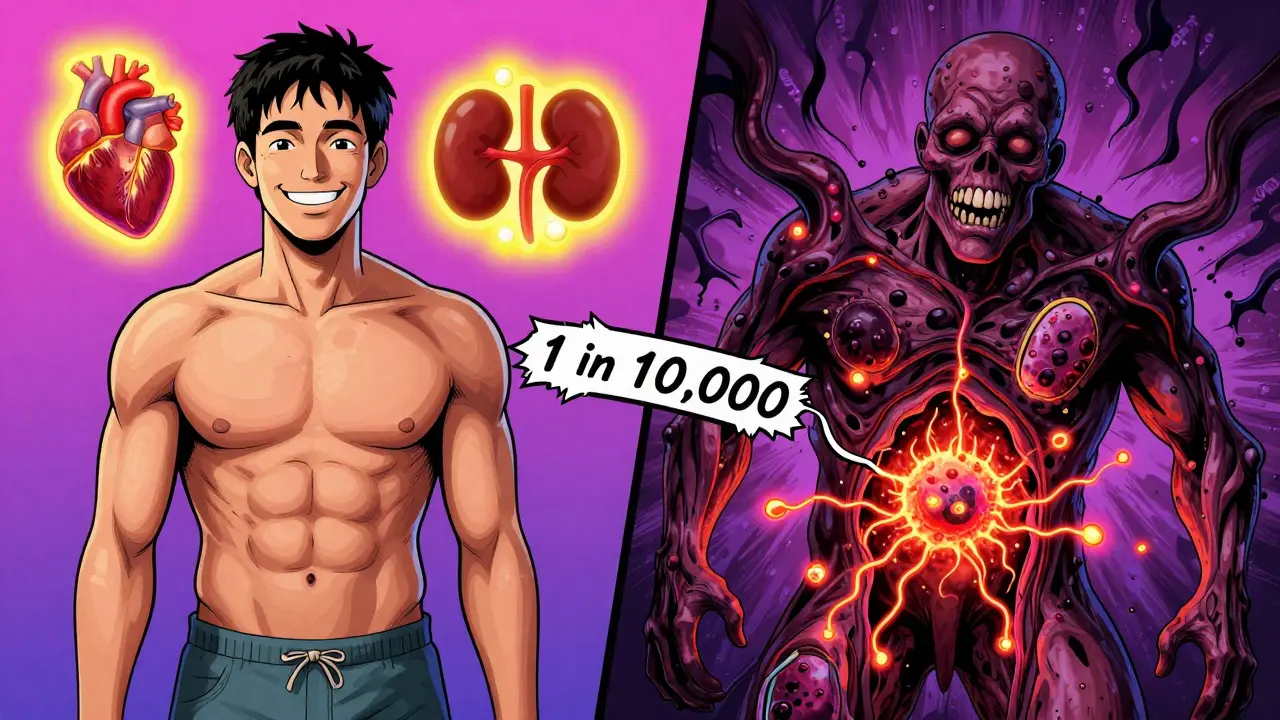
It’s rare. In the general population, you’d expect maybe 1.6 cases per 100,000 men each year. But for people taking SGLT2 inhibitors, the risk jumps. Studies show about 1 extra case per 10,000 patients over a few years. That sounds small. But when you’re the one affected, it’s everything.
Why Do SGLT2 Inhibitors Increase the Risk?
SGLT2 inhibitors work by making your kidneys dump glucose into your urine. That’s how they lower blood sugar. But that glucose doesn’t just disappear. It stays in your urinary tract. Bacteria love sugar. And when they get access to a warm, moist, sugary environment-like the area around your genitals-they multiply fast.
It’s not just the sugar, though. The glucose in urine changes the local pH and creates osmotic stress. That weakens the skin’s natural barrier. Even small cuts, shaving nicks, or minor infections like yeast or urinary tract infections can turn into gateways for dangerous bacteria. Some research also suggests these drugs might slightly dampen local immune responses, though that’s still being studied.
Most cases happen in people with poorly controlled diabetes. High blood sugar weakens your whole immune system. Add SGLT2 inhibitors on top, and you’ve got a perfect storm.
Early Warning Signs You Can’t Ignore
Time is everything with Fournier’s gangrene. If you wait, you lose. Here’s what to look for:
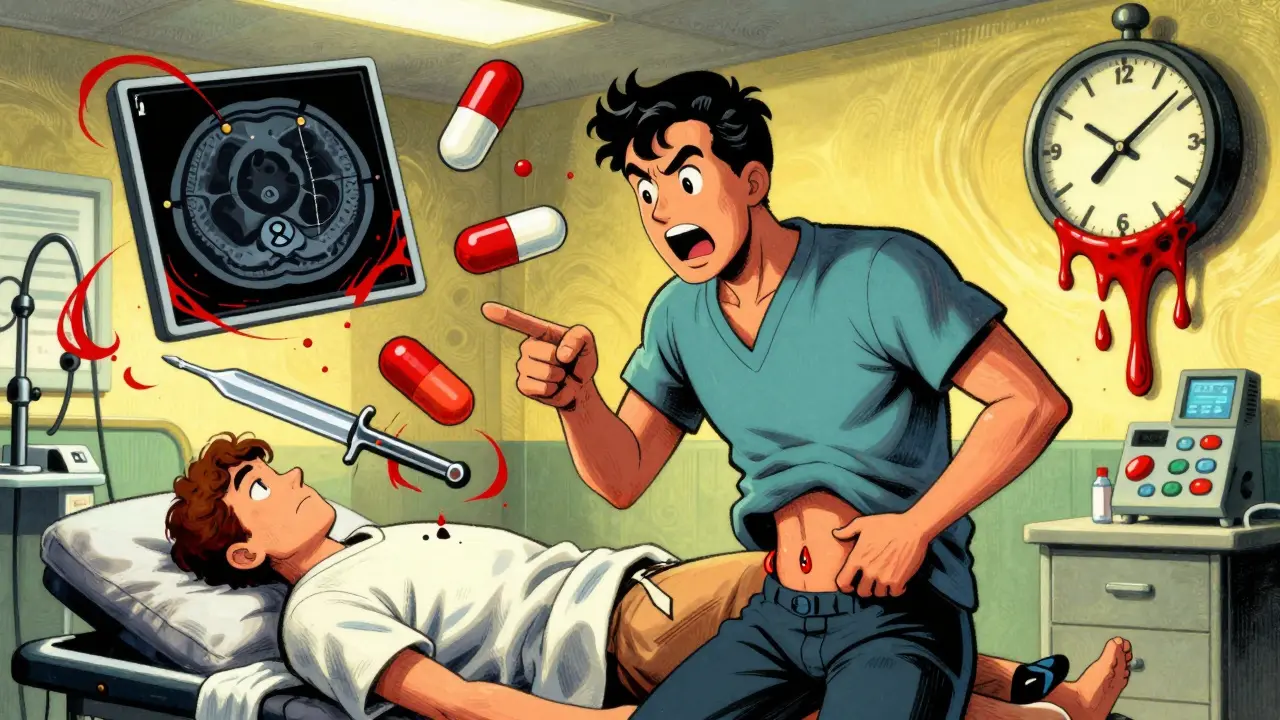
- Severe, unexplained pain or tenderness in the genitals, scrotum, or around the anus
- Redness, swelling, or warmth in the area-often worse than a typical rash or infection
- Skin that looks bruised, purple, or blackening
- Fever, chills, or feeling generally awful-like the flu but localized
- Foul-smelling discharge from the area
- A crackling feeling under the skin (called crepitus), caused by gas from bacteria
These signs don’t always show up together. One person might have intense pain and fever. Another might only notice swelling and redness. Don’t wait for all the symptoms. If something feels wrong-especially if you’re on an SGLT2 inhibitor-get help now.
Who’s at Higher Risk?
While Fournier’s gangrene is more common in men, about one-third of reported cases in Europe involved women. So this isn’t just a male issue.
You’re at higher risk if you:
- Have HbA1c above 9%-poorly controlled diabetes
- Have had genital yeast infections or urinary tract infections before
- Have a weakened immune system from other conditions or medications
- Have obesity, especially with folds of skin around the groin
- Are over 65
- Have poor hygiene or limited mobility
It’s not about blame. It’s about awareness. If you fit even one of these, talk to your doctor. Don’t stop your medication without advice-but do ask if you need extra monitoring.
What to Do If You Suspect Fournier’s Gangrene
There’s no time for hesitation. Here’s your action plan:
- Stop taking your SGLT2 inhibitor immediately.
- Call 999 or go to the nearest emergency department. Say clearly: “I’m on an SGLT2 inhibitor and I think I have Fournier’s gangrene.”
- Do not wait for a GP appointment. Do not try home remedies. Do not delay.
- Once at the hospital, you’ll need blood tests, imaging (like a CT scan), and likely surgery.
- Antibiotics will be started right away-usually broad-spectrum ones like piperacillin-tazobactam or carbapenems.
- Surgical debridement (removing dead tissue) is almost always required. Sometimes multiple surgeries are needed.
Every hour matters. Studies show that for every hour treatment is delayed, the chance of dying increases by about 9%. If you get treated within 24 hours, survival rates jump significantly. After 48 hours, the risk of death climbs above 50%.
Regulatory Warnings and What They Mean
The FDA added a boxed warning-the strongest type-to all SGLT2 inhibitors in August 2018. The European Medicines Agency and the UK’s MHRA followed. These aren’t footnotes. They’re red flags.
By 2019, the UK’s Yellow Card system had recorded 6 cases linked to these drugs: 4 in men, 2 in women. That’s not a lot, but each case was life-threatening. Since then, more cases have been reported globally. The risk hasn’t disappeared. It’s just better understood.
Doctors are now trained to warn patients about this when they start the medication. If yours didn’t, ask. You have a right to know.
Should You Stop Taking Your SGLT2 Inhibitor?
No-not unless your doctor tells you to.
These drugs do more than lower blood sugar. They cut your risk of heart failure hospitalization by up to 30%. They slow kidney disease progression in people with diabetes. For many, they’re life-saving.
The key is balance. If you’re doing well on your SGLT2 inhibitor, your blood sugar is under control, and you haven’t had recurrent infections, the benefits still outweigh the risk. The absolute risk of Fournier’s gangrene is still less than 2 in 100,000 patient-years.
But if you’ve had multiple genital infections, your HbA1c is consistently high, or you’re worried, talk to your doctor. There are other effective diabetes medications-like GLP-1 agonists or metformin-that don’t carry this risk.
What’s Being Done to Prevent More Cases?
Health agencies are still watching. The FDA’s FAERS system and the EU’s EudraVigilance database collect every reported case. Researchers are working on risk models that could predict who’s most vulnerable-based on HbA1c, infection history, BMI, and other factors.
Some hospitals are now including specific checklists for SGLT2 inhibitor users during routine visits: “Any genital pain? Any recent infections? Any skin changes?”
And patients are being told: “If it hurts, if it swells, if you feel wrong-don’t wait. Go to the ER.”
Bottom Line: Stay Informed, Stay Alert
SGLT2 inhibitors are powerful tools. But they come with a rare, dangerous side effect. The good news? You can protect yourself.
Know the signs. Act fast. Don’t wait for someone else to tell you something’s wrong. If you’re on one of these drugs, keep an eye on your groin area. If you notice anything unusual-pain, swelling, redness, fever-get help immediately. Your life could depend on it.
For most people, the benefits of SGLT2 inhibitors still far outweigh the risks. But awareness isn’t optional. It’s essential.
Nilesh Khedekar
January 15, 2026 AT 05:42So let me get this straight-you’re telling me I can’t even pee in peace without some bacteria throwing a rave in my groin??
And the drug company just shrugs and says, ‘Hey, it’s 1 in 10k!’
Meanwhile, my cousin’s uncle’s neighbor died from this… and his doctor never mentioned it.
What’s next? ‘Oh, by the way, your blood pressure med might turn your toes into raisins.’
Why is this even a thing? Why isn’t this on the box like ‘WARNING: MAY CAUSE DEATH IF YOU’RE A HUMAN’?
They’re selling this like it’s a magic potion, but the fine print is written in invisible ink.
And don’t get me started on how they market it to seniors who can’t even reach their own feet.
I’m not mad-I’m just disappointed.
And yes, I’m on one of these. And now I’m checking my junk every morning like it’s a crime scene.
Thanks, Big Pharma. You win.
Jami Reynolds
January 15, 2026 AT 10:00Let me ask you this: have you ever considered that this isn’t just a side effect-it’s a deliberate strategy to drive up surgical revenue? The pharmaceutical-industrial complex thrives on chronic crisis.
Fournier’s gangrene is not rare-it’s underreported because hospitals don’t want to admit they missed early signs.
And the glucose in urine? That’s not the real culprit. It’s the glyphosate residue from your processed food, combined with EMF exposure from your phone, weakening your mucosal barrier.
The FDA’s warning? A distraction. A smokescreen.
They don’t want you to know that the real solution is alkaline water, infrared saunas, and stopping all synthetic medications.
Ask yourself: who profits when you need emergency surgery?
It’s not the patient. It’s not the doctor.
It’s the system.
Nat Young
January 16, 2026 AT 09:031 in 10,000? That’s not rare. That’s statistically significant. And you’re telling me people are dying from this and we’re still prescribing it like it’s Advil?
Let’s do the math: 5 million Americans on SGLT2 inhibitors. Even at 0.01%, that’s 500 cases a year.
How many of those are misdiagnosed as UTIs or yeast infections first?
How many patients are sent home with antibiotics when they needed a scalpel?
The real problem isn’t the drug-it’s the healthcare system’s refusal to treat this like the emergency it is.
Doctors don’t get trained in necrotizing fasciitis. They get trained in billing codes.
And patients? They’re told to ‘monitor symptoms’ like this is a cold.
It’s not a risk. It’s a ticking time bomb with a prescription label.
Niki Van den Bossche
January 17, 2026 AT 04:43There’s a metaphysical layer here, don’t you think?
SGLT2 inhibitors-these beautiful, elegant molecules-do their job with poetic precision: they coax glucose from the blood, like a gentle river carrying away the excess.
But the body… the body remembers.
The genital region, that sacred, vulnerable temple of intimacy and identity, becomes a sacrificial altar to metabolic convenience.
Is this not the ultimate irony? We seek to transcend the body’s limitations-only to invite its most grotesque rebellion.
The bacteria? They’re not villains. They’re messengers.
They’re whispering: ‘You have forgotten the sacredness of your own flesh.’
And when the skin blackens, when the gas crepitates beneath your fingers… it’s not just infection.
It’s karma.
Jan Hess
January 18, 2026 AT 19:03Man I’m glad I read this
I’ve been on dapagliflozin for a year and never knew any of this
My wife and I just had a talk about checking in with each other if something feels off
Not scared just informed
And honestly if this saves my kidneys and heart I’ll take the risk
But now I know what to watch for
Thanks for the heads up
Haley Graves
January 19, 2026 AT 10:30If you’re on an SGLT2 inhibitor and you’re not having regular check-ins with your doctor about genital health, you’re playing Russian roulette with your anatomy.
Stop waiting for symptoms.
Ask your provider: ‘Do I need a baseline skin check?’
Do you have a plan if this happens?
Have you told your partner what to look for?
This isn’t about fear. It’s about responsibility.
You don’t have to stop the medication.
You just have to stop being passive.
Knowledge is power. Action is survival.
Dan Mack
January 20, 2026 AT 03:54They’re lying to you
This isn’t about diabetes
This is about population control
Big Pharma and the CDC are working together to thin out the fat, the old, the diabetic
They don’t care if you live
They care if you pay for the surgery
They want you scared
So you’ll keep taking the pills
And when you die
They’ll say it was your fault
Sarah Mailloux
January 20, 2026 AT 06:23Just want to say I’m a nurse and I’ve seen this in the ER
One guy came in with redness and thought it was a yeast infection
By the time he got to us his scrotum was black
He lost everything
But he lived because his wife pushed him to go
Don’t wait for the fever
Don’t wait for the smell
Don’t wait for the pain to be ‘bad enough’
If you feel wrong-go
It’s not dramatic
It’s just true
Amy Ehinger
January 22, 2026 AT 00:45I’ve been on empagliflozin for 3 years and I’ve had zero issues
My HbA1c is 5.8 and I’ve lost 40 pounds
I don’t have any yeast infections or UTIs
I shower daily and keep things dry
I think this is one of those things that only happens when you’re already at risk
Like, yeah it’s scary
But if you’re doing everything right
and you’re not overweight
and your blood sugar is stable
then you’re probably fine
Just stay aware
Not paranoid
Just aware
RUTH DE OLIVEIRA ALVES
January 22, 2026 AT 05:14It is imperative to underscore that the pharmacovigilance data pertaining to SGLT2 inhibitors and necrotizing fasciitis remains robustly documented within international adverse event reporting systems, including FAERS and EudraVigilance.
Furthermore, the regulatory actions undertaken by the FDA, EMA, and MHRA reflect a proportionate response grounded in epidemiological evidence.
It is not prudent to conflate statistical risk with clinical inevitability.
Patients must be educated, not alarmed.
Physicians must counsel, not caution.
The benefit-risk profile remains favorable for the vast majority of appropriately selected individuals.
Any deviation from this evidence-based paradigm risks precipitating unnecessary therapeutic discontinuation, thereby increasing the likelihood of cardiovascular and renal morbidity.
Prudence, not panic, must guide clinical decision-making.
Diane Hendriks
January 22, 2026 AT 23:36Why do Americans always act like they’re the only ones with diabetes?
In India, we’ve been using metformin for decades
No one’s dropping dead from gangrene
Because we don’t rely on fancy pills
We eat less sugar
We walk more
We don’t let corporations decide our health
Stop blaming the drug
Blame the American diet
Blame the laziness
Blame the fact that you’d rather take a pill than change your life
ellen adamina
January 24, 2026 AT 03:41So if I’m on one of these and I get a small cut from shaving
Should I be worried?
What if I just keep the area clean and dry?
Is that enough?
I don’t want to panic but I don’t want to ignore it either
Anyone else feel like this?
Crystel Ann
January 25, 2026 AT 01:34My dad’s on canagliflozin
He’s 72, has heart failure, and his kidneys are holding up
He didn’t know about this risk
But now he checks his groin every night before bed
He says it’s weird but he’d rather be weird than dead
I told him I’d do the same if I ever needed it
Thanks for writing this
It saved us from ignorance