What Are Authorized Generics? Complete Explanation
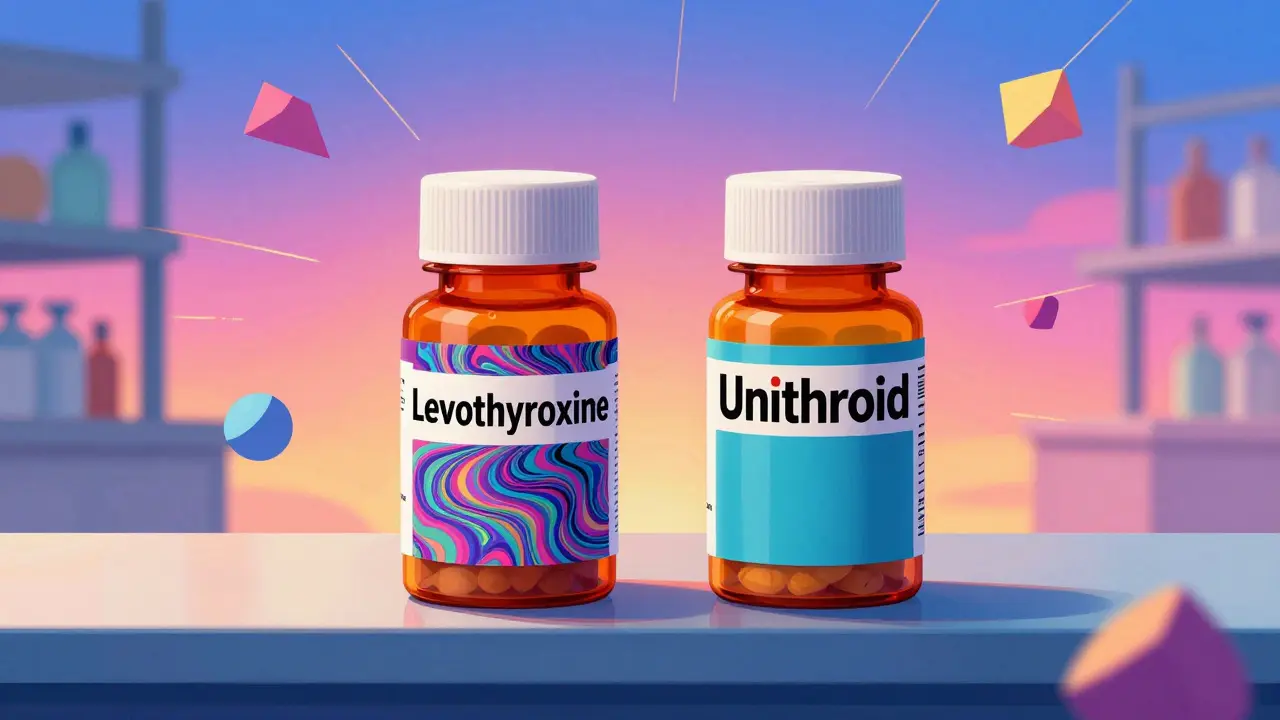
When you pick up a prescription, you might see a pill that looks exactly like your brand-name medication-but without the brand name on it. That’s an authorized generic. It’s not a copy. It’s not a knockoff. It’s the exact same drug, made by the same company, in the same factory, with the same ingredients. The only difference? No brand name on the label.
What Exactly Is an Authorized Generic?
An authorized generic is a brand-name drug that’s sold without the brand name on the packaging. The U.S. Food and Drug Administration (FDA) defines it clearly: it’s identical to the brand-name version in every way-active ingredient, dosage, strength, shape, color, and even inactive ingredients like fillers and dyes. The only change is the label. No marketing. No logo. Just the drug itself.
This isn’t a traditional generic. Traditional generics must go through the Abbreviated New Drug Application (ANDA) process. They prove they’re bioequivalent to the brand. But authorized generics don’t need that. They’re already approved under the original brand’s New Drug Application (NDA). All the manufacturer has to do is notify the FDA they’re selling it without the brand name.
Think of it like this: If the brand-name drug is a car made by Toyota, the traditional generic is a similar car made by a different company using slightly different parts. The authorized generic? It’s the exact same Toyota, pulled off the same assembly line, but sold under a plain white label.
How Are Authorized Generics Made?
There are two ways authorized generics get to market.
The first is when the brand-name company makes it themselves. They run the same production line, same quality checks, same packaging-but remove the brand name and sell it under a different label. Companies like Pfizer, AbbVie, and Johnson & Johnson have done this with drugs like Lipitor, Humira, and Celebrex.
The second way is through licensing. The brand-name company gives the formula and manufacturing rights to another company-often a subsidiary or partner-to produce and sell the drug as an authorized generic. For example, Prasco Laboratories sells an authorized generic of Colcrys (colchicine), and Greenstone Pharmaceuticals sells one for Celebrex (celecoxib).
In both cases, the pill you get is chemically and physically identical to the brand. No shortcuts. No compromises. Same factory. Same batch standards. Same quality control.
Why Do Companies Make Authorized Generics?
It’s not charity. It’s strategy.
When a brand-name drug’s patent expires, other companies can launch traditional generics. That usually causes the price to drop fast. But if the original manufacturer also launches an authorized generic, they can capture part of that market before the competition gets too big.
Research from Health Affairs in 2022 showed that between 2010 and 2019, there were 854 authorized generic launches. In 75% of cases where traditional generics were already on the market, the brand company launched its authorized version after the competition started. Why? To grab shelf space, pharmacy contracts, and patient loyalty before the cheaper generics take over.
It’s a way for big pharma to stay relevant without fighting a price war. They keep their name out of it, but they still control the supply. And because they’re the original maker, they can guarantee consistency-something some patients prefer.
How Are Authorized Generics Different From Traditional Generics?
Here’s the key difference: ingredients.
Traditional generics only need to match the brand’s active ingredient. They can use different fillers, dyes, or coatings. That’s why you might see a blue pill one month and a white one the next-even if it’s the same drug. Sometimes those differences cause minor side effects or reactions in sensitive patients.
Authorized generics don’t have that issue. They use the exact same inactive ingredients as the brand. So if your body reacts poorly to the dye in a generic version of your blood pressure pill, the authorized generic might be the only version that works for you.
Another big difference? FDA listing. Traditional generics appear in the Orange Book, the official list of approved generic drugs. Authorized generics? They’re not listed there. You won’t find them in most pharmacy databases unless you specifically ask for them.
And pricing? Authorized generics usually cost less than the brand-but often more than traditional generics, especially once multiple generic makers enter the market. In some cases, they’re 15-25% cheaper than the brand, but still 10-20% more than the cheapest generic.

Why Don’t Patients Know About Them?
Because pharmacists often don’t tell them.
When a prescription is filled, the pharmacy usually picks the lowest-cost option. If an authorized generic is available and cheaper than the brand, it might be dispensed automatically-without the patient knowing it’s not the brand they asked for.
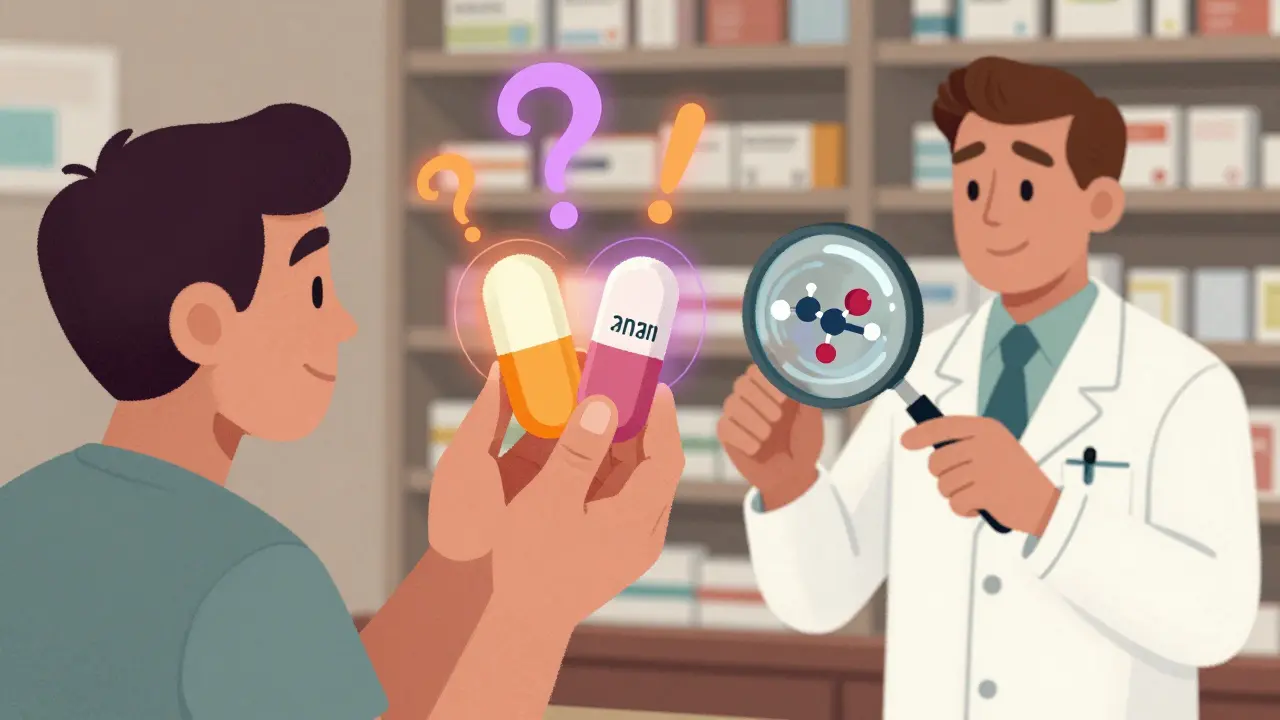
Patients sometimes notice the pill looks different. Same size. Same color. Same imprint. But no brand name. That’s confusing. Some think it’s a mistake. Others worry it’s fake. Pharmacists have to explain: “This is the exact same medicine, just sold without the brand name.”
It’s a communication gap. Most patients aren’t trained to recognize authorized generics. And since they’re not listed in the Orange Book, many electronic prescribing systems don’t flag them as options.
What Are Some Examples?
Here are real-world cases you might encounter:
- Colcrys (brand) → Colchicine (authorized generic by Prasco)
- Concerta (brand) → Methylphenidate ER (authorized generic by Watson/Actavis)
- Celebrex (brand) → Celecoxib (authorized generic by Greenstone)
- Unithroid (brand) → Levothyroxine (authorized generic by Jerome Stevens)
These aren’t hypotheticals. They’re drugs millions of people take every day. If you’re on one of these, you might already be taking an authorized generic without realizing it.
Are Authorized Generics Safe?
Yes. Absolutely.
The FDA says they’re identical to the brand. No testing needed beyond notification because they’re not a new product-they’re the same product, just relabeled.
For patients with allergies to certain dyes or fillers, authorized generics can be the only safe option. For example, if you’re allergic to FD&C Red No. 40, and the generic version of your antidepressant uses it, the authorized generic might use a different dye-or none at all-because it matches the brand’s formula.
There’s no evidence that authorized generics are less effective or less safe. In fact, because they come from the same manufacturer and production line, they’re often more consistent than traditional generics.
How Do You Know If You’re Getting One?
Check the label. If it says the drug name but no brand name, it might be an authorized generic.
Ask your pharmacist. Say: “Is this an authorized generic?” They can check the packaging or their system. Some pharmacies even label them as “Authorized Generic” on the bottle.
Look up the drug on the FDA’s List of Authorized Generic Drugs. The FDA updates this list periodically (most recent as of October 10, 2025). It’s not easy to find, but it’s the only official source.
Don’t rely on the pill’s color or shape. Authorized generics often look identical to the brand. The only sure way is the label and the pharmacy’s records.
Should You Choose an Authorized Generic?
It depends.
If you’re price-sensitive and your insurance covers traditional generics, you might get a better deal with a regular generic. But if you’ve had issues with side effects from other generics-stomach upset, rash, or inconsistent effects-an authorized generic could be your best bet.
Some patients report better stability on authorized generics, especially for drugs like levothyroxine, where tiny differences in absorption can affect thyroid levels. In those cases, sticking with the same manufacturer’s version-even if it’s unlabeled-can mean fewer doctor visits and fewer dosage tweaks.
Talk to your doctor. Ask if an authorized generic is right for you. Especially if you’re on a medication where consistency matters: seizure drugs, blood thinners, thyroid meds, or psychiatric medications.
What’s the Future of Authorized Generics?
They’re not going away.
As more brand-name drugs lose patent protection, manufacturers will keep using authorized generics as a tool to hold onto market share. They’re a legal, FDA-approved way to compete without lowering prices to the floor.
Some critics argue they slow down true generic competition. If the brand company launches an authorized generic right when the first traditional generic enters, it can cut off the 180-day exclusivity window that’s meant to reward the first generic maker.
But for patients? They’re a real option. A safe one. And sometimes, the most reliable one.
The bottom line: Authorized generics aren’t a loophole. They’re a legitimate part of the drug market. They’re not always the cheapest. But they’re always the same as the brand. And in medicine, that matters.
Are authorized generics the same as brand-name drugs?
Yes. Authorized generics are identical to brand-name drugs in active and inactive ingredients, dosage, strength, and manufacturing process. The only difference is the label-no brand name, no logo. They come from the same factory and are held to the same quality standards.
Are authorized generics cheaper than brand-name drugs?
Yes, typically. Authorized generics usually cost 15-25% less than the brand-name version. However, they’re often more expensive than traditional generics, especially once multiple generic manufacturers enter the market and drive prices down further.
Why aren’t authorized generics listed in the FDA’s Orange Book?
Because they’re not approved under the Abbreviated New Drug Application (ANDA) process. Authorized generics are marketed under the original brand’s New Drug Application (NDA). Since they’re not a separate drug product, they don’t need to be listed in the Orange Book, which only includes drugs approved through ANDA.
Can I ask my pharmacist for an authorized generic?
Yes. You can ask your pharmacist if an authorized generic is available for your prescription. Some pharmacies stock them, and others may need to order them. It helps to know the drug name and brand name so they can check their inventory or contact their distributor.
Do authorized generics have the same side effects as the brand?
Yes. Since they’re made with the exact same ingredients and formulation, authorized generics have the same side effect profile as the brand-name drug. In fact, for patients who react to inactive ingredients in traditional generics, authorized generics may cause fewer side effects because they match the brand’s exact formula.
Why do brand-name companies make authorized generics?
To maintain market share after a patent expires. By launching their own generic version, they can capture patients and pharmacy contracts before cheaper traditional generics take over. It’s a business strategy-not a charity. But it still gives patients a lower-cost option that’s identical to the brand.
Are authorized generics safe for children or elderly patients?
Yes. Authorized generics are held to the same safety and quality standards as the brand-name drug. They’re approved by the FDA and manufactured under the same conditions. For elderly patients or children who need consistent dosing-especially with medications like thyroid hormones or seizure drugs-they can be a safer choice than traditional generics with different inactive ingredients.
Can I switch from a brand-name drug to an authorized generic?
Yes, and many patients do without any issues. Because the formulation is identical, switching doesn’t require dosage changes or monitoring. But if you’ve had problems with other generics in the past, an authorized generic may be the most reliable alternative. Always check with your doctor before switching, especially for critical medications.
Joanna Brancewicz
January 8, 2026 AT 17:09Authorized generics are a game-changer for patients on narrow-therapeutic-index drugs like levothyroxine or warfarin. Same exact formulation, no variability in fillers or dyes-critical for those with sensitivities. Pharmacies don’t always flag them, but they’re legally identical to the brand. Ask for it by name.
Kristina Felixita
January 8, 2026 AT 21:04OMG I just realized I’ve been on an authorized generic for my antidepressant for like 6 months??!! I thought the pill looked ‘off’ but same color, same size, just no name on it… my pharmacist never said a word. Now I feel like I was tricked?? But also… kinda glad I’m paying less?? 😅
Dave Old-Wolf
January 9, 2026 AT 08:50So if it’s the same drug, why isn’t it always the cheapest option? I thought generics were supposed to be the bargain. If the brand makes it, why don’t they drop the price more? Feels like they’re playing both sides.
Prakash Sharma
January 10, 2026 AT 03:20USA is so lazy. Why do you need an ‘authorized’ anything? In India, generics are made by thousands of factories and they work fine. This over-regulation and branding nonsense is why your healthcare costs so much. Just let the market decide.
Manish Kumar
January 11, 2026 AT 16:29Think about it: the authorized generic is the original soul of the drug, stripped of its capitalist skin. The brand name was never the medicine-it was the illusion, the marketing halo, the placebo effect wrapped in patent law. The authorized generic? It’s truth in a pill. No ego. No logo. Just chemistry. And isn’t that what medicine was meant to be? Not a brand, but a cure?
Donny Airlangga
January 11, 2026 AT 18:03I’ve switched to authorized generics for my blood pressure med and my levels are way more stable. My doctor didn’t even mention it, but my pharmacist did. Honestly, if you’ve had weird side effects from other generics, this might be your answer.
Molly Silvernale
January 11, 2026 AT 21:26It’s like finding out your favorite song was always the same-just played on a different radio station. The brand was the flashy billboard. The authorized generic? The pure, uncut melody. No ads. No hype. Just the truth vibrating through your veins. And somehow… that’s more beautiful.
Ken Porter
January 13, 2026 AT 18:07Authorized generics? More like authorized corporate loopholes. Big Pharma lets you think you’re saving money, but they’re still controlling the supply. They don’t want real competition-they want you to think you have a choice.
swati Thounaojam
January 15, 2026 AT 11:03My mom takes levothyroxine and she’s had issues with generics before. We asked for the authorized one and she’s been stable for a year. No more dizzy spells. Just… quiet. Good. Thank you for explaining this.
Annette Robinson
January 16, 2026 AT 20:53Thank you for writing this. I’ve been telling my patients for years to ask for the authorized generic if they’ve had reactions to other versions. So many don’t know it’s an option. This is the kind of info that saves people from unnecessary suffering.
Luke Crump
January 17, 2026 AT 10:39Wait-so the brand company makes the generic? That’s not capitalism. That’s fascism with a pill bottle. You’re not giving us choice-you’re giving us the illusion of choice while keeping your monopoly alive. This isn’t innovation. It’s manipulation.
Aubrey Mallory
January 18, 2026 AT 03:28If you’ve ever had a bad reaction to a generic, this is your lifeline. Authorized generics aren’t just ‘safe’-they’re the only version that doesn’t feel like a gamble. Especially for thyroid, seizure meds, or mental health. Don’t settle for ‘close enough.’ Demand the real thing-even if it’s unlabeled.