Cholinergic Urticaria: How Heat-Induced Hives Work and How to Stop Them
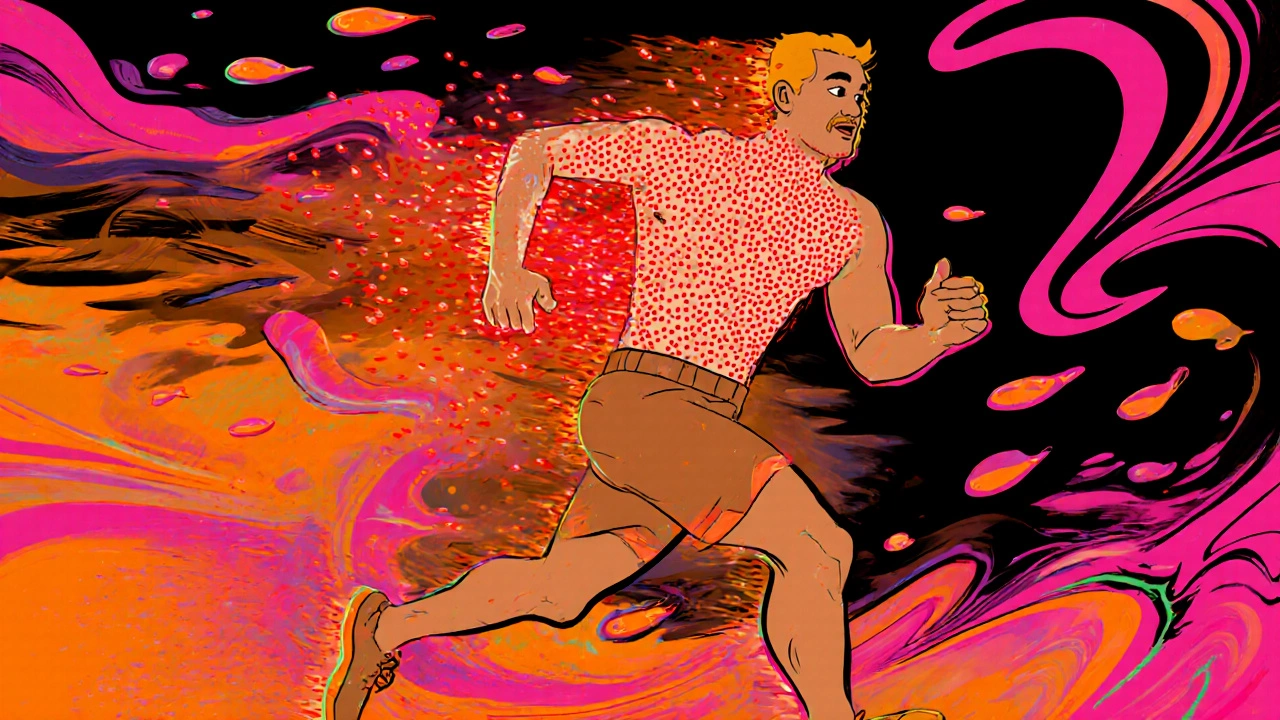
Imagine breaking out in tiny, burning bumps the moment you start jogging, eating spicy food, or even walking into a warm room. No allergens. No poison ivy. Just your own body overheating-and your skin reacting like it’s under attack. This isn’t just a bad rash. It’s cholinergic urticaria, a little-known but deeply disruptive condition where heat triggers hives. And if you’ve ever felt it, you know it’s not something you can just ignore.
What Exactly Is Cholinergic Urticaria?
Cholinergic urticaria (CU) is a type of physical urticaria-meaning it’s not caused by food, pollen, or chemicals. Instead, it’s triggered by a rise in your core body temperature. When you sweat, your nervous system sends signals to your skin that go wrong. Mast cells in your skin overreact, releasing histamine. That’s what causes the red, itchy, pinpoint bumps-usually 1 to 3 millimeters wide-surrounded by a red flare. They show up fast: within 2 to 15 minutes of getting hot. And they vanish just as quickly once you cool down, usually within 30 to 90 minutes.
Unlike cold urticaria (which happens when you touch ice or jump into cold water) or solar urticaria (triggered by sunlight), CU hits areas where you sweat-chest, face, upper back, arms. It rarely shows up on your palms or soles. And here’s the kicker: it doesn’t matter if you’re sweating from exercise, a hot shower, spicy food, or even stress. Any rise in body temperature can set it off.
Who Gets It-and Why?
Most people first notice CU between ages 15 and 25. It’s rare in kids under 10 and uncommon after 50. About 5 to 7% of all people with hives have this form. Studies show it’s slightly more common in men, but that might just be because men are more likely to exercise intensely.
The real mystery lies in the biology. Research from the Journal of Investigative Dermatology found that people with CU have lower levels of two key proteins: acetylcholinesterase (AchE) and CHRM3. These normally help calm down the nerve signals that tell sweat glands to activate. When they’re missing, the signal goes unchecked. That triggers a flood of inflammatory chemicals-CCL2, CCL5, CCL17-that pull immune cells into the skin, turning it into a reaction zone.
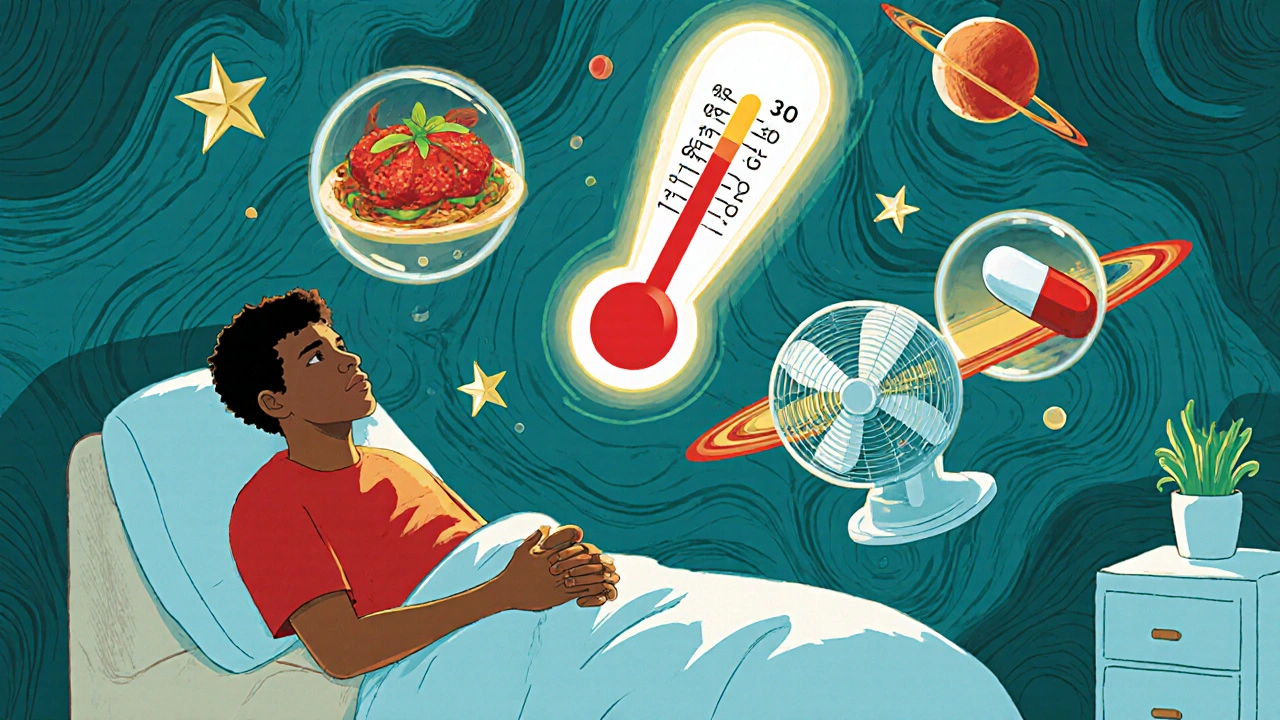
It’s not an allergy. It’s a misfire in your nervous system. Think of it like a thermostat that’s stuck on “high.” Even normal body heat-37°C (98.6°F)-can be enough to flip the switch in someone with CU. Most patients find their personal trigger point is around 38.1°C (100.6°F), measured using ingestible thermometers in clinical studies.
How It Feels-Real Symptoms, Real Life
People with CU don’t just get a rash. They describe it as:
- Pinpricks of heat under the skin, like hundreds of needles
- A burning, tingling sensation that spreads
- Intense flushing, especially on the chest and neck
- Itching so bad it distracts from everything else
One Reddit user wrote: “I started my morning run. Five minutes in, my chest lit up. It felt like I was being stung by fire ants. I had to stop. Sat on a bench for 20 minutes until it faded.”
For many, the worst part isn’t the rash-it’s the fear. You can’t predict when it’ll happen. A hot lunch, a crowded subway, a workout you thought was “light”-any of these can trigger a flare. About 83% of people report exercise as their main trigger. Spicy food comes in second. Emotional stress? That’s a big one too. Crying, arguing, or even watching a tense movie can raise your core temp enough to set it off.
And it’s not just skin-deep. About 12% of people with CU experience systemic symptoms: dizziness, rapid heartbeat, nausea, or even trouble breathing. In 8.7% of cases, it can escalate to anaphylaxis. That’s why some patients carry epinephrine auto-injectors-even if they’ve never had a severe reaction before.
Why It’s So Hard to Diagnose
Doctors often mistake CU for exercise-induced anaphylaxis, heat rash, or even fungal infections. A 2021 study in JAMA Dermatology found that 22% of patients who went to the ER with CU were misdiagnosed on their first visit.
The gold standard test? The passive warming test. You sit in a warm room (around 39°C) while your core temperature is slowly raised by 0.5°C. If you develop the classic pinpoint hives within 15 minutes, you’ve got CU. It’s simple, reliable, and works in 94% of confirmed cases.
But most clinics don’t have the setup. So many patients go years without a diagnosis. They’re told it’s “just stress” or “allergic to sweat.” Neither is true. It’s a neuroimmune disorder. And it needs to be treated like one.
How to Manage It-Proven Strategies
There’s no cure. But you can take back control. Here’s what actually works:
1. Antihistamines Are Your First Line of Defense
Second-generation antihistamines like cetirizine (Zyrtec) or loratadine (Claritin) are the standard. Most people start with 10mg daily. If that doesn’t help, doctors often increase the dose-up to 40mg of cetirizine per day. A 2023 study found this boosted effectiveness to 73% in people who didn’t respond to normal doses.
First-gen antihistamines like diphenhydramine (Benadryl) work too-but they cause drowsiness. About 58% of users say it messes with their work or driving. Stick with the non-sedating ones.
For stubborn cases, adding famotidine (Pepcid) 20mg twice a day helps. It blocks H2 receptors, which work alongside H1 receptors in the skin. One Cleveland Clinic study showed 57% of patients improved with this combo.
2. Avoid the Triggers-Smartly
You can’t avoid heat forever. But you can outsmart it:
- Work out in air-conditioned spaces
- Wear moisture-wicking fabrics (polyester blends, not cotton)
- Take cool showers before and after exercise
- Use a handheld fan or cooling towel during activity
- Avoid spicy foods, alcohol, and hot drinks if they trigger you
- Keep your environment cool-set your home thermostat to 21-22°C
One patient on MyHealthTeams said: “Switching to gym workouts with AC and wearing those cooling shirts cut my flares from daily to once a month.”
3. Monitor Your Temperature
Most CU patients have a personal “trigger threshold”-the exact body temp that sets off a flare. For most, it’s around 38.1°C. You can track this with wearable sensors or ingestible thermometers. Apps like the Urticaria Center of Excellence’s free tool let you log temperature, activity, food, and symptoms. After a few weeks, patterns emerge. You’ll know exactly when you’re getting close to your limit.
4. Biologics Are Coming-But Not for Everyone
In June 2023, the European Medicines Agency approved omalizumab (Xolair) for CU. It’s an injectable biologic that blocks IgE, the antibody involved in allergic reactions. In trials, 78% of patients with severe, treatment-resistant CU saw their hives disappear completely.
But here’s the catch: it costs $3,500 per month in the U.S. Only 4.3% of CU patients can afford it. Insurance rarely covers it for CU unless you’ve tried everything else. It’s not a first-line option-but for those who’ve lost quality of life, it’s life-changing.

What Doesn’t Work
Don’t waste time on these:
- Antifungal creams-they treat infections, not nerve-triggered hives
- Topical steroids-they don’t penetrate deep enough to stop mast cell activation
- Herbal remedies or essential oils-no evidence they help CU
- Just “toughing it out”-this can lead to worse flares or anxiety-driven avoidance
Long-Term Outlook
Good news: CU often gets better with time. About 30% of people see their symptoms fade completely within 7 to 10 years. It’s more likely to resolve if you’re in your 20s or 30s when it starts.
But climate change could make things harder. A 2023 study in the Journal of Investigative Dermatology predicts that rising global temperatures could increase CU prevalence by 15-25% in temperate regions like the UK and northern Europe by 2040. That means more people will face this condition-not less.
Researchers are working on biomarkers to diagnose CU faster and smarter. By 2026, they hope to have two reliable blood or skin tests. Wearable tech is also advancing. Companies like ThermaCare are testing smart clothing that cools your skin automatically when your temperature spikes. Early trials show a 63% drop in flare frequency.
When to See a Doctor
See a dermatologist or allergist if:
- You get hives every time you sweat or get warm
- The rash lasts longer than 90 minutes
- You feel dizzy, short of breath, or your throat tightens
- It’s affecting your sleep, work, or social life
Don’t wait. The sooner you get a proper diagnosis, the sooner you can start managing it-and reclaim your life.
Can cholinergic urticaria go away on its own?
Yes, in about 30% of cases, cholinergic urticaria resolves spontaneously within 7 to 10 years after it starts. It’s more likely to fade if you’re younger when symptoms begin. But for many, it becomes a long-term condition that requires active management.
Is cholinergic urticaria an allergy?
No, it’s not an allergy. Allergies involve the immune system reacting to a specific substance like peanuts or pollen. Cholinergic urticaria is caused by your nervous system misfiring when your body heats up. It’s a neuroimmune disorder, not an allergic reaction.
Can spicy food trigger cholinergic urticaria?
Yes. Spicy foods raise your core body temperature by stimulating sweat glands-even if you’re not exercising. About 67% of people with CU report spicy meals as a trigger. If you notice flares after eating curry, hot sauce, or chili, avoid them or eat smaller portions.
Does exercise make cholinergic urticaria worse?
For nearly 9 in 10 people with CU, exercise is the main trigger. But you don’t have to stop. Switch to low-heat workouts-swimming in cool water, yoga in AC rooms, or using a fan while cycling. The goal isn’t to avoid movement, but to control how your body heats up.
Can I use antihistamines every day?
Yes. Second-generation antihistamines like cetirizine and loratadine are safe for daily, long-term use. Many patients take them consistently, not just when they feel a flare coming. Doses can be increased up to 40mg daily under medical supervision if needed.
Is cholinergic urticaria dangerous?
For most, it’s just uncomfortable. But in 12.3% of cases, it can cause systemic symptoms like low blood pressure, rapid heartbeat, or wheezing. In 8.7% of patients, it can lead to anaphylaxis. If you’ve ever felt faint or had trouble breathing during a flare, you should carry an epinephrine auto-injector and talk to your doctor about a rescue plan.
Gus Fosarolli
November 28, 2025 AT 13:23So let me get this straight - my body thinks sweat is a biological insult? That’s either genius or a cosmic prank. I’ve been calling it ‘hot rage rash’ for years. Turns out it’s got a fancy Latin name and peer-reviewed papers. Cool. Now I can tell my boss I’m not ‘overreacting’ - my nervous system is just really dramatic.
Evelyn Shaller-Auslander
November 29, 2025 AT 00:04i had no idea this was a thing. i thought i was just allergic to my own sweat lol. thanks for explaining it so clearly. i feel less alone now. 🥹
Ron Prince
November 30, 2025 AT 00:48Oh great. Another ‘neuroimmune disorder’ invented by woke doctors so people can avoid real exercise. Back in my day, we just sweated through it. No antihistamines, no cooling shirts, no ‘trigger thresholds.’ You want to run? Run. Your body’s supposed to heat up. This is weakness dressed up as science.
Sarah McCabe
November 30, 2025 AT 18:15OMG YES. I once broke out during a yoga class and had to leave because I looked like I got into a fight with a swarm of bees 🐝🔥. This post is a lifeline. Thank you for existing.
King Splinter
December 1, 2025 AT 05:57Okay but honestly this whole thing feels like overdiagnosis. I mean, people used to just deal with heat. Now we’ve got apps tracking your core temp like you’re a SpaceX rocket. And don’t get me started on the $3,500 biologics - someone’s making bank off people being scared of their own sweat. This isn’t medicine, it’s capitalism with a dermatology sticker on it.
Kristy Sanchez
December 2, 2025 AT 14:14So you’re telling me my emotional outbursts are literally turning my skin into a crime scene? That’s poetic. Or tragic. Depends if you’re into self-sabotage as a lifestyle. I cried during a Netflix documentary and ended up looking like a boiled lobster. My therapist said it was ‘unprocessed trauma.’ Turns out it was just my CHRM3 proteins throwing a tantrum. Thanks, biology.
Michael Friend
December 2, 2025 AT 18:49Let’s be real - this is just anxiety manifesting as a rash. People who have this are the same ones who track their sleep cycles, meditate with binaural beats, and buy $120 ‘therapeutic’ water bottles. The body doesn’t break out because you ate a burrito. It breaks out because you’re emotionally unstable and refuse to accept that heat is a natural part of life.
Jerrod Davis
December 3, 2025 AT 06:25It is imperative to underscore the clinical significance of the passive warming test as the diagnostic gold standard. The absence of standardized protocols in primary care settings constitutes a systemic deficiency in dermatological triage, thereby perpetuating diagnostic delays and exacerbating patient morbidity.
Dominic Fuchs
December 4, 2025 AT 17:18Imagine your body’s thermostat got ahold of a philosophy degree and decided to overthink everything. That’s CU. We evolved to sweat. But somewhere along the line, our nerves got confused and started screaming ‘EMERGENCY’ at 37°C. We’re not broken. We’re just too sensitive for a world that thinks heat is a virtue.
Asbury (Ash) Taylor
December 4, 2025 AT 18:48This is such an important post. If you’re reading this and you’ve ever felt like you’re ‘too sensitive’ to heat - you’re not. This is real. And you deserve to manage it without shame. Start with the antihistamines. Track your triggers. You’re not alone. Keep going.
Kenneth Lewis
December 5, 2025 AT 17:32wait so spicy food = hives? no wonder i always break out after tacos 🤯 i thought it was just ‘bad digestion’ lol. also why is everyone using cooling shirts now? is this a trend or are we all just secretly suffering??
Jim Daly
December 6, 2025 AT 02:09everyone’s acting like this is some new disease but i’ve had this since i was 12. they called it ‘heat rash’ and told me to stop being dramatic. now they got a fancy name and a fancy drug. classic. i don’t need a $3500 shot. i need people to stop acting like i’m broken because i can’t run in the sun.
Tionne Myles-Smith
December 6, 2025 AT 19:22I’ve been living with this for 8 years and I’m finally starting to feel like I’m not crazy. The fact that 30% of people outgrow it? That’s my hope right there. I’m not giving up on hiking, spicy food, or dancing in my kitchen. I’m just doing it smarter now. 💪🔥
Joanne Beriña
December 7, 2025 AT 13:58Why is this even a thing? In America we don’t coddle our bodies. You want to exercise? Sweat. You want to eat food? Get hot. This is what happens when you let science become a therapy session. If you can’t handle your own body heat, maybe you should stop pretending you’re an athlete.
ABHISHEK NAHARIA
December 8, 2025 AT 17:33This condition is indeed fascinating from a neuroimmunological perspective. However, the Western medical paradigm tends to overmedicalize physiological responses. In traditional Indian systems, such heat-induced eruptions are often attributed to Pitta imbalance and managed via dietary moderation and herbal cooling agents such as neem and amla. Perhaps a holistic approach deserves equal consideration.